Farm technology

Climate change has affected farmers in so many ways, it’s difficult to count on your finger tips. The popular view on climate change altering crop patterns, skewing yields and changing regional economies has triggered the interest of most livelihood researchers over the last decade.
Technology will play a key role in ensuring food security.{credit}Photodisc/ImageSource{/credit}

In India, a new grant was announced this week to improve livelihoods and food security of farmers in three states — Punjab, Gujarat and either Bihar or Jharkhand.  These states have a significant stake in India’s overall food security. The U.S. Agency for International Development (USAID) will award a $1.7 million grant to the Centers for International Projects Trust (CIPT).

The Trust will implement what is being called the ‘Water-Agriculture-Livelihood Security in India’ programme. The grant will be used towards public and private sector collaborations and will look at innovations that ensure better agricultural practices.

The programme will support local farmers set up innovative and integrated water and energy saving technologies and practices thereby trying to ensure better yields and incomes for farmers. It will look at  introducing best practices in groundwater management,  improving water and energy policies.

Partners in this programme include state governments, agricultural universities and research institutes, the Indian Council for Agricultural Research, Columbia University in the US, and agri-businesses.

The key to the success of such programmes will be empowering  farmers with technology. As father of India’s Green Revolution M. S. Swaminathan argues in this article in Nature India: “This impending food crisis can be solved to some extent if we can turn the small and marginal farmers, now eligible for institutional credit, to science and technology based farming methods.”

Hope programmes such as these fall back on technology to create sustainable models that last a while and not end with a couple of yields.

Suicidal tendencies

Young India is drinking up rat poison or hanging itself by the noose or lying down on railway tracks to end lives at an alarming rate, if a new study in Lancet is to be believed. After road accidents in men and childbirth related deaths in women, the second most important cause of death in India seems to be suicide, according the study which relies on data from the the Registrar General of India (RGI).

The RGI conducted a national mortality survey between 2001 and 2003 to determine the cause of deaths in 1·1 million homes chosen randomly from all parts of India.

Killing young India?{credit}Photodisc/Brand X{/credit}

What the researchers have now done is this: they have applied the age-specific and sex-specific proportion of suicide deaths in this survey to the 2010 UN estimates of absolute numbers of deaths in India. Thus they arrived at an estimation on the number of suicide deaths in India in 2010. What they found is shocking:  about 3% of the deaths among people over 15 years of age were due to suicide. This accounts for  about 1,87, 000 suicide deaths in India in 2010 at these ages — 1,15, 000 men and 72, 000 women.

Even more shocking was the estimation that 40% of suicide deaths in men and 56% in women were between 15 and 29 years of age. About half of suicide deaths were due to poisoning, mainly through pesticides.

The researchers suggest suitable public health interventions such as restrictions in access to pesticides to prevent this alarming trend. However, the trigger for committing suicide might be a more appropriate subject to look at and plug than the method of committing suicide.

If the study estimates are not way off the mark, just what is making India’s youth lose hope?

[The researchers of this study were drawn from Epidemiological Research Centre, Chennai; Post Graduate Institute of Medical Education and Research, Chandigarh; Society for the Natal Effect on Health in Adults, Chennai and National Institute of Mental Health and Neurosciences, Bangalore. They collaborated with researchers from London School of Hygiene and Tropical Medicine; Dalla Lana School of Public Health and University of Toronto, Canada to make the estimates.]

Heart phone

There’s a promise that India’s teeming millions sitting on a cardiovascular epidemic of sorts can now benefit from a easy-to-use smartphone application that will tell them exactly how their heart is faring.

Once this large-scale public health project funded by the Global Alliance for Chronic Diseases Research Grants takes off in India, it would be easy to screen cardiovascular risks using a handy, intelligent smartphone device. The project is expected to use World Health Organization guidelines through a smartphone application that will guide health workers in rural India through a series of questions to assess a patient’s blood pressure, blood sugar, weight and height.

Putting your smartphone to more uses than one.{credit}Subhra Priyadarshini{/credit}

The application is called Health Tracker, and will calculate a comprehensive risk profile that can be uploaded to a secure electronic health record. High risk individuals will then be referred to see a doctor who follows a management plan for the patients long term care. According the George Institute, India, which will implement the project, it will build capacity in primary healthcare in rural India. Australia’s national health and medical body,The National Health and Medical Research Council, will spend Rs 15 crore on this project and a couple more.

David Peiris, the principal investigator for the heart phone project, feels that it will be a practical intervention to address the growing cardiovascular epidemic in India. The pilot findings, he says, will be used to inform a large scale trial in rural India.

Apart from cardiovascular health, The George Institute will use the grant for a national salt reduction programme, investigate affordable drug treatment strategies to treat hypertension and assess innovative smartphone healthcare technology, executive director of the institute Anushka Patel informs.

Here’s hoping the project reaches out to at least a fraction of the over 30 million people with cardiovascular disease living in India .

Green revolution 2.0

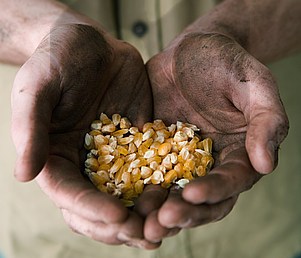
{credit}Photodisc/Photoalto{/credit}

An interesting article published in a review magazine of International Centre for Agricultural Research in the Dry Areas (ICARDA) discusses the feasibility of a second green revolution in India this week. Ram Badan Singh,  president of the country’s National Academy of Agricultural Sciences feels the signs for another big bang in Indian agriculture are encouraging. “Gross capital formation in agriculture, as a percentage of agricultural GDP, increased from 12% in 2004-05 to 22% in 2010-11. Investment in agriculture has increased by 30% in recent years,” he points out.

The first green revolution in the 1960s and ‘70s  catapulted India into becoming the second largest agricultural producer of the world. Though its second version might still be some years away, Singh says most experts feel its only a matter of time.

Of course, it would mean research integration, private investments and policy changes. Singh contends that the first green revolution involved a lot of environmental costs by way of unsustainable groundwater extraction, fertilizer run-off, pesticide residues and salinization. The priority was to resolve food shortages, and environmental issues were poorly understood. “Today we have a clearer understanding of how to monitor, control – even reverse – land and water degradation. We also have technologies that can increase yields without damaging the environment. These technologies are the key to a second Green Revolution,” he writes.

In trying to reach closer to the next big thing in Indian agriculture, technology will play a vital role, says Monkombu Sambasivan Swaminathan, the man credited for bringing about the first green revolution. The challenge would also be to bridge the rich-poor divide in technology, he says in this article in Nature India.

It would be worth watching policy changes and private participation in agriculute in the coming years to find out if the optimism surrounding Green Revolution II is real.