Climate change policy: What’s new for Asia?

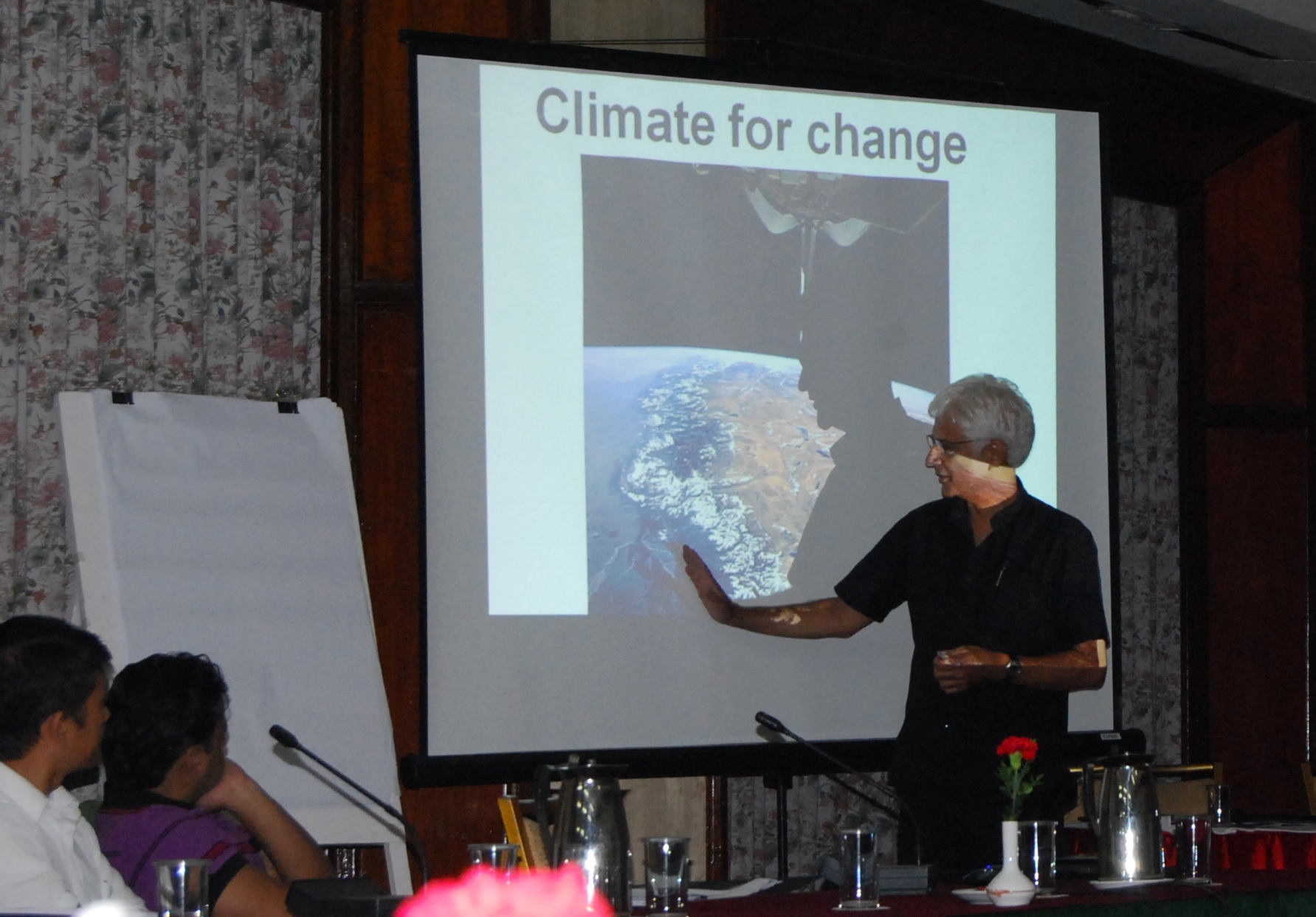
CDKN-IPCC-Whats-in-it-for-South-Asia-AR5_Page_01At a workshop discussing what the take homes for  Asian countries might be from the latest assessment report of the Intergovernmental Panel on Climate Change (IPCC) — AR5 — it was pointed out that there wasn’t enough science coming out of developing countries to feed the database on emissions or warming in the larger climate change debate. Local scientists need to conduct more climate change related experiments, write more scientific papers and bolster regional science  in order to make a case for these developing countries in the international discourse on climate change.

“We also need more authors from the developing world to participate in writing the chapters for the IPCC reports,” says Jonathan Lynn, Head of Communication at the IPCC. Lynn says though there is substantial science emanating from India now, some other small Asian countries such as Indonesia lag far behind. The IPCC collates scientific data from across the world to make predictions for future scenarios with the help of scientists, economists, policy makers and government representatives. Most of the work done by scientists in this process is voluntary and not paid for. Developing country scientists, who also do consultancy work for a living, would expect such work to pay off for their time — this could be one of the reasons why not many developing country scientists are interested in the job, Lynn says.

The IPCC assessment reports try to turn all available scientific evidence into something that would make sense to policy makers and businesses — therefore, the authors have explained the science at hand this time in terms of “risk management” parameters. “And since there are questions of ethics and equity involved in this highly political debate, we now have philosophers in the IPCC team to make sure those aspects are taken care of,” Lynn says.

Joyashree Roy, an economist from the Jadavpur University in Kolkata is the lead author of the industry chapter in IPCC’s assessment report five. She says Asia needs to urgently decouple the high energy sector from emissions. “Almost 44 per cent of the global emissions are from the energy and industry sectors of China and India — there lies an opportunity for south Asia. Can we think of a low emission-high energy scenario?”

Roy says population and economic growth are responsible for the surge in energy demand as well as emissions in south Asia.

Another IPCC author Navroz Dubash from New Delhi-based thinktank Centre for Policy Research points to an inherent dichotomy in the report — the number of countries which have adopted mitigation strategies or have a national action plan for climate change has gone up many times, especially in Asia post-2005. Simultaneously, the emission rates of Asia have zoomed and the world as a whole is hurtling at great speed into a carbon-based future. How is that possible, you wonder. “Well, there have been a slew of national policies in the last few years but they will take around 3-4 years to bear fruit. The more optimistic outlook would be to review the scenario in a couple of years and see if these policies have led to significant action,” he says.

Dubash says India will also benefit from the new stand of IPCC where ‘co-benefits’ of climate-friendly policies are being seen in new light. Earlier, IPCC talked of climate change mitigation plans as the main goal with parameters such as development or health as co-benefits. “The idea now is that the concept of co-benefits could work both ways, meaning if a development project brings in climate change mitigation as a spin-off, it should be totally acceptable. This concept is at the core of India’s national plan and now IPCC has sanctified it — so there’s a huge opportunity.”

According to A R Paneerselvan, advisor to the executive director of Panos South Asia, an organisation informing public and policy debates on environment issues, there are talks of a south Asian intiative for climate related insurance. The insurance would cover farmers against any vulnerability stemming from climate change. The initiative is still at a nascent stage and there’s pressure from the cash crop sector in south Asian countries to make a case for climate-related insurance, he says.

As for IPCC’s fifth assessment report and what’s in it South Asia, London-based Climate and Development Network brought out a good primer that explains just this. The Intergovernmental Panel on Climate Change (IPCC) chairperson Rajendra Kumar Pachauri also spoke about what it means for India at an outreach programme in New Delhi today.
Aerosols contributing to climate change in India, China

Our freelance writer Biplab Das dug out an interesting research paper from Geophysical Research Letters this week. Though the authors are from Argonne National Laboratory, Illinois; NASA Goddard Institute for Space Studies and Columbia Earth Institute, Columbia University, New York; they have been working on the contribution of aerosols  to climate change in India and China.

It is worth pointing out here that there has been very little study of the contribution of aerosol emissions from India and China to radiative forcing. Radiative forcing is the process through which about 30 per cent of sunlight reaching the Earth’s surface is reflected back into space as invisible infrared light.  Aerosols generated by human activities reflect infrared light generated by reflected sunlight, thereby trapping it in the atmosphere. This alters radiative forcing, resulting in climate change. Recent studies have identified aerosol emission, particularly black carbon emission from industrializing countries like India and China, as emission control targets for mitigating climate change.

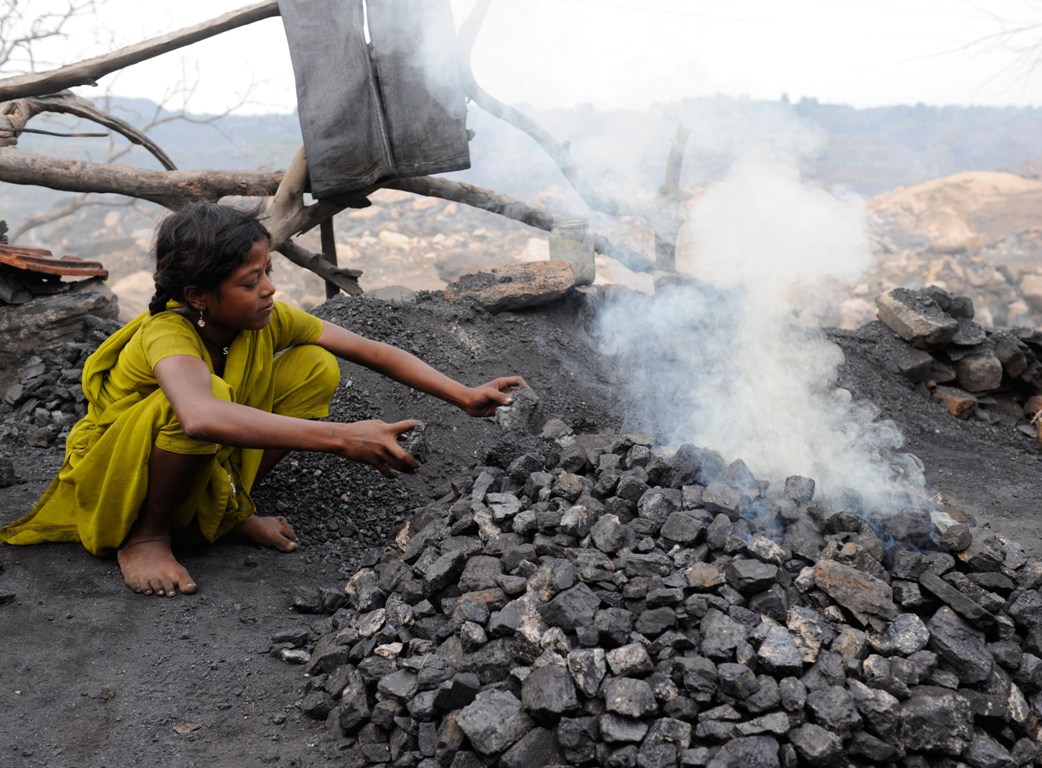
Coal burning is one of the key contributors to aerosol emissions.

Coal burning is one of the key contributors to aerosol emissions.{credit}Joerg Boethling / Alamy{/credit}

So the researchers have found that these small airborne particles called aerosols (for example, black carbon particles in diesel exhaust and sulfate particles produced by coal burning) in India and China may indirectly contribute to climate change. Higher black carbon levels in the atmosphere lead to warming, whereas increased sulfate levels cause cooling.

To find out the situation in India and China, the researchers examined emissions from the most important aerosol sources in the two neighbouring countries and estimated the net radiative forcing from each source, both locally and globally. In this analysis, they used models developed by the NASA Goddard Institute for Space Studies.

Major emission sources of black carbon are diesel truck and bus exhaust and residential biofuel and fossil-fuel combustion. For organic carbon, residential biofuel and fossil-fuel combustion are important sources. The study found that fossil-fuel combustion in the power sector accounts for 52.3 per cent of sulphur dioxide emission in India.

The researchers reveal that residential biofuel combustion in both India and China gave rise to significant positive direct radiative forcing through black carbon emission. They say that aerosol emission from diesel trucks and buses also makes a positive contribution to radiative forcing in India.

References

1. Streets, D. G. et al. Radiative forcing due to major aerosol emitting sectors in China and India. Geophys. Res. Lett. (2013) doi: 10.1002/grl.50805

Himalayas get climate funds

Some respite for the people of the Hindu Kush-Himalayas (HKH) grappling with the effects of climate change.
A new grant of 11 million euros announced today will go into livelihood development and mitigation of climate change impacts for people in the region. The European Union (EU) and the International Centre for Integrated Mountain Development (ICIMOD) signed an agreement on this today.

{credit}photodisc/imagesource{/credit}

The programme will start in 2013 and envisages using natural resources in a more sustainable, efficient way to protect the environment. According to a release by the organisations, the programme will try to do this by enhancing the knowledge base on Himalayan ecosystems and ecosystem services, raising awareness on the effects of environmental degradation, climate change and adaptation; strengthening collaborative action research in the region. It will also build capacity in higher education and train institutions and civil society across the region to scale up best practice for improved resilience to climate change.

The HKH region spans over 8 countries: Afghanistan, Bangladesh, Bhutan, China, India, Myanmar, Pakistan, and Nepal with interconnected mountain ranges and plateaus, extending for more than 3,500 km.  Glaciers alone cover an area of 60,000 square km.  The region is called the world’s ‘roof’ and ‘water tower’.
According to ICIMOD, changing climate patterns have negatively impacted the lives of people in this region. Glaciers are receding, permafrost retreats, snow melt induces changed river flows, and ecosystems are altering.
There is an increased frequency and duration of extreme climatic events, causing more frequent and severe natural disasters.  These factors aggravate erosion, land degradation, decline in soil fertility and crop yields.  The capacity of mountain people to deal with these growing stresses is limited, and the incidence of poverty is growing.
The funds should see some reversals in the lives of the HKH people, who are in the direct line of fire of the climate change phenomenon.

Two degrees of concern

At a recent meet of climate change communicators in Kathmandu, a documentary film called ‘A Degree of Concern’ by Syed Fayaz got the attendees talking animatedly. The film made in the last decade, projected a scenario in a distant future when one degree rise in temperature would play havoc with the glaciers, make agriculture unsustainable and, in short, impact every aspect of our life. It ended with an ominous and alarming warning: “Just one degree”. Though cinema-wise sound, the foremost criticism for the film was its poor scientific assumption — it relied on a baseline data of just three years, in which the temperatures in the freeze zones of upper Himalayas was found to be fluctuating increasing by two degrees every year. That was the basic flaw — a poor baseline.

N H Ravindranath{credit}IISc{/credit}

Today, a media report quoting an upcoming paper in the Indian science journal Current Science says the temperature rise scenario isn’t far away. It is just around the corner — by 2030 — and the predicted rise in temperature, primarily due to green house gas emissions,  is not one degree but somewhere between 1.7 to 2 degrees! Now that comes as a real alarm. The scientists, including lead author R K Chaturvedi say they have arrived at the conclusion through an average of 18 climate models with a smaller margin of error. This kind of rise will actually be quite severe — N H Ravindranath, a professor at the Centre for Sustainable Technologies and Centre for Ecological Science at IISc and co-author is quoted as saying.

Such temperature rise will make Northern India unbearably hot — as of now the heat wave in peak summers kills many and pushes groundwater levels further down. In northeast India, Arunachal Pradesh will be the worst hit, according to the report.

S K Dash, head of the department of Centre for Atmospheric Sciences at IIT Delhi, quoted in the same report, has been studying regional temperature rises for a long time now. He said in a phone chat that there are a number of open source models predicting temperature rise scenarios across the world and it is possible to collate them and arrive at a figure. He is, however, willing to wait till the scientific paper is out to make a comment one way or the other on the veracity of these findings.

On its own, IIT Delhi is currently undertaking what it calls regional climate modelling (RegCM) to be able to project a future scenario till 2100. “We have studied the temperature rise scene up to the year 2003 and found that in the 100 years preceding it, the rise has been about 1.2 degrees,” he said.

Dash is cautious in making any further remark — and he makes the right scientific query: what is the baseline for this new study? Since when has the data been measured?

Like him, we shall wait for the Current Science paper. It would be interesting to see the climate models used for this study.

Reporting climate change

Climate change seems to be our favourite punch bag, whatever the calamity — droughts, failed monsoons, floods or cyclones. How much science goes into deciding which of these natural phenomena are an offshoot of the global climate change phenomenon? Is climate change reporting as robust (or weak?) as the scientific evidence to back accentuated glacial melts or sea level rise?

The workshop

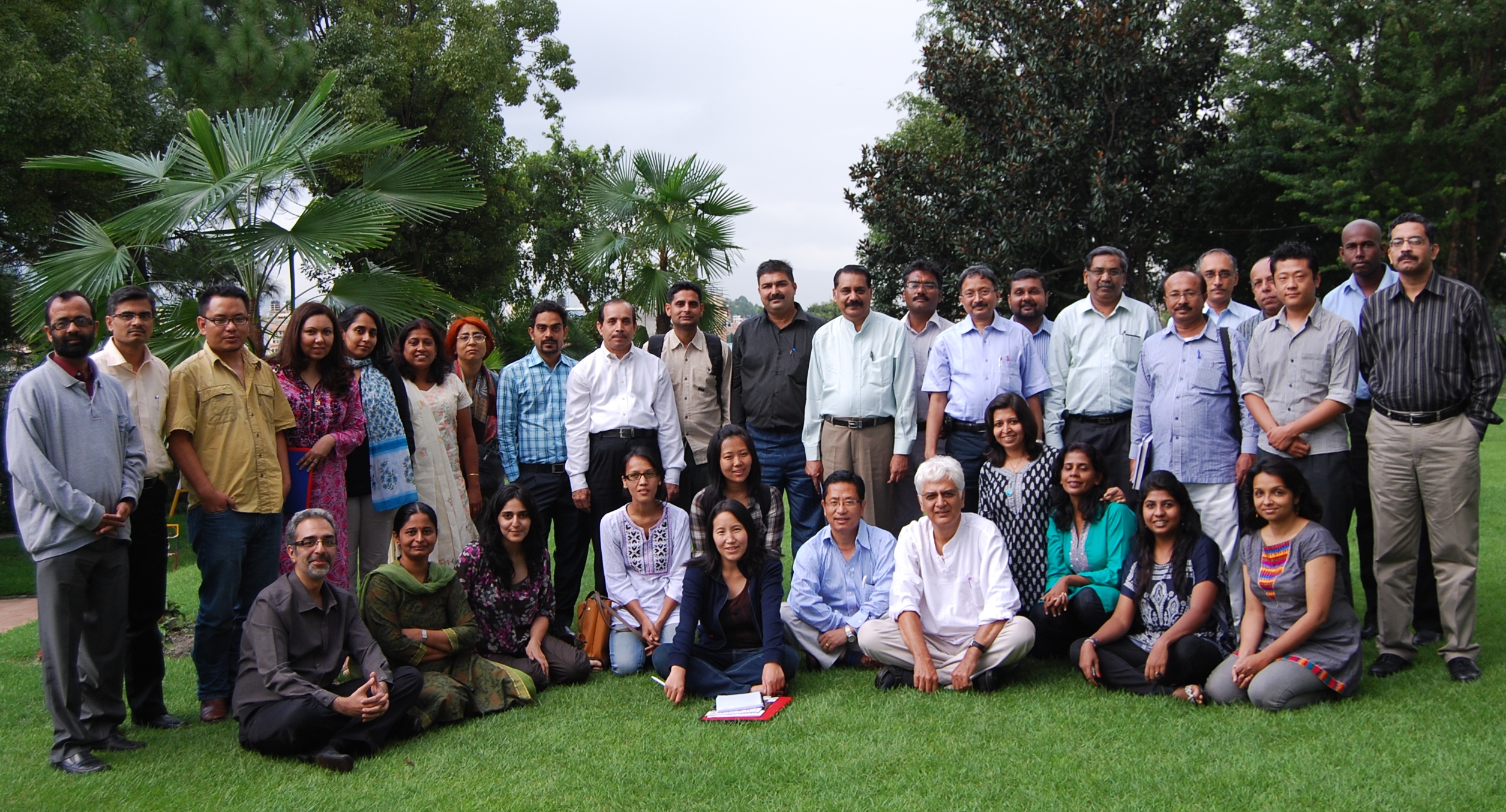
A regional meet of climate change communicators from the SAARC nations currently underway in Kathmandu, Nepal (August 24-30, 2012) is seeking to look at all that is good with our reportage and all that we need to improve. It would look and feel like any of the umpteen such well meaning ‘workshops’ which fail to make much headway but for the presence of some real ‘experts’ who have toiled it out on the ground. From Nepalese journalists who have trekked the Hindukush range to Sri Lankan scribes who have shrugged off the ‘small island nation’ tag to influence policy across south Asia; spirited Editors of newspapers, magazines and television channels from SAARC countries to radio reporters whose voices reach the farthest corners of our villages — the mix at the meet organised by PANOS is eclectic and therefore works.

The basic premise of their coming together is to corroborate what we know all along but need occasional nudging to recall — that the rules of science and the rules of journalism are actually the same: to question, to inquire and to investigate.

The rigour of the week-long workshop and its academic nature notwithstanding, the stand-out feature has been the brilliant anecdotal asides that each session throws up, which the editor of a Bhutanese daily described as media’s ‘dazzle’ stories on climate change.

For instance, shepherds in the Hindukush Himalayas are actually happy with the tiny lakes being formed from glacial melts — it means fresh water and more pastures for their sheep. Women in some Indian villages have been rendered unmarriagable because of the water scarcity in the region (who wants water-stingy in-laws?) . No cars can ply on the roads of Bhutan on Tuesdays, even if you are dying and need to be rushed to a hospital — an example of an extreme step taken by the government to keep the effects of climate change at bay. While wildlife activists in Colombo might be fighting hard to protect their cultural emblem — the elephant –, villagers facing the wrath of the pachyderms want the beasts to die. They just won’t cast their votes unless the government ensures electric fencing around villages to keep wild elephants away.

Climate change communicators from across South Asia are attending the workshop.

These lesser known stories and many more such have thrown open another debate on the sharp urban-rural perception divide on issues such as environment, wildlife and climate change. While we were busy framing protocols and worrying about wording them correctly, people most affected by climate change were sitting in faraway foothills and forests oblivious of the threat posed by the burning global issue.

That said, all victims certainly are not  ignorant or unperturbed. A number of cases of indigenous knowledge in action also got into the anecdotes lore of the workshop. Like the heart-warming story of 75-year-old civil engineer Chewang Norphel who is building artificial glaciers in the driest villages of Ladakh for perennial water supply. Or the Lahore man who lives in a quiet ‘green’ house in a neighbourhood hopelessly drowned in the whir of generators.

The media’s coverage of climate change came in for scrutiny as data from University of Colorado was pulled out to show peaks in the graph only during significant annual events such as the Copenhagen climate change conference of 2009 or the Cancun or Durban conferences. The graph also peaked when there was a natural calamity — a drought, a flood, a cyclone — presumably linked to climate change. This, the workshop felt, needs to be changed with more regular policy features, success stories and informed opinion. The media’s role to warn policy makers and imminent victims in the run up to a natural disaster through science-backed reportage was also discussed at length.

And since I must end with a smiley,  here it is. They are hunting like crazy for the unique half-plant-half-insect Cordyceps sinesis in the highlands of Bhutan, Nepal and India. It sells for a couple of lakhs of rupees a kilogram for its aphrodisiac virtues.  As we know, Bhutan measures its progress with the Gross National Happiness (GNP) index (into which an environment component is built in, by the way). I’m sure there are a lot of happy people in the beautiful ‘60% forests country’ right now!

Farm technology

Climate change has affected farmers in so many ways, it’s difficult to count on your finger tips. The popular view on climate change altering crop patterns, skewing yields and changing regional economies has triggered the interest of most livelihood researchers over the last decade.

Technology will play a key role in ensuring food security.{credit}Photodisc/ImageSource{/credit}

In India, a new grant was announced this week to improve livelihoods and food security of farmers in three states — Punjab, Gujarat and either Bihar or Jharkhand.  These states have a significant stake in India’s overall food security. The U.S. Agency for International Development (USAID) will award a $1.7 million grant to the Centers for International Projects Trust (CIPT).

The Trust will implement what is being called the ‘Water-Agriculture-Livelihood Security in India’ programme. The grant will be used towards public and private sector collaborations and will look at innovations that ensure better agricultural practices.

The programme will support local farmers set up innovative and integrated water and energy saving technologies and practices thereby trying to ensure better yields and incomes for farmers. It will look at  introducing best practices in groundwater management,  improving water and energy policies.

Partners in this programme include state governments, agricultural universities and research institutes, the Indian Council for Agricultural Research, Columbia University in the US, and agri-businesses.

The key to the success of such programmes will be empowering  farmers with technology. As father of India’s Green Revolution M. S. Swaminathan argues in this article in Nature India: “This impending food crisis can be solved to some extent if we can turn the small and marginal farmers, now eligible for institutional credit, to science and technology based farming methods.”

Hope programmes such as these fall back on technology to create sustainable models that last a while and not end with a couple of yields.