Science stories are equal to success stories. Right? Wrong. In thinking of scientists as successful people, we often assume that their career paths are straightforward, meticulously planned, and yield positive outcomes. However, things don’t always go as planned. Behind every small success, there’s probably a string of failures — work that did not make it to the curriculum vitae, rejected papers, turned-down applications, declined grants, unsuccessful job interviews, and many closed doors.
Science blooms in these failures as much as it does in the glory of accepted manuscripts, grants, awards, and patents. In this blog series “My Science Failures” we will hear some straight-from-the-heart stories of these secret milestones in the lives of scientists — and learn how they turned these events on their head (or did not).
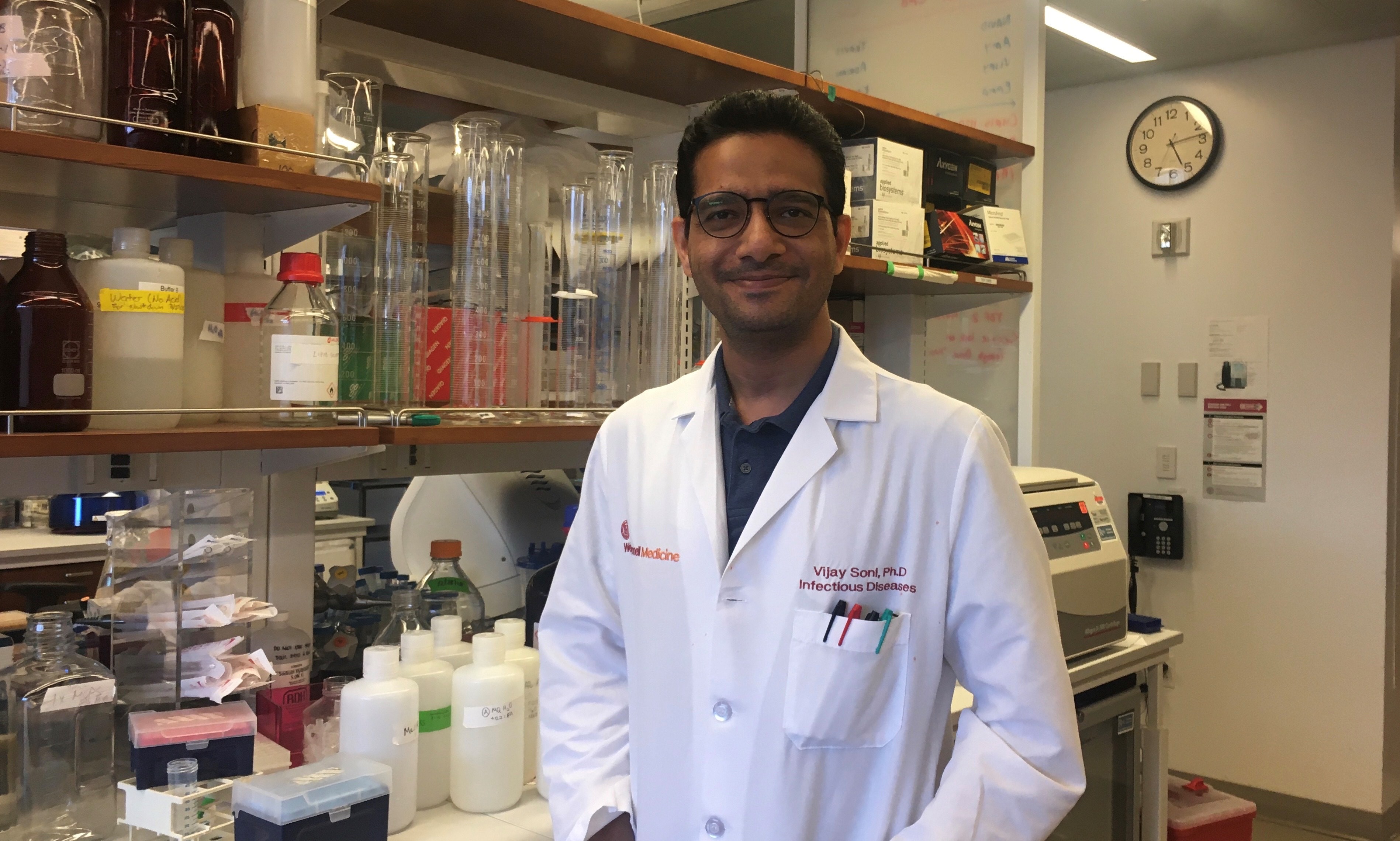
Vijay Soni, an instructor at Weill Cornell Medicine, New York, says the actual reason why science is so successful is these failures.
Vijay Soni
In science, we fail more often and at a rate higher than in other vocations. Hypotheses go wrong, experiments do not deliver the expected outcomes. There are contaminations, misleadingly simplistic or representative models, false-positive results, experiments without controls, rejections of manuscripts, and failed projects. The actual reason, why science is so successful, is all these failures. It is, therefore, imperative to learn the real value of mistakes.
“Failures are a sign that you are inventing,” says Elon Musk. Curiosity guides us to learn better and faster. We have been taught to attach connotations to words and are accustomed to believing that success is positive, and failures are negative. However, learnings are never black and white – they are a full rainbow. Each colour is an experience that must be enjoyed, lived, and felt.
Scientists hardly speak of false starts. There is nothing glamorous about dead and failed stories. And so there is a big chunk of knowledge that goes unreported or unpublished.
How do scientists cope with recurrent failures and grow? In my own research journey, many times I wish I knew about earlier false starts so that it didn’t have to go down an already failed path. I did not find any resource where scientists shared their wisdom from failures. Therefore, I started FailWise to offer learnings, information, opinion, and guidance around such failures. The inspiration came from Brandon Mull’s words: “Smart people learn from their mistakes, but the real sharp ones learn from the mistakes of others.”
Every scientist has a personal relationship with failures, and evolves uniquely. I have too. As a biology undergraduate, I learnt a big lesson early on when my lecturer published under his name all data from a research project I was working on to get a grant. Similarly, a lab mate presented my data without my consent or acknowledgment to get a postdoc position. Lesson I learnt: don’t disclose all your data and research to anyone. Never circulate your lab reports or critical data even among close friends.
There are more things that I learnt as a researcher:
- I studied undergraduate in a Hindi medium. I always felt it would be a problem when I go for higher studies. But I was wrong. Language is not a barrier in science but lack of knowledge is. I never stopped reading books and research articles. If you do not read background literature, maintain notes or connect the dots to frame your questions, you will likely fail. Learn to ask better questions, you will automatically be guided towards better answers.
- Once I was told that I would not have been hired if I was not from a certain lab (my master’s and undergraduate studies were from a very small state university in India). It was discouraging. But I reminded myself that people who follow their path passionately and honestly make great scientists and labs, and they may not necessarily be working in a world-class institute. No matter what your background, chase your dreams with perseverance.
- After Masters, I was working as a project assistant at a renowned institute in India. I was treated like a labourer there — never allowed to ask any question, asked to help in my principal investigator’s household work. He used foul language, forced me to work at least 12 hours every day, even on weekends. I tried hard to stay but gave up after 6 months and joined another lab. The lesson I learnt: Quit (as soon as possible) if you are not respected or treated properly. A mentor who does not provoke thought or gives you the freedom to ask questions, will likely not aid your career much. Choose your research mentor wisely. You can not do science when you have a micro-manager or a bad human for a mentor.
- During my undergraduate, I was selected for a presentation for a national-level scholarship. I researched hard for a project on neural tube defects and but I was not well prepared for the presentation. And thus I failed to get the scholarship. Lesson learnt: Bad communication or presentation skills will dampen your science. Work on them, ask for feedback from your mentor and lab mates. Do mock presentations, write notes, try recording and listening to them to improve your sentences and script.
- While I was doing Ph.D. I never explored anything beyond my lab. But during postdoc, I started attending various courses on entrepreneurship and leadership skills. This helped me start my own company (Scipreneur). Researchers seldom explore things beyond their labs. Remember, your network is your net worth. Try to participate in courses, meetings, competitions, and networking events. Use social media wisely and to your benefit. Read biographies, listen and watch good talks and podcasts. They will help you in multiple ways. Like how to manage stress and time, how to cope with failures, how to deal with relationship hurdles, and how to envision your future with a better goal? Do more informational interviews, where you ask an expert’s time to discuss how they achieved their goals.
- Entrepreneurship was always on my mind but I never explored it as I felt I lacked the skills required. I failed to start on some interesting ideas and later found that someone had worked on them successfully. It took me 6 to 7 years to realise that Ph.D. and postdoc leverage us with so many traits like leadership, mentoring, communication, negotiation, perseverance, collaboration, and entrepreneurial skills. Do not undervalue yourself. Learn to swim beyond your safe zone and against the currents. It will not only boost your confidence but also enhance your ability to cope with challenges.
- I have seen researchers working day and night but failing to achieve big. Donkey work will seldom give you great science and big breaks; smart work will. You need to polish your ideas, questions, plans and execution. Teamwork is dream work, so never hesitate to ask for help. Collaborate and discuss with peers. I also learnt to use technology in the right way to accelerate the pace of research and increase efficiency. For example, use software and languages for better and fast analysis, LinkedIn for better collaboration and learning, Evernote for writing and as a virtual notebook, simple web-based software for colony counting and standard curve plotting, and different online tools to make beautiful figures and presentations.
We cannot predict failure, but we should keep the lessons learnt imprinted in our minds. Collaborative learning and sharing help us see mistakes more positively. Failures can rewire our brains and give us the confidence to approach problems from a different angle. They force us to question our hypotheses, plans, protocols, execution, and experimental setups. The greatest thing a scientist can discover is “a novel or better question”. Give yourself permission to fail and explore.