Nature India coverage gets South Asia Climate Change Media Excellence Award

Nature India is humbled to be the recipient of the South Asia Climate Change Media Excellence Award 2012-13 for its coverage of climate change issues, including that in the Sundarban delta of the Bay of Bengal. A series of articles and blog pieces from Nature India’s coverage of climate change were collectively chosen for the award by Panos South Asia, headquartered in Kathmandu, Nepal and part of Panos Institutes worldwide that encourage and facilitate public discourse and debate on a wide range of issues including environmental issues. Nature India‘s reportage will be honoured at the awards night of the CMS Vatavaran Film Festival on January 30, 2014 in New Delhi.

The recognition bolsters Nature India‘s spirit of bringing its readers the best coverage of Indian science.

Please register free on Nature India to read the full articles. Here is an excerpt of one of the award winning articles:

Will the climate ever change for Sundarbans?

Seven years after the first report on the ‘vanishing islands‘ of Sundarbans, Subhra Priyadarshini revisits the fragile delta in the Bay of Bengal to find that it is not just climate change that threatens the existence of this world heritage mangrove tiger-land spread across the Indo-Bangladesh border.
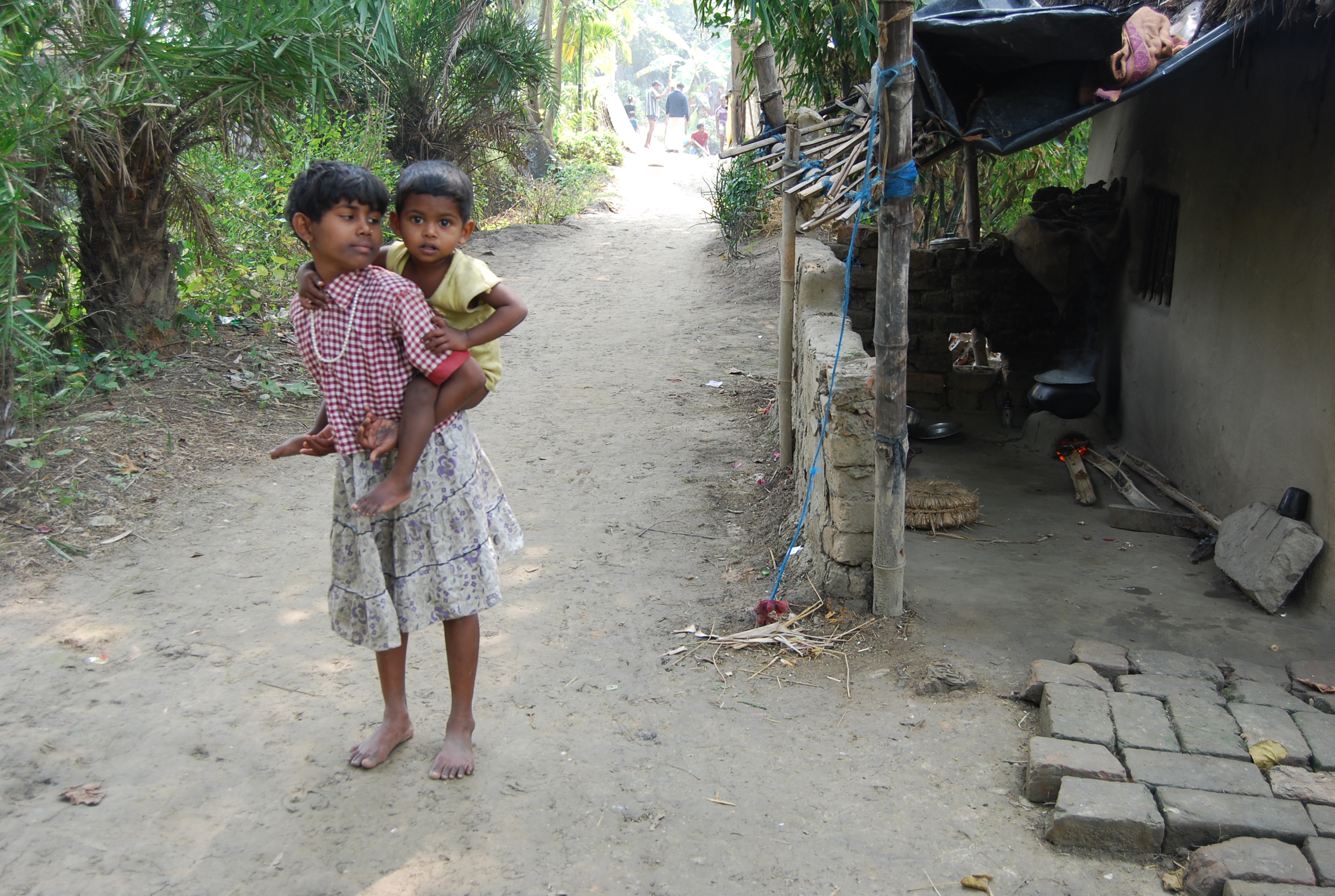
Sundarbans

{credit}Subhra Priyadarshini{/credit}

The seas are rising around the Sundarbans. That is old news.

Two islands in this 100-odd island conglomerate have vanished from the face of earth. Even that is old news, met with a stoic shake of the head by environment refugees who now inhabit Sagar, the biggest island in west Sundarbans. For them ‘climate change’ is just another phrase that NGOs and people from the media use to describe everything that is wrong with their lives.

Flooding is a way of life for people in the islands.

In their life full of challenges, the loudest alarm bells ring before every monsoon — of the fury that the sea is about to unleash between September and November. Severe cyclones — four of which have visited the Sundarbans between 2007 and 2009 — are gulping in more and more land every year. The world’s only mangrove tiger-land is now a constantly shrinking landmass, its existence threatened by severe cyclonic storms, unmanageable demographics, rising seas, coastal flooding and erosion.

Though just a bit of this fear is reflected in government figures, it is clearly evident in Shamila’s voice. “The fury of the sea now is like never before,” she says standing right where she stood seven years back outside her hut in one of the many refugee colonies dotting Sagar. Shamila has grown from a shy teenager into a confident mother of two and knows where to flee if the going gets tough. “We will go to Kolkata and do something there,” she says talking of her secret dream to settle in the burgeoning megapolis, capital of West Bengal, where “you get beautiful saris”.

Climate displacements

Shamila’s father Sheikh Abdullah did something similar in the late 1990s when he left the sinking island of Lohachara in the vicinity, along with 7000 other refugees from various islands, and sought shelter in Sagar. Lohachara does not exist on the map anymore along with another island Bedford, which never had any human habitation.

Scientists estimate that Sagar will be the worst hit in future with over 30,000 people displaced by 2020 even as neighbouring Namkhana produces 15,000 more refugees. The other islands, all in the western end of the estuarine delta, predicted to face similar fates are Ajmalmari (east and west), Dalhousie, Dakshin Surendra Nagar, Moushuni, Lothian, Ghoramara, Dulibhasani, Dhanchi, Bulchery, Bhangaduani and Jambudwip.

According to estimates, between 2001 and 2010, the net loss of land to the seas across the Indian Sundarbans stands at 63 square kilometre. About 1.35 million people are currently at high risk from sea level rise, storm surges and coastal flooding, with another 2.4 million people exposed to moderate risk.

Read the rest of the article here.

We need some cheeky scientists

As the year drew to a close, I was invited by one of the leading newspaper groups in south India to reflect on the state of India’s science. I have always thought that a crucial factor missing from the country’s science is some cheek, the spirit of adventure, that streak of impertinence which allows researchers to stand up and be counted.

The following piece (reproduced with permission from Hindu Business Line) reflects upon the spirit of constructive irreverence, a key ingredient for scientific research:

India needs a small dose of impertinence in its science

India needs a small dose of impertinence in its science{credit}Federico Rostagno /Alamy{/credit}

Some call it irreverence, some politely couch it as the “questioning spirit”. I call it cheek. That’s what’s missing from Indian science today — the impertinence that made the likes of Raman, Saha and Bose.

Over the years, I have seen students get into undergraduate science streams, bubbling with the passion of becoming biotechnologists, nuclear physicists and electronic engineers. In just about a year, they lose steam, bogged down primarily by the examination system that leaves no room for any other creative pursuit. Halfway into their ‘dream streams’, most of these students are either regretting their decision or are resigned to a no-fun future restricted to earning a living through science. By the end of their courses, many turn away from the subjects they initially thought would be the love of their lives, or just stick around in labs carrying out orders from uninspiring seniors.

What is with this country’s science administration that strips our youngsters of their cheekiness, a crucial factor in the pursuit of science? Why is asking questions of senior scientists seen as a mark of irreverence?

Contrary to the spirit of science, why is it that we see science, scientists and policymakers recoil when faced with uncomfortable questions? What is robbing the happiness of our young researchers — most of whom are encouraged to become androids pushing copycat science?

The lack of cheek has pervaded the science administration so deep that when eminent scientist C. N. R. Rao stood up to question the state of India’s scientific funding after receiving the Bharat Ratna last month, the scientific community was pleasantly surprised. Prime Minister Manmohan Singh’s scientific advisor wasn’t alone in his concern. His public expression of disappointment with the system is the outcome of long years of fighting the system. It is this outrage that many in the science community in India feel but seldom express.

Boom times

These are boom times for Indian science. The national spending on science and technology has gone up in the last few years and is inching towards two per cent of India’s GDP. Though many would still call it peanuts compared to other science-faring nations, it isn’t as bad as the last decade. Hordes of new institutes are coming up, but many feel that simply increasing the number of institutes will not lead to scientific prowess. It is, in fact, a catch-22 situation. The education system needs a complete rethink in order to attract more students to science and produce world class scientists.

India has registered an annual growth rate of more than 12 per cent in scientific publications in Science Citation Indexed journals in the last 5-6 years which compares well to the global average of 4 per cent. India’s global ranking in the number of publications has also seen relative improvement — from 15th position in 2000 to 10th in 2009 and improving.

Given the background, it should look like it is really hunky-dory for scientists working in India. Though good science and research are happening in some brilliant pockets of India, things are not as cheerful in a majority of labs.

Too many bumps

The lion’s share of scientific R&D in India is government-controlled. Scientists complain about the bureaucratic handling of science, poor pay and personal development opportunities, lack of amenities and stifling work environments where new ideas are not allowed to flow freely.

India is also accused of doing ‘copycat science’, duplicating work already done in western countries. The Prime Minister urges scientists to think out of the box and expresses concern over the red tape in science administration at every meeting of the Indian Science Congress. India hasn’t seen a home-grown Nobel Laureate since Sir C. V. Raman who got the prize for physics in 1930, and that is something the government rues time and again.

Also, the ‘publish or perish’ principle of scientific success results in a lot of junior scientists complaining that their seniors take the credit for work they have done and fail to acknowledge them. A lot of angry voices complain about corruption and one-upmanship in Indian labs.

While a handful of such cases have been taken seriously and those found guilty removed from their positions, there is no empirical data to prove that this might be a widespread phenomenon.

However, having said that, it must be conceded that there are labs in this country where the spirit of scientific inquiry is alive. Ideas float around merrily here.

Many of these ideas might be brutally shot down for their sheer craziness by friendly seniors (who prefer to be addressed by their first names). But those that survive are brilliant. That is a democratic and profitable scheme, as against labs that ask for written approval even to ideate!

A scientist friend made a particularly bold statement that I must quote: “Bureaucracy is not something I am bothered about, I can handle that. The sole aim of my lab is to get a Nobel for India soon. That’s what keeps me going.” Good luck, mate!

The spirit is alive. In pockets.