Year-end rant

This evening, BBC Radio asked me what I thought were the most significant events in Indian science this year. As always, year-enders are the best way to take stock and scribble down what to follow-up on next year.

So here goes my off-the-cuff top-five list:

1. First up, Chandrayaan scored very high this year. Though India’s Moon mission took off late last year, it made a big splash when NASA and ISRO announced the water find. Most certainly, the biggest science story of the year.

2. Though not strictly science, India’s completing the nuclear triad with its nuclear submarine Arihant was keenly watched by nuclear experts, policy makers, journalists willing to give an arm and a leg for a picture of the submarine, and the common man alike. Nuclear capability of a nation always makes a good talking point in scientific circles, I noticed, and hence Arihant finds a mention here.

3. Despite his work in faraway Cambridge, India-born American scientist Venkataraman Ramakrishnan became an instant idol for many young scientists in India when he won the year’s Nobel Prize in chemistry. “When can we do it sitting here in an Indian lab?” was the question being asked in every single forum. A healthy dollop of much-needed inspiration, that!

4. Science policy wise, the government nod for researchers to have an equity stake in scientific enterprises and spin-offs while still being employed in their organisations was among the most cheered. It means, like their peers in all developed countries, Indian scientists can now enjoy the commercial benefits of their inventions and patents. This figures high on my follow-up list next year!

5. The sequencing of the genome of an Indian was widely discussed. Though some scientists thought it wasn’t such a big feat and anyone with a machine could do it, the event itself stood out as a stepping stone for more Indian genomic studies to come.

Anything else you think should figure in this list? Or something that shouldn’t?
Indian genome

The human genome sequence of an Indian has now been mapped, putting the country in the league of five others — United States, Britain, Canada, China and South Korea — who have demonstrated similar capabilities. This means the 3.1 billion base pairs describing every function of the body of an Indian are now available for further study and as an important diagnostic tool for predictive healthcare.

Devoting over two years on the background work, a team of young scientists from the Indian Institute of Genomics and Integrative Biology (IGIB) in New Delhi mapped the genome sequence of a man in his fifties from Jharkhand. The sequencing revealed his susceptibility to bipolar disorder, collateral cancers, five variations of ulcer and three types of coronary disease.

The project will be followed up with sequencing of various Indian communities — regions, races and castes.

The world’s first human genome sequence was completed in 2003 by the International Human Genome Project with scientists from the US, UK, France, Germany, Japan and China. Resource constraints hindered India’s participation in that project.

IGIB scientists had earlier sequenced the genome of a zebrafish — 1.8 billion base pairs — setting the stage for human genome sequencing.

Earlier in this blog, we had featured the Indian Genome Variation Consortium, a public-private partnership that networks six Council of Scientific and Industrial Research (CSIR) labs and some private software firms, when they completed the genetic mapping of one of the world’s most ethnically diverse populations — Indians — last year.

More sturdy steps for Indian genomic studies!

Don’t talk emissions

India has made its stand more than clear before the Copenhagen climate change summit — no legally binding emission cuts, something India has repeatedly clarified at more public fora than one in recent past.

Jairam Ramesh, minister for environment and forest, in his trademark style, made the announcement today in the lower house of Parliament — India will never accept a legally binding emission reduction agreement. The three hour ‘green debate’ in Parliament itself was a historic first.

The view is in line with what IPCC chief Rajendra Pachauri thinks should be India’s line at the meet.

Despite the pressure on developing countries to announce when their emissions will peak, Ramesh is confident India should not sign a peaking year agreement. India owes a responsibility, not to the world, but to itself — that is the official stand days before the climate change talks open in Copenhagen. “Forget Copenhagen. Forget the world….. we are going to Copenhagen with a positive frame of mind,” Ramesh reiterated.

Though the minister’s posturing did make for good headlines, what he left unsaid was more relevant. By not spelling out what India is expecting the western world to bring on to the negotiating table, he did not go too far in signaling what the country might see as a ‘good deal’. Doing that might have been more ‘positive’ than a mere announcement of the obvious.

India’s stand of not wanting to be a ‘deal breaker’ will be seen in the right light only if the government reflects at Copenhagen what it is claiming to be armed with — flexibility. On why and how India would benefit from being part of a climate deal, we have heard the view of the Pew Center on Global Climate Change.

Let’s look at a deal first, is what India seems to be saying at present, and we will take if further from there. Till then, where’s the need for a commitment?

AEC change of guard

sbanerjee.jpg

Srikumar Banerjee. © BARC

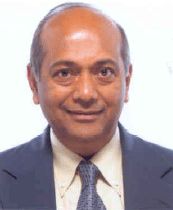
Srikumar Banerjee is the new chairman of the Atomic Energy Commission (AEC) replacing his eminent predecessor Anil Kakodkar. Banerjee also dons the hat of the secretary of the Department of Atomic Energy, which comes with the chair. He was till now the director of the Bhabha Atomic Research Centre (BARC).

Banerjee takes charge of the Indian nuclear establishment at a time when India’s nuclear programme is truly evolving, what with the Indo-US civilian nuclear deal in place and the country opening itself up to global nuclear commerce. Banerjee will have to look at reinforcements to DAE’s research and development programme, to strengthen the foundation of the structure in such commerce-driven times. His long years at the Bhabha Atomic Research Centre (BARC) should come in handy while he takes new policy stands to trigger change in this direction.

Banerjee is a metallurgical engineer from IIT Kharagpur, is counted among the best names in material science and technology in the country and was awarded the civilian honour Padma Shri in 2005. Here’s hoping he has a fruitful stint at DAE.