Starting early for a dream PhD

Chetna Gopinath is a fifth year PhD candidate in the Cellular and Molecular Biology Program at the University of Michigan. Born and raised in Bangalore, she moved to the US for a Master’s in Biomedical Science from State University of New York in Albany and subsequently a PhD. Chetna talks of how starting early in her quest for the best places to study shaped her scientific interests and her career path in the US.
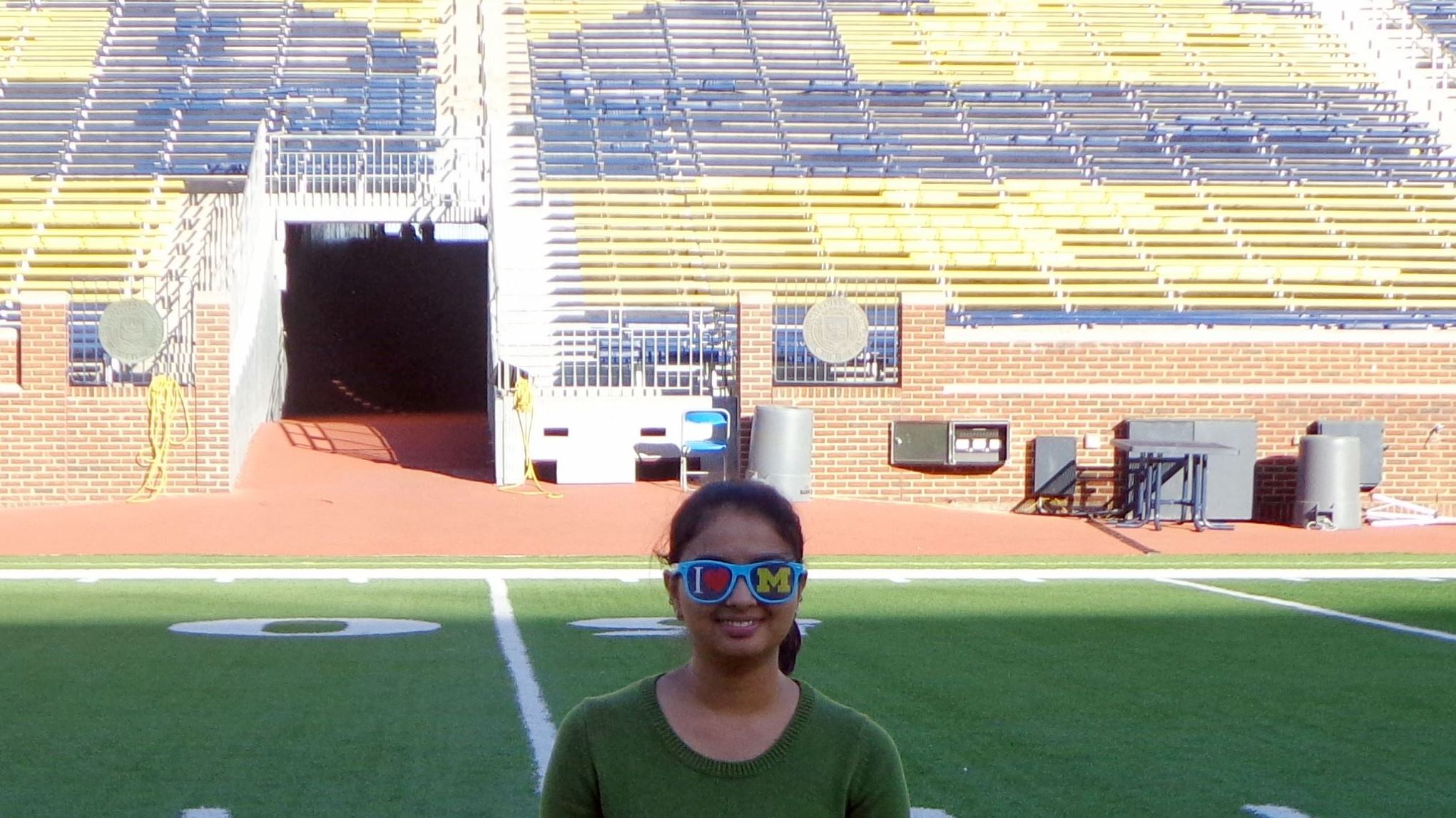
Chetna Gopinath

Chetna Gopinath

Career Path

My fascination for biology began in high school. In biology classes, the inner workings of the human body intrigued and inspired me to expand my knowledge in this field. During that time, ‘Biotechnology’ was an upcoming and exciting field, gaining a lot of attention. It offered an array of opportunities and was a perfect blend of biology and technology. So, after 10th grade I opted for biotechnology as an elective subject and later decided to pursue a bachelor of engineering in Biotechnology.

At undergrad level, I quickly realised that I enjoyed life science courses such as genetics and molecular biology the most. I wanted to switch paths from engineering to life sciences and eventually work in the biotech industry. So I decided on a Master’s degree in the US since it not just offered great opportunities in the area but also was a hub of many biotech companies. I took the Graduate Record Examination (GRE) and Test of English as a Foreign Language (TOEFL) exams in the third year and applied to eight Masters programmes in the US. I chose a two-year Masters programme instead of committing to an intensive PhD programme to get a flavour of biomedical research.

At the State University of New York at Albany, where I enrolled for a Master’s in Biomedical Science, a number of funding options are available to students such as teaching assistantships, research assistantships, and tuition waivers. F1 (or student) visa holders are permitted to work on-campus, so students have the option of working in various University jobs such as in the cafeteria or in the library. I reached Albany three weeks before orientation, which helped me settle in and find my bearings. During this time, I set up meetings with several professors and spoke to them about their research and was fortunate to receive a research assistantship to perform my Master’s thesis in Dr. Alain Laederach’s laboratory. I received a monthly stipend, which helped cover both my living expenses and a significant portion of my tuition fees. My Master’s thesis research involved studying changes in the secondary structure of RNA brought about by disease-associated mutations. This experience triggered my interest in studying cellular and molecular mechanisms underlying human diseases.

My experience in the Master’s programme served as a jumping off point for the rest of my career: it helped me solidify my interest in the life sciences, determine the type of research I was interested in, and gave me an academic foundation to build expertise that would be valuable for the rest of my career. In order to gain more research experience, and to further my knowledge of the molecular pathology of human disease, I worked in Dr. Anthony Antonellis’ laboratory in the department of Human Genetics at the University of Michigan as a full-time research associate. Here, I studied the transcriptional regulation of key genes involved in Schwann cell development and peripheral nervous system (PNS) myelination. My research paralleled my Master’s thesis in that I was again investigating molecular mechanisms of genetic diseases, so I could use the skills I learned during my Master’s. Working in the Antonellis laboratory also allowed me to gain new experiences in zebrafish model systems and in the neuroscience field. I chose to attend the University of Michigan for my PhD, where I am currently in the Cellular and Molecular Biology programme at the University of Michigan Medical School.

Most PhD programmes require first-year students to do two to three lab rotations, which are like trial runs that allow students to spend time in different labs before committing to a mentor and a lab for their thesis research, along with taking classes. Lab rotations helped me explore different topics of research. Choosing a thesis lab after your rotations is a tough challenge. Some of the important considerations are the funding situation of the lab, successful publication record, a collaborative lab environment and a supportive mentor. For all these reasons, I decided to go back to Dr. Antonellis’ laboratory for my PhD thesis.

My PhD thesis involves understanding the molecular mechanisms underlying Schwann cell development. Schwann cells produce the myelin sheath in the PNS. Myelin sheath wraps around the axons to allow rapid communication between the central nervous system (brain and spinal cord) and the peripheral tissues. Damage to the peripheral nerve via physical damage, toxicity, diabetes or inherited mutations results in peripheral neuropathy, which is characterized by muscle weakness and sensory loss in the hands and feet. There are currently no treatment options available for these debilitating diseases. However, defining the regulatory pathways underlying Schwann cell biology will help us understand the pathology of peripheral neuropathy and design therapies for peripheral nerve repair. My dissertation focuses on defining regulatory pathways important for Schwann cell myelination by identifying target genes of SOX10, a key transcription factor regulating PNS myelination.

Pursuing a PhD has been an invaluable experience. In addition to the technical skills I learned at the lab bench, I acquired a number of transferable skills that I can take with me into any career I choose. Grad school has been an excellent avenue to learn things like how to give oral presentations, writing grants, management skills from working with undergraduate students, collaborations, and, most valuable, critical thinking and problem solving abilities. I know that whether I choose to stay in academia, or move into the biotech industry, my combined skill set will help me advance into any position.

Culture shock

I thought I had the American culture all figured out by watching Friends (one of my favorite sitcoms) but I was wrong. I expected every city in the US to be like New York City. Being born and raised in a big city like Bangalore and moving to a small city like Albany, which has less than one-sixth of the population of Bangalore, was a big change. While people were friendly, they tend to live independent lives with little to no intervention from neighbours unless specifically requested. Small talk, be it about sports or weather, is an important aspect of social interaction in the US. The first few months were an adventure and everyday was a new learning experience; from figuring out the public transportation system to the different types of food, to chores as trivial as grocery shopping.

A second wave of culture shock happened during the first day of my biochemistry class. Classroom etiquette took on a whole new meaning; habits frowned upon in India such as eating and drinking coffee/tea during lectures and referring to professors by their first names were the norm rather than the exception. Most undergraduate colleges in India require a minimum of 75% attendance to be able to write the semester exam but here most classes do not have a minimum attendance requirement. The idea behind this is that students should be in class if they truly want to learn and feel that they will gain valuable knowledge from being present, rather than being forced to attend. The concept of ‘open book’ exams was completely alien to me and, contrary to what I initially anticipated, turned out be a lot harder as compared to closed book exams.

I kept an open mind and over time began to blend into the culture. These experiences have taught me a lot about myself and have helped me be the person I am today.

Tips for students interested in pursuing PhD in the U.S.

  • Having a Master’s degree is not a requirement to apply to PhD programmes.
  • Plan ahead of time: It takes almost a year and a half to prepare for the GRE and TOEFL exams, and to put together your application. GRE scores are valid for five years and TOEFL scores are valid for two years so my advice is to take these tests sooner rather than later.
  • Competitive PhD programmes look for students with undergraduate research experience. My advice would be to gain as much research experience as possible during your semester breaks. Volunteering at non-profit organisations also helps your application.
  • Professors in the US are friendly and helpful, so do not hesitate to contact them with questions.
  • Most universities in the US offer a myriad of research opportunities, which at times can seem overwhelming, so spend some time narrowing down to a few research areas to focus on.

An app for blood delivery

[This blog post was updated on 28 June 2017 to include some more sources that estimate voluntary blood donation in India and to address other issues around it.]

Kate Telma

Kate Telma

Need a unit of A- blood delivered to your hospital? There’s an app for that.

Nature India intern Kate Telma, from the Graduate Program in Science Writing at the Massachusetts Institute of Technology (MIT), met an enthusiastic group of blood donors at the India Habitat Centre in New Delhi this week.

Here’s her guest post on this life-saving app they launched to mark World Blood Donor Day on June 14.

While cycling through the city, your phone pings. Someone in the area with your blood type needs blood. In less than a minute, you swipe through the pre-screening questions — Any drinks last night? Currently on antibiotics? Dengue, chikungunya, or jaundice in the last six months? Pre-screening approved, you head to the nearby hospital to donate blood.

That’s the ‘Donor On Call’ Android app (iOS and Windows versions in the works), which connects patients in the National Capital Region of India with nearby, voluntary blood donors.

A screenshot of the app

A screenshot of the app

The number of non-remunerative blood donations in India has been on the rise since the country adopted the in the early 2000s. The World Health Organization (WHO) estimated that voluntary blood donation in India had risen to 85% percent in 2016. But hematologist Dharma Choudhury, who mentors Donor On Call, estimates the percentage of voluntary donations to be much lower. The remainder of collected blood units are known as “replacements”.  When someone needs a blood transfusion, family members and friends are called to give units of blood to the hospital blood bank to replace the blood credited to the patient.

Pratap Chandnani founded Donor On Call in 2014 through the Green Shakti Foundation, an organization that engages Delhi NCR citizens on issues of environmental sustainability, urbanization, and resource utilization. By connecting recipients directly with donors in real time, Chandnani hopes to reduce blood storage costs, and to prevent wasting some of the estimated 600,000 litres of blood thrown out by hospitals across India in the last five years. Though discarding some of these blood units was inevitable—donated blood needs to be screened for sterility and pass serological testing before it can be safely given to anybody else—some of the blood was likely thrown out because it had been stored beyond its validity.

Unlike more traditional organ and blood donation programmes, Donor On Call encourages donors to get to know recipients. “Very rarely, there are situations where people want to donate on their birthday, or their anniversary,” to anybody who needs it, says Chandnani. “As a norm, it will be a specific need. You know the patient; you have an idea of the disease.”

The choice of allowing the donor to know the recipient—and vice versa—is not without controversy. Rajat Kumar Agarwal, a senior volunteer at the Sankalp India Foundation in Bangalore, cites the WHO Code of Ethics for Blood Donation and Transfusion, which mandates anonymity between donor and recipient.

“By suggesting that blood donation should happen at the time of need, [and] that too with the involvement of the family of the patient, the proposed solution actually violates two fundamental elements of the design of any modern blood transfusion service – a) The need to have adequate supply of blood on [the] shelf for each patient in need – thoroughly tested and processed. And b) the fact that the responsibility of organising blood is that of the hospital and not of the patient’s family,” Agarwal wrote in an email to Nature India.

Currently, Donor On Call is focused on building a robust donor base in the Delhi NCR area, and has roughly 6,100 donors registered so far. In addition to organizing blood for specific rare groups, Donor On Call encourages donors to pursue a healthy lifestyle through yoga, cycling, running and nature walks. Demand for the service is spreading to smaller towns such as Singrauli and Simla, but Chandnani worries that the mobile network might not support the app in the northern region. The developers are also creating a manual call-in option for people without access to smart phones.

Donors at the launch voiced some concerns, like feeling they needed to donate in response to a request, even if they couldn’t. In some cases, concerned family members submit several requests, depleting the donors in the area even without medical need. And there was a rumour of a couple rogue donors charging for their donation. Chandnani’s concerns for the app centre around seasonal impacts and climate change. Shifting weather patterns have brought previously unseen diseases such as dengue to the area. The air pollution levels during the winter in Delhi are very high, so a good number of donors go on antibiotics.

Away from home: Quantum thermodynamics in Israel

A new story from a new country in the ‘Away from home‘ blog series today. The series features promising young Indian postdocs working in foreign labs. They recount their experience of working in foreign lands, the triumphs and challenges, the cultural differences and what they miss about India. They also offer useful tips for other Indian postdocs headed abroad. You can join their online conversation using the #postdochat hashtag.

Our ‘Away from home’ interactive map now features 45 bright Indian postdocs from around the world. Write to us to suggest names of postdocs from countries and disciplines we haven’t covered yet.

Arnab Ghosh is the first Indian postdoc from Israel being featured in this series. Arnab, a quantum thermodynamics geek at the Weizmann Institute of Science (WIS), Israel is a Ph.D from Indian Association for the Cultivation of Science (IACS), Kolkata. He brings in a unique flavour from a country culturally close to India and witnessing a robust growth in science and technology. His collaborative work on ‘Born-Kothari condensation‘ was recently in the news.

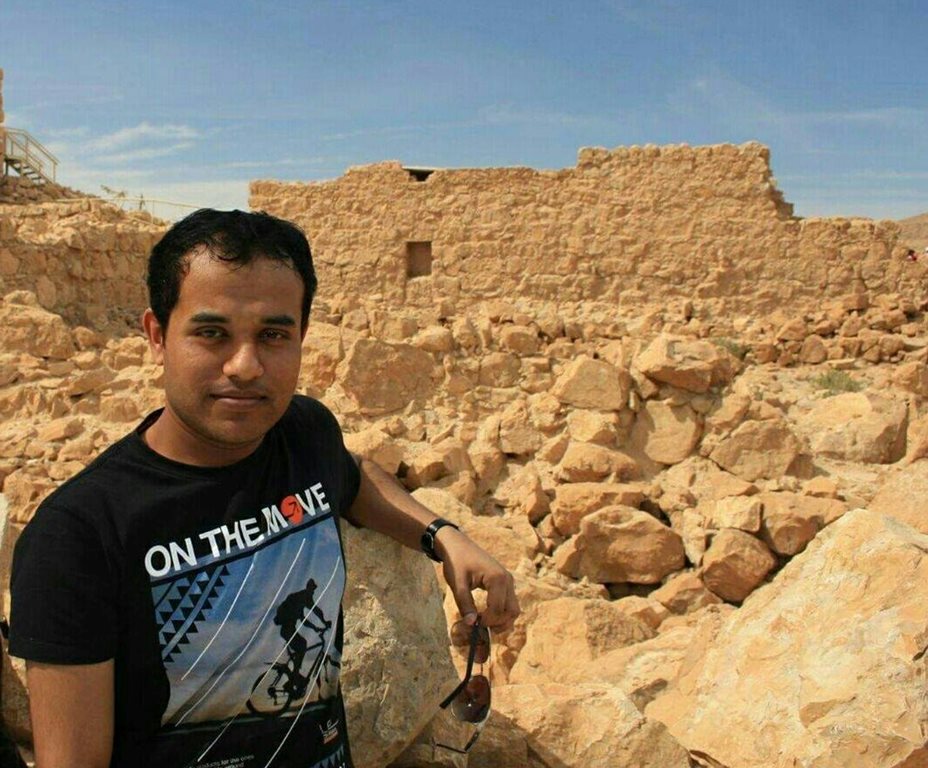
Arnab Ghosh at Isarael's historic Masada rock plateau

Arnab Ghosh at Isarael’s historic Masada rock plateau

Fascinated with maths

My interest in science started with a fascination for mathematics, a subject I loved most in school. My first mentor Bikas Bhadra fanned this interest further. Long after becoming a chemist, I enjoy the maths stories he tells me till date, a recent one being that of Archimedes’ and his classic method of evaluating the mathematical constant π. I opted for chemistry in undergrads but the interest in maths steered me into theoretical chemistry.

I joined an integrated PhD programme at the Indian Association for the Cultivation of Science (IACS), Kolkata under Professor Deb Shankar Ray, who gave me full freedom to try out new ideas. This resulted in some interesting observations, the most important being the recent proposition of a new kind of condensation for fermions, namely, the Born-Kothari condensation (BKC). We named it after the seminal works of eminent Indian physicist D. S. Kothari and German physicist Max Born — a work that was dormant since 1943. This is reminiscent of the more familiar Bose-Einstein condensation (BEC) for bosons named after Albert Einstein and Satyendra Nath Bose.

I wanted to expand my scientific horizon and so do a postdoc in a different field altogether. After the PhD , I started looking for a long-term postdoctoral position that would allow me sufficient time to learn the new subject. Weizmann Institute of Science (WIS), Israel offered me a rare three-year postdoctoral fellowship. I took the opportunity.

Dabbling in quantum thermodynamics

This field has attracted considerable attention in recent times, both in theory and in experiments. While thermodynamics was developed as a theory that limits possible macroscopic processes, quantum mechanics describes mainly microscopic systems. Thus it was unclear earlier why these two disciplines should be related. Richard Feynman envisioned ‘‘tiny machines’’working at the single-atom level in his seminal speech ‘‘There is plenty of room at the bottom’’ in 1959. His vision is now on the verge of realization, thanks to cutting-edge quantum technologies. Yet, these technologies, while entreating quantum mechanics, still rely on power-supply and cooling that are governed by 19th century thermodynamics. It is therefore important to examine the conceptual compatibility between these two disciplines. Despite considerable attempts over last few decades, their concordance is still an open fundamental issue.

The project we are currently pursuing under Professor Gershon Kurizki of the Department of Chemical Physics involves such crucial bearing on the validity of the conventional thermodynamic laws and the performance bounds of heat machines in the quantum domain.

Cosy team, Mediterranean bliss & costly weekend trips

My lab has is made of a small group of three — two from Kolkata, India and one from Austria. It is nice to have people from different cultures and ideological backgrounds under the same roof, makes for interesting conversations. An abundance of Indian postdocs in every university of Israel is an additional plus point.

The best asset of Israel is its captivating Mediterranean weather. Israelis are generally very hard working, helpful and cooperative. They love India and Indian people. They travel to India a lot. Indian festivals are gradually becoming popular in Israel. This year we had full-blown Holi celebrations organised in the WIS campus.

Language might have been a hindrance if there weren’t so many Indians in Israel to help newcomers make a smooth transition. Indians naturally gel into the Israeli work culture, easily find Indian groceries and can speak in Hindi with many Indian-Israeli Jews. An Israeli plumber once came in to fix a water problem in the apartment I share with an Indian friend. He inquired if we were Indian and when we said yes, he broke into a popular Bollywood number: “I am a disco dancer”! We realised that Bollywood is a big brand ambassador of Indian culture outside India.

In Israel, Friday and Saturday are holidays when you have limited access to public transport. Though taxi services are available during the weekend, they are expensive. So it’s hard for us to plan a long distance outing after a busy week. Most people own cars, so they don’t face such problems. Our only saving grace are the trips organized by the institute for international postdocs. This leaves us with limited choice.

Tips for Indian students looking at Israel for postdoc

Having spent time in the US and in Israel, I would say the US is more formal and professional. Israel gives you a delightfully satisfying balance between work and personal life. So, if you have decided to come to Israel, don’t hesitate.

There are several ways to apply for postdoctoral positions in Israeli Universities:

  1. Finding position online and apply for it. Here is one such link: https://www.academy.ac.il/Ads/?nodeId=940 . Alternatively, keep eye on the respective websites of the Universities. All nine Universities of Israel are world class.
  2. Applying through different fellowship programmes. Special fellowships like VATAT support Indian and Chinese postdocs to do research in Israeli Universities. Here is one such link to apply for these: https://www.weizmann.ac.il/feinberg/fellowship-aid/postdoc-fellowship-opportunities
  3. Directly contacting the faculty member you would like to join.

On coming back home

I do miss my own people, my family, playing with my little twin nieces, mom’s delicious dishes. I miss my native village Alampur, where I spent my childhood. I miss Diwali and Durga Puja festivities with my dear ones.

I came abroad only to get a better scientific exposure and experience. I would like to come back to India at the first opportunity. In a couple of years, I will start applying for positions back home.

Nature India Annual Volume 2016 is out

Our much awaited collection of the year — the Nature India Annual Volume 2016 — is out this week.

In the year gone by (2016), India witnessed events that would go down in the country’s science history. The Indian Space Research Organisation (ISRO) launched 20 satellites on board one single vehicle, a warm-up that was only bettered five times over into a record breaking 104-satellite launch in early 2017.

India’s low-cost space-faring brilliance, bolstering her sense of self-sufficiency, has attracted global attention. It has come with caveats though — the European Union (EU) recognises that with such a mature space programme (and big strides in other areas of scientific research), India can no longer be bracketed together with ‘developing countries’. The EU’s funds for Indian researchers have, therefore, shrunk to a trickle with the premise that India is
now capable of pumping in more funds for collaborative projects with the EU.

This annual volume of Nature India takes a look at the changing landscape of science and research funding in India with a series of articles.

The discovery of gravitational waves marked a high point in theoretical physics last year. It sent ripples of joy for India, which is now all set to implement a multi-institutional Rs 1200 crore astronomy project that will see one advanced LIGO detector from Hanford in Washington being shifted to a site in India. There’s a flurry of activity in India around this international project. We capture that excitement in this issue. Alongside this, India’s leading participation in making the world’s largest radio telescope, the Square Kilometre Array (SKA), in the remote Australian outback makes it to our cover.

In another investigation, we look at the mushrooming of genomic service centres in India, the lack of regulation in the country to cope with the new wave and how even now most genetic conditions remain undiagnosed at birth.

We hop on to the biodiverse Western Ghats of India to report on an ‘evolutionary museum’ of bush frogs, a forest virus that resurfaced after a decade to kill over 120 people, and to inspect why the rice genome is under threat in this unique rice growing valley.

For researchers looking to ward off work blues, a couple of articles offer practical advice on how to overcome research rut and how to make most of conferences.

Our annual volumes strive to be an important addition to the science calendar of India — a must have for anyone interested in keeping abreast with the research highlights of the year, newsmakers, trends in R&D, careers and policy issues. These annual chronicles of the “contemporary history of science in India” are put together by a group of editors and eminent scientists, who handpick the contents from our coverage through the year.

Affiliations and research interests of some people might have changed after publication of these articles. We mention the publication date on top of each article so that they make sense.