SciArt scribbles: Science, history and comics

Many scientists embrace the artistic medium to infuse new ideas into their scientific works. With science-art collaborations, both artists and scientists challenge their ways of thinking as well as the process of artistic and scientific inquiry. Can art hold a mirror to science? Can it help frame and answer uncomfortable questions about science: its practice and its impact on society? Do artistic practices inform science? In short, does art aid evidence?

Nature India’s blog series ‘SciArt Scribbles’ will try to answer some of these questions through the works of some brilliant Indian scientists and artists working at this novel intersection that offers limitless possibilities. You can follow this online conversation with #SciArtscribbles.

Argha Manna, a cancer researcher-turned-science comics artist, tells us how he blended his passion for science, history and comics to carve a unique genre for himself.
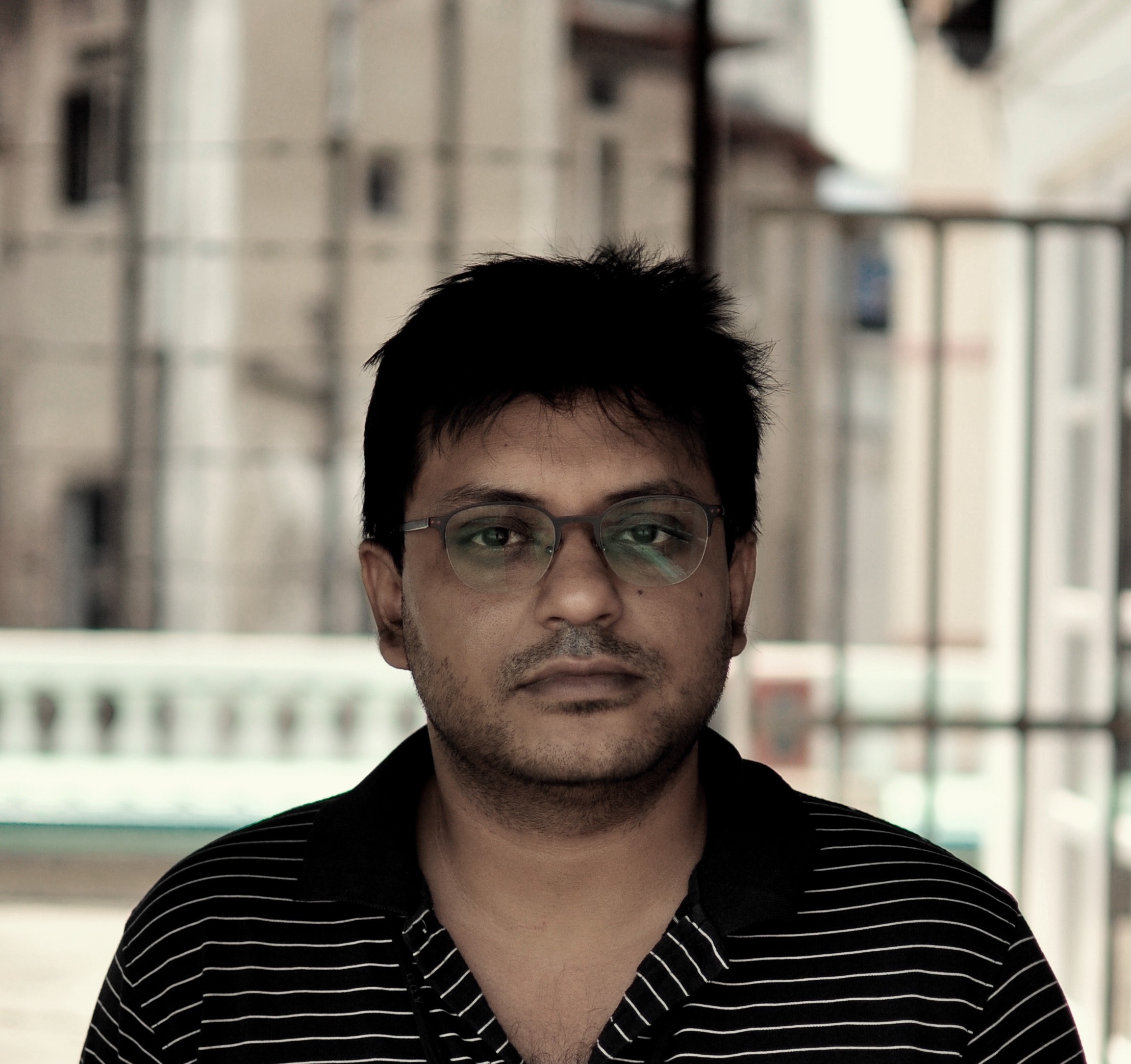
Argha Manna

Seven years ago, as a PhD student in cancer biology at Bose Institute in Kolkata, I was sitting at my desk reading a research paper. The paper was about how ‘cortical actin remodeling can influence spatio-temporal organization of cell surface receptors’. Although it was not directly related to my research, I wanted to read it as one of my friends was on the author list. While the paper featured a beautiful graphical abstract and excellent schematics, I was still having trouble understanding what it was about. The moment I started to think in visual sequences, however, the story opened up for me. Unknowingly, I had created a comic narrative in my mind on the cellular events, and the paper made sense.

Making science accessible through comics is not a new concept. According to Will Eisner, considered the father of the graphic novel, and eminent comics artist and scholar, Scott McCloud, comics is a sequential art form. The practice of using sequential art to explain scientific findings was common during the early days of modern science — Galileo made a series of sunspot drawings from his own observations. After the advent of time-lapse imaging and video-micrography, sequential art has been restricted to either the discussion section of academic journals or in science-themed comic books.

Visual metaphors to tell science stories

My first encounter with such books was Larry Gonick’s The Cartoon History of the Universe series. I was amazed by the use of visual metaphors. Later, I came across several books that used comics to communicate science such as Jay Hosler’s Optical Allusions, Neurocomic by Matteo Farinella and Hana Ros, and Mysteries of the Quantum Universe by Thibault Damour and Mathieu Burniat. I also found comics in academic journals like Science (General Relativity by Adrian Cho, Science, 2015). In all of these comics, metaphors were used to explain complicated scientific concepts in an accessible manner. Jorge Cham’s PhD comics and Randal Munroe’s xkcd are great examples of this.

Reading Nick Sousanis and Richard Monastersky’s The fragile framework (Nature, 2015) was a kind of ‘aha moment’ for me. I had found my calling – communicating science through comics. I dropped out of my PhD and joined a local newspaper in culturally-rich Kolkata, the West Bengal capital. In the first few months I created a series of articles for school children on the advent of modern science. I was fascinated by the history of science, so I started researching Robert Hooke and the early days of the Royal Society. A few months later I started to convert the articles into a comic form — and my first newspaper comic was born (Image 1). It has been appearing every week in ‘The Telegraph in School’ supplement.

Image 1: A page from the comics ‘Welcome to the Hookes’ lab’

I didn’t want to restrict myself to just explaining scientific concepts, to make science truly come alive I also included elements such as socio-political context, the people behind the science, technological development, social network of scientists and micro-histories.

Such an approach is essential in communicating the full flavour of the history of science, according to Harvard-based physicist and historian Peter Galison (Ten problems in History and Philosophy of Science, ISIS, 2008). History of science practitioners — as historians, scientists, librarians, cataloguists and archivists — collect these elements in the form of oral histories, newspaper clippings, artwork, diaries and memoirs, photographs and podcasts.  A complete story can then be formed by adding these elements together — and may be more easily digested as a comic, rather than as a long form text.

As popular history of science stories tend to focus on Europe and North America, I created a free-to-access blog ‘Drawing History of Science‘ to tell stories about Indian science through illustration. At the beginning it was a lone venture. Then Sci-Illustrate, a Munich-based group, came forward as a collaborator in my journey. I found their goal – to revive the stories of women scientists from India – important. Together we have been retelling stories of Indian Women in Science (Image 2 and 3).

Image 2: Rajeswari Chatterjee (1922-2010), former professor and chairperson of the department of electro-communication engineering at the Indian Institute of Science, Bangalore. This and the following artwork were created in collaboration with the Sci-Illustrate group in their ‘Indian Women in Science’ series.


Image 3: Clockwise from top left: JANAKI AMMAL, Indian botanist and cytogeneticist, credited with putting sweetness in Indian Sugarcane varieties; ASIMA CHATTERJEE, one of the first women in India to earn a doctorate in science; IRAWATI KARVE, India’s first woman anthropologist; BIBHA CHOWDHURY, India’s first female particle physicist.

Later, ClubSciWri, the science communication platform of ‘PhD Career Support Group’ or STEMPeersTM approached me to create more comics about the history of science. In collaboration with them, I am telling stories from a global perspective, through comics and art (Image 5).

Image 5: A page from the essay ‘Waging war on the microbes’. The text of the essay was originally written by Ananya Sen for Club Sci Wri.

My future plan is to narrate natural history research in colonial India through comics and interactive art. Right now I am cataloguing the artwork (drawings, engravings etc) published in Asiatic Society journals and other media. I wish to redraw the old colonial artworks, to make them more interactive and then add the context and other elements in the form of sequential illustrations. It is still a lonely walk but I feel the future is bright.

[Argha Manna can be contacted at argha.manna@gmail.com.]

Suggested reading:

SciArt scribbles: Crowdsourcing oral history of India’s science 

SciArt scribbles:CRISPR and the smell of rain

SciArt scribbles: Bringing art and science together for greater good

SciArt scribbles: The mellifluous gene editor

SciArt scribbles: The molecule painter

SciArt scribbles: Coupling creation and analysis with collages

SciArt scribbles: Technology to aid dance

SciArt scribbles: Music to tackle PhD blues
SciArt scribbles: Playing science out

Artists on science: scientists on art

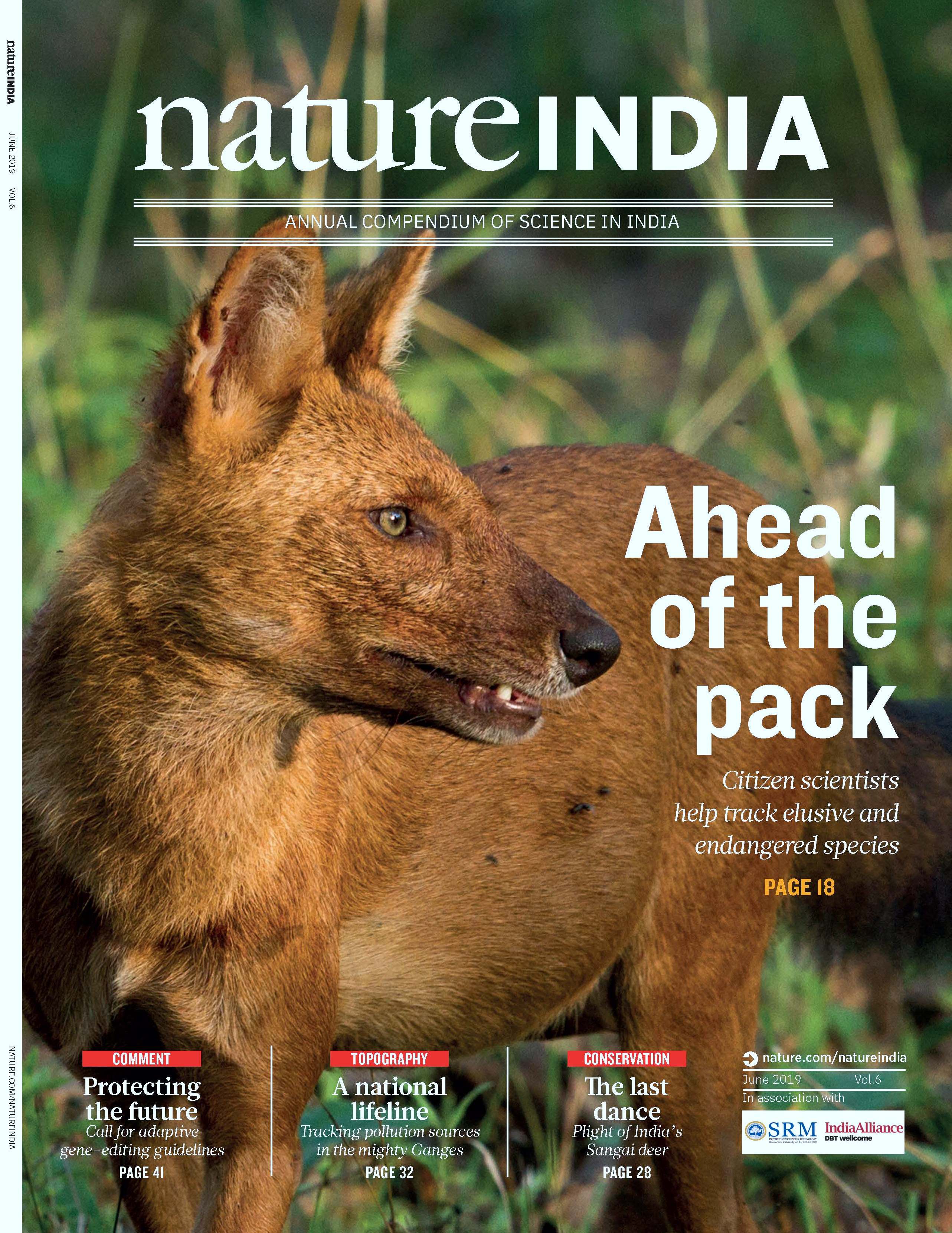
Nature India 2018 annual volume is out

The Nature India annual volume 2018 is out now.

The past couple of years have seen some interesting trends in India’s science. There has been a surge in the number of innovation-driven start-ups, and in the use of artificial intelligence in fields as diverse as health and aerospace. What has been most noteworthy, however, is the social aspect of science. More than ever before, the scientific community is standing up against pseudoscience, be it by contesting an unsubstantiated remark by a politician, calling out scientific misconduct, or helping weed out fake and predatory journals published from India.

Another positive social drift slowly gaining ground is the citizen science movement. In this annual issue, we focus attention on the tangible results of some crowd-sourced projects. For a country with more than 1.3 billion people, citizen science may turn out to be an effective tool to connect science with people, appraising them of the rigours of gathering and verifying evidence, and in turn, building a scientific mindset. Used intelligently, citizen science could help find answers to some pressing sustainable development challenges faced by India and much of south Asia.

The other big story that we looked at in 2018 was how Indian scientists have quickly embraced the use of CRISPR Cas-9, the gene splicing tool that became the reason for celebrations and controversies around the world. We report on some key Indian scientific missions that are editing genes related to diseases, especially blood anomalies, unique to the developing world.

On the other side of the disease spectrum, some new red flags were waved in the form of the first report of artemisinin-resistant malaria in India and the ‘good’ microbe bifidobacteria harbouring genes that make it resistant to anti-TB drugs.
Our 2018 photo contest took a comprehensive look at vector-borne diseases. The winning pictures that present a stinging story are featured in the photo section.

Climate is a burning issue for south Asia, quite literally. We analyze how the urban poor will suffer the most in an imminent climate crisis facing most big cities of south Asia. In a series of investigations, we reported how rice farming is impacting the climate more than ever before, why cloning hybrid seeds could benefit rice farmers, how increased dependence on nitrogen fertilizers has made India a nitrogen emission hotspot, and why crop stubble burning is national menace.

A lot has been happening around India’s holy river Ganga (also known as Ganges). Scientists are putting together a 3D map of the mighty river clogged with waste, and its fertile basin, where groundwater is depleting at an alarming rate. Part of our coverage is dedicated to the scientific solutions to these huge challenges faced by India’s largest river.

Nature India annual volumes curate research highlights, news, features, commentaries and opinion pieces published through the year. They are a thoughtful selection designed to give our readers an accessible reference to the latest in India’s science.

As always, we welcome your feedback.

You will find more on our our archival annual issues here: 201720152014 and 2007-2013.  And some more about the content and subscription of these issues here.

SciArt scribbles: Crowdsourcing oral history of India’s science

Many scientists embrace the artistic medium to infuse new ideas into their scientific works. With science-art collaborations, both artists and scientists challenge their ways of thinking as well as the process of artistic and scientific inquiry. Can art hold a mirror to science? Can it help frame and answer uncomfortable questions about science: its practice and its impact on society? Do artistic practices inform science? In short, does art aid evidence?

Nature India’s blog series ‘SciArt Scribbles’ will try to answer some of these questions through the works of some brilliant Indian scientists and artists working at this novel intersection that offers limitless possibilities. You can follow this online conversation with #SciArtscribbles.

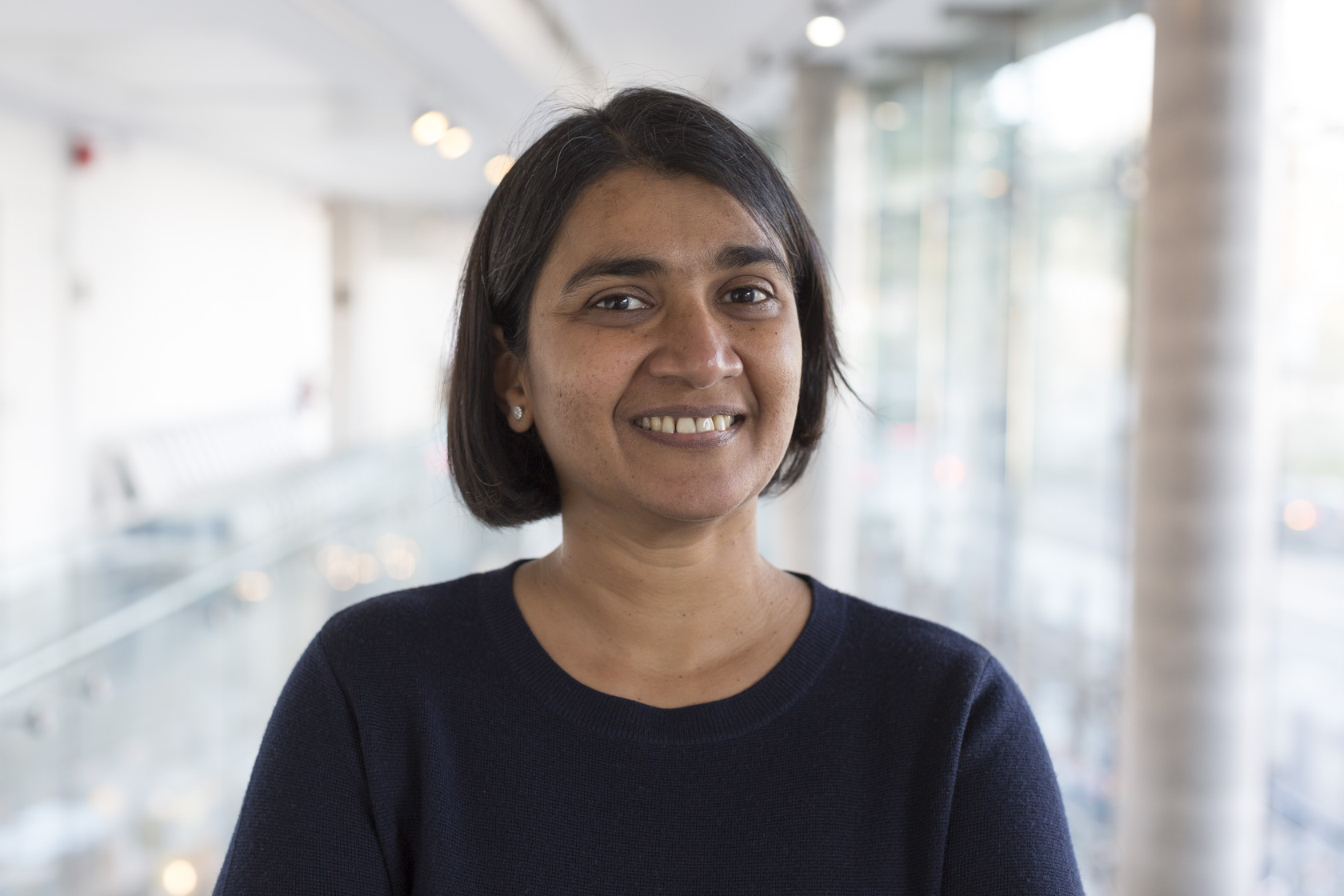
Are memories of the generation that transformed India’s science in the 20th century fast fading away? Do India’s contributions get lost in the predominantly western storytelling of science? Jahnavi Phalkey, historian of science and the founding director of Science Gallery Bengaluru, says a new public repository is all set to correct this by documenting the oral history of India’s science.

Jahnavi Phalkey{credit}Science Gallery Bengaluru{/credit}

The concept of a well-documented ‘intergenerational conversation’ – where one generation passes on their expertise, anecdotes and experiences to the next – is grossly missing in India’s science. While transformative ideas revolutionised the country’s science and engineering in the 20th century, not many in the present generation of scientists might recollect the people behind those sparks.

To preserve these nuggets from history, my team and I at the Science Gallery Bengaluru are putting together a public archive of India’s science. Called Re:Collect, this crowd-sourced online repository will house recordings of conversations with free India’s first generation of scientists, engineers, and laboratory technicians about their life and times, giving us a peek into an era gone by. In short, we will document memories of science in action.

The repository is India’s first attempt to draw on the public’s curiosity, especially of the young, to unearth, document, and appreciate India’s rich science and technology history. Our inspiration came from two highly successful volunteer driven public digital archives – P Sainath’s People’s Archive of Rural India (PARI) and Guneeta Singh Bhalla’s 1947 Partition Archive.

What Sainath  says about the need for a people’s archive is equally true for the history of science in India, “Without any systematic record, visual or oral, to educate us – let alone motivate us – to save this incredible diversity, we are losing worlds and voices … of which future generations will know little or nothing.”

We will plug into a network of institutional archives willing to accept documents and objects we discover. Our first institutional chapter will be hosted at the Archives and Publication Cell, Indian Institute of Science (IISc), shortly to be followed by another chapter at the Indian Institute of Technology, Madras (IITM).

Positioning India in the global science narrative

The story of science is mostly told as a story of Europe and North America. Stories and contributions from India and other parts of the world are lost in this narrative. We thought about how we might be able to change that skew.

While it was heartening to see new institutional archives opening their wares up, we found very few oral histories and no significant collection of personal papers of scientists and engineers. Such material is essential to write the history of scientific practice, credible biographies and thought-provoking prosopographies such as Gary Wersky’s The Visible College: The Collective Biography of British Scientific Socialists of the 1930s (1978), Marwa Elshakry’s Reading Darwin in Arabic, 1850-1930 (2013) and Michael Boulter’s more recent Bloomsbury Scientists: Science and Art in the Wake of Darwin (2017).

Not too long ago, at the Science Museum London, I worked on what was dubbed as a blockbuster exhibition on India for which I was looking for interesting objects and stories behind them. Given my research in history of science, I knew it would be difficult, though I did not then appreciate just how much! King’s College London, where I was employed at the time, came to the rescue with seed funding for research on the exhibition and this is how Re:Collect was born. 

The process of archiving

Through the initial seed fund from King’s, I created a list of over 1,000 senior scientists and engineers born before India’s Independence in 1947, organised by their current city of domicile. Based on our learning from comparable projects, science communicator Shaun O’Boyle, designer Madhushree Kamak and I developed handbooks to generate material for the project. We have an established protocol for audio and audio-visual recording of interviews in laboratories, for creating their audio-summaries and transcripts, and for documenting objects and instruments of historical interest.

Re:Collect India will be driven by the young and not-so-young volunteers  ̶  they could be students, scientists, historians, artists or anyone interested in the history of science and technology in India. These volunteers will interview the first generation of free India’s scientists, engineers, and technicians preferably in their laboratories or field-site. They may even video record the interview as long as it adheres to the standards specified by the protocol. We want to encourage the need to listen to and capture the stories that these interviewees want to tell.

Field experiments are tricky and often throw up hilarious moments. Re:Collect will capture the joy of doing experimental research. In this photo, meteorologist Anna Mani works with a colleague on a radiosonde, a balloon-borne weather-measuring equipment.{credit}World Meteorological Organization{/credit}

The conversations will essentially capture the enthusiasm, challenges, setback, struggles of teaching, conducting research, establishing disciplines, institutions, and building equipment in India after Independence. We will encourage the documentation of objects in teaching and research. The resulting conversations about scientific practice will become an oral history archive, and also generate an object inventory.

India’s voices in science

As India comes under the spotlight in what promises to be the Asian century, general recognition of India’s struggles and accomplishments in science remains woefully inadequate both at home and abroad. This global lack of awareness is untenable especially when India is being seen as an engineering powerhouse with huge potential in scientific research.

Our archive, therefore, will have three strands – a digital public archive of people in science, an inventory of historical objects in teaching and research, and an open access exhibition website with stories of science in action. In due course, we would like to add full text official and credible reports related to science and engineering in India. As a bonus, we hope the process will help generate donations of personal papers and objects to institutional archives.

The Re:Collect experience and our online orientation workshops will help volunteers develop useful new skills. Our citizen archivists may want to become storytellers and vice versa. We would, of course, respect the interviewees’ intellectual ownership of their story, and always acknowledge the volunteer’s contributions.

Re.Collect will capture the collective energy and camaraderie that builds and pushes the pursuit of science. Rajeshvari Chatterjee (centre), the first woman engineer from Indian Institute of Science, works with colleagues at the Department of Electrical Communication Engineering.) {credit}APC, IISc{/credit}

Institutions of science and their archives, especially in India, are seldom accessible to the layperson. Moreover, written documents fail to capture the excitement, the tragedy and the occasional triumph of everyday science. Video and spoken-word recordings of conversations, accompanying historical and contemporary photographs, and supporting documents are, therefore, more appropriate as public resources.

Besides the collaborations with IISc and IITM, we are exploring partnerships with universities in India and abroad to host the website and the digital repository. We will also be actively seeking collaborations with people who can use materials from the repository for research, writing, filmmaking, and pedagogy.

As people across generations meet and talk to each other, the young will meet the experienced. The stories shared will shed light on institution building and leadership in science, on the trials and travails of doing experimental research in India  ̶  all immensely useful learning for an early career scientist or an engineer. Moreover, the material itself will lay the foundations for future history writing; and more generally, the project will help create a historical sensibility around science in India.

[Jahnavi Phalkey is the author of Atomic State: Big Science in Twentieth Century India, and director-producer of the film Cyclotron.]

Suggested reading:

SciArt scribbles:CRISPR and the smell of rain

SciArt scribbles: Bringing art and science together for greater good

SciArt scribbles: The mellifluous gene editor

SciArt scribbles: The molecule painter

SciArt scribbles: Coupling creation and analysis with collages

SciArt scribbles: Technology to aid dance

SciArt scribbles: Music to tackle PhD blues
SciArt scribbles: Playing science out

Artists on science: scientists on art