How to beat loneliness in a research career

Ramya Nandakumar, an assistant professor in the Department of Biomedicine at Aarhus University in Denmark, says research stints in a foreign land can get lonely. It’s prudent to invest in good friendships to beat the depressingly long winters, she says.
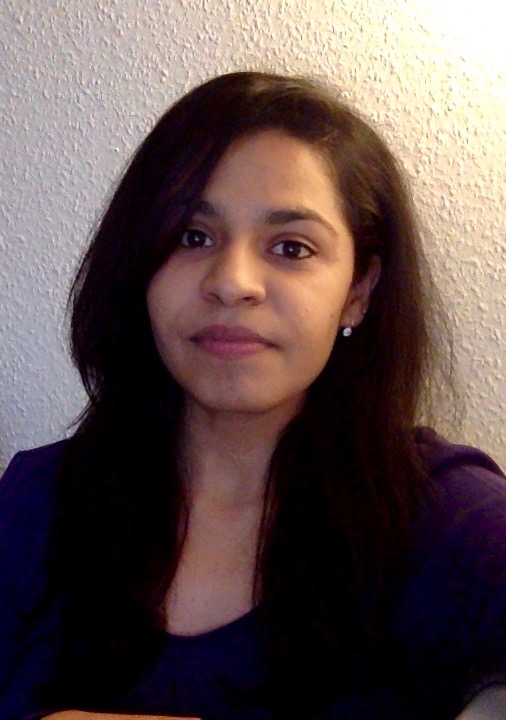
Ramya Nandakumar

Inspired by Fleming

I always wanted to become a scientist. A picture in my school textbook of  of Alexander Fleming, nestled in a comfortable corner of his laboratory, looking up into his staph plate appealed deeply to an introvert, curious young me.

Years later, this fascination took me to the All India Institute of Medical Sciences, New Delhi where I worked on a Masters project at the department of transplant immunology. Later, I was offered a three-month internship in Germany as part of a collaborative Indo-German project. When the calls for PhD opened, I applied and continued my research in the same lab. PhD was an extremely steep learning curve, after which I took up a postdoc at the University of Aarhus, Denmark.

Postdoc is the time to define your career trajectory

To make the best of a postdoc stint, it is advisable to think of it as a ‘stepping stone’ to your career of choice. Having a plan can help you leverage your postdoc to establish a career within or outside of academia. Easier said than done, though a broad understanding of where one intends to go after postdoc can enable supervisors to put you on a trajectory, if they are so inclined.

A good rule of thumb when investing in a research career is to look for a well-funded lab with an investigator preferably with students of several nationalities.

In my current lab I have colleagues from Spain, Germany, China, Iran, Greece and England. While some benefits of multiculturalism are obvious, in a divided world, it is reassuring to see that scientific research has a non-discriminatory way of accepting everyone regardless of where they are from.

It is also worth mentioning that when applying for positions, the cover letter is your best friend. Use it wisely to describe yourself and highlight why you have written to that specific Principal Investigator (PI).  Make it personal if applicable (…I heard you speak at the conference at …., I was inspired by the article you recently published.). This might help you stand out from the many applications the PI receives, especially from India and China.

During my research career, I have been challenged plenty, mostly by my own preconceived notions. Stepping out of one’s culture is a great way of questioning one’s very conditioning.

Tackling winter blues

Denmark is extremely expensive but as a researcher in a university you pay less tax (~32%) than the average Dane. With immigration rules getting tougher, it has become increasingly difficult to bring dependents to Denmark (except spouses and children under 18). Parents and family can get visitor visas but they don’t normally qualify as dependents. This could be a problem if you are the sole caregiver to ageing family back home.

Life in Denmark is lonely, a feeling compounded by the dark and depressingly long and rainy winters in this part of Europe. Seasonal affective disorder, commonly known as ‘winter blues’ is quite common around here.  Good bright white light and a dose of Vitamin D can do their bit, but investing in good friendships also helps immensely. Winter blues for the trailing spouse is a reality one must consider. I came to Denmark alone and did not know anyone here. Therefore, a room in an international dormitory came as a blessing.  The shared kitchen was a melting pot of a wide array of cuisines, strong political discourses and diverse viewpoints. This is where I made most of friends I have today, friends from all over the world I share interests with despite our very obvious differences.

Take rejections in your stride

What wasn’t there in that picture of Fleming was a folder thick with rejections: failed experiments, grant rejections, soul-crushing article reviews, and numerous applications that are unfortunately symbolic of today’s research. Although Fleming looked content in his corner, research today is hardly independently run from the confines of a room. The emphasis on networking, being social and collaborating with researchers from within and outside of one’s own discipline. A successful scientist today, is as much a scientist in the typical sense, as he is a collaborator, entrepreneur and writer. These skills are essential, not just desirable any more.

[Ramya Nandakumar can be reached at ramya.nandakumar@biomed.au.dk]

Becoming a parent in graduate school shaped my approach to work–life balance

Karishma Kaushikan assistant professor and Ramalingaswami Re-entry Fellow at the Institute of Bioinformatics and Biotechnology, University of Pune, India thinks that learning to share details of her personal life at work has made her a better academic mentor.

The Kaushik family at the Wooden Shoe Tulip Festival in Woodburn, Oregon.{credit}Bryan Rupp Photography{/credit}

Out of breath and running late, I entered the room to discuss my latest research updates with faculty members and graduate-school colleagues. Flustered, embarrassed and more than seven months pregnant, I proceeded with the important presentation, not mentioning the false contractions I had woken up to that morning.

It was July 2011, and I was just a year into my PhD programme at the University of Texas at Austin, after graduating with a medical degree in India. At the time, I drew strict lines between my professional and personal lives. This stemmed from the fear of being perceived as ‘not serious about science’ or ‘having a life outside the laboratory’ — something I felt was part of academic culture.

However, choosing to become a parent in graduate school meant that my academic and personal lives could no longer be completely separate. Those rigid divisions between ‘work’ and ‘non-work’ weren’t as solid as they once were.

After my child was born two months later, I continued being discrete about my ‘non-work’ life, avoiding topics related to health concerns, child-care conflicts or personal upheavals.

This came from both self-imposed and institutional pressure to operate within a system that did not account for a ‘non-conventional’ graduate student, be it a young mother or an older candidate.

I defended a major research proposal a few weeks after childbirth, silently accepted curriculum plans that scheduled teaching at 8 a.m. and continued my very heavy workload of course requirements for the PhD programme.

This made an already difficult academic career phase even more challenging. I felt like I was struggling alone professionally, and I felt isolated as one of few new parents in graduate school. I rarely spoke about my child at work, and I hesitated to share insights into the happy moments of my life outside the lab — moments such as celebrating my son’s first birthday or summer plans for a family road trip.

My approach to being open about work–life balance changed through the years of my PhD. During this time, I successfully navigated several crucial milestones in my programme and my research, both of which I had previously struggled with in the early years of my PhD.

Every small accomplishment left me feeling more sure of myself as a scientist, and I gained confidence in my ability to effectively navigate work–life balance.

I realized that my previous approach of putting work above all else, or having no time for life, was farcical, superficial and dishonest to myself and those around me. It disturbed me to think that I was perpetuating the stereotype that to be committed, scientists should have no life outside of science, when in reality I was attempting to do almost the opposite: to raise, in my son, an entire life outside of science.

I resolved to share and openly prioritize parts of my life I had previously kept hidden, including both the responsibilities I shouldered outside of work and the joys of parenthood. I formally requested that my institution reschedule my teaching to a later hour, making it clear that early-morning classes were difficult for a young mother.

I politely excused myself when meetings stretched into the late evening, saying I needed to relieve the nanny, and would catch up later. Over lunch conversations with colleagues, I shared anecdotes of my son’s growth milestones and my plans to host a dinosaur-themed birthday party.

Openly prioritizing and planning my work and life around each other greatly enhanced my competency and enthusiasm at work. My teaching reviews — based on student feedback — went from average to exemplary, The quality and pace of my research output strengthened, and accolades and recognitions for research, teaching and science outreach started coming my way.

My openness also improved my professional relationships and my understanding of the scientific community. Because I was open, others were more open with me, too. While my concerns centred around childcare and managing dual career paths with my spouse (an engineer in the private sector), I discovered that my colleagues had their own hurdles to jump: mental health, immigration concerns or financial constraints.

Today, I am very open with researchers and students in my group about the day-to-day juggling of my personal and professional roles, and I encourage them to be the same. I believe that this fosters honest and respectful professional relationships and a constructive work atmosphere in which we do not hesitate to share the need to manage personal priorities. Not only does this make us more humane, empathetic and approachable individuals, but it also, in a small but powerful way, makes academic science a more inclusive and considerate place.

[This article first appeared in Nature.]