Away from home: Maintaining life’s equilibrium

Every Wednesday, our ‘Away from home’ blog series features one Indian postdoc working in a foreign lab recounting his/her experience of working there, the triumphs and challenges, the cultural differences, what they miss about India, as well as some top tips for postdocs headed abroad. You can join in the online conversation using the #postdochat hashtag.

Our last blogger this year is Niti Kumar, a PhD from the Institute of Genomics and Integrative Biology (IGIB), New Delhi, currently a postdoc at  Max Planck Institute of Biochemistry, Munich, Germany. Niti says her chemistry teacher propelled her into science with some funny correlations she made between chemistry and life! Read on.

We’ll post the next blog in this series in the New Year 2013. Till then, enjoy the holidays and ‘Away from home’!

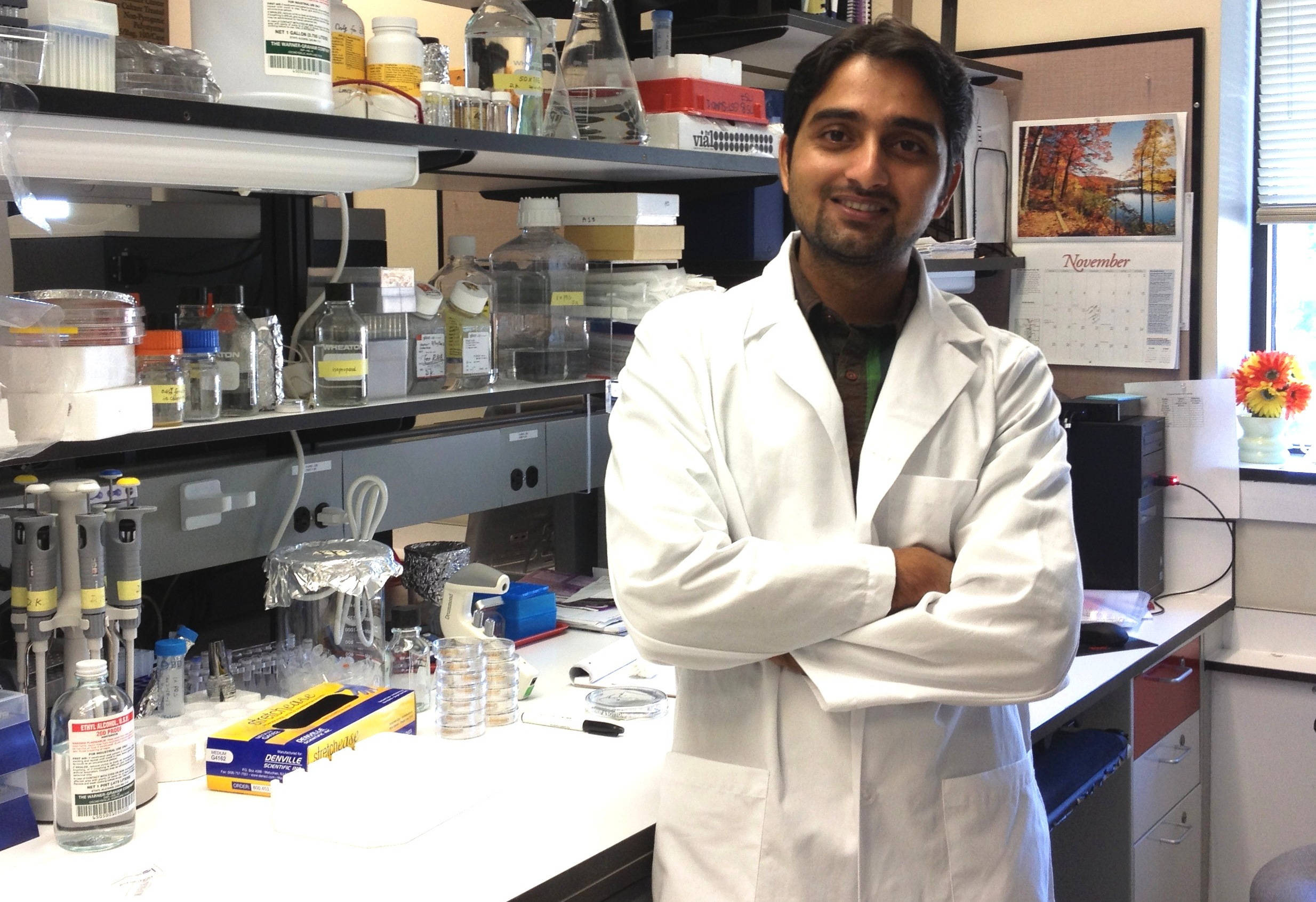
Niti Kumar strikes an equilibrium in life through the principles of thermodynamics!

When friend doesn’t pay attention, it’s an exothermic reaction!

During early days in school, science was just another subject for me to pass and to be promoted to the next grade. It was in Xth grade that I started to develop interest in science. The credit goes to my chemistry teacher Mrs. Indu Das, who had a different style of teaching. She drew analogies between chemical reactions and our daily lives. That made science interesting. She would say,”When you are caught doing something wrong, there is an ‘endothermic reaction’. When your friend does not pay attention, it results in an ‘exothermic reaction’! To have equilibrium in life, learn thermodynamics.”

Polypeptide peeking

I did my PhD. work at the Institute of Genomics and Integrative Biology (IGIB), New Delhi. It involved nucleic acids biophysics. For my postdoc, I wanted to make a transition into the field of proteins. I joined the lab of Prof. Ulrich Hartl at  Max Planck Institute of Biochemistry, Munich, Germany. He has made seminal contribution in the field of protein folding and the lab works in diverse areas. Further, I knew that Max Planck Institutes are never hit by recession!

I am an EMBO post-doctoral fellow at Department of Cellular Biochemistry. As of now, I use biophysical and biochemical tools to investigate the conformational state of polypeptide while it is still attached to the ribosome. This work aims to understand the co-translational folding of polypeptide on the ribosome.

Enjoying work and life

My lab is quite international. We learn to communicate and respect other nationalities. We get a chance to eat and learn cuisines from different nations. Further, the scientific and non-scientific division is very organized and works quite efficiently. Most importantly, people enjoy work and life.

Though MPI are lavishly funded, it might become a disadvantage sometimes as experiments become heavily dependent on commercial kits. We ignore the possibility of simple, elegant and cost-effective experiments on certain times.

Lost but not gone

The transition from my institute in India to Munich was not very smooth. Working in a very big lab and changing my research field initially made me feel completely lost. Outside the lab, not knowing language put me in tight spots several times. For example, I was caught by a ticket collector for travelling on a wrong ticket. I think, after initial turbulence, we adapt and learn to handle situations in a smart way.

Top tips for postdoc aspirants

As a post-doc, you have a different role to play. Therefore, it is very important that students do some homework about the lab, institute and country before venturing out.

So,

1. Check publications and number of people in the lab you wish to join (check how many Asians, Europeans, and Americans are there in the lab).

2. Be aware of differences in communication styles — it pays to be direct and to the point in western societies.

3. Take a basic language course for smoother integration in and outside the lab.

4. Come with an open mind to learn new things in science and life, and enjoy both. If you do not like the place, please move on.

Miss being carefree

I miss the sense of belonging and comfort which I received from family and friends while in India. Here, if something goes wrong, I need to fix it myself.

I do plan to come back to India sometime.

Our Away from home interactive map, pictured below and updated every Wednesday, is dotting up the US and Germany. Stay tuned as we add more Indian postdocs from around the world. Feel free to suggest names of postdocs from unusual countries we haven’t covered yet.

Away from home: Research not a job

Every Wednesday, our ‘Away from home’ blog series features one Indian postdoc working in a foreign lab recounting his/her experience of working there, the triumphs and challenges, the cultural differences, what they miss about India, as well as some top tips for postdocs headed abroad. You can join in the online conversation using the #postdochat hashtag.

This week’s postdoc blogger is Puja Arora, who after completing her Ph.D from National institute of immunology in New delhi, India is now at the Albert Einstein College of Medicine in New York. She tells us why the “best thing about doing research as a job is that it’s not a job”.

Pooja Arora (extreme left) at a 'cultural crossroads for food' event held in her lab.

Yogurt drew me to science

I grew up in a small village and my family had cows. I used to wonder how milk turns into yogurt and how it sometimes doesn’t. I imagined it were superheroes in the starter that my grandma used to add to milk and it was their superpower that transformed milk to yogurt.  In high school I understood that my imaginary superheroes were tiny bacteria invisible to the naked eye but seen with a microscope.  College solved the mystery of fermentation and I got hooked to studying the chemistry of life.

Great teachers

I went to National institute of immunology in New Delhi, India for my PhD studies and trained with Dr. Rajesh Gokhale, one of the most successful scientists in India today.  He taught me how exciting it is to work on seemingly intractable problems and solve them using innovative methods.  I learnt everything about doing science from him.  For my postdoc, I wanted to take a detour and decided to pursue immunology.  I joined Prof. Steven Porcelli at Albert Einstein College of Medicine, Bronx, NY and am working on the molecular control of glycolipid presentation.  The connecting link between my research work are the lipids — I studied their biosynthetic pathways for my graduate studies and am now studying their immunogenicity.

I just want to paraphrase my friend Shajo: “The best thing about doing research as a job is that its not a job”.  The best feature of my present lab is collegiality and the collaborative nature of my colleagues.  I am also fortunate enough to have all the independence I want in my research, the ability to walk into Steve’s office anytime and discuss my problems.

A smooth transition

The transition from India to my US lab was very smooth and I think the academic culture is pretty much the same everywhere.  Reagent wait times in the US are non-existent and there in no red tape to deal with for the routine orders — those were my major gripes during PhD.

Most of the acclimatization is needed when you step outside into the bounds of the unknown metropolis called NYC.  The weather is really cold in winter and you have to dress in layers. I would recommend buying your winter stuff here, the Indian outerwear is not warm enough for the east coast cold.

I had my moments of cross cultural anxiety though. My first thanksgiving was a shock, I was assigned to carving the big 24 pound turkey my Italian landlady had cooked. My refusal to eat meat induced my landlady to offer me shrimp pasta — “‘coz it ain’t no meat.”

Miss my family

I miss my family, especially my mom. I visit them annually but its just too little and those family times are over too soon.

Doing a postdoc abroad gives you a good oppurtunity to broaden your horizons and interact with people from different countries.  This transition can be very smooth if you are someone who enjoys change and is not scared of it.  For people who prefer to be surrounded by their families and friends, staying in India maybe an equally good option.

I would get back to India if I get a really good job offer.

You can see where the postdocs featured in this series are based in the interactive Away from home map (pictured below) updated every Wednesday.


Away from home: Of jalapenos & cognition

Every Wednesday, our ‘Away from home’ blog series features one Indian postdoc working in a foreign lab recounting his/her experience of working there, the triumphs and challenges, the culture factor, tips for Indian postdocs headed abroad and what he/she misses most about India. You can join in the online conversation using the #postdochat hashtag.

This week we have young medico Abhijit Das, a postdoctoral fellow at the Kessler Foundation, New Jersey, USA. Abhijit completed his  neurology residency at Sree Chitra Tirunal Institute for Medical Sciences and Technology (SCTIMST), Trivandrum, Kerala, India. He tells us about his tryst with blizzards, his coming to terms with the silent ‘j’ of jalapenos, and the excellent research environment in cognitive neurorehabilitation.

Abhijit Das (centre in purple shirt) with his Kessler Foundation group.{credit}Kessler Foundation{/credit}

I would have been a forest ranger, given half a chance

Getting into medicine was not entirely by my choice – given a chance I would have become a forest ranger!

However, after entering medical school I realised that there was still an undiscovered “final frontier” in the human brain. So, I decided to be a neurologist. During my neurology residency I experienced first-hand the catastrophic effects of neurological disabilities – for the person, for the family and or the society as a whole. I also realized that we know very little about how to repair a damaged brain. That is how I chose to research on brain plasticity and brain stimulation.

Neurorehabilitation is still a developing field – so it took me a bit of time to select a lab. The Kessler Foundation Research Center is a pioneer in cognitive neurorehabilitation and the labs are very well funded. Moreover, the fellowship I got has several innovative and distinctive features – like opportunities for cross-domain collaboration.

Brain-picking now

Now I work on cognitive fatigue — a condition characterized by an overwhelming sense of tiredness or feeling of exhaustion that interferes with usual activities. This fatigue is common to a lot of neurological disorders such as multiple sclerosis, traumatic brain injury, Parkinson’s disease and stroke. After more than 100 years of research, fatigue is still poorly understood and there is no effective therapy.

My plan is to convert our knowledge about a “brain network” underlying fatigue to a treatment protocol using non-invasive brain stimulation. My preliminary work was recently recognized by the National Institute on Disability and Rehabilitation Research (NIDRR), US — they chose me as a young investigator.

Love the US research ambience

And my fabulous fellow postdocs and mentors at Kessler Foundation. I like the enthusiasm, professionalism and high moral values of people around me. I also learnt how to network, which is very important in a changing field like neurorehabilitation. Being an avid traveler and photographer I also enjoy the very well maintained National Parks in USA.

Our group recently identified a “hidden epidemic” of neurologic disability unfolding in India [Das, A. et al. Neurology. 79, 2146-47 (2012)]. The epidemic is fueled by increases in traumatic brain injury (TBI), age-related dementia, and stroke. Together, these three account for more than 3.5 million new cases of disability each year.

That is 11,000 each day, or 7 people every minute who acquire a neurologic disability in India. I can only hope that people become more aware of this issue andnNeurorehabilitation is given a priority in research funding.

Teething trouble

The weather gave me a tough time during my initial months in the US — I started my fellowship in a winter of record snow and blizzards. I was completely unprepared for it.

I had no problems in blending in — people are very courteous and polite here. However, my sheer innocence about certain things made for some difficult times. For instance,  during one of our postdoc lunches in a restaurant, the team ordered some “buffalo wings” – I kept wondering if there are buffaloes in the US that had wings but was relieved when it finally turned out to be a spicy chicken dish. Since then, it is my favourite!  Also, I had a difficult time ordering pizza with “Jalapenos” as the “J” is pronounced as “H”. Before my friends corrected me, I always goofed that up!

Things to take note of

1. The initial few months are very difficult in the US – you need to have credit score to get everything here – cars, apartment. Till you build up your credit score , which takes some time, life is difficult, more so if you have a family along.

2. Look for the publication track record and the funding in your lab. A successful mentor is more likely to make you successful. Also, be very clear about goals before you start the fellowship – fellowship is a joint venture between you and your mentor/lab. So make sure your goals match with each other.

Miss the Indian healthcare scene

I miss the interaction with my patients. The doctor-patient interactions are different here and I do not necessarily like them.

I am now in the process to return to India. My field has huge potential in my home country but I am aware of the challenges. One of my idols in science is Luis Federico Leloir, the Argentine doctor and biochemist who did seminal work in carbohydrate metabolism. He worked in an underdeveloped country in the middle of multiple political upheavals to produce scientific research that was honoured with the Nobel Prize.

I believe that with vision, originality and scientific focus we can make India a leader in neurorehabilitation. Moreover, given the current funding scenario in USA, I believe India is a better option for young investigators like me.

You can see where the postdocs featured in this series are based in the Away from home  interactive map (pictured below) updated every Wednesday.

{credit}Google maps{/credit}


Away from home: November round-up

Every Wednesday we have been hosting an ‘Away from home’ blogging series which features one Indian postdoc working in a foreign lab. Each post recounts his/her experiences: the triumphs and challenges of lab life, the cultural differences, what they miss about India, as well as some top tips for postdocs headed abroad.

To date, the series has had an excellent response from the scientific and research community worldwide. So for regular readers, and those who are just joining us, we thought we would provide a summary of the first four entries, including an interactive  map pinpointing the labs these postdocs are based.

We will continue to update the map each Wednesday and hope that you will join in the online conversation using the #postdochat hashtag. 

Proteins in Germany

Teeing off the series for us was Kangkan Halder, who completed his doctoral thesis at the Institute of Genomics & Integrative Biology (IGIB), New Delhi, India. He is currently a post-doctoral fellow at the Applied Synthetic Biology Group at the University of Göttingen, Germany. Read about his quest for developing a method to study structural changes and dynamics in proteins, and his experiences with sneeze-inducing Indian spices in a shared German kitchen!

Modeling biology

Synthetic and systems biologist Kayzad Nilgiriwala tells us in the second blog of the series, he wants to import some strong points from the US research scene when he comes back home. He is a postdoc at the Massachusetts Institute of Technology (MIT), Cambridge, USA. Kayzad completed his Ph.D. in Microbiology at Bhabha Atomic Research Centre (BARC), Mumbai, India.

An eye for funds

The funding problems independent postdoctoral researchers (with visas) may face in the US, was one of the highlights of Moumita Chaki’s blog. A PhD from Indian Institute of Chemical Biology (IICB-CSIR), Kolkata, currently working as a Postdoctoral fellow at the University of Michigan Medical School, USA.

Where animals and reagents abound

Our final blogger for the month was Mainpal Rana, a PhD from the Biological Sciences and Bioengineering Department of Indian Institute of TechnologyKanpur and currently a postdoctoral associate at the Magee-Womens Research Institute Pittsburgh, USA. He tells us about the joys of not having to wait for reagents for experiments and the woes of not having Indian utensils in an American kitchen.

You can see where our November postdocs are based in the Away from home interactive map pictured below.

{credit}Google maps{/credit}

Away from home: Getting the right exposure

Every Wednesday, our ‘Away from home’ blog series features one Indian postdoc working in a foreign lab recounting his/her experience of working there, the triumphs and challenges, the culture factor, tips for Indian postdocs headed abroad and what he/she misses most about India.

Today we hear from Anil Shukla, a PhD from the Department of Biotechnology, IIT Guwahati, who chose to work as a postdoctoral fellow at the National cancer Institute in USA to be able to get a world view of cancer research. Though he loves his work environment and research standards, he misses the warmth of Indian friendships and human relationships.

Anil Shukla says he knew as a child that he would get into medicine or research.

Hospital trips shaped my thinking

During my childhood,  I used to get stressed out seeing the condition of patients suffering from various diseases whenever I used to go to a hospital. I knew then itself that I had to spend my life in a profession where I can help to improve the life of these patients. I wanted to be a medical practitioner or researcher.

Years later, I completed my PhD from the Department of Biotechnology, IIT Guwahati. I was working on drug development against Leishmaniasis which is a lethal tropical disease. I wanted to carry out further research on cancer that afflicts millions of lives. The National cancer Institute seemed like one of the best places to work and pursue research in cancer.

I currently work as a CGS postdoctoral fellow at the Laboratory of Protein Dynamics and Signalling at NCI (NIH), USA. The primary goal of my research is to validate the co-relation between centriole cycle and cell cycle events and identify function and location of several proteins involved in centriole reduplication in cells, a hallmark for several tumors and ciliopathies.

Excellent research facility

The best thing about this place is that you have all the resources for excellent research, access to high-end equipment and better collaborations. People are really helpful and interactive. Laboratory environment varies from place to place. Fortunately, I am in a very competitive as well as supportive environment. My research background was 80% different and I was very hesitant and nervous in my initial days, but here people help you a lot in all the aspects. Truly speaking, I never found the same positive competition and support in Indian research environment.

USA is a very good place to live in. You can live the way you want. It has complete freedom as well as it is rich in culture.

Lack of emotional support

There are several challenges as well. I was completely in a new environment: new country, new people and new culture. During my initial days, sometimes I found lack of emotional support — I missed my fun filled PhD days, wanted that spicy food again and wanted to be with my family members and friends. I missed the Indian culture, “chai-samosa”,  fights with my friends, watching movies together in our small hostel room. I still miss these things a lot, but you have to bear all this for your bright career.

I feel that people are a bit too formal here. If you wish to meet even your friend, you have to take an appointment. I don’t know exactly whether it is good or bad, but I think something is missing in the relations here.

Crazy for science? Come to the US

If you wish to really work hard, be a crazy scientist and spend your life in research, I think good institutions in USA are the places for you. But if you want to do some research, cannot find enjoyment is science then I am not sure.

I think these days several opportunities are coming up in Indian academia for fresh PhDs. Several new institutes have come up (such as the IITs, NITs and other private and government colleges). So new scholars have a lot of flexibility to join either as an assistant professor or as a researcher in India.

What after PhD

But the question is: do you always wish to remain in India as a scientist? When I completed my PhD from IIT Guwahati, I got a position as assistant professor and few postdoctoral positions. I decided to explore other parts of the world, expand my skills and knowledge and then come back. As a scientist it is significantly important to spread your knowledge of science. And postdoctoral life gives you immense experience in communication, writing, experimental skills etc.

There are several ways to apply for positions: 1) direct contact with supervisor under whom you wish to work, 2) finding positions online and applying or, 3) applying through fellowship programmes.

Home coming

I would obviously want to get back to India. I came abroad to get better exposure and research experience. I would like to come back to India and join an academic research institution.

Himalayas get climate funds

Some respite for the people of the Hindu Kush-Himalayas (HKH) grappling with the effects of climate change.
A new grant of 11 million euros announced today will go into livelihood development and mitigation of climate change impacts for people in the region. The European Union (EU) and the International Centre for Integrated Mountain Development (ICIMOD) signed an agreement on this today.

{credit}photodisc/imagesource{/credit}

The programme will start in 2013 and envisages using natural resources in a more sustainable, efficient way to protect the environment. According to a release by the organisations, the programme will try to do this by enhancing the knowledge base on Himalayan ecosystems and ecosystem services, raising awareness on the effects of environmental degradation, climate change and adaptation; strengthening collaborative action research in the region. It will also build capacity in higher education and train institutions and civil society across the region to scale up best practice for improved resilience to climate change.

The HKH region spans over 8 countries: Afghanistan, Bangladesh, Bhutan, China, India, Myanmar, Pakistan, and Nepal with interconnected mountain ranges and plateaus, extending for more than 3,500 km.  Glaciers alone cover an area of 60,000 square km.  The region is called the world’s ‘roof’ and ‘water tower’.
According to ICIMOD, changing climate patterns have negatively impacted the lives of people in this region. Glaciers are receding, permafrost retreats, snow melt induces changed river flows, and ecosystems are altering.
There is an increased frequency and duration of extreme climatic events, causing more frequent and severe natural disasters.  These factors aggravate erosion, land degradation, decline in soil fertility and crop yields.  The capacity of mountain people to deal with these growing stresses is limited, and the incidence of poverty is growing.
The funds should see some reversals in the lives of the HKH people, who are in the direct line of fire of the climate change phenomenon.