Nature India Photo Story: A midnight date

In our visual storytelling blog series titled the ‘Nature India Photo Story‘, we feature photo stories that explore the realms of science, wildlife, environment, health or anything else that smells of science.

The second in the series is a photo story by Owais Rashid Hakiem, a PhD student at the National Institute of Immunology in Delhi, and one of the shortlisted participants at our ‘Visualising Science‘ workshop. Owais, a masters in biotechnology from the University of Kashmir, took to photography in the picturesque capital of Kashmir. “Once I bunked a chemistry tuition class to walk along the Mughal-era road in the middle of Dal Lake in Srinagar, and captured fauna on my camera — that was my first attempt at photography. Although I failed to develop the film roll since the police snatched that roll away — it’s high security zone.”

“I spent most of my childhood on the banks of Dal Lake, playing with fishes and frogs, sometimes dissecting them out of curiousity. Catching flies to feed spiders and rescuing kittens from the naughty boys in the neighbourhood was the kind of things one specialised in,” he says.

Owais continues to click whenever outside the laboratory, where he studies the “regulation of heat shock proteins in Mycobacterium tuberculosis“. Read his photo story to get a glimpse of one such out-of-the-lab encounter.

A midnight date

By Owais Rashid Hakiem

It was a little after midnight. I was returning to my hostel room at the National Institute of Immunology (NII) in Delhi from the laboratory — my usual nocturnal stroll. NII is nestled in the lap of the Aravali hills. The night was abuzz like always with insect songs — known and unknown — emanating from the crevices of sundry vegetation.

But that night, I also heard a different sound as I went past a tree — it was a distinct and robust chirwak-chirwak. I looked up and aimed my mobile phone in the direction of this sound to click pictures. Who was this new arrival in the campus? The phone camera could only capture two faint spots resembling eyes. Curious, I rushed back to the laboratory to grab my DSLR camera to click some more.

I was in for a pleasant surprise — it was an owlet perched high on a tree, looking back at me in various degrees of bewilderment.
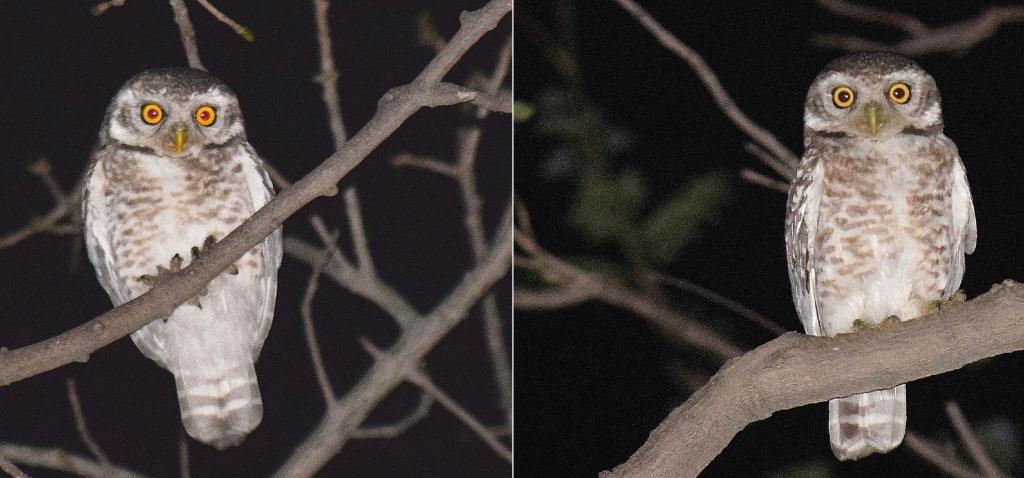
The spotted owlet

The spotted owlet{credit}Owais Rashid Hakiem{/credit}

And in a while the owlet hopped, skipped and set itself up against the moon, as if offering me the perfect backdrop to shoot.
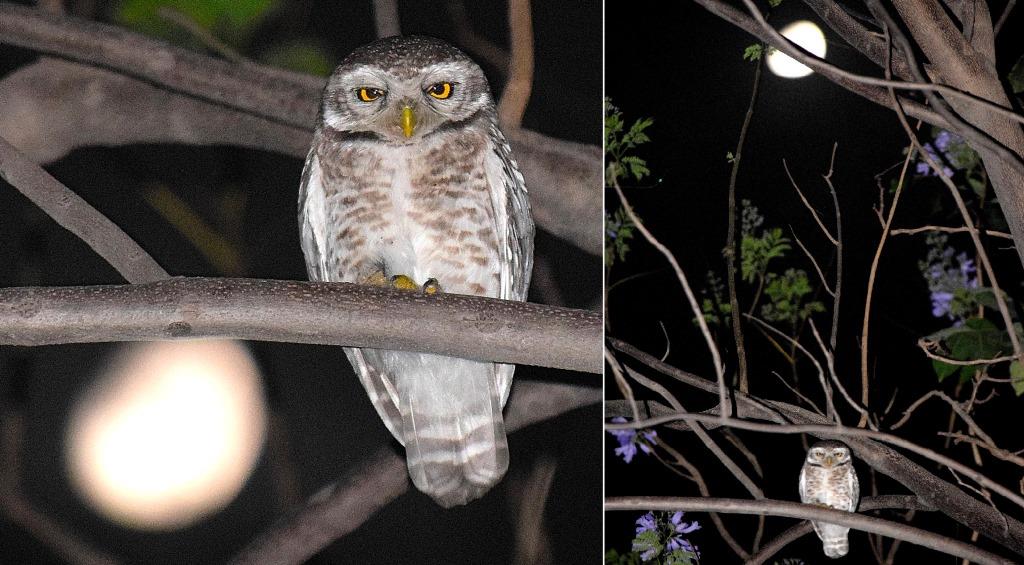
Sptted owlet

{credit} Owais Rashid Hakiem{/credit}

The exciting encounter in the dead of the night with a species that generally shies away from direct interaction with humans during the day left me craving for more.

And as I fiddled with my camera settings to capture that perfect one, I was in for another surprise — the owlet had company! I captured two of these lovely creatures enjoying a clear night, seemingly amazed at this unexpected intervention.
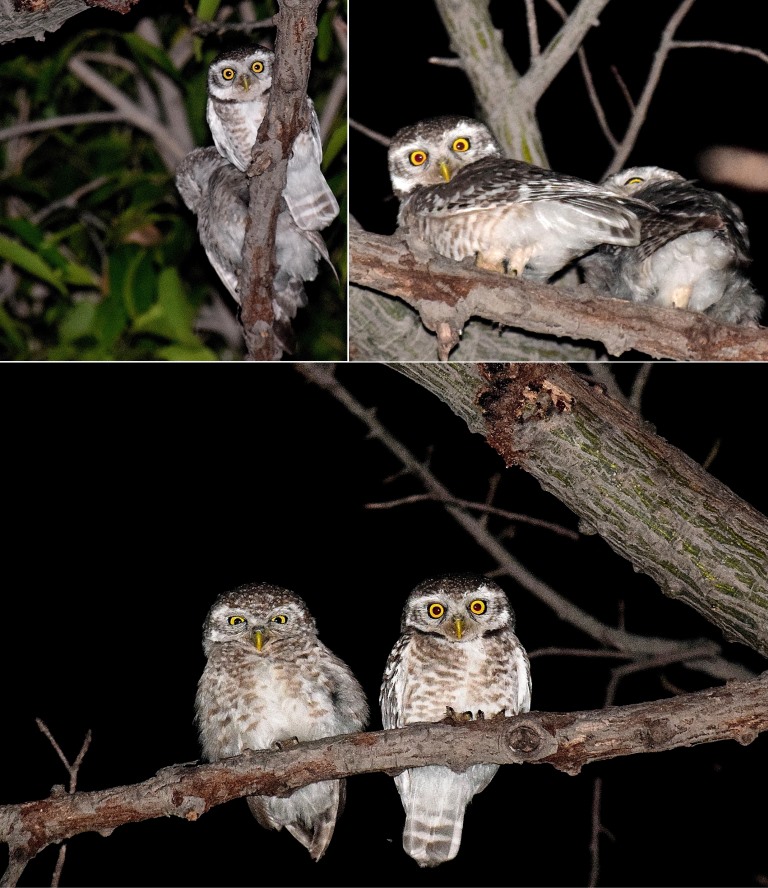
The spotted owlet duo

The spotted owlet duo{credit}Owais Rashid Hakiem{/credit}

The spotted owlet Athene brama indica is a small bird (growing up to 8.3 inches tall) that breeds in the northern drier tropics of Asia. Commonly found in farmlands and human habitations, it makes nests in tree holes. It’s got white abdominal feathers with brown streaks, the rest of the body is greyish brown. Athene brama indica is paler than other owl cousins but is nocturnal like them, feeding on insects and rodents. So it’s nests near human population may show higher breeding success as more rodents become available.

The bird’s got a harsh and loud call, a churring and chuckling that goes chirurr-chirurr-chirurr and ends with a chirwak-chirwak. That call was my invitation to this unforgettable nightly rendezvous.

You can follow this blog series online with the hashtag #NatureIndphotostory. If you have a photo story to tell, email your high resolution entries with a short narration and a couple of lines about yourself to npgindia@nature.com with the subject line “Nature India Photo Story”. If it appeals to our editorial team, your photo story might get featured on this blog.

Suggested posts
Nature India Photo Story: The kingfisher feeds

Nature India Photo Contest

How haldi and litchi cooked up a storm

[Reproduced with permission from Hindu Business Line, column ‘Science and Sensibility’. Published: 1 March 2017]

Under the lens

Subhra Priyadarshini

Two stories, both involving American and Indian scientists, have renewed discussions on scientific rigour and ethics. The stories veer around two of our beloved things — haldi (turmeric) and litchi.

The substance that gives haldi its bright yellow hue — curcumin — has been a hot favourite of Indian scientists. They have found innumerable virtues of curcumin — anti-inflammatory, anti-malarial, anti-cancer and, most recently, as a piggyback on nanofibres to regenerate bone tissues.

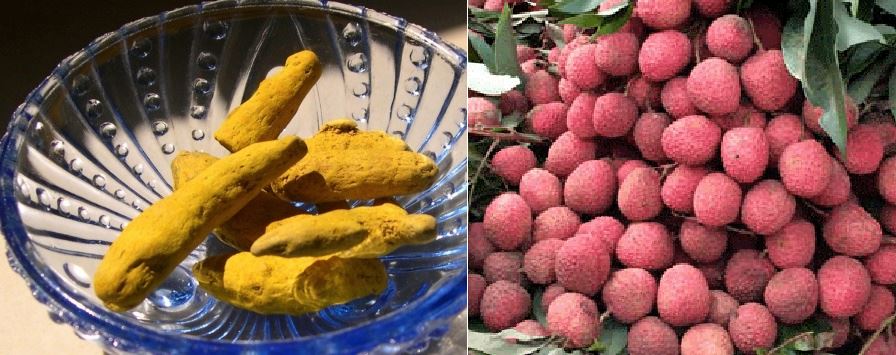
Two of India's favourite things.

Two of India’s favourite things.

When some American scientists debunked the medicinal value of curcumin in a reputed international journal recently, they stirred up a hornet’s nest back home. The article concluded that there was no evidence, whatsoever, of the therapeutic benefits of curcumin and that it wasn’t worth wasting one’s energy and money on researching it to find a new drug.

India’s scientists have taken exception to this, considering that over 10,000 papers have been published and more than 120 clinical trials using curcumin are in various stages of completion. Yes, curcumin may not make for a classical drug going strictly by the tenets of medicinal chemistry, but it certainly qualifies as an ‘adjunct drug’ to treat some infectious diseases. The contention is: summarily dismissing curcumin research as wasteful would be like throwing the baby out with the bath water. And that would bury a lot of remarkable science around the fragrant, yellow spice.

So, even as the dispute over curcumin’s candidature as a good research subject ensues, people across the world will continue to explore the benefits of ‘golden milk’. And Indian homes will continue to take any criticism of haldi with a pinch of salt.

Another controversy erupted around a red-peeled, juicy fruit that instantly transports one to the lazy summer afternoons of our childhoods. Litchis, you could gorge on them all afternoon. And most times, you skipped dinner afterwards brimming over with its sweet richness. Turns out, this innocent fruit-hogging and then not eating an evening meal, could be fatal. It kills a lot of children in Muzaffarpur region of Bihar, the litchi capital of India.

Scientists have been trying to fathom the cause of a mystery seasonal neurological disease outbreak in the region for years now. And some of them recently made a stunning revelation in Lancet: litchi fruits are laden with naturally occurring toxins — hypoglycin A and methylenecyclopropylglycine — that could actually trigger low glucose levels and metabolic derangement among children. Ironic, considering that litchi oozes sugar. The toxins embedded in the fruit apparently reverse all its sugariness.

But where’s the controversy? The dispute began when a set of scientists led by T Jacob John, a virologist earlier with the Christian Medical College Vellore, alleged that the Lancet study did not follow a basic ethical practice in science: acknowledging similar previous findings by his team. John and co-researcher Mukul Das called it ‘scientific misconduct’. Their contention: the Indo-US research group had failed to acknowledge somewhat similar results from 2014 — an act considered grossly unethical in science. True to its reputation, Lancet swung into action to figure out what went wrong in this case.

And that’s how the humble litchi taught our scientists a lesson in ethics.

How should I apply for a fellowship?

Let’s talk career with Naturejobs

Every now and then, Indigenus brings you some interesting and relevant posts from sister blog Naturejobs, a leading online resource for scientists in academia and industry who seek guidance in developing their careers. The blog delivers a mix of expert advice and personal stories to help readers review, set and achieve their career goals.

Today we have Anuj Bhatt, of the Economic and Social Research Council, the UK, explaining the best practises when applying for a fellowship. He was talking at the Naturejobs Career Expo, London, 2016.

https://youtu.be/2olf8ojUhXU