Away from home: Hard work knows no boundaries

The ‘Away from home‘ blogging series features Indian postdocs working in foreign labs recounting their experience of working there, the triumphs and challenges, the cultural differences and what they miss about India. They also offer useful tips for their Indian postdocs headed abroad. You can join in the online conversation using the #postdochat hashtag.

This week we have Arnab De, an alumnus of the Presidency College, Kolkata and a postdoc from Columbia University, USA telling us his formula of success — some intelligence, lots of hard work, communicating with colleagues and a smiling face. Arnab, whose PhD dedication to cricket star Sachin Tendulkar made him the subject of another blog piece, says “its one world” and boundaries don’t make a country, people do.
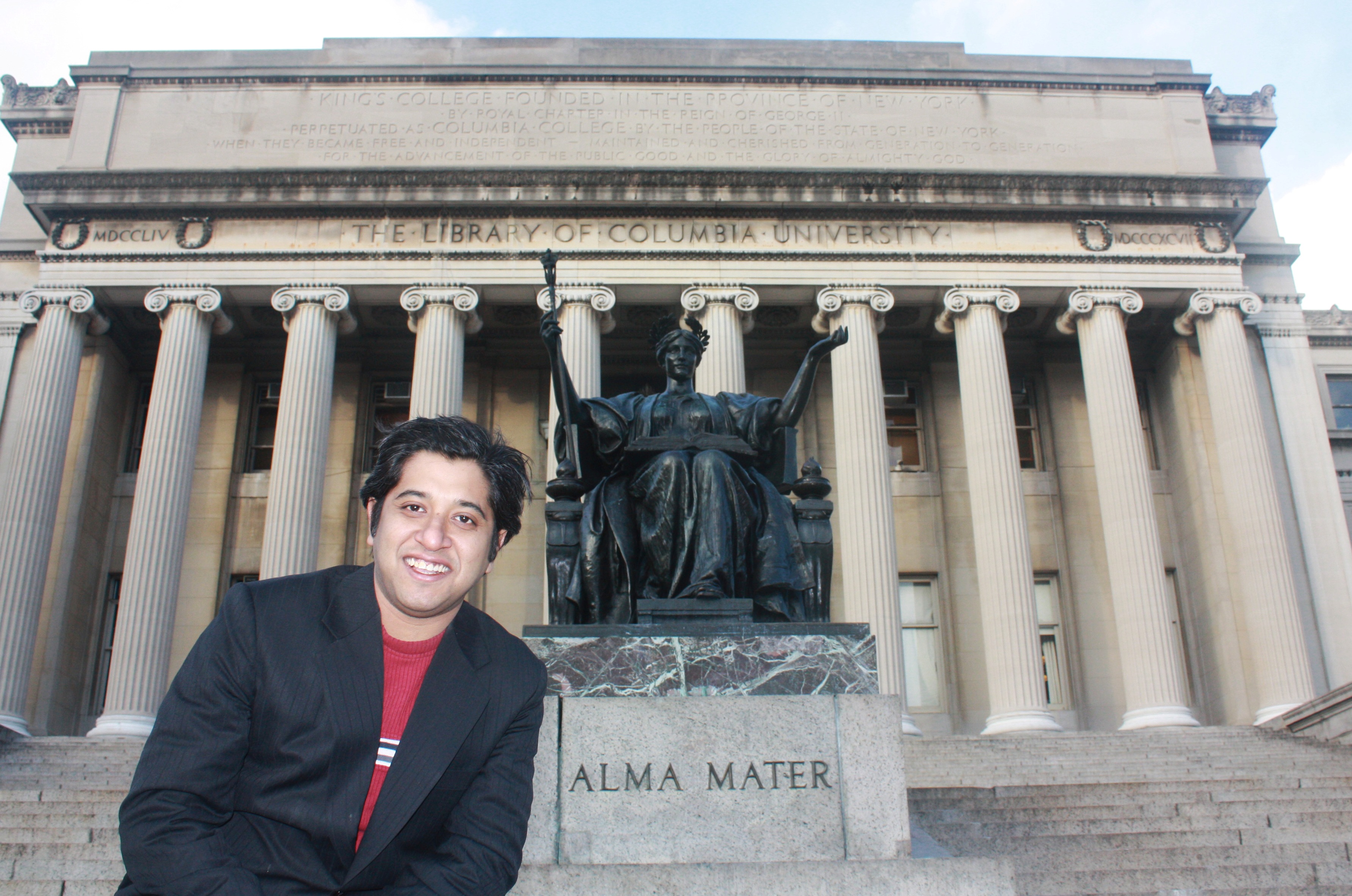
Arnab De in front of the famous Alma Mater statue at Columbia University.

Arnab De in front of the famous Alma Mater statue at Columbia University.

My father, my first guru

My father is a medical doctor practicing medicine. He was engaged in applied work in the hospital and always encouraged me to study basic sciences. I owe my initial interest in research to my dad. My brother chose to follow the medical profession like my father. My interest in the basic sciences grew enormously while studying at the Presidency College, Kolkata because of the active interest of the faculty in inculcating a curiosity for the unknown among students.

Choosing between Ivy leagues

I am very proud  of the education I received at Presidency College, Kolkata. For the PhD, I had offers from three ivy league universities — Brown, Dartmouth and Columbia. I chose Columbia for two reasons. It is in New York City, giving me an opportunity to collaborate with scientists and meet people from all around the world. It also has the world’s premium medical center (affiliated with New York Presbyterian Hospital), business school, law school and the famous Pulitzer School of Journalism. Besides, it has the highest number of Nobel laureates by university-affiliation. At Columbia, I was incredibly lucky to have the opportunity to work with the pioneering Indian-American immunologist, Prof. Sankar Ghosh. I have just defended my PhD thesis at Columbia University.

Exploring a new pathway

During my PhD, I was involved in two projects. Around the time I started my doctorate, it was appreciated that a single gene called A20 (a tumor-supressor) was mutated in a large number of cancers and other autoimmune diseases. While there were models that proposed how A20 might work, it was not known how this gene worked in animals. To understand this, I made a transgenic mouse, deliberately altering the genome, in order to precisely dissect the action of A20 in living animals. In the second project, I discovered a novel site of phosphorylation in an important immune—regulator and the corresponding kinase. One thing led to another, and early results strongly suggest that we might have uncovered a new biological pathway that is essential to respond to various infections and other diseases.

Imbibing scientific vision, leadership

Prof. Sankar Ghosh was previously at Yale before joining Columbia as the chairman of the department and ours is one of the most reputed immunobiology labs in the world. Besides being an eminent scientist, he is a visionary who broadened the horizons of the department by incorporating the field of immunobiology (our department previously focused on microbiology alone). Working at close quarters with him has given me an insight into his scientific vision and leadership, something I hope to be able to execute for the rest of my life. New York City is the melting pot of the world, and one can meet the world everyday at Times Square.

Living with Indophiles and snow

NYC is somewhat different, but even the smaller college towns present the exciting prospect of getting to know students from everywhere in the world. So you will find many Indians anywhere you go. One reason I personally did not find it as difficult to acclimatize to the new place was that I found a great partner (Rituparna Bose, who completed her PhD from Indiana University, Bloomington in geology, we are married now). I also did my MS in Chemistry at IU, Bloomington and my mentor, Prof. Richard DiMarchi, was a very understanding individual who knew a lot about India. That helped too.

Let me put it this way, home is where the heart is, always! So I miss India. But if I wanted to be in another country, I would want to be in the USA. I am originally from Kolkata, rather hot and humid. Hence, the snow here has proved to be a major challenge. The first flurries are pristine; the second snow shower might not bring as much joy.

Look at labs as well as institutions

USA is the land of hopes, dreams, opportunities and immigrants. Hence, I would encourage students seeking out the USA for post-doctoral opportunities. The clichéd advice is to be research-specific and look at labs, not institutions. I would look at both the ongoing research in the lab as well as the institution. Why? Just like in India, there are the good and ‘not-so-good’ institutions in the US. You can always switch labs if you are in a big research institution (if something goes wrong in the lab). This might not be possible in a smaller institution. Also when the funding looks bad, smaller institutions are likely to suffer more than the more famous counterparts. Just a fact of life!

India is changing, growing

My parents, my little brother, food and cricket — I miss them here. NYC has a lot of ‘desi’ restaurants, but none of them have ‘mishti doi’ or ‘luchi’ (two divine Kolkata-based delicacies). I miss playing quality cricket (and practicing in the terrace with my younger brother). I missed being in Mumbai when India won the cricket World Cup (2011). Sachin Tendulkar (the way he adapted to the challenges over his career) is my inspiration and I dedicated my PhD thesis to him. While some may criticize me for that, I am incredibly proud of that decision. India is changing/growing. I see that in my nephews and nieces and I welcome that change.

I am happy to work anywhere in the world which allows me to contribute to my fullest ability. If India presents me an opportunity, I will certainly be interested in giving it a close look.

The India story

People ask me about the differences between India and the USA, about what it takes to be successful in the USA. As I see it, the difference between India and USA is the availability of resources, and certainly not intellect. A decade or two ago, the discrepancy in resources was stark. As resources become more balanced, Indians will succeed in India too.

In my opinion, the recipe for success is exactly the same here and in India: some intelligence, lots of hard work, communicating with colleagues and a smiling face. Communication might be understandably somewhat easier in India because of language barriers. All things considered, it is not all that different whether in India or the USA. It’s really one world.  Indeed, the hopes and dreams of the immigrant have helped to shape the legacy of the USA in more ways that we can imagine.
Arnab De features here in our ‘Away from home’ interactive map along with many other Indian postdocs from around the world. Please feel free to suggest names of postdocs from countries and disciplines we haven’t covered yet.

Away from home: Why the postdoc phase is crucial

The ‘Away from home‘ blogging series features Indian postdocs working in foreign labs recounting their experience of working there, the triumphs and challenges, the cultural differences and what they miss about India. They also offer useful tips for their Indian postdocs headed abroad. You can join in the online conversation using the #postdochat hashtag.

In this post, microbiologist Devendra Dusane, a doctorate from the University of Pune and a postdoc at McGill University, Canada talks about the importance of the postdoc phase, which he says,  is crucial for shaping one’s  goals — both in life and in research. It is “overwhelming when my wife and daughter appreciate my published research papers and celebrate with me”, he says.

DD

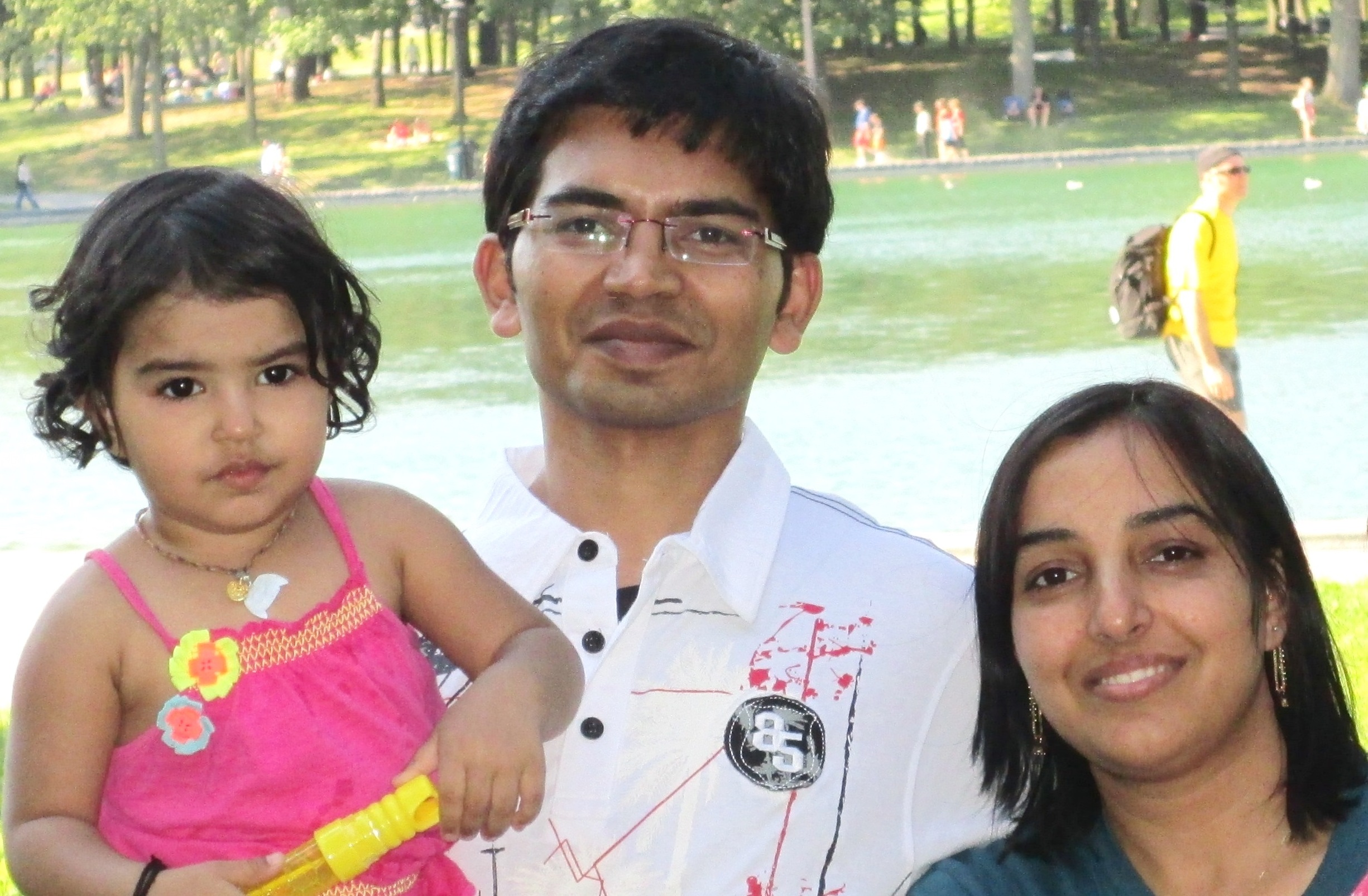
Devendra Dusane with his family

The ABC of Microbiology

When I joined the master’s programme of the University of Pune in India, I started learning about antimicrobial agents and biofilms. I found that bacterial cells, which I earlier thought to be lonely, actually attached to surfaces, communicated, multiplied and formed detrimental biofilms that were resistant to most antibiotics. This phenomenon of bacterial cross-talk (quorum sensing) and antibiotic resistance triggered my interest to study new antimicrobials that could inhibit and disperse these biofilms.

The research was a part of a collaborative programme between the Bhabha Atomic Research Centre (BARC) and the University of Pune. I had to travel for a few months every year from Pune to the BARC unit at Kalpakkam, Tamil Nadu to seek guidance, use confocal microscopy and collect marine samples. It was fun. I had good colleagues at both places. I had the best supervisors during my Ph.D.

I was fortunate to be associated with great minds and places during my career. Before pursuing PhD, I had an opportunity to work in an industry for three years and then for a year with Prof. Anil Gupta at IIM Ahmedabad. Prof. Gupta is an authority in intellectual property rights, grass-root innovations and a Padmashree awardee. This was the time when I got the opportunity to interact with the former director general of CSIR Dr. Raghunath Mashelkar and former DBT adviser Dr. S. Natesh.

Career path

I am presently a postdoc at the Department of Chemical Engineering, McGill University, Canada. I am in one of the best labs at McGill doing research on anti-biofilm agents and quorum sensing inhibitors (to disrupt the bacterial cross-talk). My mentor is young and dynamic and always ready to help her students.

Career choices

In everybody’s life, there comes a time when you have to decide on the right career path. Life is all about correct choices; consequences follow. After comparing my well paid peers in the IT sector and those in research waiting endlessly for the government’s decision for a marginal rise in research fellowship/stipend, I thought if the decision to pursue research was right or not. However, I am happy about deciding to undertake research — it has not just been a great career choice but also an immensely satisfying one. It is especially overwhelming when my wife (who is also pursuing research) and daughter appreciate my published research and celebrate with me.

Advice for postdoc aspirants

No matter where you do your postdoc, selecting the right mentor is very necessary. I know it is difficult to gauge this before you meet and start working with your mentor but you have to look for a supervisor who is working in your area of interest and is established. One who understands his/her students’ research goals and treats you as a colleague.

I would advise new postdocs to be innovative in their research, get work published to set up a platform and move ahead in achieving future goals. One should also remember that postdoc is just a temporary phase — don’t get attracted to it and stay for a long time. Think about achieving career goals — academia or industry is always waiting for prepared minds.

Speaking about research in Canada, it is one of the best places to start your career as a postdoc. Winters are pretty cold but its fun to go skiing with friends and family.

Path to success

I would advise postdoc aspirants to pursue a postdoc career in India or abroad and gain expertise to set up their own lab (academia or industry). Also, doctoral or post-doctoral training is a crucial step not just for setting and achieving your career goals but also to understand life. During this time you know more about yourself, people around you, different places and how to adjust to different situations. So keep up the hard work and enjoy life.

Find Devendra Dusane in our ‘Away from home’ interactive map featuring Indian postdocs from around the world. Please feel free to suggest names of postdocs from countries and disciplines we haven’t covered yet.

Sunspot event regales astronomers

Director of Mumbai’s Nehru Planetarium Arvind Paranjpye shared with us this lovely scarlet image of the sun today. The image shows a very large sunspot dotting the surface of the sun these days. “It is large enough to be seen with naked eyes. However, one should not look at the Sun without proper protection, such as solar goggles used for observing solar eclipses,” he cautions.

sunspot

{credit}Deepak Joshee{/credit}

For astronomy enthusiasts, the sunspot, cataloged as AR 1967 (Active Region 1967) is 200,000 kilometers in size — big enough to fit in a dozen Earths in itself.

Paranjpye says normally a sunspot’s life is from about a few hours to a few days. Larger ones can live for more than a month. This is one of those. “Actually this spot is the same as seen earlier in the first week of January 2014. It was called AR1944 then.”

The sun rotates on its axis once every month and the sunspot AR1944 that went behind the sun has now reappeared as AR1967.

Sunspots are a result of complex interactions between its magnetic field and rotation. The sun is gaseous body. Unlike solid bodies such as Earth, different regions on the sun take different time to make one rotation.  The rotation is fastest close to equatorial region (about 30 days) and slowest near polar region (over 30 days).

Paranjpye further informs that the sunspot appears dark only due to the contrast with surrounding region. The temperature of a sunspot is about 4500 degree Celsius, which is about 2000 degrees lesser than its surroundings.

Sunspots appear in cycles. Sunspots on the surface of the sun go through a cycle of 11 years. “Every five years and six months, we have a very large solar activity that decays over the next five and half years and then increases again. Presently we are close to the end of its current activity cycle.” At the end of the sunspot cycle the magnetic poles of the sun also flip – the North Pole becomes the South Pole and the South Pole becomes the North Pole.

Solar astronomers are closely watching the sun for this event to take place anytime now.

So enjoy the astronomical event but be sure not to forget your goggles.