Nature India Photo Story: The enigmatic sun

In our visual storytelling blog series titled the ‘Nature India Photo Story’, we feature photo stories that explore the realms of science, wildlife, environment, health or anything else that smells of science.

Here’s a photo story and a personal essay by B. Lakshmi Sowjanya on the mystical aura of the sun, arguably the most prominent among all celestial objects.

Sowjanya is a geneticist, a Bio-CARe Woman Scientist, and a postdoctoral researcher at the Indian Institute of Science, Bangalore. Her research interests are in the field of molecular oncology and lipidomics. She is keen on nature photography, and immensely enjoys capturing the Sun, drawing poetic parallels for life from its many hues.

Sun1

{credit}B. Lakshmi Sowjanya{/credit}

The Sun has not only attracted humans forever but also supports all life-sustaining activities on planet Earth. Several cultures around the world worship the Sun. Amazingly enough, the distance between Earth and the Sun is exactly right for life-conditions to flourish. Closer, we would burn; farther away, we would freeze.

In my photography journey, I try to capture glimpses of the Sun through clouds spread across the sky. As I set sight on the warm colours of the setting Sun, I am transported to an enchanted world. It has been an amazing journey so far, shooting the Sun in different colours, shades and moods.

Sun2

Sun6

{credit}B. Lakshmi Sowjanya{/credit}

These photographs were taken at the West Coast of India during winter (October to January) at dusk in Honavar taluk (14° 16′ 48″ N, 74° 26′ 38.04″ E), Uttara Kannada district, Karnataka state. They show the magical play of the clouds, humid weather conditions of the seashore, and the hues of sun rays.

In these photographs I tried to capture how differently we can visualize the Sun in the same season. The climate, atmospheric gases and clouds in the sky could greatly impact the way in which we see the Sun.

Sun4

{credit}B. Lakshmi Sowjanya{/credit}

Even as it signals an end, a sunset promises renewal. With the last rays peeping over the horizon comes the realisation that tomorrow holds endless possibilities. The descending Sun embodies the sheer power of an utterly romantic moment. Just like love at first sight, the sight of the Sun takes my breath away, leaving me speechless. I feel a rush of love and gratitude for Mother Nature.

Sun5

{credit}B. Lakshmi Sowjanya{/credit}

There is science behind these feelings, too. Watching sunsets promotes psychological effects believed to enhance satisfaction in life. Sunsets are a moment to pause in preparation for a new phase of life; a time of renewal, learning, and moving ahead with challenges. Sunsets can be real blessings.

I admire the steadfastness of the sun – an eternal and untiring effort to repeat the daily cycle, day after day, until all energy is spent, bidding us goodbye with a promise to return the next day in all its power and glory.

Sun3

{credit}B. Lakshmi Sowjanya{/credit}

This collection of radiating hues represents some of the most beautiful moments and most wonderful memories of my life. The ‘sweet light’ time, just before the sunset, is perhaps the best time for serial sunset photography. It is during those fleeting moments that the bright and pale shades of red tend to be even more dramatic, enhancing sunset photos and making the colours pop.

You can follow this blog series online with the hashtag #NatureIndphotostory. If you have a photo story to tell, email your high resolution entries with a short narration and a couple of lines about yourself to npgindia@nature.com with the subject line “Nature India Photo Story”. If it appeals to our editorial team, your photo story might get featured on this blog.

Suggested posts:

Nature India Photo Story: Cubanacan the Litigon

Nature India Photo Story: A midnight date

Nature India Photo Story: The kingfisher feeds

Nature India Photo Contest

Goodbye Kalam saab

Last night when news of APJ Abdul Kalam’s death spread thick and fast on social media – many heartbroken with the scientist/ex-President’s death and many wishing the news wasn’t true – one thing became clear. That this was not just the death of a scientist, a leading light of India’s space programme, or of the ‘People’s President’ – it was the demise of an adorable, all-round-good-natured, immensely accessible human being, rooted in his humble beginnings and untouched by the highs that fame brought.

Avul Pakir Jainulabdeen Abdul Kalam (1931-2015)

Avul Pakir Jainulabdeen Abdul Kalam (1931-2015){credit}PIB{/credit}

Why do I say that? In no time, my Facebook wall was a collage of pictures featuring Kalam alongside practically everyone I knew – the quintessential smiling face beamed in each of those pictures almost saying “Come here, do you want a picture with me?” Kalam would be missed most for this ease of approach, this humility that comes with knowledge. Small wonder that he often quoted from a Sanskrit slöka that roughly translated to “A fruit-laden tree always bends low.”

For Kalam, science was one of the many, many things he was passionate about – the number one on his passions list being teaching. “You ask me to teach 20 hours a day, I perhaps can,” he said to me once.

And he always came across as a teacher you could look up to for those wonderful motivational one-liners that stay with you for a long, long time and egg you on when you are not in the best of speeds. For instance, the Christopher Morley quote “Big shots are only little shots who keep shooting” featured quite regularly in his talks. “India needs such small shots in thousands,” he would say. No big surprise that his books – strewn with such pep quotes – flew off the shelves in no time.

With a gentle sway of the head and smiling eyes, he could heap on you tonnes of data peppered with intricate statistics, effortlessly – and then cross check if you retained all of it, typical Professor-style. “An aerobic space transportation vehicle can have a 15% payload fraction for a launch weight of 270 tonnes. This trans-atmospheric space transportation system has the potential to increase the payload fraction to 30% for higher take-off weight. So what per cent payload fraction can an aerobic space transportation vehicle have?” he would ask. And you had to say, “15%”, before the conversation went any further. He made sure the learning never stopped as long as you were with him. And then he left you with further food for thought – that was the magnet of his personality.

Kalam saab, as we fondly called him (though he might have secretly preferred Prof. Kalam), wrote several books, scientific papers, essays and his public talks are all freely accessible on the internet for anyone to benefit from. One piece he wrote for the launch of Nature India, however, will always remain precious to me. “What do you want me to write on?” he asked when I said we would love to have an inaugural article from him. “You are launching Nature India – I have to write something worthwhile. Let me give it a good thought”. Kalam, then a popular President with non-stop speaking assignments, entertained several rounds of emails before the article could be finalised. “Please feel free to edit as you like,” was his standard reply to all my queries. Here’s the piece that was finally published in Nature India.

I leave you with the endearing bits from that article – they give a peek into the man’s difficult early years that ended up shaping his invincible spirit, which India will continue to look up to for years to come:

“As I embark on my discussion on space safety and security, I am reminded of my joint family in Rameswaram, a small island in southern part of India, where a number of us brothers and a sister lived together. I was the last fellow. I keenly witnessed my mother keep all her children connected in spite of their varying needs and personalities. I used to ask myself, how does she keep us united despite such amazing diversity? It was only through the inherent pure love of the mother.

During the last five decades, I have seen how many successes and a few failures of space programmes helped connect countries around the globe. Whenever a major space event takes place – man landing on the moon, first series of communication satellites in the geo-synchronous orbit or remote sensing satellites in polar orbit, NASA astronauts, including Sunita Williams, descending on earth on a rainy day – it captures the attention of the entire planet. Events in space have in a way integrated the world, like the mother unifying the family. The question is: can we use space to transform earth into a homogenously prosperous place without poverty or fear of war?”

[“With Kalam’s demise, India’s scientists will miss their champion and star supporter in New Delhi,” says veteran science journalist K. S. Jayaraman in this obituary. “Being non-political, Kalam could cut across political parties while his image as father of India’s missile programme helped him promote science and technology. An approval from Kalam almost always resulted in budgetary support for such projects like the $250 million nanotechnology initiative, or the manned space mission.” Read more on India’s missile man’s contribution to India’s science vision here.]

Sunspot event regales astronomers

Director of Mumbai’s Nehru Planetarium Arvind Paranjpye shared with us this lovely scarlet image of the sun today. The image shows a very large sunspot dotting the surface of the sun these days. “It is large enough to be seen with naked eyes. However, one should not look at the Sun without proper protection, such as solar goggles used for observing solar eclipses,” he cautions.

sunspot

{credit}Deepak Joshee{/credit}

For astronomy enthusiasts, the sunspot, cataloged as AR 1967 (Active Region 1967) is 200,000 kilometers in size — big enough to fit in a dozen Earths in itself.

Paranjpye says normally a sunspot’s life is from about a few hours to a few days. Larger ones can live for more than a month. This is one of those. “Actually this spot is the same as seen earlier in the first week of January 2014. It was called AR1944 then.”

The sun rotates on its axis once every month and the sunspot AR1944 that went behind the sun has now reappeared as AR1967.

Sunspots are a result of complex interactions between its magnetic field and rotation. The sun is gaseous body. Unlike solid bodies such as Earth, different regions on the sun take different time to make one rotation.  The rotation is fastest close to equatorial region (about 30 days) and slowest near polar region (over 30 days).

Paranjpye further informs that the sunspot appears dark only due to the contrast with surrounding region. The temperature of a sunspot is about 4500 degree Celsius, which is about 2000 degrees lesser than its surroundings.

Sunspots appear in cycles. Sunspots on the surface of the sun go through a cycle of 11 years. “Every five years and six months, we have a very large solar activity that decays over the next five and half years and then increases again. Presently we are close to the end of its current activity cycle.” At the end of the sunspot cycle the magnetic poles of the sun also flip – the North Pole becomes the South Pole and the South Pole becomes the North Pole.

Solar astronomers are closely watching the sun for this event to take place anytime now.

So enjoy the astronomical event but be sure not to forget your goggles.


No shadow day

Now this one is quite interesting, as most news from the planetarium is.

Did you know that there are certain days in the year when you won’t cast a shadow of yourself even if you are standing in the scorching sun? This happens — though just for a while — on certain days when the sun is absolutely, directly and truly on top of your head. And in India we are experiencing that time of the year when your shadow will leave you briefly, as if it has just disappeared.

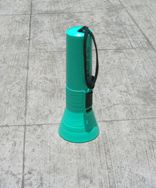
Here’s a picture borrowed from Arvind Paranjpye, Director of the Nehru Planetarium in Mumbai, to explain what happens.

Though the handle of this torch casts a shadow on the torch, the torch itself casts no shadow. Paranjpye, like many of his colleagues, has been holding public demonstrations for a number of years now to popularise the simple science behind the event.

The phenomenon is experienced twice every year by people living between the latitudes 23.5 deg. south (tropic of Capricorn) and 23.5 deg. north (tropic of Cancer). Standing vertically in the sun during these days at certain given times will make your shadow vanish completely. Here are the timings and dates for some Indian cities that are experiencing the magical phenomenon right now.

It’s interestingly called the ‘Zero Shadow Day’ and is certainly a phenomenon worth experiencing. If not for anything else then to prove the saying “Your shadow never leaves you” wrong!

Young astronomy

We are looking at an award winning photograph by young astronomer Dhruv Arvind Paranjpye.

The award winning picture. © D. A. Paranjapye

About a year and a half back in September 2010, this picture bagged top honors at the Astronomy Photographer of the Year competition in the under-16 category. The photograph will now make it to an official annual book on the competition held by the Royal Observatory of Greenwich, UK.

The picture shows an annular eclipse, which occurs when the Moon is too far from the Earth to completely cover the Sun’s disc unlike what happens during a solar ecplise. Through a layer of cloud, Dhruv shot the bright ring that appeared as the Sun shone around the edges of the Moon.

The young photographer

“My father got me a telescope and a digital camera, and the annular eclipse was a perfect opportunity to test my skills. The photograph was clicked from the southernmost tip of the Indian Peninsula, Kanyakumari,” Dhruv, now 16, says. Dhruv’s father Arvind Paranjpye is an avid astronomy photographer himself and is presently the director of Nehru Planetarium in Mumbai. “Almost everyone had cameras attached to big telescopes with zoom lenses. While they were all disappointed that clouds had come in, he made full opportunity of the fact that clouds can act as natural filter,” the proud father says.

The photograph called ‘A Perfect Circle’ was taken with a basic 3.2 megapixel point-and-shoot camera, and got the first prize in that category. The stand out quality that got him the prize was the perfect geometry of the eclipsed Sun contrasted with the chaotic shapes of the clouds. By using the clouds as a filter, Dhruv was able to reproduce wonderful, contrasting colours.

This recognition would certainly motivate a lot of young astronomy enthusiasts and photographers to pursue their passion.

Satellite launch

This week, the Indian Space Research Organisation (ISRO) is all set to launch its radar imaging satellite RISAT-1 on board the organisation’s workhorse, the Polar Satellite Launch Vehicle (PSLV).

Pre-launch tests on RISAT-1 at Sriharikota. © ISRO

Early on April 26 morning, RISAT-1, a microwave remote sensing satellite carrying a synthetic aperture radar (SAR), will be launched into space. RISAT-1 weighs around 1858 kg — the heaviest satellite to be lifted by the PSLV thus far — and is scheduled to be put into a 536 km orbit, according the ISRO chairman K. Radhakrishnan. It’s life span is five years.

The 71-hour countdown for the launch of  started this morning at the Satish Dhawan Space Centre at Sriharikota in Andhra Pradesh.

India currently depends on images from a Canadian satellite as its domestic remote sensing spacecraft can’t take pictures of the ground during cloud cover. RISAT-1 being launched at a mission cost of Rs. 498 crore  will operate in a multi-polarisation and multi-resolution mode to provide images with coarse, fine and high spatial resolutions. Pictures beamed from RISAT-1 would be used to estimate crop yield, assess acreage and predict crop health during monsoons, when the sky is covered with clouds. The images can also be used for disaster management during cyclones and floods.

ISRO had launched RISAT-2 in 2009 with an all weather capability to take images of the earth. The satellite was aimed to enhance ISRO’s capability for disaster management applications.


Post updated on April 26:

PSLV C-19 lift off with RISAT-1. © ISRO

PSLV-C19 was launched into space from Sriharikota early this morning (April 26, 2012) putting RISAT-1 in a polar circular orbit. It was a successful lift-off, according to ISRO chairman K. Radhakrishnan.

RISAT-1 will start beaming images in five days.

Notably, PSLV C-19 is the third in this series of launch vehicles to involve the high-end version PSLV-XL (XL meaning extra large). It is equipped with six extended strap-on motors, each carrying 12 tonnes of solid propellant. ISRO’s Chandrayaan-1 was also launched on board a PSLV-XL.

Star-struck

Bollywood star Shahid Kapoor made it to celestial stardom, quite literally, when some fans chose to buy a star in his name in the Orion constellation last week for his birthday. Last year, Shah Rukh Khan got his name etched on lunar soil when fans named the ‘Sea of Tranquility’ crater after him.

Bollywood stars Shahid Kapoor and Shah Rukh Khan have already gone 'celestial'.

Scores of websites [1, 2, 3, 4, 5 and more] are selling the stars, moon and galaxies to whoever has money to buy a celestial gift for their loved ones. Organisations and individuals have also been controversially selling extra-terrestrial real estate on other planets, natural satellites or space — a bit of the moon, an acre of Mars and a yard of the space north-west of Andromeda galaxy!

In the wake of this new-found craze among Indians to ‘name a star’, here’s some reality check:  the International Astronomical Union (IAU) is the internationally recognized authority which designates all heavenly bodies according to globally accepted rules. The IAU clearly “dissociates itself entirely from the commercial practice of ‘selling’ fictitious star names or ‘real estate’ on other planets or moons in the Solar System.”

Here is an interesting fact sheet by IAU on why stars don’t get real names instead of boring numbers, who is legally responsible for naming objects in the sky and why the IAU can’t do much about the mushrooming of such star-sellers across the world. Turns out, the certificates issued by these star-sellers are only expensive pieces of paper that give you a temporary feeling of happiness. The star is named after someone in their company’s ‘individual registry’ — which isn’t saying much!

So the next time you hear about a Bollywood or Hollywood star being reborn in the sky, just know that a bunch of gullible, star-struck people lost some money to a bunch of dream-sellers!

Night planets

News of another lovely celestial event has come in from the Nehru Planetarium in Mumbai. Arvind Paranjpye, who has just moved to the planetarium as its Director from the Inter-University Centre for Astronomy and Astrophysics in Pune, informs us of an opportunity to see all the ‘naked eye’ planets at night between February 23 to March 2.

As always, the resourceful skygazer has created computer simulation images to show what the cosmic phenomenon would look like. He traces the moon, half hour past sunset in the western sky above Mumbai, to track the lunar movement vis-a-vis the planets Mercury, Venus and Jupiter between February 23 and 27, 2012.

Planet show

© Arvind Paranjpye

This is also a good opportunity to see Mercury, he says observing that Copernicus who first suggested that planets go around the Sun instead of the Earth, never saw Mercury himself.

The last such planet show was during April-May last year when Mercury, Venus, Jupiter and Mars came together in the dawn sky.

For more information on this and more celestial events happening over India, here‘s Arvind’s helpful blog.

Happy planet watching!

Shuttle shuts shop

India’s GSAT-12 Communication Satellite, launched onboard Polar Satellite Launch Vehicle (PSLV-C17), perched itself successfully in the geosynchronous orbit this week. On the other side of the globe, curtains came down on NASA’s three decade long space shuttle programme.

Here’s a lovely video made by colleagues at Nature Videos marking the end of NASA’s shuttle programme with the return of Atlantis to Earth: Space Shuttle: The complete missions .

The video is a journey of NASA’s incredible reusable space transportation system that sent five shuttles — Columbia, Challenger, Discovery, Atlantis and Endeavour — with 355 men and women into space. It has endearing visuals of their triumphs and losses, the rigours of a space mission and the techonological prowess involved in such programmes.

American President Ronald Reagan’s historic words after the crash of Challenger in January 1986 seem prophetic on hindsight as the shuttle programme’s dream run comes to an end: “The future doesn’t belong to the faint hearted, it belongs to the brave.”

You might also want to read this Nature Network blog interviewing Charlotte Stoddart of the Nature Video team on the making of the video. There’s also a Nature special talking about the end of the space shuttle programme and the uncertain future of the human space flight.

Daylight Venus

So you might actually get to see planet Venus in broad daylight tomorrow (June 30, 2011) if you know exactly where to look. And of course if the monsoon doesn’t spoil your planet watching session.

The moon will come directly between the Earth and Venus and for a while the planet will be right behind the moon during daytime in India. However, the event apparently can still be seen — first in Kandla, Gujarat around 1:03 p.m. From the West it will move towards the north east of India and end at Silchar, Assam around 1:57 p.m. After about an hour and 20 minutes later, Venus will come out from behind the moon.

The planet will be visible in a clear sky. The place to look for it is in context with the Moon. It will take about 30 seconds for Venus to disappear completely behind the moon and the same time to reappear again.

For more on the celestial event, here’s a good place to find information.