Film on scientists gets national award

Featured on this blog earlier for its powerful narration of the life and science of India’s celebrated scientist triad Bose-Raman-Saha, The Quantum Indians has now won India’s National Film Award as the best educational film of 2013.

Raja Choudhury

Raja Choudhury

The Quantum Indians written and directed by Raja Choudhury celebrates the lives of India’s three great yet almost forgotten scientists Satyendra Nath Bose, Sir C V Raman and Meghnad Saha. The national award jury has chosen the film “for an extremely efficient and precise analysis of the contributions of three renowned scientists in a manner that not only educates today’s generation but also provides insights into complex scientific phenomena in an accessible manner.”

The film tells the compelling and inspirational story of three amazing Indians who revolutionised the world of quantum physics in the 1920s giving us Bosons, The Bose-Einstein Statistics, the Raman Effect, the Saha Equation and India’s first and only Nobel Prize for science. Their work was also responsible for building the science infrastructure upon which much of India’s future was built.

Raja says he wanted to inspire the young people of India and help restore their interest in basic science as an essential and rewarding career path today. To take the message to the youth, the film is now being shown around the world at Indian embassies and cultural centers, in academic institutions, on TV, on the Indian Diplomacy Youtube Channel and on DVD by co-producers Public Service Broadcasting Trust (PSBT).

Raja is now making another science-based film called The Indian Mind that looks at the great inventions and ideas that India has given to the world — from the cotton of the Indus Valley, from the ‘Zero’ to the Bosons and the quest for Mars.

Congratulations to the team of The Quantum Indians and here’s hoping the film influences some young minds and redirects them towards the glory of basic sciences.
Boson debate

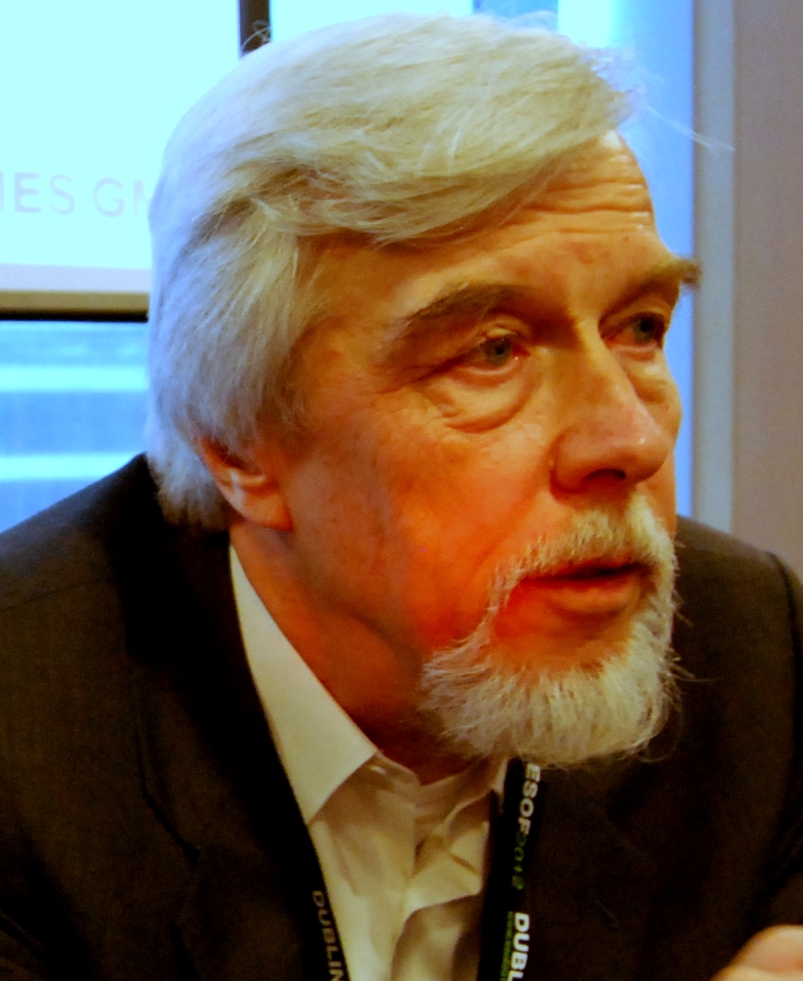
Rolf-Dieter Heuer{credit}Subhra Priyadarshini{/credit}

Why’s the ‘boson’ of Higg’s boson written in lower case? Why hasn’t the Indian physicist Satyendra Nath Bose, after whom the celebrated particle is half named, not been awarded the Nobel Prize yet [12, 34]? Why isn’t India, despite her traditional strength in particle physics, not an associate member of the mother of all particle physics labs CERN?

The boson debate, which reached its crescendo after the discovery of the Higgs boson (or something consistent with it) in CERN this July, has not died down in the land of Bose, whose Bose-Einstein statistics has become the basis of most quantum mechanics as we know it today.

This weekend (September 2-3, 2012) CERN Director general Rolf-Dieter Heuer was in Kolkata, where Bose spent most of his working life. He confronted the seething rage among Bengali scientists for having forgotten the contribution of one of India’s foremost physicists to the now famous particle. And obviously, he was bombarded by these uncomfortable questions.

The level-headed, media savvy CERN chief, however, fielded these queries with characteristic guile, dousing the curiosity of India’s scientific community once and for all.

“India is like the “historic father” of the Higgs boson project.”

“It’s a pity Bose did not get the Nobel. His contribution to science is immense and not getting a Nobel doesn’t in any way undermine his genius.”

“The new particle is a member of the boson family. The name Higgs signifies it as a definitive particle and boson signifies that it belongs to the boson family.”

Great sound bytes which will take the debate nowhere but, coming from Heuer, might certainly help pacify those who revere Bose.

The CERN membership question has also been bugging India for a long time now. Heuer, who had earlier said it’s a matter of money — a commitment of 10 miliion Swiss francs annually — clarified that he hasn’t yet got any written communication to support India’s claim that the country is interested in joining the league of CERN nations.

The boson debate and the associate membership discussions have gone nowhere but, as of now, Heuer and the Indian government would like us to believe otherwise. There are indications that by the year-end India might take a step ahead in this regard but going by the trend of all things official, it still looks like the elusive Higgs boson — is it or is it not?

High on Higgs

Watching the live webcast from CERN and the press conference thereafter, I could only sigh: Wish I were there today to witness history being made in particle physics. The rest of the day went in reading my colleague Geoff Brumfiel’s live blog from CERN and his witty analysis of the discovery of Higgs boson and, of course, the umpteen serious and funny takes on Twitter.

A little later I heard from Archana Sharma, the Indian staff physicist at CERN, who shared her excitement and the star-struck disbelief of a bunch of interns from India presently on a summer programme at CERN. The anticipation surrounding CERN’s scientific seminar on the “Latest update in the search for the Higgs boson” was so palpable at the Route de Meyrin that you could cut it with a kitchen knife, she said, prompting this beautiful piece for Nature India. Archana’s earlier pieces in the run up to today’s announcement have always made for wonderful reading and  have celebrated the Indian presence at CERN.

In India, there also has been much speculation[1, 2, 3, 4] on why Satyendra Nath Bose, the Indian physicist who lends his name to Higgs boson following his celebrated work with Albert Einstein, has gone unsung through the ages. In fact, there is much criticism of the fact that only the ‘H’ in Higgs boson is written in capital letter. This debate is not going to die soon, at least in the land of Bose, whose Bose-Einstein statistics has become the basis of most quantum mechanics as we know it today.

Having been to the dream tunnel, I fondly remember the time when LHC, ATLAS, ALICE, CMS and Higgs were explained in great detail to a group of visiting international journalists. This was in late 2009 when the ‘God Particle’ had already been made famous by the Hollywood production ‘Angels and Demons’ and all of us took turns to wink at the retina recognition machine. The search for the elusive Higgs boson was at a fever pitch and we were told they were expecting a breakthrough in 2011. All of it sounded as exciting then as it did today. In December 2011, the internet went viral again with a couched announcement that the Higgs boson might have been found.

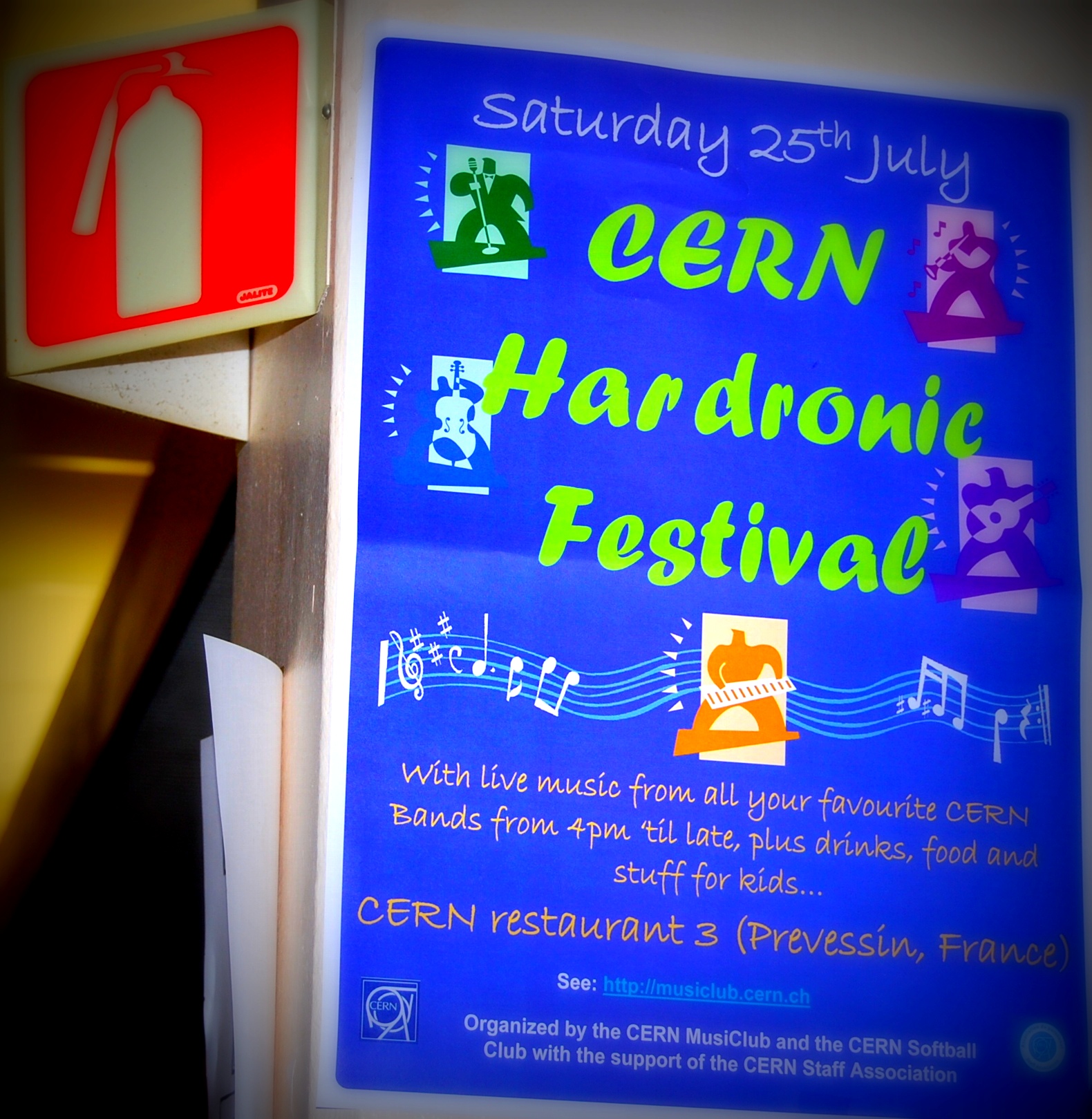
As all speculation was finally put to rest today, I went back to the ‘CERN’ picture folder on my computer to run a slideshow of my time there — celebrating Higgs boson at my workstation! Here’s a picture taken at CERN that amused me no end then and perfectly fits the spirit of the party-goers tonight. Enjoy!

{credit}Subhra Priyadarshini{/credit}

Higgs hunt

The Higgs fever caught on with the media, social networking sites and physicists across the world this week. A dear friend Archana Sharma, staff physicist at CERN, was bubbling with obvious excitement. Will they, won’t they announce the big thing? And then the couched announcement of having sighted glimpses of Higgs boson sent the internet viral. She wrote a piece for Nature India soon after the announcement which emphasised that scientists still need more data to say “Eureka”.

Archana sent in some key points from the CERN announcement which I thought would be a delight for physicists. I reproduce them here, courtesy her. You might have to strain a little to read them but they certainly give you an idea of the sense of thrill CERN physicists were feeling tonight.