Career paths: There’s no set route for scientists

A scientist’s career path is often the result of a series of chance meetings, unexpected events and changes in personal circumstances. You shouldn’t be afraid to follow your own unique route, says Zoe Self.

u-turn-naturejobs-blog

{credit}iStockphoto/Thinkstock{/credit}

Guest contributor Zoe Self

Have you ever been striding down the road only to realise that you are heading in completely the wrong direction? If you turn around on the spot, you’ll likely get some funny looks from those around you. You could look at your phone, pretend you’ve been called away to attend some kind of crisis and go back in the other direction with a new (if not false) sense of purpose. Or, you could look at your watch and pretend to realise that, actually, you need to be somewhere else. But what if this was your career path?

When I finished my biomechanics PhD in 2012, I wasn’t sure I wanted to stay in research. More than anything, I was exhausted by the end of my PhD and felt like the approach of ‘a change is as good as a rest’ applied.  I really wanted a job in science communication, as I had loved the outreach and engagement work I’d taken part in throughout my PhD, but had been made aware, by those working in that area, that jobs were hard to come by. I eventually decided a lecturing role would suit as it required many of the same aspects. Engaging students in my discipline sounded equally fulfilling, but it wasn’t long before I felt like I was heading the wrong way. I no longer felt like I was learning and achieving (important at an early-career stage); to my surprise I missed research (a break had changed my outlook), and I still wanted a shot at a career in science communication. Continue reading

Ask the expert: Meet Rui Pires Martins

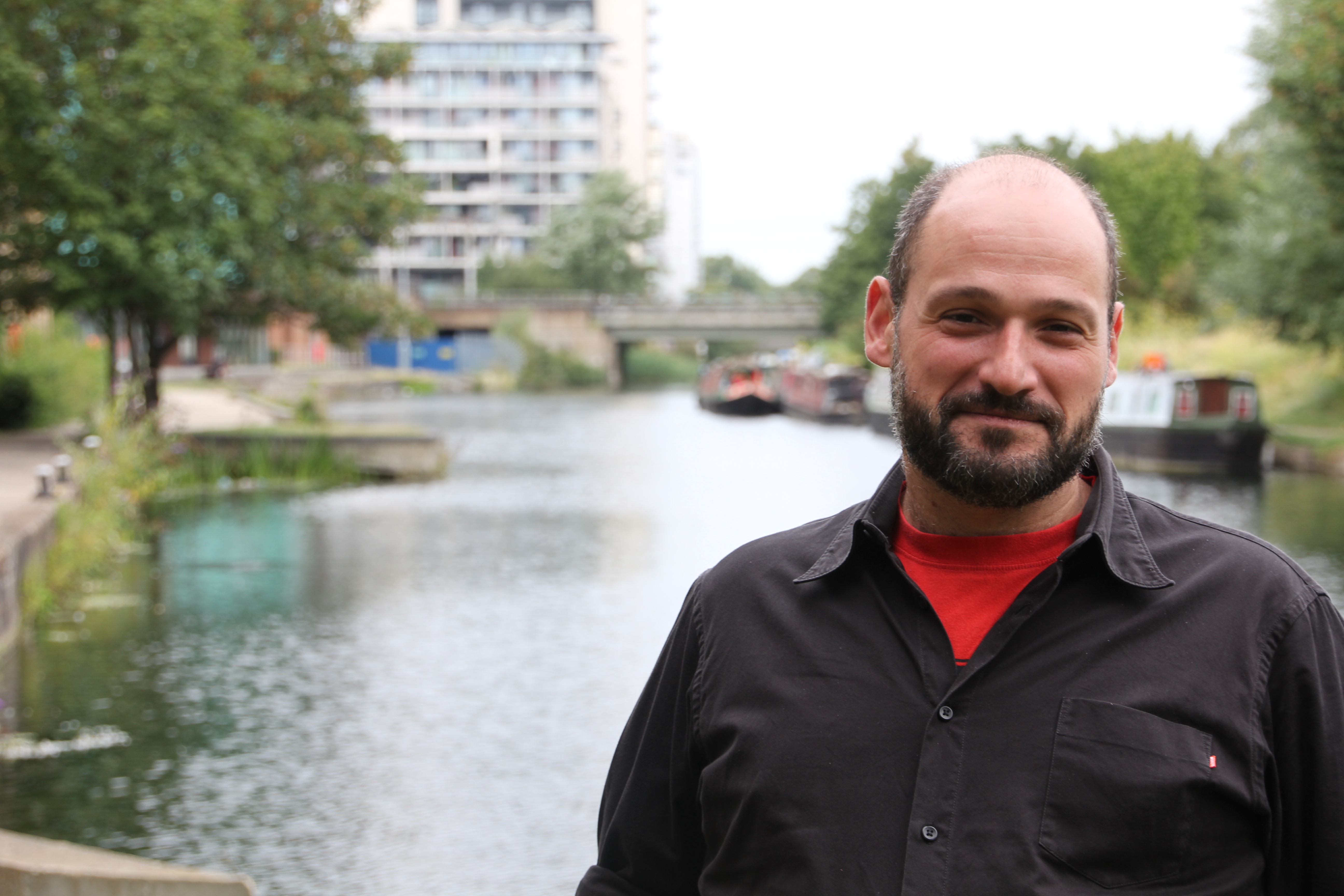
Rui Pires Martins is the Researcher Development Advisor for Postdocs and Early-Career Researchers at Queen Mary University of London, UK.

Rui-Pires-Martins-naturejobs-blog

{credit}Image credit: Rui Pires Martins{/credit}

Say hello to Rui!

What is your scientific background?

My background is in the molecular biology and genetics of developing systems. My doctoral studies involved looking at the molecular changes that prime gene clusters for transcription during spermatogenesis. As an EMBO fellow, I investigated epigenetic and cell polarisation phenomena in pre-implantation mouse embryos. During my second postdoc, I focused on chromatin structure and nuclear architecture changes that accompany differentiation and nuclear reprogramming.

Why did you decide to leave academic research?

In some respects, I haven’t. I suppose after so many years of relying on an evidence base to guide my laboratory investigations, I seek to do the same as a researcher developer. I conduct institutionally-based research when I can to inform my practise as an adviser to postdocs. Continue reading

Finding job satisfaction in financial services

Fund management and financial services give physicist Ben Peters an insight into a highly uncertain world.

After completing a PhD at the University of Oxford, exploring single molecule transistors, Ben Peters moved into financial services. Here he describes his transition from academia.

Click here to read about how Peters pursued fund management as a career.

Ben-Peters-Naturejobs-blog

{credit}Image credit: Ben Peters{/credit}

Why did you decide to leave academia?

Job security is a big thing for a postdoctoral researcher. Having to reapply for funding every few years didn’t much appeal to me at the time, particularly as I’d just had a child.

But as it happened, I had become interested in the world of investment and investment management through my brother in law, Hugh, who I now in fact work with. So I had an ‘in’ to the industry, and I had an idea of where I wanted to look.

What are some of the biggest lessons you’ve learned since starting out in fund management?

In theoretical physics you derive an equation and you get a result. With experimental physics you do an experiment and within the boundaries of error, you get a result. You don’t really get one in this field in terms of finishing a project or getting a precise answer. Continue reading

Networking for introverts

Being prepared can help introverts start conversations at big conferences, says Paul Brack.

Guest contributor Paul Brack

social-media-naturejobs-blog

Social media is a great tool for networking for introverted scientists.{credit}iStockphoto/thinkstock{/credit}

In the last few years, introverts have become the new geeks. In the past we were painted as miserable wallflowers. Now, thanks in large part to Susan Cain’s book Quiet and her accompanying TED talk in 2012, we’re often portrayed as the conscientious, thoughtful people who are going to quietly invent the technology needed to save the world.

Whilst the reality has of course always lain somewhere between these two extremes, there’s one thing that is true for introverts: we generally struggle with networking. Introverts find over-stimulating environments, like large groups at conferences, difficult to navigate. But that shouldn’t put an introverted scientist off from adapting their networking tools to suit their character.

At its heart, networking is about forming relationships. Some psychologists have suggested that introverted people take longer to make connections than extroverted people, as they find it more tiring. This is based on the description formulated by Katharine Cook Briggs and Isabel Briggs Myers (building on the work of Carl Jung), the developers of the Myers-Briggs Type Indicator ‘personality test’, that whereas extroverts are energised by meeting new people, introverts are drained. Continue reading

Social media: The art of self-promotion

Social media is a powerful tool for promoting your own work and interacting with your research community – so get yourself out there!

Guest contributor Steve Hurst

self-promotion-naturejobs-blog

{credit}Image credit: Venimo{/credit}

If you have a question about deer or goat behaviour, then Dr Alan McElligott is your go-to guy. His research on the evolution, ecology and communication of large mammals, particularly ungulates, has seen him appear on a diverse set of media outlets, from the BBC to Modern Farmer and countless others.

When Alan’s latest co-authored paper ‘Intrasexual selection drives sensitivity to pitch, formants and duration in the competitive calls of fallow bucks’ was published, his first thought was to contact his institution’s press department, but his second – like an ever increasing number of researchers – was to expand the reach of his work beyond the usual scientific community through social networking sites.

Last year a survey by Nature found that nearly 50% of researchers have a professional presence online and, of the subset of scholars who said they ‘regularly visited’ social media sites, 37% visited Twitter daily. Alan uses Twitter and likes to engage with other people who are interested in his work. Continue reading

Science communication: Lessons from improvisation

Improvisation techniques can help scientists hone their key messages when addressing peers at conferences, says Catherine Seed.

Guest contributor Catherine Seed

audience-naturejobs-career-expo-Boston-15

Robert Langer presenting at the 2015 Boston Naturejobs Career Expo{credit}Naturejobs{/credit}

You’ve spent weeks in the lab collecting, processing and analysing your data, and you’ve filed for publication. All this work took a lot of effort, time, organisation and collaboration (and coffee). Finally, you are now free to show the data to the world at the next conference (or most probably to your research group).

This step might seem like the easiest part. Once you know the results, you can share them. Talk about them until the cows come home. After all, you’ve just spent years working on them. You know them better than anyone else.  Yet it seems impossible to cram all you know – the intricacies of your study, the broader context, the unexpected results, the side-projects, how the variables link together – into a 15 minute talk at a conference! Which points should you make, and with what detail? And how? How is a presentation structured again? Continue reading

How to approach a PI when you have misgivings about data

Scientist can feel defensive when hard-earned data are questioned, so careful planning is required when approaching them with misgivings.

magnifying-glass-naturejobs

{credit}Design Pics/Thinkstock{/credit}

The scientific community is paying close attention to published work, and it means retractions are becoming more frequent, despite the careful pre-publication scrutiny. Retraction Watch publishes the depressing news of retractions almost daily. Although outright fabricated data is rare, mistakes do happen because scientists want to turn a blind eye to unwanted results, want to avoid being scooped or use inadequate experimental tools .

As a scientist, any work that you publish or data you collect becomes associated with your work or your lab. Thus, several reputations hang in the balance if retractions do occur. Rigorous experimental planning, data collection and analysis are paramount. But what happens if, for reasons outside of your control, these things don’t happen?

Unfortunately, early career researchers are often at the receiving end of non-reproducibility when moving into a new laboratory or taking on a new project. If you do believe that you’ve been caught up in a piece of work that doesn’t meet the high standards science demands, how do you approach your supervisor to voice your concerns? Continue reading

Science communication: A foot in the door

Payal Bhatia shares how she became interested in science communication, and how she has started carving out a career for herself in the field.

Guest contributor Payal Bhatia

science-writing-naturejobs-blog

{credit}Tsha/Shutterstock{/credit}

If I was ever going to leave the lab, it would be to become a full-time science communicator. My first formal piece of science writing was a book chapter I wrote as a PhD. I enjoyed this experience so much that I ended up taking courses at the University of Zurich to improve my writing. This overlapped with a chance meeting Isabel Arnold, editor of the EMBO Journal at the time, who introduced me to the field of science journalism. With my science background, exposure to scientific editing and my passion for writing, I quickly learned that science writing was the career I would love. However, I knew I did not have enough experience to start right away. Employers were looking for candidates with a few years of experience in writing and communication, and when looking at job descriptions, I realized that I was missing a few skills. This gave me an indication on where I could develop and get a foot in the door.

I did some self-reflection and made a plan— a simple outline of what I enjoy writing about, what skills I already have, what resources I can use to gain additional skills and most importantly, if I know someone in the field. Continue reading

Lessons from a laureate

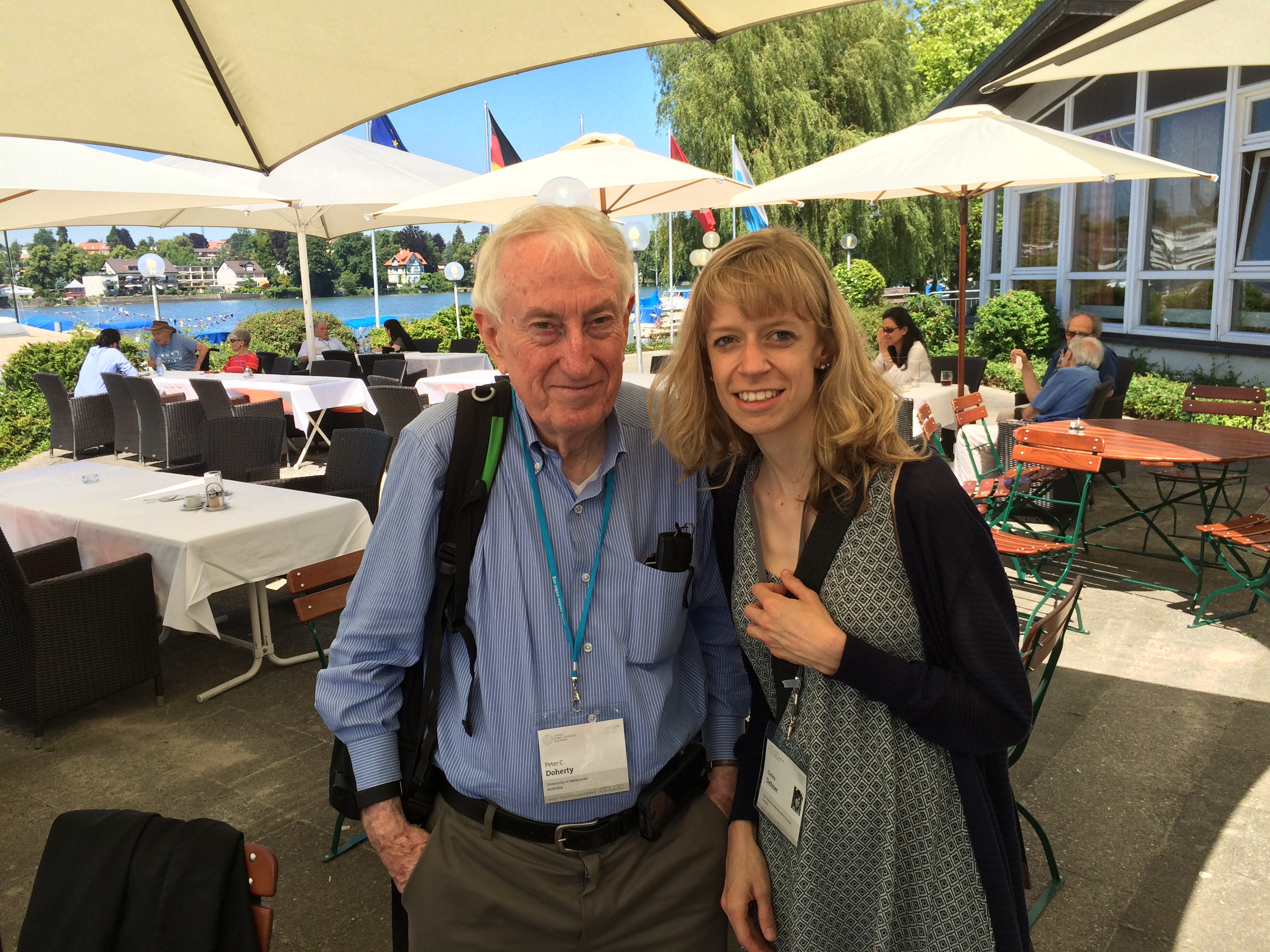
Carina Dehner shares what she learnt at the 2015 Lindau Nobel meeting from Professor Peter Doherty, winner of the Medicine or Physiology Nobel in 1996.

Guest contributor Carina Dehner
Carina-Dehner-naturejobs-blog

Peter Doherty and Carina Dehner{credit}Image credit Carina Dehner{/credit}

The Nobel Prize is a highly coveted and uniformly respected accolade. Receiving this honor opens almost every single door in the world; seemingly every country will welcome you with open arms. For example, the American immigration system will immediately provide you with a green card–. Furthermore, it conveys life-long prestige which many use to influence policy.

But, what is so special about these laureates? What happened in their lives and education that primed them for their seminal achievements? At the 2015 Lindau Nobel meeting I had the opportunity to interact with Professor Peter C. Doherty, winner of the 1996 Medicine or Physiology Nobel for his research on the immune system. He and Rolf Zinkernagl discovered how the immune system recognizes cells infected by a virus, deepening the understanding of how the immune system distinguishes self from foreign molecules. I was interested in his work as it closely relates to my own research on autoimmune diseases. What I was most excited about, however, was what I could learn from someone who has reached what many consider to be the pinnacle of a scientific career.

Nonlinear paths

Doherty began in Australia as a veterinary doctor, then switched to pathology, where he made his novel findings in immunology research. This meandering path is not unique to Doherty – many scientists often switch research fields, following research questions they find interesting. This type of career path is worth considering because it might stop you from developing tunnel vision and be open for other aspects.

Mentors

Today young scientists are advised to seek a mentor, but it struck me as interesting that Doherty’s never had one. Although he did mention annual meetings with a supervisor in pathology, he never gleaned constructive feedback that helped guide and formulate his thinking. He often left meetings with a simple “good idea” and nothing more. But this obviously did not discourage him.

He doesn’t believe mentors are the be-all-and-end-all. Many senior scientists are extremely busy, and might not be able to focus much attention on your needs as a young researcher. Instead, he suggests speaking to those who are just one or two steps ahead of you in your chosen career path to find out what they’ve experienced. Not only that, but if you want the best learning experience, “it helps to have a mentor who will continue to be enthusiastic about you after you’ve left “the fold”.

Yet he does his best to help his current students. Now, Doherty spends more time away from the bench, reviewing his staff’s papers and working with them to improve their communication skills. “Being able to express him- or herself is one of the most important things in a scientist,” he says.

Science communication

As part of my experience at Lindau, I was given the opportunity to present my research in Doherty’s master class on immunology research. I learned how difficult it can be to convey one’s research to an audience, particularly those not in your field. In asking essential word definitions and mechanisms in immunology – addressed to the audience, he made it obvious how important it is to make one’s own work understandable for any audience. Instead of skipping the details he recommended focusing on the message of the project.

Doherty enjoys communicating ideas that are important to him and encourages young scientists to express their opinions, thoughts and most importantly their work to others. One way he recommends is by submitting written articles to publications like The Conversation. “[It] is a great option for spreading your work – it’s openly accessible and it saves you from wrong journalism – you yourself can set your point of view there,” he says. He believes that the problem lies with well-qualified science journalists losing their jobs, “and the fact that media organizations push a particular (and at times toxic) line.”

So instead he suggests scientists reach out to the public themselves. “The lack of awareness of science and how it works is dangerous, especially when ignorance is a license to deny realities that may be dangerous to us,” he says. “We need everyone to speak up, and younger people are more likely to be adept in the ‘new media’.”

His advice on how to learn to do this is to just get writing.If you can find someone who is good and will read your stuff, listen to what they tell you,” he says. He had a short list of tips that would be useful for any scientists, whatever their career stage:

Less is more. You don’t have to cover everything. Instead, focus on getting a key message across.

Tell a story, whatever format you use.

Avoid jargon where you can.

Don’t reproduce anything you don’t understand. “If you read an impressive argument or statement that you don’t understand, don’t reproduce it. The originator probably doesn’t understand it either!”

The end goal

When reflecting on the Nobel itself, Doherty believes that “this prize is much more recognition than what you deserve – suddenly things come up you never thought about before.” But there are also advantages of a prize like this. He now has the ability to provide yearly financial support for the training of young scientists, which brings him much joy.