Big cat blues

Large banners featuring tigers and leopards have come up in and around India’s national capital region of New Delhi. The banners, featuring Asia’s big cats —  tigers, leopards, snow leopards and clouded leopards  — threatened by illegal poaching, are part of an eye-catching campaign by the World Wide Fund for Nature (WWF). The black and white pictures have a direct-hitting subtext “Wanted Alive” emphasising the need to keep these felines healthy and happy in their natural habitat. Reproduced here, with permission from WWF, are the pictures that tell their own story.

Telling pictures{credit}WWF{/credit}

The threat on Asia’s big cat was highlighted at the recently concluded Global Tiger Recovery Programme Stocktaking meeting in New Delhi from 15-17 May, 2012. The meeting was attended by senior government officials from all 13 tiger range countries.

The meet also discussed how, besides existing markets, emerging ones such as  Myanmar, were compounding the threat on these animals killed for their body parts. The body parts are smuggled through porous borders to clandestine international markets.

{credit}WWF{/credit}

According to TRAFFIC, the WWF-IUCN wildlife trade monitoring network ,  the snow leopard from the Himalayan mountains and the little known clouded leopard from the dense jungles of north-eastern India are hunted for their beautiful coat. The beautiful clouded leopard’s bones are smuggled for medicines, its meat for exotic dishes and the live animal itself for pet trade. Its canines and claws are also used for decorative purposes.

{credit}WWF{/credit}

The tiger, of course,  remains the largest cat species in the world threatened by illegal trade in its bones
and skin. The bones are valued in traditional East Asian medicines, and the skin is used by the wealthy to decorate houses, tents or clothes. TRAFFIC estimates that body parts of nearly 500 tigers have been recovered from illegal traders in India during 2000-2011. Many more tigers may have been killed and smuggled out, undetected.

Leopards are also being poached in large numbers in India for their skin and body parts.

{credit}WWF{/credit}

The campaign comes after a similar innovative one on wildlife in September 2010 when India was gearing up to host the Commonwealth games.  In that campaign, TRAFFIC warned tourists of the dire consequences of buying illegal wildlife souvenirs from India.

Here’s wishing this new campaign makes people sit up and take note.


Saving whales

Siddharth Chakravarty

Siddharth Chakravarty

It was inspirational to hear about a young sailor from Maharashtra, India who is storming the icy waters of the Southern Ocean right now in a crusade against whaling. Siddharth Chakravarty, a third generation sailor from Nashik is a qualified seaman and the first volunteer from India to sign on for the high-risk, direct-action campaign by the international non-profit conservation organization Sea Shepherd Conservation Society.

Chakravarty is currently taking the Japanese whaling fleet head-on, the first time an Indian is at the helm of the society’s flagship vessel M/Y Steve Irwin. He will be navigating the vessel through mountainous seas riddled with icebergs to track down and intercept the Japanese whaling fleet. The 28 year-old sailor will guide and steer the ship on a course that will bring it into direct conflict with the whalers.

His primary task will be to find the fleet’s factory ship, the Nisshin Maru, and block its stern to prevent any whales being dragged up the slipway. “The aim is to bring an end to so-called scientific whaling and protect the southern hemisphere’s whale population from further slaughter. We want to permanently end illegal whaling in the Southern whale sanctuary which is protected by an international moratorium”, the young sailor says.

A decade of ferrying oil tankers and forest products around the globe nudged his conscience about the environmental impact of his work . The research he subsequently started led him to realise the discharges at sea of marine oil and other waste. “I felt conflicted by the consummate callousness of the shipping industry which manifests itself most clearly in the pollution of the waterways, arising out of commercial shipping operations, and accidental discharge from ships which, in turn, have crippling effects on marine life,” he says. Thereafter he has worked to stop illegal poaching of the endangered bluefin tuna in the Mediterranean Sea, off the coast of Libya.

All the very best to the crusader!

Species in red

As always, the International Union for Conservation of Nature (IUCN) red list, which catalogues the endangered species of the world, has brought in good and bad news alike. At least four species from India figure in the ‘critically enangered’ category — two animals and two plants. Some were already in that category and some have got upgraded following further decline in their numbers.

The recently discovered resplendent shrubfrog Raorchestes resplendens living in the Anamudi summit in the Eravikulam National Park of Kerala is a curious case. Less than 300 of these amphibians are believed to be living on this summit in a territory not bigger than three square kilometres. Their population is going down though the cause for such decline remains unknown.

The Great Indian Bustard Ardeotis nigriceps has been uplisted to ‘critically endangered’ following extremely rapid decline primarily due to habitat loss and degradation. Earlier found in the Thar desert and Deccan tableland, it is now confined to Rajasthan (175 birds), with smaller populations (less than 50 birds) in Andhra Pradesh and Maharashtra, and about 20 each in Uttar Pradesh, Gujarat, Madhya Pradesh and Karnataka.

The two plant species — Syzygium travancoricum, a native of Kerala and Ilex khasiana from the Khasi hills of Meghalaya — are equally intriguing. The Kerala species has a very small reported population (less than 200). The sacred grove of Aickad is reported to harbour four of these trees and another 15 to 20 have been seen at Guddrikal.

Ilex khasiana, on the other hand, is barely there. Occurring in mixed evergreen forests, only 3-4 trees are hanging on to dear life on the Shillong Peak! That makes this species a must see next time in Shillong.

Of the 62,000 species that the IUCN evaluated, nearly 20,000 are threatened. And like always, the red list has put the spotlight on these species, urging to protect them through renewed conservation efforts.

Co-op conservation

Late last month, a regional initiative to strengthen wildlife law enforcement came into being when the South Asia Wildlife Enforcement Network (SAWEN) was formally launched at an inter-governmental meeting hosted by the Royal Government of Bhutan.

The idea is to keep an eye on illegal wildlife trade, recognised as a form of trans-national organized crime that threatens many species in the region — tigers, elephants, rhinos, medicinal plants, timber, marine species, birds and reptiles. The SAWEN secretariat will be in Nepal. It will link up authorities across the region to share good practices and resources.

Inter-governmental organizations including the CITES, Interpol, WWF and TRAFFIC met to agree on joint activities, and increase communications and fundraising. Indian environment and forests minister Jairam Ramesh expressed his commitment in working together with these countries to protect natural resources from illegal pillage and plunder.

Another laudable step in South Asian conservation efforts. We will wait optimistically for this scientifically designed regional cooperation to bear fruit soon.

Black magic killing owls

A new report rings alarm bells for at least 15 species of Indian owls.

Apparently the night birds are being illegally traded for black magic and sorcery across eight states in India. An investigtion by WWF India into the illegal trade of owls reports that shaman or black magic practitioners prescribe the use of owls and their body parts — skull, feathers, ear tuffs, claws, heart, liver, kidney, blood, eyes, fat, beak, tears, eggshells, meat and bones — for ceremonial rituals. WWF says sacrifice of the birds is a common practice around Diwali, the Indian festival of lights, which went by last week.

owl.jpg

Hunting of and trade in all Indian owl species is banned under the Wildlife (Protection) Act 1972 of India.

Though the report does not have real numbers, the illegal trade is estimated to be in thousands. Larger species are most sought after, especially those with false “ear-tufts” (feather extensions on the head) thought to bestow greater magical properties on the birds. The illicit trade happens in Uttar Pradesh, Madhya Pradesh, West Bengal, Andhra Pradesh, Delhi, Gujarat, Rajasthan and Bihar.

The environment minister released the report before Diwali and one hopes the owls get a follow-up thought too, in terms of stricter implementation of the act.

Commonwealth & wildlife

As New Delhi grapples with last minute preparations for the Commonwealth Games due this October, wildlife bodies are concerned that illegal trade in wildlife products might see a spurt as thousands of tourists arrive here to participate in and see the coveted games.

A friend sent me prototypes of brand new public service announcements that are part of TRAFFIC India’s campaign advising tourists to exercise caution while buying souvenirs from India. Here’s a collage of the bright and creative posters that have messages like: “FREE!!! A pair of handcuffs and up to seven years in jail with every ivory product” and “FREE!!! Up to seven years accommodation in a prison cell with the purchase of any item made of protected reptile skins”.

A release accompanying the posters says the campaign is targeted at domestic and foreign tourists. The posters send a clear message that it is not only the poachers and traders of endangered wildlife who are liable for punishment under India’s Wildlife (Protection) Act, 1972, but also those who purchase and use such items. Tourists inadvertently become a party to illegal trade in wildlife products.

The “Don’t Buy Trouble” campaign has been launched at vantage points — airports, hotels/resorts and other significant tourist hotspots.

The fear is not unfounded. Illegal wildlife trade has almost threatened the very survival of many species in India. TRAFFIC India lists some such products — mongoose hair, snakeskin, rhino horn, tiger and leopard claws, bones, skins, whiskers, elephant tusks, deer antlers, turtle shells, musk pods, bear bile, medicinal plants, timber and caged birds such as parakeets, mynas and munias.

The idea to reinvent the campaign, running since 2008, during the high tourist footfall period is well thought of. It will go a long way in ensuring the Commonwealth Games do not get a rap from the wild side, in the least.

Tiger tourism

There’s a move to stop tiger tourism in India in the wake of concerns that the big cats are facing threats from tourists.

Soon, the core regions of 37 tiger reserves in the country will see no human footfalls and people living in these areas will be rehabilitated. Official figures suggest that the species has already disappeared or is endangered in 16 reserves largely due to poaching, and also due to habitat damage caused by tourism. Perched on top of elephants or vehicles, tourists end up destroying grasslands. Their abodes — cottages and hotels — are bad news for the tiger’s habitat.

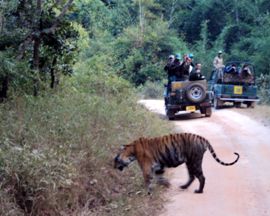
A wild tiger at the Kanha National Park in Madhya Pradesh. ©M. K. S. Pasha.

The erosion is evident. A visit to most tiger reserves in this country leaves you with a wallet full of visiting cards of tourist guides, elephant-back tour organisers, so-called bird and wildlife guides, nature walkers and the likes. They have their ways to get you inside the core area.

Through anxious days and nights, you are promised the prized sighting but you have to be content with sundry other wildlife. The tiger is for the lucky few, you are made to believe in the end, and asked to contact the very same people for the ‘lucky sighting’ the next time around.

The move to stop tiger tourism in the core areas is a welcome one. In any case, there are very few big cats left to be preserved in the core areas. And only the lucky get to see them, anyway.

Hope in CITES for big cats

I engaged myself in the discussions emerging out of the Convention on International Trade in Endangered Species (CITES) at Doha this week to sniff something that I have been meaning to write about for a while — the growing impact of internet and new Information and Communication Technologies (ICTs) on the conservation of wild fauna and flora. Participating countries recongnised the exploitation of these media by criminals and the need to find ways to tackle this.

How the law enforcement community can use the same media to turn the tables on criminals was the question most sought answers to. The Internet also connects legitimate traders of wildlife to tech-savvy consumers and so the biggest challenge is to find ways to help these consumers determine if the goods are legal and sustainably traded. Why, an elephant conservation and advocacy group keenly following the talks reported that the pachyderms had done fairly for themselves at Doha. They claim to have over 4000 fans of Facebook — an illustration of using new media to spread the word around!

cites.jpg

What made for good news for Asian countries was an amended CITES resolution on the region’s big cats that called for comprehensive legislation and enforcement controls to regulate trade in tiger and other Asian Big Cats’ parts and derivatives. The resolution called for increased regional cooperation among tiger range states, improved reporting, establishment of a tiger trade database and introduction of innovative enforcement methods to curb such trade.

Indeed a step forward in times when scientists report that prioritisation based on demographic, genetic, and ecological considerations can ensure species recovery and retention of evolutionary flexibility in the face of ongoing global changes.

Attendee representatives from more than 100 governments, including most of the tiger range countries, sought funds to stop illegal trade in specimens of Asian big cat species. Governments and intergovernmental organisations, international aid agencies, and nongovernmental organisations should come forward to heed to this call.

Or who knows if there will be even ‘1411 left’, as a popular corporate tiger conservation campaign in India claims.

Wildlife crime handbook

A new handbook on wildlife law enforcement promises to be just the insight that enforcement officials and agencies need into the growing wildlife crimes in India.

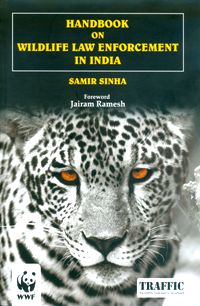
wildlifecrimebook.jpg

The Handbook on Wildlife Law Enforcement, written by the head of TRAFFIC India Samir Sinha and launched by India’s proactive environment and forests minister Jairam Ramesh, is a ‘comprehensive and detailed publication on wildlife trade and crime, conceived from several discussions with senior enforcement officials and experts.’

The book has sections on offence prevention, identifying early signs, wildlife crime scenes, internet as a tool for illegal wildlife trade, securing electronic evidence and conducting interrogation. According to Ravi Singh CEO of WWF-India the book has been published at a time when many of our own species and conservation landscapes are depreciating, some beyond even long term recovery.

I remember Sinha telling me sometime back that the main challenge for wildlife law enforcement agencies in the country was poor acknowledgment of the magnitude of the problem. There are very organised criminal syndicates operating in this country, he said. Sinha was also disturbed at the tiger-centric focus of conservation while other species were left out to fend for themselves. The fundamental enforcement challenges, however, were lack of ‘legs on the ground’ — a long time peeve of all agencies — the abysmally low number of forest guards that man India’s forests.

Hope the book answers these questions and takes the conservation debate beyond tigers by highlighting crimes on other species.

Tiger ticker

Close on the heels of Indian scientists demonstrating the invaluable genetic diversity of the subcontinent’s big cats, here’s some more good news for tiger conservation in India.

tiger1.jpg

© WWF

Last week, India officially launched an online database of authentic record of tiger deaths and other key wildlife species across the country. Tigernet is a collaborative effort of the National Tiger Conservation Authority of the environment and forests ministry and TRAFFIC-India, the wildlife trade monitoring network.

The idea is to compile and analyse such data as a management tool for tiger conservation in India. The website is a refreshingly candid venture that promises to be a transparent official record of deaths of the big cats in India. It gives tiger reserve directors and chief wildlife wardens in India the ability to key-in crucial information about tiger deaths, poaching and seizures.

Conservation experts have been crying foul for long on the lack of accurate information on such issues. The website answers a lot of questions raised time and again by NGOs and conservation workers and should go a long way in assisting anti-poaching efforts.

By significantly simplifying the tiger death reporting system and even findings of post mortem examinations, the government has shown its willingness to go a step further in its seriousness over transparency in wildlife conservation efforts.