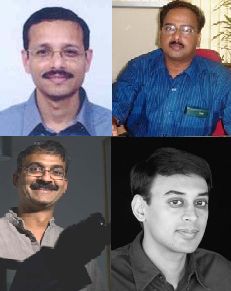
Every three years, Thomson Reuters draws up a list of 10 eminent Indian researchers who demonstrate the strongest performance in their research areas by way of highly cited papers and total citations to those papers. At an award ceremony last evening, these top 10 were honoured based on review of papers published between 2010 to 2014 and indexed in the Thomson Reuters Web of Science (the list excludes any researcher previously named in their top 10 list):
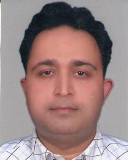
Vinay Gupta
Vinay Gupta, a scientist working in the area of physics of energy harvesting at the CSIR National Physical Laboratory. His current research interests are in charge generation and extraction in photo-excited OPV molecules at ultrafast scale using both time-resolved absorption and fluorescence (time-correlated single photon counting) techniques. He has more than 60 papers to his credit.
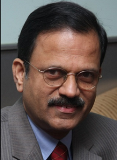
Ambady Ramachandran
Ambady Ramachandran, Chairman of Dr. A. Ramachandran’s Diabetes Hospitals and President of India Diabetes Research Foundation has contributed extensively towards diabetes care and epidemiological research in India for more than three decades. A series of urban and rural epidemiological studies taken up by his team have resulted in a wealth of knowledge on pathogenesis, risk factors and temporal changes in the prevalence of diabetes, pre-diabetes and cardiovascular risk factors in India. He has more than 300 research papers to his name.
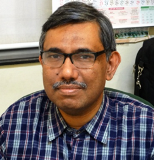
Arindam Banerjee
Arindam Banerjee, Professor of Biological Chemistry at the Indian Association for the Cultivation of Science, Kolkata. His current interests are self-assembling peptide-based soft nanomaterials, organic-inorganic nanohybrid systems obtained from peptides and metal/semiconductor nanoparticles, fluorescent noble metal (Au/Ag) nanocluster and white-light emitting materials. He has published more than 110 research papers in various international journals.
A K Srivastava
A. K. Srivastava, Professor of analytical chemistry at the University of Mumbai. He has made noteworthy contributions in the areas of electrochemistry, chromatography, forensic and environmental sciences. His research group has developed electrochemical sensors for metals, pharmaceuticals and biomolecules. His recent achievement is the development of graphene based nanocomposite materials for super-capacitor applications that are rated very high in the field. Chromatographic methods based on GC, HPLC and HPTLC, developed by him find applications in forensic science laboratories and textiles industries for analysis of narcotics and banned azo dyes. He has 115 research papers published in reputed international journals.
Prithwish Tribedy
Prithwish Tribedy, a scientist at the Variable Energy Cyclotron Centre, Kolkata. He has written many semi-theoretical (phenomenology) papers with one to two collaborators. With 36 publications in journals of international repute, this young scientist is being frequently cited by known authors. He has also been featured in the Forbes India Magazine’s ‘The Just-30 Club’ for his outstanding contribution to high-energy physics.
Rahul Bannerjee
Rahul Bannerjee, Principal Scientist at the Physical and Materials Chemistry Division, CSIR – National Chemical Laboratory. His interests are in the metal organic frameworks (MOFs) for reversible gas storage, covalent organic frameworks (COFs) for functional applications, synthesis of polyoxometalate based hybrid materials, chiral MOFs for separation of chiral organic molecules from racemic mixtures and proton conduction, supramolecular co-ordination polymeric gel materials. He is an editorial board member and Associate Editor of CrystEngComm. He has also served as a co-editor of Acta Crystallographica Section E in 2011-2012. A Fellow of the Royal Society of Chemistry, he has published more than 100 papers and one book chapter.
Rajeev K Varshney
Rajeev K. Varshney, Director of the International Crops Research Institute for the Semi-Arid Tropics, Hyderabad. Internationally recognised for his contribution in genome sequencing of pigeonpea, chickpea, peanut, pearl millet, sesame, mungbean and azuki bean and development of molecular breeding products in chickpea and peanut. He has also published over 300 publications.
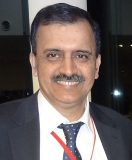
Sundara Ramaprabhu
Sundara Ramaprabhu, Professor in the Department of Physics, Indian Institute of Technology Madras, Chennai. Significant contributions in the areas of hydrogen energy technology, nanomaterials, fuel cell technology, nanofluids, water purification, CO2 capture and conversion and biomedical applications of nanomaterials. Has 40 patents and 290 papers in international journals. He has developed 10 technologies and completed 16 projects worth Rs.2.11 crores.
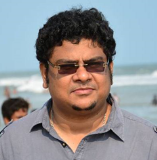
Swagatam Das
Swagatam Das, Assistant Professor of Electronics and Communications Science Unit at the Indian Statistical Institute, Kolkata. Research interests include machine learning and pattern recognition, evolutionary computation and multi-agent systems. Has published one research monograph, one edited volume and more than 200 research articles in peer-reviewed journals and international conferences. He is the founding co-editor-in-chief of “Swarm and Evolutionary Computation”, an international journal from Elsevier. He also serves in editorial positions in many other journals.
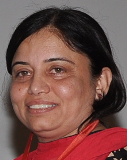
Vandana Bhalla
Vandana Bhalla, Assistant Professor at the Guru Nanak Dev University, Amritsar. She has been active in the field of research and teaching for over 16 years. Her area of research is supramolecular chemistry. She has made significant contribution to the study of chemo sensors and organic light-emitting diodes and has published 130 research papers in journals of international repute. She is the first ever woman scientist to be named in the Thomson Reuters’ citation list.
“It is a lonely journey for scientists in research,” said Soumya Swaminathan, the newly-appointed head of Indian Council of Medical Research (ICMR), who handed away the awards. The journey is even more difficult in the Indian context given the meagre pay that scientists get and the many challenges they face to take their research or innovation to the public, she noted.
Small wonder that at least a couple of the scientists being awarded thought a hoax e-mail that had landed in their inbox (one had even deleted the mail announcing the award before realising what it was!) — such is the level of disbelief among researchers about being patted on the back. Vandana Bhalla also made special mention of two challenges — one, of being a woman researcher and two, of doing research in a University setting.
Amidst all the challenges, recognition of their work, therefore, is precious.

 Umesh Waghmare, Professor at the Theoretical Sciences Unit, Jawaharlal Nehru Centre for Advanced Scientific Research (JNCASR), Bangalore for his “innovative use of first-principles theories and modeling in insightful investigations of microscopic mechanisms responsible for specific properties of certain materials such as topological insulators, ferroelectrics, multiferroics and graphene”.
 Jonardon Ganeri, Global Network Visiting Professor of Philosophy, New York University and Recurrent Visiting Professor, Department of Philosophy, King’s College London, UK for his “outstanding scholarship and originality in interpreting and scrutinizing analytical Indian Philosophy and shedding light on shared ground as well as the dichotomy between Indian and Greek traditions of philosophical reasoning”.
 Amit Sharma, Group Leader, Structural and Computational Biology Group, International Centre for Genetic Engineering and Biotechnology (ICGEB), New Delhi for his “pioneering contributions towards deciphering the molecular structure, at the atomic level, of key proteins involved in the biology of pathogenesis of the deadly malarial parasite”.
 Mahan Maharaj, Associate Professor of Mathematics, Ramakrishna Mission Vivekananda University, Belur Math, Howrah, West Bengal for his “contributions to geometric group theory, low-dimensional topology and complex geometry. He established a central conjecture in the Thurston program to study hyperbolic 3-manifolds and introduced important new tools to study fundamental groups of complex manifolds”.
 G Ravindra Kumar, Professor in the Department of Nuclear and Atomic Physics (DNAP), Tata Institute of Fundamental Research (TIFR), Mumbai for his “pioneering experimental contributions to the physics of high intensity laser matter interactions. He provided for the first time, unequivocal evidence of turbulent magnetic fields and the discovery of terahertz frequency acoustic waves, in laser produced hot dense plasmas. These results have significance to testing stellar and astrophysical scenarios.”
 Srinath Raghavan, Senior Fellow, Centre for Policy Research, New Delhi for “outstanding research that synthesizes military history, international politics, and strategic analysis into powerful and imaginative perspectives on India in global context”.