Career paths: Out of the Ivory Tower

Taking small steps to build up your transferable skills and contacts can be the key to moving away from academia and towards your dream job.

Guest contributor Lauren Emily Wright
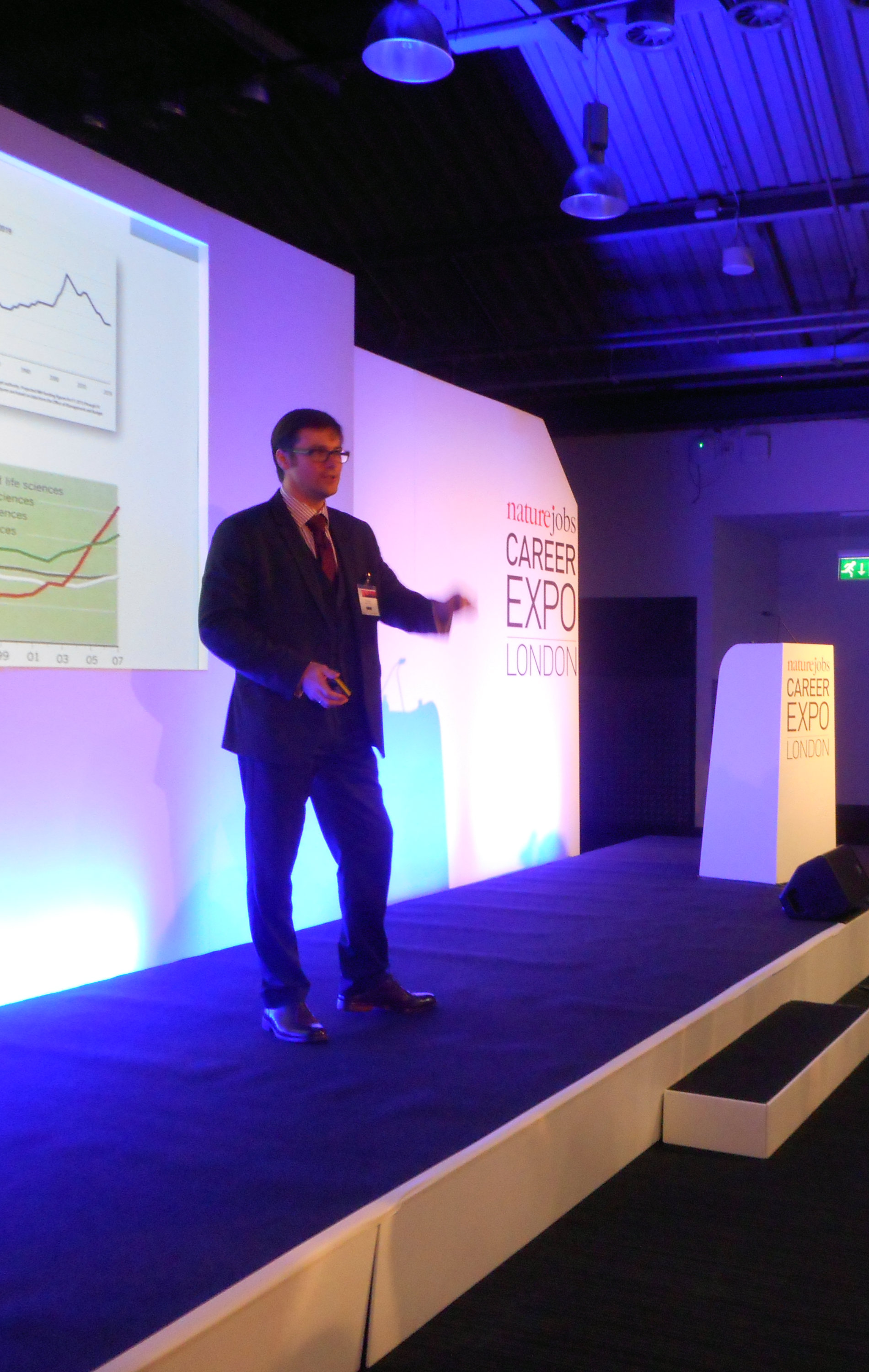
Phill-Jones-NJCE15-Keynote-naturejobs-blog

{credit}Image credit: Lauren Emily Wright{/credit}

Ever thought “I want to leave academia, but all I know is lab work”? Well despair no more — the path out isn’t as treacherous as it may seem. In a great keynote speech at the Naturejobs Career Expo 2015 on 18 September 2015, Phill Jones told the story of how he left academia to become the head of publisher outreach at Digital Science, a company that provides a multitude of services to scientists, institutions, publishers, and funding bodies.

Jones gave the audience the sense that calculated planning and sheer luck had both played their part in his career. With a PhD in physics, he was firmly grounded in the world of academia. But after following his wife to Boston, Jones realised that a postdoc in physics would be hard to come by in such a biology-centred city. “I had to be a little more flexible in my career,” he said.

As Jones notes, it is necessary to have an open mind when thinking of changing career paths. “You can’t think ‘all I know is how to pipette’.” Instead, think about what sort of transferrable skills you can offer an employer. For example, Jones finished his PhD with an in-depth knowledge of optics — perfect for a position in a biology lab that used optical imaging to investigate strokes.

But how can you identify which transferrable skills you already have, and which you need to gain for that ideal new career? How can you make contacts outside academia? Continue reading →

Data sharing: Making it happen

Sharing of ideas and data could remove the barriers to scientific discovery.

Guest contributor Lorraine Clark

I’m currently working as a postdoctoral research associate in the field of chemical biology at Scripps Florida and over my past eight years in academia, I have come to some conclusions based on personal experiences and conversations with colleagues: Teamwork and collaboration are considered the most valuable qualities in the chemical and pharmaceutical industry. However, in an academic setting, people often still commonly believe the only way to advance their careers is by independently achieving as many accomplishments as possible. This point of view is perpetuated by the tendency of some investigators to pit their students and postdoctoral researchers against each other. This may involve, for example, having two people work on the same project and only giving recognition to the person who completes it first. This process can breed a hostile, overtly competitive atmosphere leading to mistrust and an unwillingness to share data, particularly if the data represent negative results, because of the negative connotations it has. Rather than quickly leading to scientific achievements, this practice might actually decelerate the speed of discovery.

Much more progress could be made if academic researchers were willing to collaborate more by sharing not only their ideas but also their data, especially considering the time and resources often spent on dead end avenues of a research project. Continue reading →