The 2015 Nature Careers Graduate Student Survey

See how current graduate students around the world feel about their future career paths in next week’s issue of Nature as the results from the 2015 Nature Careers Graduate Student Survey are published.

One challenge that many graduate students face when deciding on future career paths is finding information on what the options are, and how other graduates got there. Although some information is collated by universities and by the Survey of Doctoral Recipients, run by National Science Foundation in the United States, for example, it’s not enough for students to make an informed decision.

“Graduate students would make better decisions [about their future careers] if they had better data,” says Paula Stephan, a labour economist at Georgia State University. So, to do their bit and help young graduate students arm themselves, Nature Careers runs a bi-annual, global survey of graduate students.

Many say that mentors should have an active role to play in preparing students for their future careers, but in 2011 the graduate student survey run by Nature Careers demonstrated that as the years went by, graduate students were less and less satisfied with the support they received.

Other surveys have shown that this decrease in support could in part be due to the growing lack of interest in academic careers as the students move through their PhD programmes.

In 2013, the Nature Careers graduate student survey also explored the issue of debt, and how students were increasingly worried about how the financial burden of grad school would affect their future careers.

Whether these trends have continued, the Nature Careers team is trying to find out. This year, the survey looks to answer questions that many graduate students will have on their mind: What do science graduate students around the world expect to pursue for their career? What do they really think about industry – or academia? How do they decide on a career path? Are they getting useful advice from their adviser or from their institution? And how do they feel about their graduate programme?

Find all this out and more in Nature Careers on 21 October 2015, when we publish the results of our 2015 survey. We had almost 3,500 respondents from all corners of the world, including Africa, Asia, Europe and Central, North and South America.

Careers in industry: The options

As PhD studentships far out-number the quantity of post-doctoral opportunities, young researchers might want to consider a career in research outside of academia.

Guest contributor Zoe Self

Careers-in-industry-NJCE15-naturejobs-blog

{credit}Image credit: Zoe Self{/credit}

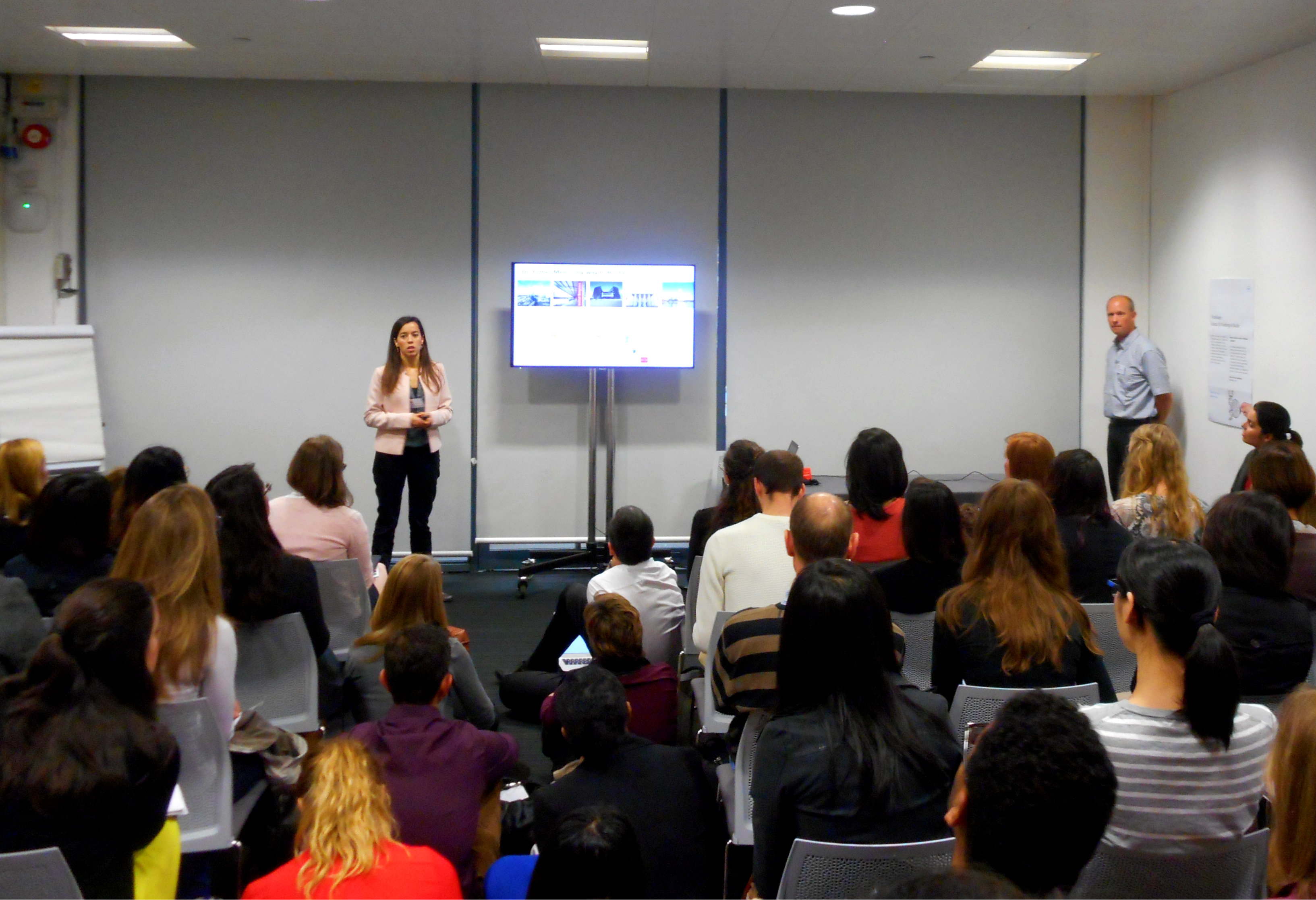
“There are careers available in academia, but they are becoming more and more limited,” said Naturejobs editor Julie Gould as she introduced the session on careers in industry at the 2015 London Naturejobs Career Expo on 18 September 2015. The auditorium was packed, with many delegates sat on the floor. Chairing the panel was Dr Ric Allott, business development manager at the Central Laser Facility, part of the UK’s Science and Technology Facilities Council. In opening, he said that he’s keen to break down the misconception that basic science occurs only in academia, while industry focuses just on applied science. “That is not the case,” he said. “There’s a real spread — a real broad application of science, research and development across both of those [academia and industry].”

Allott introduced a panel of experts from different areas of industry to give their take on careers outside of academia.

Government laboratories

Dr Dave Worton is a senior research scientist at the National Physical Laboratory (NPL), a government-run laboratory in the UK. He supervises a team of scientists and oversees multiple research projects. Worton also spends time applying for funding and attends academic meetings, much like a university researcher. The career ladder at the NPL has a similar structure to that in universities, including research scientist roles (graduate level), his position of senior research scientist (post-doctoral experience) — and beyond. “It’s very much like working in a university,” he said, but with opportunities to move laterally, into business. Continue reading

Industrial postdocs: A bridge between two worlds

Many pharmaceutical companies now offer postdoc positions, which might be more similar to the traditional academic positions than you think.

Guest contributor Lauren Emily Wright

Roche-NJCE15-workshop-naturejobs-blog

Matthias Nettekoven & Esther Melo from Roche Pharma Research & Early Development in Basel, Switzerland, presenting at the 2015 London Naturejobs Career Expo {credit}Image credit: Lauren Emily Wright{/credit}

Science is often carelessly tossed into two main categories – academia and industry – and the decision to move from one to the other can be daunting. But current opportunities seem determined to break down these walls and make a more homogenous research environment. The Roche group ran one of the most popular workshops of the Naturejobs Career Expo in London, held on the 18th of September 2015. Attendees filled the aisle and crowded around the open doorway, straining to hear the presentations by Dr. Matthias Nettekoven and Dr. Esther Melo, who work at Roche Pharma Research & Early Development in Basel, Switzerland, discovering new therapeutics and diagnostics in several research areas.

Nettekoven, a principal investigator, started with a reminder that research positions are not the only jobs offered by pharmaceutical companies. For instance, following a research post, Roche employees can move into marketing, sales, HR or manufacturing. “When you’re in, you’re just in. You develop into what you want to be,” said Nettekoven. “The world is open, but the initiative has to come from you.” Continue reading

Big data: Collaborative science

The rise of data-intensive research is increasing the need for collaborative science.

Guest contributor Lakshini Mendis

data-naturejobs-blog

{credit}Image credit: iStock/Thinkstock{/credit}

Big data, a term thought to have originated in the mid-90s, is a current buzzword amongst scientific communities. Rather than a sole reference to the size of complex datasets, the term broadly encompasses all aspects of working with large datasets from acquisition to analysis.

Big data in science

At its core, scientific research is driven by our curiosity to understand the relationship between cause and effect. Traditionally, ‘hypothesis-driven’ experiments are designed to answer a specific question about a cause-effect relationship.

However, over the last sixty years there has been a trillion fold increase in computing performance. The per-capita capacity to store information has roughly doubled every forty months since the 1980s. These technological advances are revolutionising almost all facets of human life, including how scientific research is conducted.

In contrast to the traditional ‘hypothesis-driven’ approach, advancing technology allows us to acquire larger, more complex datasets, encompassing as many variables as possible, without bias from preconceived ideas. Powerful computation also enables us to finally realize the full potential of decades-old mathematical and statistical concepts. We can now sift through many variables and identify numerous cause-effect relationships in the same dataset, which would have previously been undetectable to the unaided human mind. These principles are now being applied to diverse fields, from astronomy to neuroscience, from particle physics to genomics.

The need for collaboration

The National Human Genome Research Institute reports that the cost of sequencing a human-sized genome was almost US$10 million in 2001, which had halved a couple of years later. The Human Genome Project took 13 years and cost about US$2.7 billion; however, human whole-genome sequencing is now more affordable and accessible than ever. Today, Illumina’s HiSeq X Ten System can sequence “over 18,000 human genomes per year at the price of about $1000 per genome”. Advances such as this have allowed scientists like Theordora Ross from UT Southwestern Medical Center to identify novel mutations in “mystery breast cancer patients” – those with a strong family history of cancer but who did not possess the BRCA mutation – using human whole-genome sequencing. Advances in human whole-genome sequencing are also paving the way for large-populations studies, which in turn is inching us toward precision medicine.

Thus, a lack of data is no longer the bottleneck to discovery. Rather, it is the effective management, analysis, and sharing of large datasets that now pose a challenge.

Initiatives such as the Open Science Data Cloud and the Multi-Institutional Open Storage Research InfraStructure provide an online repository to efficiently store large datasets and share them between different groups. Effectively analysing complex datasets requires abilities that often extend beyond a single researcher’s immediate skillset. Even the most tech-savvy researcher can struggle with some of the mathematical and computational expertise needed to correctly interpret large datasets. Thus, collaboration is key. Having a versatile team comprised of researchers, software engineers, bioinformaticians and statisticians, helps each focus on what they do best. There is no longer a requirement for the sole researcher to become a ‘jack-of-all-trades’. However, there is a need for clear communication between the experts of each field.

Current global big data projects, such as the Sloan Digital Sky Survey, the Blue Brain Project, and the Human Proteome Project, HapMap effectively demonstrate the value of collaboration.

Addressing the barrier to collaboration

However, when it comes to projects that are being conducted on a smaller scale, many researchers are still apprehensive about openly sharing their data. The reasons cited include intellectual property concerns and the fear of being scooped. These concerns have been generated, in part, by the hypercompetitive environment of research, where a high impact factor publication alone has become the ultimate goal of scientists, no matter the cost.

Journals such as Scientific Data and GigaScience help encourage researchers to share their data openly by recognizing their contributions as publications. Further, disseminating the entire dataset helps validate the interpretation of the data and the findings from it. It also opens the door to enable other researchers to reuse the data to investigate their own hypotheses, while guaranteeing proper acknowledgment of the source. For instance, different researchers can make maximal use of a large mass spectrometry dataset to investigate different proteins of interest, without the need for additional time and resources. This approach can help streamline scientific discovery with efficient use of funding.

There are already discernible changes to the scientific research landscape that address the challenges of big data projects. However, the rise of data-intensive research requires a change of mind-set amongst scientists. There is an increased need for multidisciplinary research teams, with clear communication between experts of different fields. Scientists also need to be innovative and become more aware of the tools that will enable them to widely collaborate and openly share data. These changes will help us fully grasp the potential of big data and accelerate understanding.

Lakshimi-mendis-naturejobs-blog

{credit}Image credit: Lakshimi Mendis{/credit}

Lakshini Mendis is a winner of the 2015 Scientific Data writing competition. She is also a PhD student at the Centre for Brain Research in Auckland, and studies how the human brain changes in Alzheimer’s disease. She is passionate about good science communication and is a strong advocate for women in STEM, and volunteers as the Editor-in-Chief at The Scientista Foundation! Follow her musings on Twitter!

Careers in academia: Different options

The traditional career path in academia isn’t the only option available for scientists, say panelists at the 2015 Naturejobs Career Expo in London.

Guest contributor Gaia Donati

Careers-in-acdemia-NJCE15-naturejobs-blog

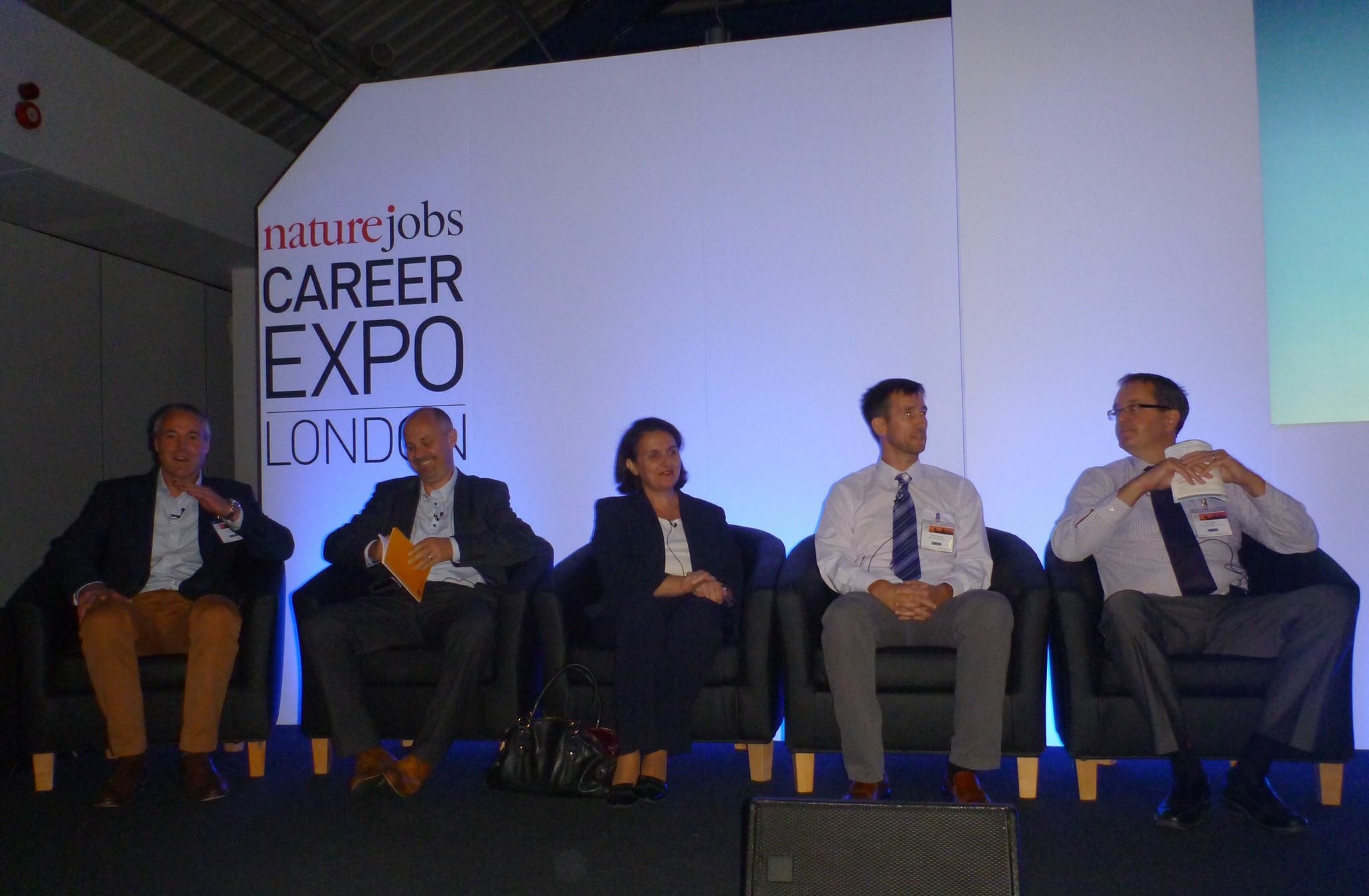
L-R: Frances Ashcroft, James Hadfield, Frederique Guesdon, Lisa Fox and Anna Price. {credit}Image credit: Julie Gould{/credit}

Are you close to finishing your degree, and tempted by the academic environment you came to know well? If yes, then you’re in good company: according to the Vitae Careers in Research survey from 2015, 77% of researchers in the UK aspire to a position in academia, and 60%  expect to find an academic job. However, the Royal Society estimates that only 3.5% of PhD graduates land a permanent position as researchers or lecturers. But all hope isn’t lost: alternative options for those wishing to stay in academia exist, as panelists discussed at the Naturejobs Career Expo in London on Friday 18 September 2015.

The panel offered a refreshing perspective on some options that allow scientists to maintain the link with academic research without facing years of potential postdoctoral insecurity. Dr Anna Price, chair of the panel, left academic research because she lacked a specific question to answer as a scientist. As the head of Researcher Development at Queen Mary University of London, she now works with researchers on planning their careers and honing their transferable skills. Price is well aware that academia is a competitive sector; for this reason, and from her own career development perspective, she introduced four panelists to talk about traditional academic positions as well as roles at the crossing between research and management. Continue reading

Big data: The impact of the Human Genome Project

The Human Genome Project led to a paradigm shift in the way science is conducted and data is shared, says Rehma Chandaria.

Guest contributor Rehma Chandaria

164480115_genome_istock_thinkstock

{credit}istockphoto/thinkstock{/credit}

In 1996, an international group of scientists came together in Bermuda to discuss how sequence data from the Human Genome Project (HGP) should be released. The meeting concluded in the formation of the ‘Bermuda Principles’, a set of rules ensuring the data would be immediately shared on publicly accessible databases as it was generated. This ground-breaking accord contravened the conventional practice of releasing data only after publication in scientific journals. It changed the way we see data sharing, and ultimately, changed the way science research was conducted.

Its success demonstrated how a global community of scientists could collectively produce and use data far more efficiently than an individual could. This greatly benefited scientific progress and led to many important new insights and discoveries. For example, information of 30 genes associated with disease was published prior to publication of the draft sequence in 2001.

Recognising its ability to accelerate progress, there is an enormous push for all scientists to make raw data publicly available for others to analyse and use. As a prerequisite for publication or receiving grants, it is becoming increasingly common for journals and funding bodies to insist that data is shared openly. Continue reading

Scientific communities: Build your own

Learned societies and online platforms can be great ways to develop a mutually beneficial network, say panellists at the 2015 Naturejobs Career Expo in London.

Guest contributor Paul Brack

Jon-Tennant-NJCE15-communities-naturejobs-blog

Jon Tennant and the merits of online scientific communities {credit}Image credit: Julie Gould{/credit}

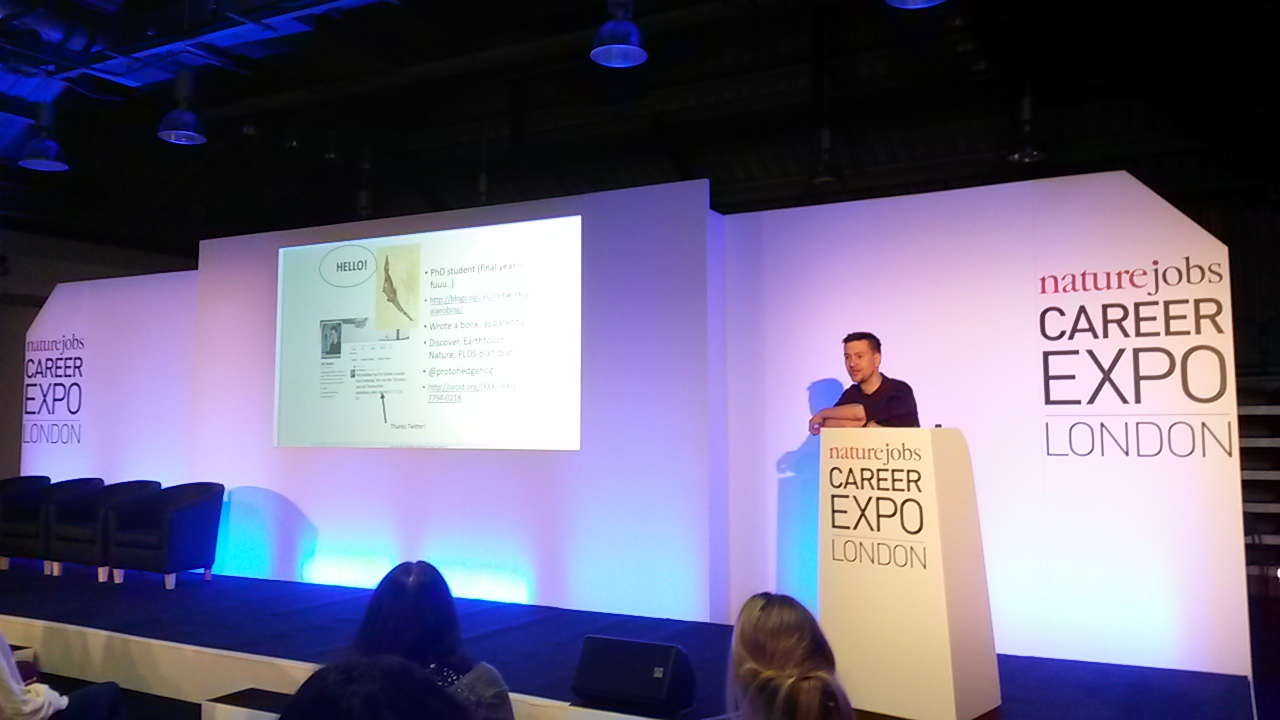
“Networking isn’t just me trying to get something from you,” said Julie Gould, editor of Naturejobs, as she opened the session on Building Scientific Communities at the 2015 London Naturejobs Careers Expo. “Networking is about building a relationship with another person that will benefit both of you.” The two invited speakers in this session, Sarah Blackford, head of Education & Public Affairs at the Society for Experimental Biology, and Jon Tennant, an Imperial College London PhD student, discussed some methods that early career scientists can use to start these types of relationships.

Learned societies

Learned societies, such as the Royal Society of Chemistry or the Biochemical Society, are, according to Blackford, “clubs for people with a similar interest in an academic discipline.” Early-career scientists often underestimate how useful learned societies can be in helping them advance their careers. Blackford pointed out that learned societies have quite a lot of money, and, as they’re not-for-profit, “they give that money back into the scientific community.” Learned societies do this partly by organising and subsidising events, such as conferences on topics that interest their members and giving travel grants to early-career scientists to enable them to attend external meetings. Continue reading

Sharing data: Why it should be done

As data continues to be produced at staggering rates, scientists need to become more aware of the benefits of data sharing, says Eleni Liapi.

Guest contributor Eleni Liapi

CD-stack-naturejobs-blog

{credit}PhotoDisc/Getty Images{/credit}

The scientific community is currently experiencing an explosion in data generation. At CERN (the European Council for Nuclear Research), the rate of data production is 1 petabyte (=1015 bytes) per day inside the Large Hadron Collider (LHC), which is comparable to 210,000 DVDs.  At the European Bioinformatics Institute, 20 petabytes of biological data had been stored between 2004- 2012.  In the US alone, the volume of data produced by the healthcare industry in 2011 was estimated at 150 exabytes (=1018 bytes). Undoubtedly, this volume of information brings with it several problems, including data storage and sharing.

Access to data is a topic that initiates numerous discussions and opinions between scientists and other communities for a plethora of reasons, including concerns about inappropriate use, institutional or industrial restrictive policies where the gigabytes of obtained genomic data are to be utilised for pharmaceutical research, for example. To date, there have already been attempts to estimate the extent of the problem. In one survey, 67% of the participants expressed the view that inaccessible data hinder scientific progress. Continue reading