How to track the “lost generation” of scientists

“We should not consider it a disaster that someone trained to a high level doesn’t remain in academia,” Jean-Pierre Bourguignon, president of the European Research Council, told a panel discussion about science’s “lost generation” last month.

In this podcast Bourguignon and two of his fellow panel members  tell Julie Gould how better career tracking data from universities and other institutions would show how few achieve staff positions, challenging the perception that academia is the only worthwhile career option.
Continue reading

Women in science: patriarchy, leaky pipelines, and the “two body problem”

In the June 2018 Naturejobs podcast we focus on women in science. Aashima Dogra and Nandita Jayaraj tell Harini Barath about Life of Science, the website they created to celebrate female scientists in India and highlight some of the career barriers they face.  Also, stem cell researcher Cristina LoCelso describes the importance of mentoring, hobbies, work-life balance, and strong family networks after becoming the first woman to be awarded the prestigious Foulkes Foundation Medal by the UK Academy of Medical Sciences. And finally, Nana Lee, assistant professor in biochemistry at the University of Toronto, Canada, gives us her three top tips about career transitions between academia and industry, and how best to accommodate family life.

Continue reading

Podcast: Science, sickness and dyslexia

Collin Diedrich

Collin Diedrich

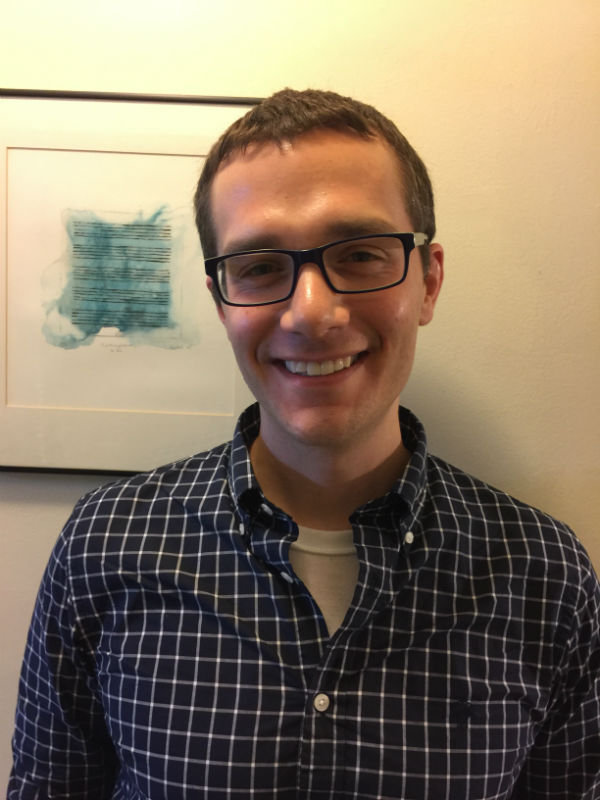
Julia Hubbard, a research fellow at the Francis Crick Institute in London, has Type 1 diabetes and lupus. Collin Diedrich (pictured), postdoctoral research fellow in HIV/TB co-infection immunology at the University of Pittsburgh, US, has dyslexia. Listen to their top tips for successfully juggling scientific careers alongside illness and disability.

Also, Jack Leeming discusses Nature’s recently published comprehensive guide to scientific careers in China.

Continue reading

Gender inequality in the sciences: Why is it still with us?

victorianwomenWomen make up 50% of our community. That should include science. There are simple steps universities and research institutes can take to make it happen, says Kate Christian.

When I was struggling though my double major in chemistry back in the early 1970s I was a rarity. I was one of two women. On the more difficult days, when the environment was feeling particularly male dominated or when I was being particularly patronized, I would try to imagine what it had been like for my grandmother when she was studying to be a doctor at the University of Sydney, straight after World War 1, or for her five sisters, who all trained for professional jobs. Compared to theirs, my situation was a breeze.

Continue reading

Podcast: How to be a consummate networker

networkingThere’s nothing sleazy about networking and it’s not just something to do at conferences, according to careers consultant Alaina G Levine.

It is a two-way process, she adds, an “honourable” exchange that builds capacity and contributes value. Levine, author of Networking for Nerds, shares her top tips, including the all-important “art of the follow-up.”

Peter Fiske says solid networking skills helped him to return to academia after 16 years in industry, most recently as CEO of Pax Water Technologies.

Peter also describes how academia has changed. “The intensity has gone up. People in research work so hard. Oh my God, they work all the time,” he tells Julie Gould. Continue reading