Entrepreneurship: You’ve got the edge to found

Young scientists have substantial advantages over others when it comes to founding a start-up.

Guest contributor Leonie Mueck

Ideas-naturejobs-blog

{credit}Topp_Yimgrimm/ThinkStock{/credit}

Eoin Hyde has been running from meeting to meeting. His start-up, Innersight, is in a critical phase and he has to convince investors to give him and his co-founder enough funds to get it off the ground. Even with his hectic schedule, he’s full of energy.

“Everything is happening very fast,” he says. Until just a few months ago, Hyde had been working as a postdoc at King’s College London, following a PhD in computational biology at the University of Oxford. He enjoyed his research, but when a former colleague approached him with the request to co-found Innersight, a medical imaging company that constructs 3D images from patients’ scans to help doctors during minimally invasive surgery,  he didn’t think twice. “I had been playing with the idea to found a start-up for a long time,” he explains.

Hyde belongs to a minority. Not many science PhDs choose to found companies, at least not in the UK. According to the UK GRAD programme, only 2% of UK-based physical science and engineering PhD graduates are self-employed; it is unknown how many of those have the goal to found fast-growing technology start-ups with global reach. Alex Crompton, programme director at Entrepreneur First, finds these low numbers regretful because in his opinion, science PhD graduates are perfect founders. Continue reading

Joining a start-up fresh out of university

Martine Bernstein

{credit}Alex Greenbaum{/credit}

In 2009, Dan Senor and Saul Singer christened Israel the “Start-Up Nation” in their best-selling book, a title that Israelis have whole-heartedly embraced. The book details how Israel has experienced success in the high-tech sector, seeing hundreds of software and communications businesses start, many of which have flourished.

Martine Bernstein did not know this when she decided to go to Israel to finish her MSc in Human Molecular Genetics. She wanted to combine her Jewish roots with her fascination for genetics, and knew the Weizmann Institute of Science was doing high quality research in this field. “It was a phenomenal place to study; I had some great hands-on lab experience,” says Martine. Continue reading

London’s biotech hub with Kit Malthouse

Is London ready to become the next biotech hub?

Kit Malthouse

{credit}Hannah Lucy Jones{/credit}

In this month’s Windback Wednesday series, we’re all about entrepreneurship: what it takes to be one, how to become one and more. But if you’re based in London, it’s not so easy. Although it’s got the brains and research centres to make it a hub, setting up shop in London is the tricky part. In this podcast, I speak to Kit Malthouse, the Deputy Mayor of London for Business and Enterprise, and find out how London is preparing to become the next biotech hub.

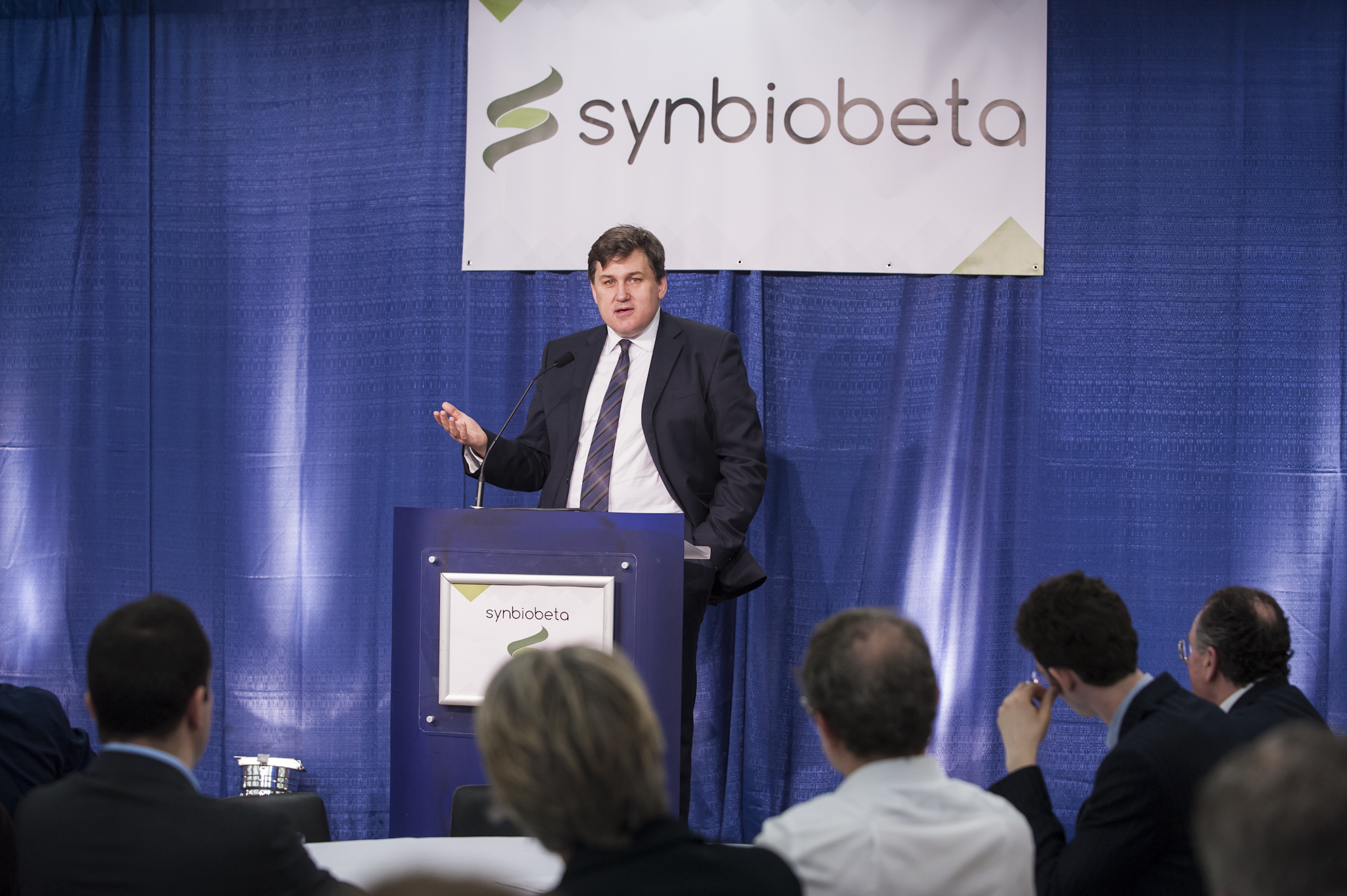
Kit Malthouse, the Deputy Mayor of London for Business and Enterprise has big plans for London. In his speech at SynBioBeta event at Imperial College London, he spoke of his dreams of London becoming the next big hub for biotech start-ups. He is aware that the foundations for this already exist.

“To a certain extent we already are. We have a huge life sciences sector.” Five large research institutes, many hospitals, Institute for Cancer Research the Crick Institute (soon!) and many more are part of an ecosystem that already exists in London. But what the Deputy Mayor hopes to do is “give it some coherence, so that it comes together as an entity… promote it, and fundamentally attract investment in.” 

Continue reading

Tips on starting a business in science

If you were planning to use your research to launch a start-up company, would you expect to be the CEO? It’s one of the most important questions you can ask yourself if you plan to start a business, according to science business adviser and lawyer Christof Hettich, partner at law firm Ritterhaus, managing director of science investment fund dievini and an honorary professor at Heidelberg University of Applied Science.

Speaking at this week’s Naturejobs Career Expo in Heidelberg, Germany, Hettich said that while you can learn the skills you need to lead a business, it takes time and could detract from your core strength — your science. “You have to learn to delegate and trust in other people,” he says. While the founder of a company often wants to be the CEO, particularly in Europe, it’s not always good for business. “You have to define from your side where you can help the company the most,” says Hettich, adding that not having the right CEO is one of the main reasons businesses fail.

Eschewing traditional business-textbook tips in favour of his personal experience, Hettich highlighted three key areas: the science, building a sustainable organisation and venture capitalist funding.

Be the best or the first — and protect your IP

In order to form the basis of a new company your research should either be the first or best of its kind. Anything less than that might be suitable for an existing company to add to its portfolio, but “it’s not enough to start a business”, says Hettich. “You need to be very early and the best in your field.”

As the backbone of your potential business, your intellectual property (IP) is a precious commodity. “You have to pay unbelievable attention to creating and protecting your IP,” says Hettich. That doesn’t mean you should just create patent after patent — Hettich advises you develop a proper strategy — but you do have to be very careful about what you publish about your research before you have a patent in place. If you involve a venture capitalist to get funding (see below), they are likely to uncover any problems with your patent during their due diligence checks.

Be sustainable

As well as deciding on the right CEO, make sure you pick an appropriate chief financial offer (CFO). Although crucial, this position is often assigned to an existing acquaintance, which can cause problems as the business grows. “That’s not really a sustainable model,” says Hettich.

Understand venture capitalists

When it comes to funding, make sure you plan ahead. Venture capitalists (VCs) — those who invest money on behalf of a private fund — will only invest if they have a clear idea when and how they can withdraw their investment in the future to achieve a healthy return. VCs may also be influenced by what’s currently ‘fashionable’ in science, making some areas more likely to attract investment.

How do you choose which VCs to approach? It’s “easier to convince VCs familiar with the industry,” says Hettich. He also advises checking at which stage of a business the VC usually invests, as this will vary.

Finally, VCs have experience in building companies, so be prepared to be challenged as well as supported. “You will get additional help, whether you want that or not,” says Hettich.

Share your tips

Do you have any other tips for starting a business in science? Share them below.