
Why every researcher should keep an old bulletin board.
Guest contributor Eli Lazarus
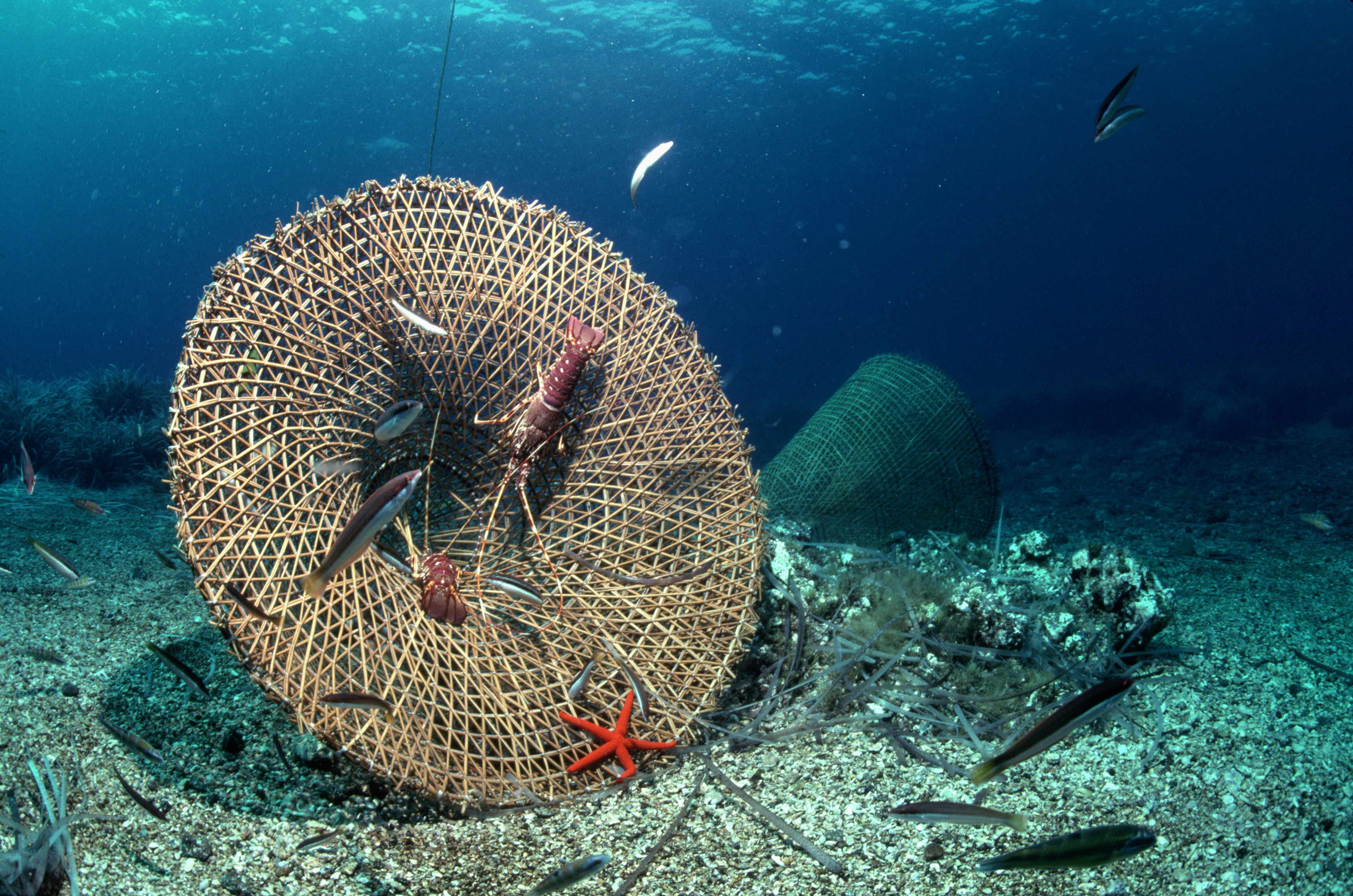
I recently found a short article my father wrote for National Fisherman, in 1988, which reported on a new kind of lobster trap with a “catch escape panel” aimed at reducing bycatch. My dad had a steady freelance gig at the time with National Fisherman, and the article was one of several he wrote while researching “ghost traps” – lobster traps, specifically, but really any lost fishing gear (nets, lines) that disappears underwater for reasons random, accidental, or deliberate.
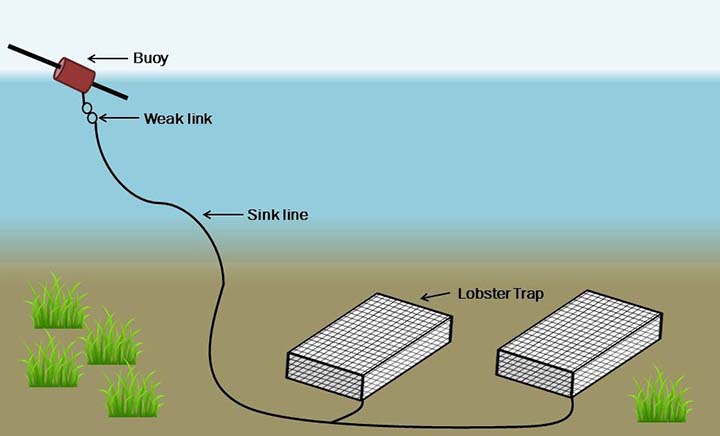
With lobster traps, it’s easy to imagine what happens. To retrieve traps and the lobsters in them, a fisher works her way along from floating buoy to buoy. Each is connected to a heavy “sink line” that is in turn fixed to a trap, which sits on the seabed, catching lobsters. If something – a propeller from a passing boat, for example – parts the sink line, then the buoy drifts off with the current and the trap is lost.
{credit}Getty images/Jeff Rotman Photography{/credit}