Ghost research: taking stock of work that disappears

Why every researcher should keep an old bulletin board.

Guest contributor Eli Lazarus

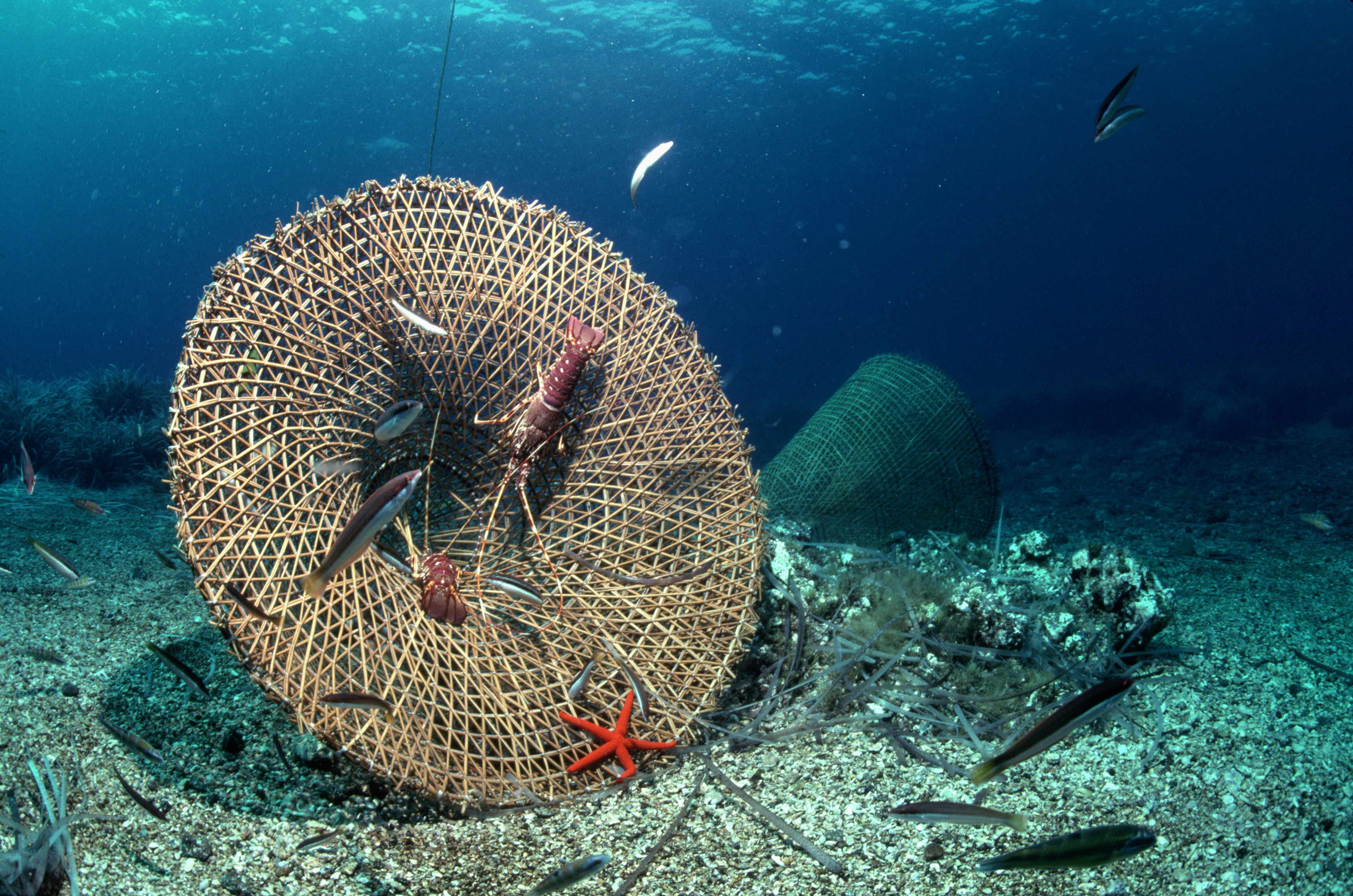
I recently found a short article my father wrote for National Fisherman, in 1988, which reported on a new kind of lobster trap with a “catch escape panel” aimed at reducing bycatch. My dad had a steady freelance gig at the time with National Fisherman, and the article was one of several he wrote while researching “ghost traps” – lobster traps, specifically, but really any lost fishing gear (nets, lines) that disappears underwater for reasons random, accidental, or deliberate.

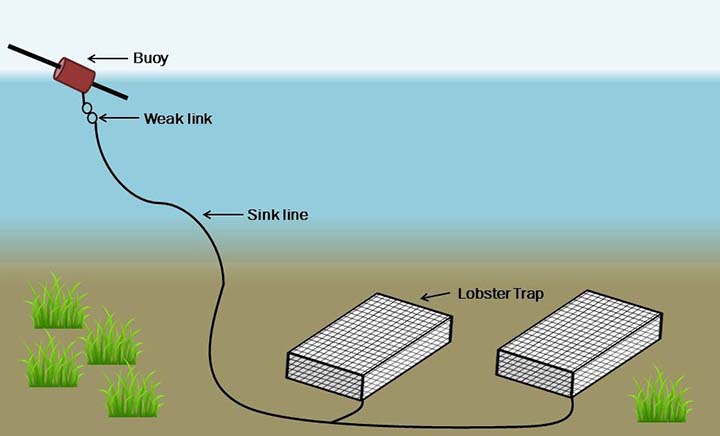
With lobster traps, it’s easy to imagine what happens. To retrieve traps and the lobsters in them, a fisher works her way along from floating buoy to buoy. Each is connected to a heavy “sink line” that is in turn fixed to a trap, which sits on the seabed, catching lobsters. If something – a propeller from a passing boat, for example – parts the sink line, then the buoy drifts off with the current and the trap is lost.
GettyImages-519978966-smaller

{credit}Getty images/Jeff Rotman Photography{/credit}
Continue reading

Failing to fail gracefully

Failure is hard, but keep trying, says John Tregoning (who should follow his own advice occasionally).

Guest contributor John Tregoning

Advice: easier to give than to follow

This time last year, I wrote ten strategies to improve mental health in academic life. I think they’re worth reading, if you haven’t already. You’d think that having given all this advice, I would have followed it, and maintained a Zen-like calm. Not so.

John Tregoning

John Tregoning

In the last year I have allowed failure (and the prospect of failure) to define my mood, compared my progress with researchers several leagues above me and found myself wanting, got too obsessed with work to appreciate anything else, taken on more than I can manage, unsuccessfully disguised my jealousy about colleagues’ success, taken criticism as a personal attack, and not spoken to anyone about what was going on in my head.

Whilst reflecting on my inability to follow my own advice, this year I wanted to come up with something that I could follow to improve my own mental health. Then I had (another) grant bounce and realised that, for me, the major contributor to mental health issues in academia is failure. Yes, failure is relative and, yes, there are clearly bigger problems in the world. But in that bitter moment of rejection it’s hard to step back and see that. Continue reading

It’s not you, it’s me: Learning from a grant rejection

Lisa Michelle Restelli

{credit}Image courtesy of Lisa Michelle Restelli{/credit}

Introducing Lisa Michelle Restelli, one of the winners of the London Naturejobs Career Expo journalism competition

Lisa Michelle Restelli completed a masters degree in medical, molecular and cellular biotechnologies at San Raffaele University in Milan, Italy, and she is now a second-year PhD candidate at the University of Basel in Switzerland. Her work focuses on mitochondrial morphology and its relationship to the central nervous system, both in health and in disease. Outside the lab, she enjoys cooking, reading, and travelling, preferably in combination.

—-x—-

“Acceptance rates for grants in Switzerland are 30-40%,” proclaimed my prospective boss  in February 2012 as I interviewed for a PhD position in neurobiology across the Alps. “We should get your project funded in no time.” As it turns out, it was actually 51% at the time for the Swiss National Science Foundation. These optimistic figures certainly had a lot to do with my final decision to move to Switzerland to pursue a PhD, closely followed by chocolate. Even as an undergrad, I could perceive the steady uncertainty of the worldwide funding situation, so I was eager to position myself in what seemed to be a safe haven.

Continue reading

How to bounce back from grant rejection

Courtney Long

{credit}Image courtesy of Courtney Long{/credit}

Introducing Courtney Long, one of the London Naturejobs Career Expo journalism competition runners-up.

Courtney Long is a native of Texas and is currently working as a postdoctoral fellow at the University Medical Center Hamburg-Eppendorf in Hamburg, Germany. She received her PhD in Microbiology and Immunology from the University of Oklahoma Health Science Center in Oklahoma City, Oklahoma, USA.  She enjoys traveling around Europe with her husband Andy, reading, walking her two boxers dogs, mochas, baking, and being an all-around sassy southern belle.

—-x—-

It’s all in the way you handle it. First of all, I take the news with a class not seen since the likes of Grace Kelly or Jackie O.

OK, I lied. For me, part of bouncing back is going through the 6 stages of scientific grief.

Stage one: The initial let down

You anxiously open your email every morning, hoping they have contacted you. Every so often hitting the “Refresh” button (as in every few minutes) because surely something is wrong with the server and you just know the winners should be told by now. Then the fateful day arrives and sitting in your inbox is THE email. You open it with bated breath, your cheeks already starting to arch up in a celebratory smile, you start reading about how many strong applicants there were this year and what a difficult decision it was. Compliment sandwich at its best. Bottom line: You got rejected. The full weight of the rejection hasn’t quite hit and here is where you enter stage two. Continue reading