Nature India Photo Contest 2020: Finalist #2

Announcing the second finalist in the Nature India Photo Contest 2020:

 Amitava Chandra, Kolkata, West Bengal

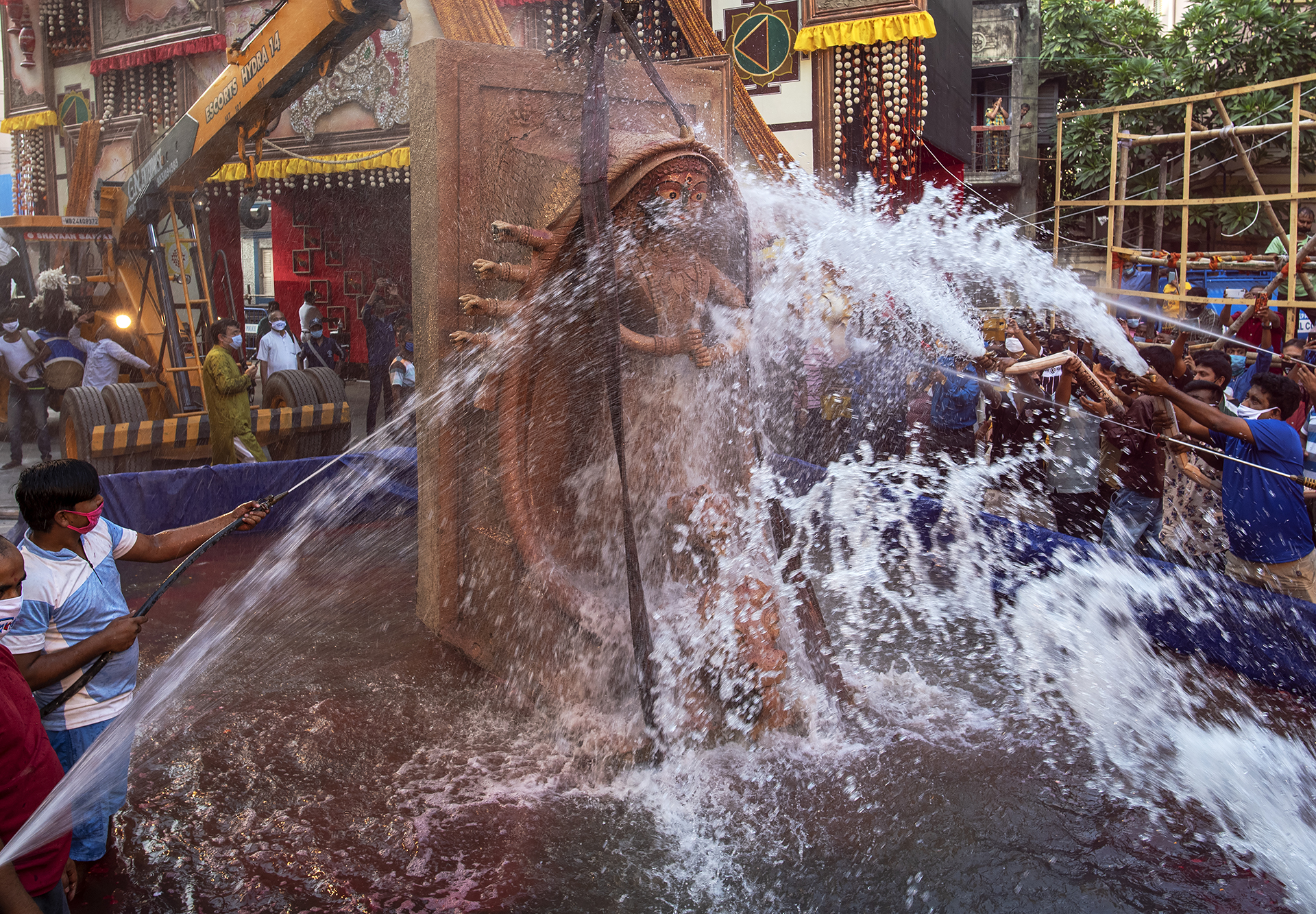
Photo caption: Immersive innovation

“The annual Durga Puja festivities end with the immersion of the gods’ idols in river Hooghly, a tributary of the Ganges. Every year thousands of people take part in the idol immersion processions. Following COVID-19 restrictions, the festival organising committees created temporary water bodies to ‘immerse’ the clay-made idols by dissolving them with high power water jets, like in this picture taken at the Tridhara Sanmilani Puja Pandal, Kolkata on 26 October 2020. The benefits were two-fold – no processions, and no pollution of the Ganges’ waters.” — Amitava Chandra

Congratulations Amitava for making it to top 10!

The Nature India editorial and design teams have chosen ten stunning finalists, that will be rolled out (in no particular order of merit) over the next few days. These entries have been judged for novelty, creativity, quality and print worthiness. Nature India’s final decision to chose the winner will be partly influenced by the engagement and reception these pictures receive here at the Indigenus blog, on Twitter and on Facebook. To give all finalists a fair chance, we will consider the social media engagement each picture gets only during the first seven days of its announcement. The final results will be announced sometime in early February 2021.

Watch this space as we announce the other finalists in the coming days. Like, share and comment on your favourite photos on Twitter and on Facebook with the hashtag #NatureIndphoto to make them win.

The winning pictures will get cash prizes worth $350, $250 and $200 respectively. The top 10 finalists will be featured here, on Nature India’s blog Indigenus and in our subsequent annual issue.

The winner and runners-up will also receive a copy of the Nature India Annual Volume 2020 and a bag of Nature Research goodies. Winning entries stand a chance of being featured on the cover of one of our forthcoming print publications.

Honey bees starve in COVID-19 lockdown

Bee farmers are finding it hard to move their bee boxes from one place to another across India. This means their bees can not be fed as usual on seasonal flowers, neither will they pollinate this summer, writes Gopinathan Maheswaran of the Zoological Survey of India, in this guest post.

{credit}Pixabay{/credit}

Across the world, honey bees are the most commonly used pollinators.

In India, more than 9698 government-registered entities – individuals, societies, firms, companies and a few self-help groups – depend on beekeeping for their livelihood. A massive 15, 59, 771 registered bee colonies are spread across various states of India. However, the bee keeping business has its own challenges, especially in cases where farmers depend only on bees as the single source of pollination. Often the health of these colonies suffers from poor nutrition, pests and diseases.

The COVID-19 lockdown has presented a peculiar problem for the beekeepers and the bees. As countries go into extended lockdowns, movement of non-essential vehicles has come to a standstill. In India, the restrictions have made it difficult for the farmers to move the huge number of beehive boxes from one state to another or even within the states. As a result, the bees are starving to death.

During the summer months between February and July, farmers, especially in northern India, go from one state to the other with their bee boxes to feed the bees (Apis indica) on seasonal flowers of mango and litchi trees. Bees feed on the flower honey for nutrition and farmers sell the honey the insects store in their hives. The bees also help pollinate the mango and litchi trees, thereby increasing the production of these two cash fruit crops, and also a variety of other plants.

Farmers in Canada have reported struggling to get their shipment of beehives from aboard. Global food production, which depends a lot on bee pollination, is estimated to get affected due to COVID-19 lockdowns in various countries as without bees the yields of some fruit, seed and nut crops are known to decrease by more than 90 per cent.

This may impact poor and developing countries in the coming years as truncated food supply may result in hiking prices of many essential commodities beyond the reach of the poor in Asia and Africa. The lockdowns also hamper assessment of the damage by researchers, who can not reach the affected areas.

(Gopinathan Maheswaran is a Scientist in the Bird Section of Zoological Survey of India,  Kolkata. He can be reached at maheswaran@zsi.gov.in)

Nature India Photo Contest 2019: Finalist #10

And here’s presenting the last finalist in the Nature India Photo Contest 2019:

Sudip Maiti, Kolkata, West Bengal, India.
Photo caption: Annapurna

{credit}Sudip Maiti{/credit}

“A farm woman works in her field of cabbage in rural West Bengal. Annapurna is the goddess of food in Indian mythology. This woman represents the millions of farm women who silently work in India’s farmlands to grow fresh produce. They work doubly hard – in the fields and at home tending to their families. Their hard work should teach us never to take the food on our plates for granted.” — Sudip Maiti

Congratulations Sudip for getting your second picture into the top 10 shortlist!

That brings us to the final picture in the 2019 Nature India Photo Contest shortlist. Watch this space for the announcement of the winners in the coming week.

The winning pictures will get cash prizes worth $350, $250 and $200 respectively. The top 10 finalists will be featured here, on Nature India’s blog Indigenus and in our subsequent annual issue.

These entries have been judged for novelty, creativity, quality and print worthiness. The winner and two runners-up will also receive a copy of the Nature India Annual Volume 2019 and a bag of Nature Research goodies (including Collector’s first issues of Nature and Scientific American and some other keepsakes). Winning entries stand a chance of being featured on the cover of one of our forthcoming print publications.

Nature India Photo Contest 2019: Finalist #6

Time to announce the finalist number six in the Nature India Photo Contest 2019:

Partha Pratim Saha, Kolkata, West Bengal, India.
Photo caption: Dry day catch

“Shilabati is a rain fed river in Eastern India. Many fishermen depend on this river for their catch in the rainy season. But in summers, the river dries up. Fishermen are then unable to use their boats in the shallow water. In these dry seasons, they go down to the level of the river bed and use hand nets for fishing the traditional way.” — Partha Pratim Saha.

Congratulations for entering the top 10 shortlist, Partha Pratim!

Watch this space as we announce the other finalists in the coming days.

The winning pictures will get cash prizes worth $350, $250 and $200 respectively. The top 10 finalists will be featured here, on Nature India’s blog Indigenus and in our subsequent annual issue.

These entries have been judged for novelty, creativity, quality and print worthiness. The winner and two runners-up will also receive a copy of the Nature India Annual Volume 2019 and a bag of Nature Research goodies (including Collector’s first issues of Nature and Scientific American and some other keepsakes). Winning entries stand a chance of being featured on the cover of one of our forthcoming print publications.

Nature India Photo Contest 2019: Finalist #1

It’s time to roll out the shortlist of the Nature India Photo Contest 2019.

The 6th edition of our photo contest themed “food” opened in November 2019 and has received some remarkable entries from around the world.

We invited pictures that show food beyond just an instagram-worthy plateful — pictures that demonstrate the link between food and evironment, food and health/nutrition, food security, the processes and techniques of growing food, packaging, cooking or even the politics behind food storage and supply.

Like always, entries came from a mix of amateur and professional photographers, scientists and non-scientists, mobile cameras and high-end DSLRs.

The Nature India editorial and design teams chose ten stunning finalists, that will be rolled out (in no particular order of merit) over the next few days. Nature India’s final decision to chose the winner will be partly influenced by the engagement and reception these pictures receive here at the Indigenus blog, on Twitter and on Facebook. To give all finalists a fair chance, we will consider the social media engagement each picture gets only during the first seven days of its announcement. The final results will be announced sometime in early February 2020.

So here’s finalist number one in the Nature India photo contest 2019:

Sudip Maiti, Kolkata, West Bengal, India.

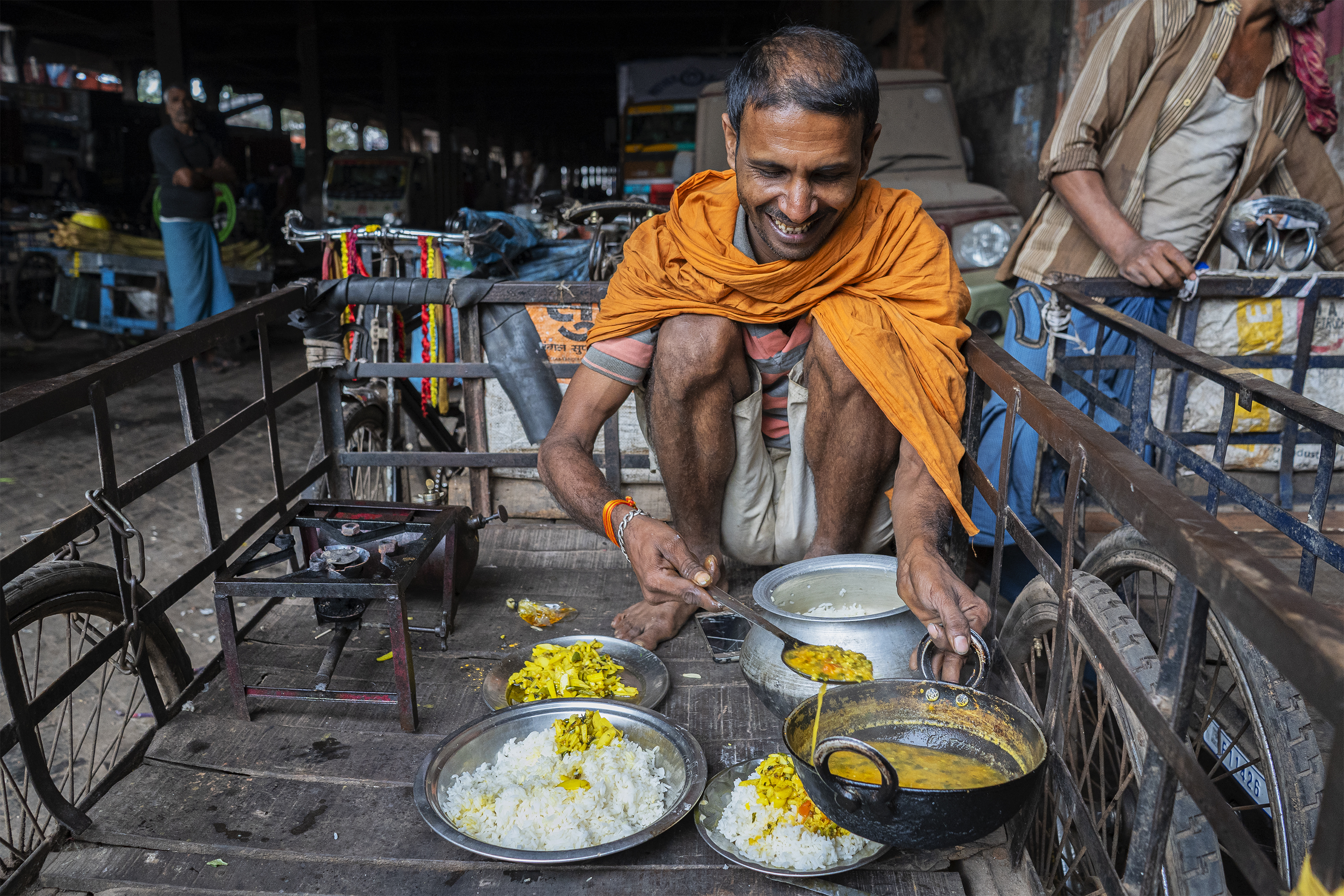
Photo caption: Open air restaurant

{credit}Sudip Maiti{/credit}

“A daily-wage worker cooks lunch for himself and his fellow workers in a hand-pulled cart below the famous Howrah Bridge in Kolkata, India. I was drawn to this scene because cooking is a private matter, mostly done indoors. In this man’s life, this important activity of the day happens in a busy, public space. The photo conveys the hardships such people face for their daily food, with a smile on their faces.” — Sudip Maiti.

Congratulations Sudip for making it to top 10!

Watch this space as we announce the other finalists in the coming days.

The winning pictures will get cash prizes worth $350, $250 and $200 respectively. The top 10 finalists will be featured here, on Nature India’s blog Indigenus and in our subsequent annual issue. 

These entries have been judged for novelty, creativity, quality and print worthiness. The winner and two runners-up will also receive a copy of the Nature India Annual Volume 2019 and a bag of Nature Research goodies (including Collector’s first issues of Nature and Scientific American and some other keepsakes). Winning entries stand a chance of being featured on the cover of one of our forthcoming print publications.

Nature India Photo Contest 2019 now open

We are back with the annual Nature India photo contest.

This year’s theme is ‘Food’.

Say ‘food’ and everyone has a story to share. These stories could be as diverse as ‘I love pasta’ to ‘the cyclone ruined our paddy yield this year’ to ‘half my country is malnourished and the other half obese’.

These stories point to our deep-seated and lifelong relationship with food. For some food is nutrition, for some others it’s an emotion – a memory, perhaps associated with a smell, taste, place or person?

For a farmer, food may mean a farm, the seeds, the equipment, the land, the market, floods or famine or a harvest festival. For a school going child, food is the lunch box or a piping hot mid-day meal served in the classroom. For many communities, food is a social binder, intrinsically linked to the culture of their land.

For scientists, food is the metabolic, biochemical or physiological process that underlines how an organism uses its source of nutrition. For global policy makers, food is the challenge of securing nourishment for close to 10 billion people by 2050. Food is health, food is environment and many times the connection between the two.

So which face of food would you want to capture in a photograph? Which of these nuanced stories do you want to tell? For the Nature India photo competition this year, we urge you to think deeper about food, beyond just an Instagram-worthy plateful.

Think of pictures that demonstrate how food fundamentally influences or interacts with health, how food security defines the health and happiness of people or how the lack of food may result in a plethora of unwanted consequences. We would also be happy to receive entries that talk to us about the link between the food we eat and our environment, or ones that depict how balanced nutrition makes for healthy people and healthy communities.

You may also draw inspiration from scenes that portray the process and techniques of growing food, cooking it in many interesting and unique ways, of infant nutrition or the politics behind food storage and supply, or even the merits or demerits of packaging food.

The canvas is wide open.

So get set, click and send your entries by 21 December 2019!

Prizes

The top three pictures will get cash prizes worth $350, $250, $200. The top 10 finalists will be featured on Nature India’s blog Indigenus

Entries will be judged for novelty, creativity, quality and print worthiness. Winners will be chosen by a panel of Nature Research editors and photographers. The winner and two runners-up will receive a copy of the Nature India Annual Volume 2019 and a bag of Nature Research goodies (including Collector’s first issues of Nature and Scientific American and some other keepsakes). Winning entries also stand a chance of being featured on the cover of one of our forthcoming print publications.

Eligibility

The contest is open to all – any nationality, any occupation, any profession. You may use whatever camera you wish – even your cell phone – as long as the photograph you send us is unedited, original, in digital format and of printable quality. Just make sure you are not violating any copyrights. Also, no obscene, provocative, defamatory, sexually explicit, or other inappropriate content please (refer to the contest terms and conditions below).

Please send your entries in jpeg format to npgindia@nature.com with your name and contact details. Please mention “Nature India Photo Contest 2019” in the subject line of your email. The photograph must be accompanied by a brief caption (please see some photo captions here for reference) explaining the subject of the picture along with the date, time and place it was taken.

We will accept a maximum of two entries per person. The last date for submissions is midnight of December 21, 2019 Indian Standard Time. On social media, please use the hashtag #NatureIndphoto to talk about the contest or to check out our latest updates.

The theme for our inaugural photo competition in 2014 was “Science & technology in India”. Our themes have then covered “Patterns”, “Nature”, “Grand Challenges” and “Vector-borne Diseases”. We have received some breathtaking entries from across the world all these years. You might want to take a look at the winning entries of the Nature India Photo Contest 201420152016, 2017 and 2018 for some inspiration and to get an idea of what we look for while selecting winners.

[TERMS AND CONDITIONS

Please read these terms and conditions carefully. By entering into this Nature India Annual photo contest (“Promotion”), you agree that you have read these terms and that you agree to them. Failure to comply with these terms and conditions may result in your disqualification from the Promotion.

  1. This Promotion is run by Nature Research, a division of Springer Nature Limited a company registered in England with registered number 00785998 and registered office at The Campus, 4 Crinan Street, London N1 9XW (“Promoter”).
  2. To enter this Promotion you must be: (a) resident in a country where it is lawful for you to enter; and (b) aged 18 years old or over (or the applicable age of majority in your country if higher) at the time of entry. This Promotion is void in Cuba, Iran, North Korea, Sudan, and Syria and where prohibited or restricted by law.
  3. This Promotion is not open to directors or employees (or members of their immediate families) of Promoter or any subsidiary of Promoter. Promoter reserves the right to verify the eligibility of entrants.
  4. The Promotion is open for entries between 00:00 on 21/11/2019 and 00:00 on 21/12/2019 IST.
  5. No purchase is necessary to enter this prize Promotion and will not increase your chances of winning.
  6. You can enter this Promotion by emailing npgindia@nature.com
  7. Only two entries per eligible person. More than two entries will be deemed to be invalid and may lead to disqualification.
  8. Promoter accepts no responsibility for any entries that are incomplete, illegible, corrupted or fail to reach Promoter by the closing date for any reason. Proof of posting or sending is not proof of receipt. Entries via agents or third parties are invalid. No other form of entry is permitted. Please keep a copy of your entry as we will be unable to return entries or provide copies.
  9. The prize for the Promotion consists of the following: Three cash awards worth $350, $250 and $200 for the top three entries respectively, a copy of the Nature India Special Annual Volume 2019 and a bag of goodies (which includes Collector’s first issues of Nature, November 1869 and Scientific American, August 1845; and some other keepsakes) from Nature Research.
  10. The prizes shall be awarded as follows: The prize will be decided in the week following the close of the Promotion. The winners will be notified via email. Winners will be selected by a four person panel of Nature staff, at least one of which will be independent from the Promotion, based on photographic merit, creativity, photo quality, and impact. Full names of the judging panel will be available on request. Any decision will be final and binding and no further communication will be entered into in relation to it.
  11. Ownership of entries: for consideration into this Promotion, you must sign a license to publish form granting the intellectual property rights to Nature Research for your image. This may be used in promotional or marketing material in print and online. You confirm that your entry is your own original work, is not defamatory and does not infringe any laws, including privacy laws, whether of the UK or elsewhere, or any rights of any third party, that no other person was involved in the creation of your entry, that you have the right to give Promoter and its respective licensees permission to use it for the purposes specified herein, that you have the consent of anyone who is identifiable in your contribution or the consent of their parent, guardian or carer if they are under 18 (or the applicable age of majority), it is lawful for you to enter and that you agree not to transfer files which contain viruses or any other harmful programs.
  12. The winner(s) of the Promotion shall be notified by email no more than two weeks after the Promotion closes.
  13. The winner(s) will be required to confirm acceptance of the prize within ten working days and may be required to complete and return an eligibility form stating their age and residency details, among other details. Promoter will endeavour to ensure that winner(s) receive their prizes within 30 days of the date they confirm acceptance of the prize. If a winner does not accept the prize within ten days of being notified, they will forfeit their prize and Promoter reserves the right to choose another winner(s). Promoter’s decision is final and Promoter reserves the right not to correspond on any matter.
  14. The name, region of residence and likeness of the winners may be used by Promoter for reasonable post-event publicity in any form including on Promoter’s website and social media pages at no cost.
  15. You can find out who has won a prize by sending an e-mail to npgindia@nature.com or checking the Nature India blog website Indigenus (https://blogs.nature.com/indigenus).
  16. Promoter reserves the right to cancel or amend these Terms and Conditions or change the Prize (to one of equal or greater value) as required by the circumstances. No cash equivalent to the Prize is available.
  17. All personal data submitted by entrants is subject to and will be treated in a manner consistent with Promoter’s Privacy Policy accessible at https://www.nature.com/info/privacy.html. By participating in this Promotion, entrants hereby agree that Promoter may collect and use their personal information and acknowledge that they have read and accepted the Promoter Privacy Policy.
  18. Promoter may at its sole discretion disqualify any entrant found to be tampering or interfering with the entry process or operation of the website, or to be acting in any manner deemed to be disruptive of or prejudicial to the operation or administration of the Promotion.
  19. Other than for death or personal injury arising from negligence of the Promoter, so far as is permitted by law, the Promoter hereby excludes all liability for any loss, damage, cost and expense, whether direct or indirect, howsoever caused in connection with the Promotion or any aspect of the Prize. All activities are undertaken at the entrants own risk. Your legal rights as a consumer are not affected.]

Water charity: What the drinking fountains of Mumbai tell us

The pyaavs of Mumbai aren’t just public fountains but a repository of memories, architectural history and an important lesson in water philanthropy. Swapna Joshi, a PhD Student at the Indian Institute of Science Education and Research Pune, studies them closely to find new meaning in the old.

A pyaav on Mumbai’s Mohammad Ali Road

There is something mesmerizing about the architecture of South Mumbai. As a local train commuter, whenever I step into Mumbai’s CSMT railway station (formerly Victoria Terminus), I notice, despite the hustle, intricate details of the building. Working with a Mumbai based conservation architect’s firm gave me a vantage point to look at colonial period architecture and appreciate it. That’s how I came in contact with the public drinking water fountains of Mumbai, locally known as the pyaavs.

‘Thy thirst repose to quench a handful of life’. This was the quote we chose to restore the first pyaav through a public-private initiative in Mumbai. Why this intense thought in a structural conservation? Was there a story beyond the material fabric of the pyaav? The answer is yes.

This pyaav was in the Kessovji Naik Fountain and clock tower in Bhat Bazaar of Masjid Bunder, one of the busiest markets of Mumbai. Some 100 years ago, a generous patron had decided to support the construction of the pyaav and provide water for the city, without any other motive. How fascinating is this!

Around the same time I read ‘The Water Heritage of Mumbai’ by Dr. Varsha Shirgaonkar, the Vice-Chancellor of S.N.D.T Women’s University. In this seminal work, she painstakingly documents most of the city’s pyaavs, including many whose exact location was not known. Data on about thirty pyaavs of Mumbai are available today. These pyaavs were built during the 19th and 20th century and provided drinking water in commercial zones, along tram routes, in markets, gardens and other public places.

A pyaav in the Char Nal area of Mumbai.

The concept of a pyaav is based on two important things — the generosity of a philanthropist with an intention of giving back to the city; and building a monument in the memory of a deceased relative of the patron. Armed with Dr. Shirgaonkar’s foundation-laying information and with the thought of developing and restoring these pyaavs to their former glory, a group of like-minded people, including me, came together. The group — comprising an architect, a journalist, a historian and a heritage enthusiast — formed a social media group called ‘The Mumbai Pyaav Project’. Our reach was limited because all we had were photos of pyaavs, some in utterly dilapidated condition.

In Carnac Bandar in Mumbai, for example, a pyaav has been transformed into a temple. Similarly, another pyaav nearby was on the verge of being demolished for a developmental project, but was saved because of the awareness of local people. Identifying dangers to the pyaavs would help in their conservation. The need is to look at the data but through a contemporary lens.

This pyaav in the Crawford Market area of Mumbai is modeled like a shrine.

In 2017, I received the Sahapedia Unesco Project Fellowship. It enabled me to map all the pyaavs in the city, understand their present condition, interview people associated with them and document them audio-visually. While doing the field work and photo documentation, I came across many pyaavs still in use as drinking water sources. When I saw a small child drinking from the pyaav in the King Circle garden, I was convinced of the need for their revival. I joined hands with people who shared this conviction to retrieve and share information on the pyaavs with a larger audience.

Apart from their heritage value, pyaavs reduce plastic pollution by eliminating the need for packaged drinking water. Commuters I interviewed near a pyaav in Kalachowki area, and the owner of a nearby shop, were delighted that it was being restored. The question of whether working class people were the only ones to drink water from these pyaavs was answered by visits to some modern paanpois (water storage tanks) and earthen water pots kept charitably for passers by on crossroads. Also, almost every tea stall serves water to customers before tea, which is a kind of a pyaav system in itself. The project started building up with all this and the same data now got a fresh relook.

The endeavour was to understand the basic drinking water supply system of Mumbai and functioning of the dams in the city — from when and why they were built to the quantity of water supply to the city. When we showed our audio-visual content, people admitted they passed these pyaavs every day but did not know what they were. Armed with knowledge, they expressed interest in seeing more of these.

Pyaavs are a network of history and heritage, drinking water supply and memories. As of now, three other pyaavs have been restored and many others are in the process of being revived . The re-collation of the data in the  Sahapedia project gave me the key to understand pyaavs much better.

The pyaavs have various functions but we have largely failed to admire them as spaces to pause, gather and remember. They are soothing beauties and heritage markers. As the great poet Rabindranath Tagore puts it: “For many years at great cost, I traveled through many countries, saw the high mountains and the ocean. The only things I did not see were the sparkling dewdrops in the grass…. just outside my door.”

[Photo credits: Swapna Joshi.]

Nature India Special Issue on ‘Grand Challenges’

coverAs part of Nature India’s 10th anniversary celebrations, we produced a special issue on ‘Grand Challenges’. (Download your free copy here.)

India is headed towards an astonishing population surge. With 1.34 billion people recorded in early 2018, the country is estimated to add another 100 million by 2024 overtaking China, currently the most populous nation in the world. Therefore, her daunting demographics are integral to any discussion around the challenges faced by India.

The mammoth population coupled with limited resources, and growing urbanization and energy needs are important factors behind many socio-economic issues. Be it poverty, healthcare delivery, literacy, pollution or waste management — each of India’s problems can be directly linked to and are intensified by its teeming millions.

Some of the most pressing challenges raised by a large population are in the public healthcare, energy and sanitation sectors. Successive Indian governments have made tremendous efforts to meet public needs and expectations. However, health concerns such as tuberculosis, maternal and infant mortality, vector- and water borne-diseases, malnutrition, hygiene and sanitation remain major problems.

03The Nature India special issue on Grand Challenges takes a closer look at some of these hazards, which are experienced across the developing world. What are the grand challenges for the country’s 1.3 billion people? Can science help find solutions to some of the public health problems? Can innovation provide long-term answers?

Through in-depth commentaries by subject experts, this special issue looks at the state of affairs in malaria
management, maternal and child health, malnutrition and tuberculosis. It also looks at the science-led innovations and solutions already on offer. In a reprint section, we compile some recent articles from across Nature Research publications that highlight the grand challenges and research-based solutions that India and the rest of the developing world have adopted.

The volume also features a special photo section curated from top entries to the 2017 Nature India photo competition, themed ‘Grand Challenges’. These pictures are compelling visual narratives of some deeply moving and familiar circumstances.

With examples and case studies of evidence-based solutions, the Nature India special issue on Grand Challenges hopes to be an enlightening read for scientists, policy-makers, business leaders, and societies across the developing world.


Pollution woes: Is methanol a solution?

Every winter, the northern plains of India are engulfed in toxic fumes, emanating from crop stubble burnt by farmers in the states of Punjab, Haryana, Rajasthan and Western UP. Coupled with that, air pollutants from power plants, and vehicles choke the mega cities. 

Avinash Kumar Agarwal from the Department of Mechanical Engineering at Indian Institute of Technology Kanpur argues in this guest post that methanol economy may offer a potential way out of the obnoxious levels of pollution India is faced with.

Delhi’s winter pollution problem has now caught global attention. The problem gets further complicated every year because of the cold weather conditions that do not allow pollutants to climb up to higher altitudes. Toxic pollutants accumulate near the ground, making a deadly chemical cocktail with secondary organic aerosols nurtured by moisture and sunlight.

The situation is so bad that sunlight can’t penetrate through the carbon black dispersed in the environment. Every winter, therefore, life for more than 250 million people living in the region becomes a chaotic mess of traffic snarls, flight and train delays and low visibility that makes roads hazardous and unsafe. The incidence of respiratory diseases increases exponentially during this time of the year. The economy goes for a toss with massive losses in productivity – millions of man hours are wasted on roads and the public health burden escalates.

The situation has aggravated in the last decade turning Delhi into a gas chamber, where ambient air quality consistently hovers way above safe limits for weeks together. Winters in India’s capital are now deemed life-threatening.

A smog-riddled Delhi day during peak winter, December 2017

A smog-riddled Delhi day during peak winter, December 2017{credit}S. Priyadarshini{/credit}

Can a methanol economy help?

Besides public policy measures to reduce pollution and stricter implementation of laws to stop crop burning, another way to address the menacing issue could be adopting a methanol economy.

Agriculture residues from farms, currently burnt to prepare the ground for fresh crop seasons, can be used to produce methanol. The carbon monoxide and hydrogen generated by gasification of this massive biomass of low-value feed stock can be used for production of methanol using simple, commercially available technologies. This will not only solve the problem of uncontrolled biomass burning and the associated problem of soot and particulate loading of atmosphere, but has the potential to generate valuable revenue and employment for Indian farmers.

Methanol can also be generated using municipal solid waste, millions of tonnes of which are accumulating in India’s mega cities. The technology for this also exists in the country. Another potential source of methanol is high ash coal, which may not be suitable for power plants or other large-scale economic activities. In theory, India has infinite potential for producing methanol to substitute all petroleum imports.

The methanol thus produced can be used to fire power plants to generate electricity, thus ridding northern India of the fly-ash generated by the power plants, which escapes the most efficient bag filters and electro-static precipitators (ESPs).

Vehicles fuelled by gasoline and diesel can be operated with methanol and di-methyl ether (DME). DME, an ultra-clean fuel known for its soot-less combustion, is a methanol derivative and can be produced by a simple one-step process.

Methanol has also been used for the last several decades as a fuel in Formula-1 race cars, thanks to its properties well suited to spark ignition engines. The octane number of methanol is 105 whereas the octane number of gasoline sold in the market is 91-94. Therefore, methanol can be blended in any proportion with gasoline or used in pure form in the engines. With some modifications in the engine, diesel engines can also operate with methanol as fuel. Older vehicles can be easily altered to use these new fuels using simple kits and new engines can be designed to take advantage of the excellent properties of these fuels. The Engine Research Laboratory at IIT Kanpur has successfully demonstrated methanol-powered spark ignition as well as compression ignition engines. These engines are extremely clean and can easily meet the most stringent emission norms applicable today, and upcoming Bharat Stage-6 norms, with appropriate prototype development.

As the Indian government is now taking a serious look at methanol economy as an alternate, it may be a good time to scale up these efforts through capacity building, production research and utilisation. Methanol economy has the potential to reduce fuel imports, increase energy security from domestic resources and contribute towards a cleaner India.

Limitations

Despite the many benefits it offers, methanol does not come without limitations. Methanol is hygroscopic, meaning it attracts moisture, and could corrode copper and brass engine components when used as a fuel. It is slightly toxic to skin and poisonous if consumed in large quantities. It could pose a health hazard if injected accidentally or intentionally. The gas is odourless, which makes leaks harder to detect. However, the trickiest bit about methanol is its invisible flame.

Cars require more frequent refuelling or larger fuel tanks because methanol has lower energy density. Use of methanol in hilly areas during winters may lead to ignition problems. Methanol is less volatile than gasoline which makes it difficult to fire up or start engines in cold weather conditions. Methanol has limited solubility in gasoline at low temperatures .Therefore phase separation may occur when using ‘gasohol’ blends because of the presence of water traces in methanol. Though methanol emissions are safer than gasoline, methanol results in relatively higher amount of formaldehyde emissions.

Considering the positives of methanol use as a fuel, these limitations can be taken care of during the design of engine and machine components or during the fuel formulation stage, where appropriate additives can be added to overcome the adverse properties of methanol. Methanol has not yet been explored in engines for large-scale implementation with the seriousness it deserves.

A methanol economy can also help regulate the ever-increasing price of gasoline and transport fuel in the world market.

A scientist who can cut your electricity bill

Mumbai-born Aaswath Raman, who grew up in Canada and is now a Canadian citizen, researches unique new ways of harnessing a largely unexploited renewable source of energy — the cold of the universe. Raman moved to the USA for his bachelor’s degree in 2002 and is currently a research associate with the Ginzton Laboratory at Stanford University, where he investigates “radiative or sky cooling” to develop prototype systems for cooling, refrigeration and beyond.

K. S. Jayaraman spoke to Aaswath Raman to find out how you can air-condition your building without electricity.

Here’s Jayaraman’s guest blog.

Aaswath Raman

Aaswath Raman

Aaswath Raman and his colleagues at Stanford University recently reported1 that it is potentially possible to air-condition a building through the technology of “radiative sky cooling” using a new coating material they have developed.

I wrote to Raman, co-lead author of this paper, and he replied explaining the mechanism: “Radiative sky cooling exploits a natural property of our atmosphere. If you can dissipate heat as infrared radiation into something that is very cold  like outer space you can cool a building without any electricity. This then provides a completely passive, non-evaporative way to cool below the ambient air temperature.”

The heart of the invention is an ultrathin multilayered material Raman and co-workers Eli Goldstein and Shanhui Fan had developed and first tested in 2014. The material, made of seven layers of silicon dioxide and hafnium oxide on top of a thin layer of silver, does two things at the same time. It beams invisible infrared heat from within a building into the cold outer space (using it as a heat sink), while simultaneously reflecting virtually all of the incoming sunlight that would otherwise warm up the building.

According to the authors, the material thus acts both “as a radiator and an excellent mirror” and the net result is cooler buildings that require less air conditioning. “The internal structure of the material is tuned to radiate infrared rays at a frequency that lets them pass into space without warming the air near the building.”

In 2014, these researchers showed that optical surfaces could be designed to enable this cooling effect even on a sunny day. In their recent work, they tested a system with panels coated with the specialised material laid atop pipes of running water on the roof of a Stanford University building. They found the panels were able to consistently reduce the temperature of the water 3 to 5 degrees Celsius below ambient air temperature over a period of three days.

When connected to refrigeration or air conditioning systems they can improve efficiency 20% or more. Raman and his colleagues are now commercialising the technology as a startup, SkyCool Systems, and have a pilot demonstration active in California, USA. They have already partnered with a manufacturer that can produce large sheets of the cooling material for further development.

The panels in operation with cooling systems at a field trial in the US.

The panels in operation with cooling systems at a field trial in the US.

And how does it apply to a country like India? “For Indian buildings our fluid cooling panels can have a major impact in commercial refrigeration in supermarkets, cold storage facilities, data centers, office buildings, malls and other commercial buildings,” he offers. “Also, there is the remarkable opportunity to use this technology to enable completely electricity-free, low-grade cooling in rural scenarios.”

At least two technical problems remain to be solved before the technology is put to practical use. The engineers must first figure out how to efficiently deliver the building’s heat to the coating material and secondly, create fabrication facilities that can make the panels at the scales needed.

  1. Goldstein, E. A. et al.  Sub-ambient non-evaporative fluid cooling with the sky. Nat. Energy (2017) doi: 10.1038/nenergy.2017.143