How outreach blends my worlds as a scientist and mom

Karishma S Kaushik, an Assistant Professor and Ramalingaswami Fellow at the Institute of Bioinformatics and Biotechnology in Savitribai Phule Pune University turned the pandemic into an opportune time to spur children’s interest in science, including her own son’s.
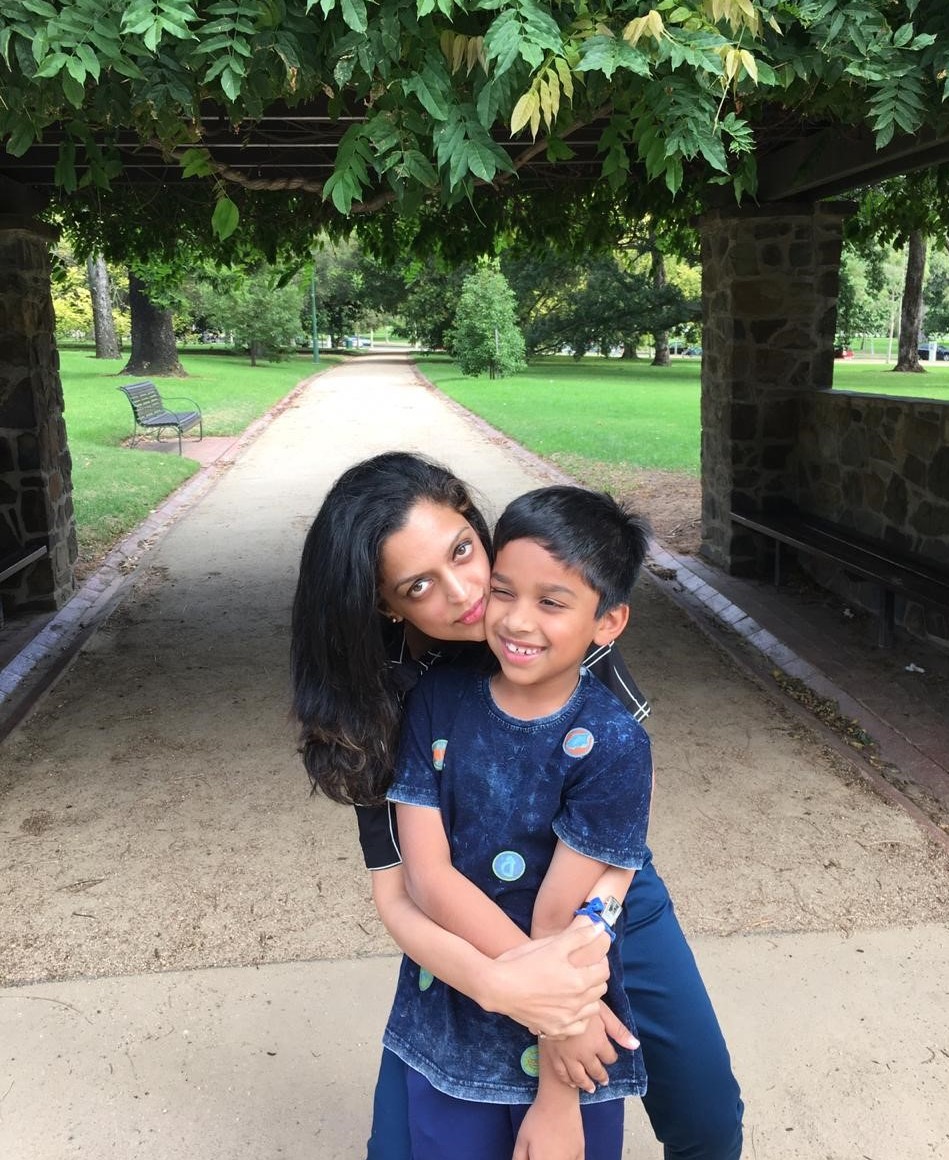
Karishma with son Abhay.

My phone pinged in the middle of the session. It was a message from my almost 10-year-old son. “Spelling mistake in slide 36. Instead of 1st you wrote ist” – the message read. I chuckled. Here I was, conducting a summer science quiz for children and their families across India, and getting instant feedback from the next room in the house. This was a heart-warming moment. It effortlessly represented how in a pandemic-stricken year, science outreach bridged my worlds as a scientist and a mother.

The pandemic forced a nation-wide lockdown in India in March 2020. It was around this time that my research colleague Snehal Kadam and I co-founded Talk to a Scientist. Schools were closed and I was giving informal science lessons to my son at home. He had so many questions – What is this virus? What is a pandemic? Why do we need to wear masks? Does the virus spread through food? As our science conversations gathered steam, I saw an opportunity in this rather distressful time to get children interested in, and excited about, science. I asked my son, “Do you think other kids your age, your friends for example, would be keen to talk to a scientist about all that is going on?” He was excited, “That would be great mom, but not just COVID, other topics as well.”

The first session of our webinar series went live on March 30, 2020, befittingly on COVID-19 for kids. Snehal and I made the visual content for the session, and I ran it by my son. He made edits and suggestions, and we got ready to roll. We expected 5 children to show up, and I was counting on my son and his cousins to be three of them. Much to our surprise and excitement, we had 75 children from across India join in. On popular demand, we started a weekly webinar for young minds.

The project has grown, and my son and I have spent hours brainstorming. For a session on medicines, he asked us to change the word ‘drug’ to ‘medicine’ on the slides. ‘Kids should not think you are talking about those kinds of ‘drugs’ that make people woozy, mom!” he said. I laughed and thought, my son is growing up. When I suggested a theme for a season, he would quickly come up with names from among my colleagues to be the guest scientists. “What about that scientist who works on peafowls, you shared a room with her in the Delhi conclave?” He has been a part of my professional life through conversations and conference books I brought back home, and now he was using it all to contribute to our outreach programme!

On the momentous occasion of us winning a grant to grow the platform, he stood near me, jumping with excitement, as I called Snehal to tell her the good news. Through weekly sessions spread over one year, he has enjoyed doing small jobs for the outreach – suggesting new features in the website, ideating for hands-on sessions with home supplies (as a parent myself, I did not want families to go out shopping for supplies in the middle of a pandemic), checking for typos in the slides, and sending flyers and posters to his school friends. For him, the ownership and importance of being a part of a national outreach programme has been thrilling. I would like to think that he will grow up to remember how it all started, with a casual conversation between us at home, and the time we spent together growing it in what was otherwise a tough year.

For me, in a year filled with professional uncertainties, pressures of working from home and home-schooling, science outreach has been a beautiful amalgam of my roles as a scientist and a mother. When the world was turning to science for answers, the scientist in me wanted to contribute to science outreach and education in the country, by sharing the process of scientific discovery and its power to transform lives and livelihoods. That I could co-create this with my son made this initiative even more special. Since the time I was a pregnant PhD student, determined to balance my life and career as a scientist and mother, I have day-dreamed scenarios where my son and I would talk about scientific advances, when he would join me on conference trips, and even imagined the possibility of us working together some day. I would like to believe that ‘Talk to a Scientist’ is the beginning of this journey.

While there have been numerous fun moments, one has been extra special. In the middle of one of the sessions, I caught my son taking a snack break in the kitchen. I looked at him questioningly, “Why are you not attending the webinar?” He replied matter-of-factly, “Your slides got a little boring mom, I will help you make better ones for next week”.

In addition to correcting typos, such no-filter feedback has been part of the deal!

Nature India Photo Contest 2020: Finalist #4

Unveiling finalist #4 in the Nature India Photo Contest 2020 themed ‘pandemic’:

Kaushik Dutta, Kolkata, West Bengal

Photo caption: Personal protection

“This little boy, struggling to come to terms with life with a mask, seems to believe that his mother might protect him from all calamities, even an unseen virus. The healing and influencing power of mothers in protecting families has been at the forefront of many awareness campaigns and immunisation programmes during public health emergencies such as the COVID-19. Clicked at the Howrah station in West Bengal, India.” — Kaushik Dutta

Congratulations Kaushik for making it to the top 10 in the Nature India Photo Contest 2020!

The Nature India editorial and design teams have chosen ten stunning finalists, that will be rolled out (in no particular order of merit) over the next few days. These entries have been judged for novelty, creativity, quality and print worthiness. Nature India’s final decision to chose the winner will be partly influenced by the engagement and reception these pictures receive here at the Indigenus blog, on Twitter and on Facebook. To give all finalists a fair chance, we will consider the social media engagement each picture gets only during the first seven days of its announcement. The final results will be announced sometime in early February 2021.

Watch this space as we announce the other finalists in the coming days. Like, share and comment on your favourite photos on Twitter and on Facebook with the hashtag #NatureIndphoto to make them win.

The winning pictures will get cash prizes worth $350, $250 and $200 respectively. The top 10 finalists will be featured here, on Nature India’s blog Indigenus and in our subsequent annual issue.

The winner and runners-up will also receive a copy of the Nature India Annual Volume 2020 and a bag of Nature Research goodies. Winning entries stand a chance of being featured on the cover of one of our forthcoming print publications.

Nature India Photo Contest 2019: Finalist #10

And here’s presenting the last finalist in the Nature India Photo Contest 2019:

Sudip Maiti, Kolkata, West Bengal, India.
Photo caption: Annapurna

{credit}Sudip Maiti{/credit}

“A farm woman works in her field of cabbage in rural West Bengal. Annapurna is the goddess of food in Indian mythology. This woman represents the millions of farm women who silently work in India’s farmlands to grow fresh produce. They work doubly hard – in the fields and at home tending to their families. Their hard work should teach us never to take the food on our plates for granted.” — Sudip Maiti

Congratulations Sudip for getting your second picture into the top 10 shortlist!

That brings us to the final picture in the 2019 Nature India Photo Contest shortlist. Watch this space for the announcement of the winners in the coming week.

The winning pictures will get cash prizes worth $350, $250 and $200 respectively. The top 10 finalists will be featured here, on Nature India’s blog Indigenus and in our subsequent annual issue.

These entries have been judged for novelty, creativity, quality and print worthiness. The winner and two runners-up will also receive a copy of the Nature India Annual Volume 2019 and a bag of Nature Research goodies (including Collector’s first issues of Nature and Scientific American and some other keepsakes). Winning entries stand a chance of being featured on the cover of one of our forthcoming print publications.

Being rocket woman

Physicist Moumita Dutta from the Indian Space Research Organisation’s Space Applications Centre in Ahmedabad, Gujarat, was part of the team that put a probe into Mars orbit in 2014.  In an interview with Elizabeth Gibney, a senior reporter for Nature based in London, she talks about the lure of optics, the challenge of crafting super-light sensors, and the rise in Indian women entering space science.

Moumita Dutta and colleagues in her lab.

Tell me about your work with the Indian Space Research Organisation (ISRO).

The Polar Satellite Launch Vehicle of the Indian Space Research Organisation, which carried the Mars Orbiter Mission satellite Mangalyaan. The payload included instruments developed by Dutta and her team.{credit}ISRO{/credit}

In my childhood I dreamed about space, aliens, the Universe, the stars – particularly the aliens! But I didn’t think I would be involved in space science. I became interested in physics when I saw the magnificent colours coming out of a prism in an experiment at school.

I ended up doing a master’s in applied physics, specialising in optics. Then one morning in 2004 I read in the local newspaper that India was preparing for its first lunar mission, and I thought ‘What a phenomenal thing’. From that moment on I wanted to join the ISRO. A year and a half later, I did, ending up working on two sensors that would fly on the Chandrayaan-1 project [India’s first lunar mission, which launched in 2008 and found evidence of water before losing contact with Earth.]

My base is the Space Applications Centre in Ahmedabad, mainly working on optical sensors for studying Earth and for planetary missions. For India’s 2018 lunar mission, Chandrayaan-2, we will use advanced versions of the sensors flown in the last mission, carrying out a very detailed study of the lunar surface and mineralogical mapping. There will be an orbiter, a lander and a rover, with mounted instruments to carry out experiments on the surface.

Methane sensor for Mangalyaan.{credit}SPACE APPLICATION CENTRE, ISRO{/credit}

Mangalyaan launched just 18 months from its conception, costing a relatively low US$75 million.  What challenges did you face in building its sensors? 

All the sensors were designed in India: a colour camera, an infrared spectrometer generating a thermal map of the Martian surface and a methane sensor. We had 15 months or so to develop them. The main challenge was to make them very compact, lightweight and low-power, because the mission was to be launched with minimum fuel. We fought for every gram. The sensors were all first of a kind, and to develop them quickly we had to use off-the-shelf — rather than space-qualified — components, then test each under extreme conditions. The team of almost 500 engineers working  across the centres on the mission worked day and night.

I feel like people worked from their heart and no one cared about the clock. The mindset was that they were working for our country, and the mission had to be successful. When we received the first signal after the spacecraft was captured into Mars orbit, a wave of joy spread across the country. The project team members became the superstars of India, with people even holding their pictures on placards, like film stars. Eagerness about Indian space research has rocketed. Three years on, the orbiter still transmits data from all the sensors, which we are analysing today.

Colour camera for Mangalyaan. {credit}SPACE APPLICATION CENTRE, ISRO{/credit}

Is space science in India welcoming women?

In the past few years we have seen a significant increase in the number of women joining Indian space science: right now, they constitute 20% or 25% of ISRO. The organisation is always ready to welcome women. As a government body, we get a minimum of six months’ maternity leave, for example, and women are given equal responsibilities. I feel like it’s not about whether someone is a man or woman, it is all about how they can handle the challenges.

Now, whenever I give a talk and a small girl comes up to me and says, “I want to work for ISRO, I want to be an astronaut,” I feel wonderful. Women scientists of ISRO have also featured in the media, including Vogue India; and when our work is recognised, we represent the contributions of all the women involved.  That is the best part of it.

[This interview was edited for brevity and clarity. It first appeared in ‘A View from the Bridge‘, Nature’s books and arts blog.]

When will our lab ladies get a life?

[Reproduced with permission from Hindu Business Line, column ‘Science and Sensibility’. Published: 27 April 2017]

Always in a crucible

Subhra Priyadarshini

A fair piece of the science pie — that’s what women scientists from across the world have been seeking since the times of Rosalind Franklin, the English chemist whose contribution to the structure of DNA was unfairly eclipsed by the more celebrated Watson-Crick duo. The history of such discrimination actually goes way back in time but Franklin’s is one of the most controversial cases worth citing.

Pick up a policy document on ‘women in science’ from 10 years ago, it won’t look much different from the white papers we make every year somewhere around Women’s Day to make life better for our lab ladies.

DSC03118

{credit}S. Priyadarshini{/credit}

This Women’s Day was no exception, apart from the fact that there seemed to be a mightier onslaught of social media messages celebrating the “beauty, grace, sacrifice and work-life balance that women so enviably achieve”. Discerning, 20th century women seem to have had it up till their neck with these messages. What if I am not beautiful or graceful? What if I end up making a mess of my work-life? What if I decide to let my work speak, rather than my cooking or sartorial sense? Would I still be considered woman enough?

These were some questions women scientists were still grappling with at a get-together of peers from across the country in the heart of Delhi. Someone mentioned the much-talked about picture of the sari-clad ISRO women scientists, which has become synonymous with woman power in India’s space research. So much so that the international science journal Nature featured the picture of these women celebrating India’s Mars mission lift-off on the cover of their India-special issue in 2015.

Women scientists in India, like in any other profession anywhere else in the world, continue to encounter the same roadblocks; marriage that makes them drop off the radar, childcare responsibilities that do not allow them to go back to a crèche-less workplace, gender-based discrimination that steadily keeps them away from higher administrative positions and sexual harassment that makes them quit their work, often under coercion or while masking tears. (Yes, women scientists are not supposed to give into human emotions like anger or sorrow at workplace even if the humiliation makes them wish they had the license to kill.)

But slowly, very slowly, a feisty resolve seems to be driving many women scientists wanting to make a mark. One does come across a gentle intrepid spirit among women — even though a handful — in many leading labs and scientific institutions of this country. Statistics do not match up to that spirit, nor does a head count of women in power-positions higher up in the profession. Sadly, at this point in history, India also does not enjoy a particularly enviable position as far as the security of and opportunities for women are concerned. Attending an international conference outside the country invariably elicits questions like “So, does a male member of the house accompany you to work?” or “What time do you get back home?” or “How safe is Delhi if I want to come for a week-long exchange programme?”

More than ever, we are having to tackle the fundamental issue of ‘mindset’ — that socio-cultural demon which rears its ugly head again just when we think we have managed to slay it.

Much like healthcare, science runs 24X7. Women scientists need flexi-timings, flexi-space, daycare and campus housing to be able to straddle the worlds of home and work efficiently. Flexi-enrolment in science courses could also equip them better to fit in personal milestones such as marriage and childbirth. Making policy tweaks to get more women into the government’s science and technology programmes, in selection committees and in top jobs would certainly be a way forward. That would mean pumping in special funds for women scientists so that they get a fair share of research grants, can plan mid-career or gap-period skill upgradation and travel for training programmes and conferences. Financially supporting and mentoring women-led start-ups and entrepreneurial ventures would also be worth considering.

There have been demands that our text books and scientific publications become more gender sensitive by addressing stark gender inequalities that they seemed to have got conditioned to knowingly or unwittingly. A gender-conscious science policy that allows women to be part of the national growth and media advocacy that inspires more women to take up science subjects in higher academics are also part of the recommendations that women scientists made this year.

Nothing majorly different from earlier years — and that’s the real reason to worry.

Women scientists on what plagues their growth

Women in Science

On Women’s Day this March 8, when social media was going berserk with messages celebrating the ‘beauty, grace and sacrifice’ of women, a bunch of feisty women scientists were talking shop at the Indian National Science Academy (INSA) in the heart of Delhi.

The usual discussions on what comes in the way of women’s performance — childcare responsibilities, gender-based discrimination at workplace and sexual harassment — was set apart with something remarkable — a gentle-intrepid spirit that’s not difficult to come by these days in many Indian labs and scientific institutions.

Yes, the numbers do not match up to that spirit. Yes, the glass ceiling sadly exists. And yes, this country does not enjoy a particularly enviable position as far as security and opportunities for women are concerned. But listening to Indian women leaders in science and technology at a seminar put together by India government’s science popularisation unit Vigyan Prasar and the Department of Biotechnology (DBT) gave a sense that there’s more to it than just those concerns. Fundamental issues of ‘mindset’ — that socio-cultural demon — need to be slayed before we can even think of levelling the playing field.

For starters, two days of brainstorming over the status of women in science resulted in some concrete suggestions. Some of these recommendations should certainly draw the attention of our science administrators and policy makers.

  • Scientists’ workplaces are functional 24X7. It’s essential to keep women’s needs in mind — flexi-timings, flexi-space, creche, daycare and campus housing — these must be made mandatory, not optional.
  • Flexi-enrolment in science courses for women, given they have important personal milestones such as marriage and childbirth to take care of.
  • Increase in representation of women in government S&T programmes, in selection committees and in top jobs.
  • Gender sensitive text books; scientific publications that address gender inequalities.
  • Increase in funding so that more women can avail of government (DBT, DST and UGC) schemes; also mid-career and gap-period skill upgradation; travel funds to attend courses/training/conferences; and mentoring/funding support for women-led start-ups and entrepreneurship.
  • A gender-conscious science policy that allows women to propel and be part of national growth
  • Media advocacy that helps make science the preferred choice of women by celebrating the success stories of women scientists and science entrepreneurs/communicators — in short, making new role models.

And this, as one can imagine, is just a snapshot of what transpired.

Vineeta Bal, a scientist at the National Institute of Immunology, New Delhi and a member of India’s task force for women in science, earlier discussed at length  in this commentary for Nature India what India’s women scientists need and why. Some years back, on Women’s Day again, the government had rolled out some schemes for women scientists based on recommendations of a panel headed by renowned nutritionist Mahtab Bamji. The panel had found that women scientists faced discrimination, sexual harassment and other problems besides their poor representation in committees and science faculties.

A study by UNESCO outlining the involvement of women in science had some stark figures for India. The Unesco Institute for Statistics (UIS) said 44% of bachelor students are female while 41% get till the doctoral level. What happens beyond that has not been chronicled for India, though there are figures from many other countries in the dataset. UIS put together an interactive infographic on women in science to highlight the global gender gap in higher education and scientific research. They aptly call it the “leaky pipeline”.

A Nature special issue on Women is Science also exposed the dismaying extent to which sexism still exists in science and introspected on why progress in this area has stalled.

The recommendations of this national seminar by Vigyan Prasar and DBT are a fresh reiteration of what women scientists in this country and elsewhere have long been seeking.

Now, does it need a Women’s Day to herald policy changes that can arrest this enormous waste of human talent?

5 women STEM ambassadors from across the world

Alex Jackson writes: As part of last week’s annual celebration of the achievements of women in science, technology, engineering and maths (STEM), Soapbox Science interviewed five prominent scientists, technologists and STEM ambassadors across the world. Each of the interviewees discuss the current scientific landscapes of their home countries and touch on aspects including gender, education, media, funding and policy. The interviewees included:

  • Nature India Editor Subhra Priyadarshini, discussing the Indian science boom and the role of journalism.
  •  Distinguished South African Professor and Chemist, Tebello Nyokong, on science, education and the “innovation” chasm developing in African science.
  • Christina Lewis Halpern: The New York woman inspiring young men from minority backgrounds to code.
  •  UNESCO Regional Chair on Women, Science and Technology, Dr Gloria Bonder, talking about women in science and gender equality.
  • Oreoluwa Somolu: The Nigerian woman empowering young women in Africa to engage with technology.

Desktop4

Ada Lovelace Day was marked last Tuesday with events taking place across the world.

Reproduced below is the interview with Nature India Editor Subhra Priyadarshini:

14 Oct 2014 | 15:21 BST | Posted by Alex Jackson
“India is now transitioning from a developing country into an emerging economic superpower and as a result many areas of development, including science, are catching up quickly.”In the second of our five features celebrating Ada Lovelace Day and prominent women in science and technology across the world, we speak to science journalist and Nature India Editor, Subhra Priyadarshini about the new resurgence of Indian science and the role science journalists play in narrating the country’s success stories. Ada Lovelace Day, marked today across the world, is an annual celebration of the achievements of women in science, technology, engineering and maths (STEM).

Subhra Priyadarshini is an award winning science journalist and currently Editor of Nature India, the Nature Publishing Group’s (NPG) India portal. She was a deadline-chasing journalist covering politics and sports, fashion and films, crime and natural disasters in mainstream Indian media for over a dozen years. She finally chose to come back to her first love – science – in 2007 launching Nature India. Subhra has been a correspondent with major Indian dailies The Times of India, The Indian Express, The Asian Age, The Telegraph, news agency Press Trust of India (PTI) and environment fortnightly Down To Earth. She worked briefly for the Observer, London. Priyadarshini received the BBC World Service Trust award for her coverage of the ‘Vanishing islands of Sunderbans’ in the Bay of Bengal in 2006. She received letters of commendation from the PTI for her coverage of the Orissa super cyclone in 1999 and the Indian Ocean tsunami in 2004. She is a regular contributor to BBC Radio’s Hindi science programme ‘Vigyan aur Vikas’ (Science and Development) and taught science communication at University of Calcutta.

The scientific landscape of India is a constantly fascinating and fluctuating one. In a country poised to be a global super power, yet fighting issues of poverty, healthcare and education, Indian science has seen something of a new resurgence over the last decade. Research output and publications have increased significantly and an evolving technology industry has been reaping just rewards. And yet for all these exciting developments, in a country where more than 1.2 billion people live, there has until recent years been one fairly absent protagonist: the media.

When Subhra Priyadarshini, who started Nature India in 2006, first specialised in science journalism after nearly 10 years covering everything from economics to sport, she found there were certain challenges to getting science on the news agenda. “In the early 2000s you would be lucky to find a science journalist working on a newspaper or magazine in India. You had to be a generalist and would find yourself one day covering Bollywood and the next looking at financial markets,” says Priyadarshini, who has worked at the Times of India, The Asian Age and the Press Trust of India, among others. “Science was always my first love and I used to get the kind of fulfilment from a science story that I would not get from say a political reportage.”

Phenomenal growth

Priyadarshini is still today only one of a small handful of science journalists in India who are helping to narrate the ever evolving stories of Indian science. She believes many more science stories are now starting to be reported in the mainstream media, a distant reality when she first started specialising in 2000.

“Scientific stories that were not popular interest ten years ago are now starting to creep into mainstream media and basic science research is getting more in-depth coverage,” Priyadarshini says. She cites new genomes being mapped or a new nanomaterial with applications in a variety of themes as the types of stories that are now starting to garner media coverage.

“Despite the phenomenal growth of science and technology in India, science journalism remains fairly scarce by proportion. This is represented in the number of science journalists in India – which you could count on your fingertips,” observes Priyadarshini. Blessed with an editor who had a scientific temperament and could see the merit of scientific storytelling, she would, like any other journalist, pitch the importance of new scientific findings and the associated socio-economic implications and challenges.

“One thing worked in my favour and that was to write in a manner where the story would not just involve the science, but also the wider aspects of social, economic and political issues. Weaving as many aspects as possible into the coverage often gave me a channel to get my stories across, particularly at the Press Trust of India.”

"Despite the phenomenal growth of science and technology in India, science journalism remains fairly scarce by proportion. This is represented in the number of science journalists in India – which you could count on your fingertips."

Opening up

A factor Priyadarshini believes has to some extent thwarted journalistic efforts to report research in the past lies in the traditional bureaucratic set up of Indian science. She recalls many tales of scientists who were reluctant to speak in the open, in many cases requiring prior approval from the donor agency before talking to the media.

However, attitudes are changing across the country as an increasing number of authors from India are getting recognised in major science journals. Priyadarshini attributes this to a “realisation and a willingness to open up as a country” in what she calls “boom time” for Indian science.

“India is now transitioning from a developing country into an emerging economic superpower and as a result many areas of development, including science, are catching up quickly,” she asserts. As the editor of Nature India, the first ever media platform in the country to cover science from the scientists’ perspective, as well as the more mainstream science writing perspective, she considers it to be one of the most exciting times in the history of Indian science.

“There is a new resurgence and even though funding for science and technology has stagnated around 1% of GDP, many of the administrators managing key science funds in India have left and scientists taken over their roles. This has been a major benefit to fund allocation.”

International visibility

Since starting Nature India in 2007, Priyadarshini has reported on many different trends in Indian science. She states that statistics for women in science in India are fairly in line with global figures. “In India 44% of Bachelor students are female, while 41% get to the Doctoral level. What happens beyond that has not yet been chronicled in India,” says Priyadarshini.

“Women researchers in the country tend to work in academic and government sectors while men dominate private sectors, where there are often better salaries and opportunities for advancement. It is very much aligned with global trends.”

However, one trend that has become most noticeable in recent years is the number of foreign scientists trickling in to work in Indian laboratories. The Indian government has made great efforts to encourage the induction of scientists from abroad in elite institutions, in a move expected to improve not just the quality of science in India, but make Indian science internationally visible.

Fellowships, short-term assignments and bilateral programmes have all come into fruition at institutions, but numbers suggesting a trend are hard to come by. “Many researchers are enticed by the unique and rich culture and landscape of India. I’ve seen a definite increase in foreign scientists present in Indian laboratories and it is true that many come for research in specific fields that are big here, such as the study of forest fires,” notes Priyadarshini.

"We are witnessing unprecedented levels of growth that are exciting for anyone involved in India science.”

World news agenda

As the sole editor and reporter at Nature India, Priyadarshini’s days can be very varied whether she is commissioning articles, editing pieces, looking for Indian research highlights or covering conferences.  Last month, she was one of only five journalists from across the world hand-picked to attend the Kavli Prize in Norway, as well as winning the South Asia Climate change Media Excellence Award earlier this year for Nature India’s in-depth coverage of climate change issues.

In recent weeks Indian science has been put firmly at the centre of the world news agenda becoming the first nation to successfully enter Mars’s orbit on its first attempt. The scenes of jubilation as scientists and engineers at the Indian Space Research Organisation cheered and embraced each other touched the hearts of millions across the world.

Priyadarshini concludes: “We are witnessing unprecedented levels of growth that are exciting for anyone involved in India science.”  Here’s hoping the media is there to cover the success stories every little bit of the way.

Women in science: Leak in the pipeline

A new study by UNESCO outlining the involvement of women in science has some stark figures for India. The Unesco Institute for Statistics (UIS) has put together an interactive infographic on women in science to highlight the global gender gap in higher education and scientific research. They aptly call it the “leaky pipeline”.

Data compiled from across the world shows more women are enrolling in university but relatively few pursue careers in research. There are many leaks in the pipeline – from stereotypes encountered by girls to the family-caring responsibilities and bias women may face when choosing a career.

In India, according to the UIS data, 44% of bachelor students are female while 41% get till the doctoral level. What happens beyond that has not been chronicled for India, though there are figures from many other countries in the dataset. Women researchers show a tendency to work in the academic and government sectors while men dominate the private research sector, which offers better salaries and opportunities for advancement.

woman researcher

Many factors compel women to drop off the research radar.

In most countries, women researchers seem to be focusing on the social sciences and remain under-represented in engineering and technology. Unesco suggests that in order to level the playing field, girls must be encouraged to pursue math and science. Globally, just one in five countries had achieved somewhat of a gender parity with 45% to 55% of their researchers being women.

In all, just about 30% of the world’s researchers were found to be women. A growing number of women enrol in universities but many opt out at the highest levels required for a research career. There were some surprising exceptions though. For example, in Bolivia, women accounted for 63% researchers, compared to France with a rate of 26% or Ethiopia at 8%.

A Nature Special on Women in Science last year also came up with similar stories. It spoke about how women are deterred from pursuing a career in science at the highest levels and what must be done to address the reasons behind this potential waste of human talent. The special issue showed how despite improvements, female scientists continue to face discrimination, unequal pay and funding disparities. Also, why women in biotechnology are stilled barred from the boardroom.

Nature India‘s previous coverage has looked at what India is doing to woo its women scientists, why women scientists in India need affirmative action and why we can’t ignore women’s role in science. The Nature India forum has also seen heated exchanges and concrete suggestions on how the leaky pipeline can be fixed.

The gender inequality in science can not be emphasised enough. And call for action can never be too late.

Indian girl, interrupted

Here’s a scientific confirmation of what we knew all along, forming the basis of India’s skewed sex ratio.

New research published this week in The Lancet says more and more Indian families with a girl as their first child abort their second if it turns out to be a girl in prenatal testing. The ghastly act presumably aims at ensuring at least one boy child in the family.

Surprisingly, the decline in girl to boy ratio is more in better-educated and richer households than in illiterate and poorer households.

The authors have analysed census data to determine absolute numbers of selective abortions and examined over 250,000 births from national surveys to estimate differences in the girl-boy ratio for second births in families in which the first-born child had been a girl.

Researchers from Dalla Lana School of Public Health, University of Toronto, Canada and colleagues from India – Post Graduate Institute of Medical Research and Education, Chandigarh; International Institute for Population Sciences, Mumbai; National Population Stabilisation Fund, New Delhi and the government of Maharastra – have come to the conclusion that the selective abortion of female fetuses, usually after a firstborn girl, has increased in India over the past few decades. Reliable monitoring and reporting of sex ratios by birth order in each of India’s districts could be a reasonable part of any effort to curb the remarkable growth of selective abortions of girls, they feel.

The 2011 Indian census showed about 7.1 million fewer girls than boys aged 0–6 years. This gap was 6.0 million in the 2001 census and 4.2 million in the 1991 census.


Poster of a Hindi movie condemning female foeticide

The Indian Government implemented a Pre-Natal Diagnostic Techniques Act in 1996 to prevent the misuse of techniques for the purpose of prenatal sex determination leading to selective abortion of girls. Obviously, the act has seen some shoddy implementation. Civil society agitation, popular media interventions including cinema; and aggressive public health programmes — nothing seems to be making a dent.

What will?

What do we, as a nation, have against the girl child?

Hail women in science

I have heard women scientists across the world rant (with reason) about the oppressive policies of labs that stifle their growth. We have had very interesting discussions on the Nature India forum regarding gender issues in science. And, of course, about the sops that governments promise to make things better for women but don’t deliver. Spurred by such inaction, Vineeta Bal, a member of the Indian government’s task force for women in science, wrote a forceful commentary on Nature India recently outlining what needs to be done immediately to turn things around for our lab ladies.

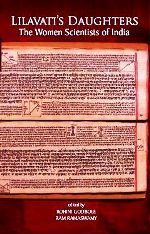
Hence this new book on 98 women in Indian science made for wonderful reading. The biographical sketch ‘Lilavati’s Daughters: The Women Scientists of India’ has every emotion one ever attributes to women scientists –- patience, angst, perseverance, fears, euphoria and above all incessant struggle in the face of a thousand odds. These are inspirational stories from the lab — the individual journeys of these gritty women on paths less trodden. Certainly a must read for all young women scientists looking for role models to follow.

blogpic.jpg

You can read a review of the book here.

And what’s more, you can actually read the book at the Indian Academy of Sciences website! Happy reading!