Breaking the curse on science

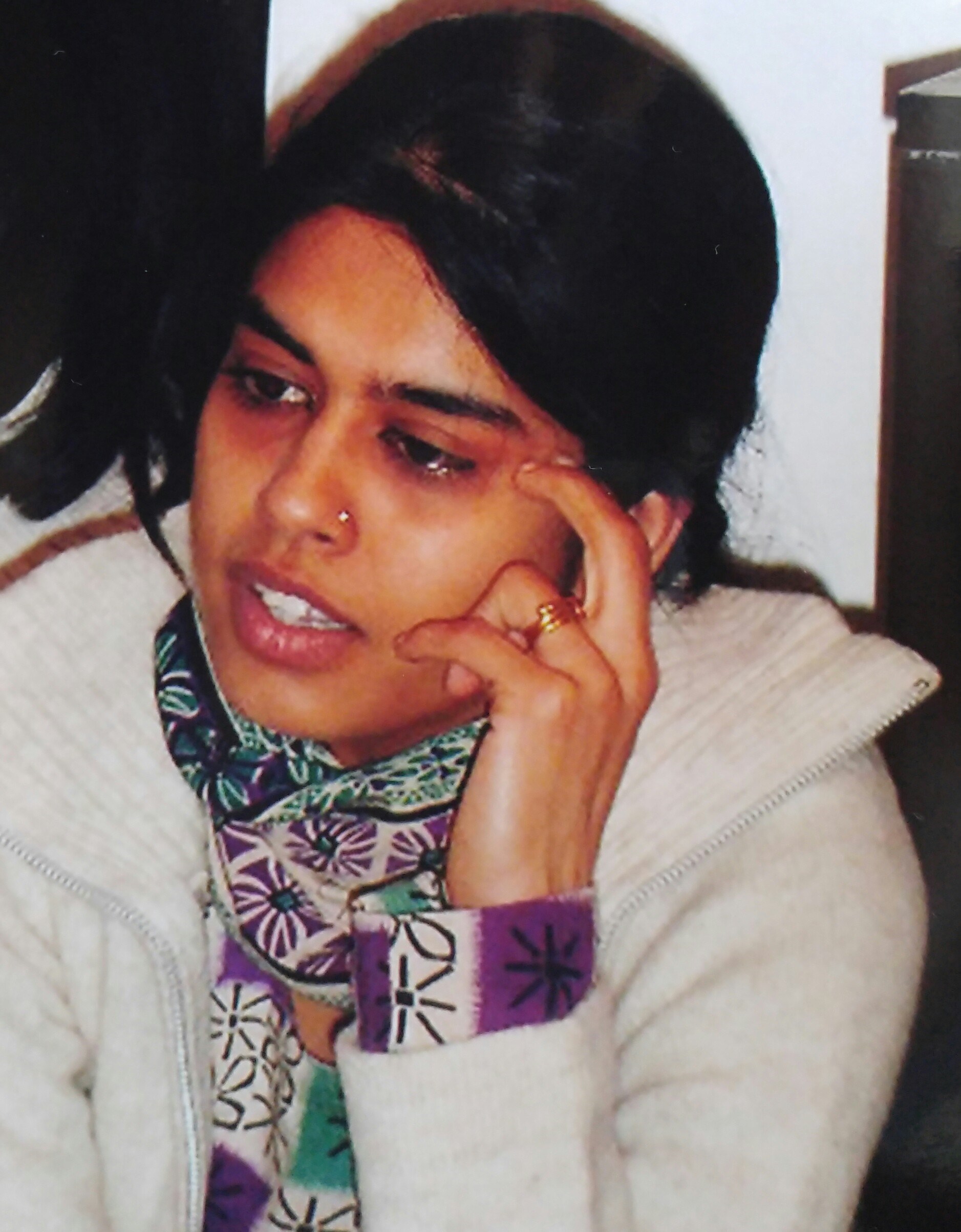
Open data can help us avoid inherent biases in our work, says winner of the Naturejobs ‘Better Science through Better Data’ writing competition Ayushi Sood.

Ayushi is an undergraduate microbiology student at Amity University, Noida, Uttar Pradesh. Her interest in what makes life tick made her fall in love with bacteria and astrobiology, and her passion for making scientific research more efficient and accessible led her to explore bioinformatics. She has been a part of research projects investigating nanoparticle-plant interactions, transgenic algae, and bacteria-algae associations.

Recently, an economist friend told me that “scientific inquiry is inherently cursed.” At first I was offended. But I had to agree after he elaborated further – science today suffers from something economists enigmatically call the “winner’s curse”.

The first scientific journals were print editions — something akin to a printed memo — circulated among researchers to update them of the findings of others in the field. To submit a paper for publication, only the observations required to prove results needed to be included in a manuscript, and rightly so: if every paper included every shred of data, journals would run into thousands of pages. This means, though, that what was communicated to the scientific community was only a fraction of what could have been communicated: only the observations that were ‘winners’ – the ones which best supported a result – would be presented, and the others would be effectively relegated to obscurity. Although we’re not limited by paper and page counts today, the same pattern of data use continues. This leads us to the problem of the winner’s curse: by the process of selection, the ‘winning’ observation oversells itself.

In economics, the winner’s curse refers to situations in auctions where the winner tends to overpay, because the actual value of the product is the average of the bids, not the highest bid. In scientific research, the curse takes hold in scientists who aim for publication in the most selective journals, with the most impressive results being favored. This ignores all the other results — the ones which weren’t so impressive — while giving disproportionate importance to the ‘winning result’.

The problem with this phenomenon isn’t immediately evident — isn’t the result what actually matters? The data is, after all, just a tool, necessary only to prove what’s important — the conclusion. In looking for conclusions in data, however, researchers can forget to ask: “does the conclusion effectively justify my repeated sampling of the real world?” In other words, is reality accurately reflected by the dataset presented? All the observations we take, whether they are inconclusive, negative, or ‘winners’, represent an analysis of the natural world. By only reporting the ones that work, the other sampling efforts cannot be used by anyone else. This process confers on a small, selected number of observations the authority to predict an unpredictable future! Back in the auction house, this would mean the value of the product is set only by the winning bid. When we report only the best set of data, we are relegating the less impressive observations to obscurity, even though these also represent an analysis of the real world, with real potential to inform.

So what does this mean for us? How should scientists avoid falling into the trap of the winner’s curse? One way would be to save, store and share all data — not just positive results. We are only human. By making our data openly accessible, we can avoid internal inconsistencies. The smallest of mistakes would be corrected by fresh eyes poring over the very same data.

Ayushi Sood

More importantly, open data could prove to be a shot in the arm for scientific inquiry as a whole. What data I find important may be perfect for my study, yet a small cluster of ignored numbers in my dataset could lead to a breakthrough for someone else, possibly in a way that I could never have imagined! Gene expression data in cancer cells could provide insights into cell signaling pathways in neurodegenerative disorders. Algal bloom observations in polluted lakes could help in effective biomass production for algal biofuel. The analysis and application of open data could usher in a new age of scientific connectivity, with the available knowledge transcending traditional discipline boundaries in way never seen before.

Well, if it’s so good, why hasn’t open data been the norm since science began? We come back to the thousand-page journal here — the question wasn’t of why not, but of how. Transmitting every single byte of data through papers and talks was impossible before the advent of computers and the emergence of the internet in the 1990s. In 2017, however, we have the tools at our disposal to store, parse, organize and retrieve every single digit. The burgeoning field of data science and analysis is ours to exploit, just waiting to script the next scientific success story.

So, I have to hand it to the economists on this one — the winner’s curse is alive and kicking in science. But, like any good scientist, I’m thinking of solutions, and every clue suggests that open data, accessibility and collaboration could be just the spell that breaks this curse.

[This blog piece was first posted in NaturejobsYou can follow Ayushi Sood’s work on Bitesize Bio and connect with her on LinkedIn or Facebook.]

Suggested posts

The era of big data is coming: Scientists need to step out of their comfort zone

Defending science by opening up: Lessons from Understanding Animal Research
Sharing data: Why it should be done

Away from home: Blending in to stand out

Our ‘Away from home’ interactive map features 48 bright Indian postdocs from around the world. Write to us at npgindia@nature.com to suggest names of postdocs from countries and disciplines we haven’t covered yet.

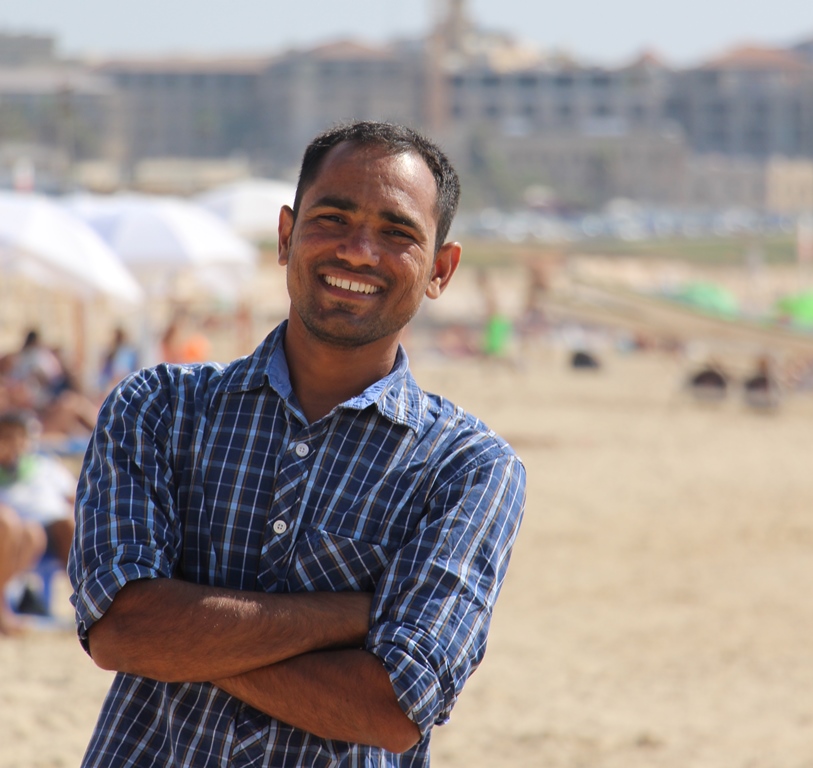
Raj Rajeshwar Malinda, a post-doctoral cell and developmental biologist at the National Institute for Basic Biology (NIBB), Okazaki, Japan has visited close to 40 countries and worked in some of them. A PhD from the University of Copenhagen, Denmark and a biotechnology masters from the University of Rajasthan, Jaipur, India, Raj draws from his rich experiences from around the world to suggest it’s best to blend in to appreciate different cultures.

Raj Rajeshwar Malinda

Decoding the cellular language

Life on Earth began with a single cell and evolved into very complex organisms such as humans. The cell is the smallest functional unit of life – the “building block” that contains all necessary information for survival. Though cell biology studies got a boost in the late 17th century with the advent of the microscope, we still don’t have ample information on how life managed to survive on Earth. A lot more information is needed to decode the cellular language of life and this mystery led me into the world of cell biology.

I love getting even the tiniest bit of information on cells and their behavior. To understand complex cellular dynamics, I combined knowledge from my cell biology PhD with developmental biology for a joined up approach towards answering questions on how life survives during development.

My journey began from a small rural town in India called “Neem ka Thana” and got me to Okazaki, a small town in Japan via many metropolitan cities across the globe. While I was still a masters student of biotechnology at the University of Rajasthan in Jaipur, India, I got a chance to meet several Nobel Laureates at a conclave. This was one of the factors that motivated me to pursue a career in research, discovery and innovation.

During my PhD at the University of Copenhagen, I was mainly focused on cellular mechanisms regulating disassembly of primary cilia (a sensory organelle found on cell surface, important in embryonic development and homeostasis) using mammalian cultured cells as a model system. In my post-doctoral tenure at NIBB, Japan, I have been investigating the regulatory mechanisms responsible for collective cell behaviour during early development of vertebrates using Xenopus laevis as a model organism, with special focus on the mechanistic properties.

Japan: An incredible mix of tradition and advancement

Besides science, I am fascinated by the diversity of people – races, cultures, languages and religions – around the world. Moving to Japan was a big decision – from Denmark in the west to the east. However, this transition was pretty smooth for me, having assimilated experiences from my travel to more than 40 countries around the globe. Despite all that I have seen, Japan is very different, very unique, truly an incredible country blending tradition and scientific advancement beautifully. Discipline, attention to detail, dedication, politeness, hospitality, punctuality and respect for the past – these were the Japanese hallmarks that made me fall in love with the country instantly.

However, language was a big issue since people, especially in the countryside, hardly spoke other foreign languages. The language barrier could isolate you from the mainstream of Japanese culture. But foreigners usually find their way around this challenge. I especially love the Japanese festivals, with each prefecture celebrating different ones around the year.

Life becomes easier for foreigners when they embrace local culture and try blending in seamlessly. Indians do carry a lot of cultural baggage many times and often stick to Indian friends. I personally feel one could be true to one’s culture but should also try to appreciate local cultures. It’s also good to make friends outside the lab and outside one’s own community.

After all, a postdoc abroad is an intensive learning phase that teaches you many important survival skills.

Tip for PhD and postdoc aspirants

  • PhD should be complemented by productive research papers — they help get good postdoc positions abroad.
  • Don’t be shy to ask for help from your PhD mentor. They are experienced in the field and have good network in the community.
  • Your research interest should always be key while choosing for a postdoc position because that’s what matters in the end. The lab matters too, since you have to spend a fair amount of time there doing research. Choosing a postdoc position abroad might be a turning point in your research career, so choose the lab and country wisely.
  • External sources of funding or fellowships always add an extra advantage. So try to secure one, for example, the JSPS postdoc fellowship in Japan, EMBO or Marie Curie fellowship for Europe, INSPIRE Faculty scheme in India (it gives you a chance to learn in foreign lab for a couple of years) and other country-specific postdoc fellowships.
  • Keep a good work-life balance, otherwise research could end up being stressful and depressing.
  • Don’t lose the enthusiasm and focus while doing your research abroad — it’s easy get derailed in a different working and living culture. If the data isn’t favouring your hypothesis, troubleshoot and ask your mentor or lab members.
  • Funding is a big issue among postdocs, so try to remain up to date with available resources and grants.
  • Don’t try to think of a long running postdoc (i.e. another postdoc after your postdoc), your post-postdoc priorities should be clear — academia or industry. At any point during your postdoc, if your choices are starting to shift from academics to industry, go ahead with the idea without delay and ask for a recommendation from your present mentor.
  • Try to network. In the end, these are the people you will see most often – through their research papers or in conferences and meetings.
  • Try writing grant applications because the skill will be really helpful after your postdoc. It becomes hard to survive in the research field without knowing how to write grant applications. It will also improve your scientific writing, which I personally find very difficult.
  • Push yourself a bit to acquire experiences beyond research. For example, participate in leadership seminars, try organising small institutional seminars or workshops, invite people from time to time to the lab and talk about your interests.

India: Unconditional love

India is a great country – diverse, culturally-rich, enthusiastic and warm – and that’s the reason every Indian misses the country in a foreign land. I miss my family and friends and the late summer-night conversations under an open sky over cups of tea. The sight and sound of kids screaming as they play in the muddy streets is something I deeply miss.

Being a foodie, I miss Indian street food from different parts of the country —the samosa and dahi-papdi from Rajasthan, pav-bhaji from Maharashtra, home-made lassi from Punjab, chaat from Delhi and masala-dosa from south India. Mangoes and rasgullas are always on my priority list, so wherever I get them I buy, even if at a premium.

[Raj Rajeshwar Malinda is also associated with the biomedical journal eLIFE and advises ASAPbio (Accelerating Science and Publication in Biology). He volunteers free career counselling and can be reached at therajsmile@gmail.com.]

Frugal innovation: India, France can lead the way

In this guest post, Navi Radjou draws from his experience at a hands-on education and problem-solving school in Mumbai. He points out that France’s strong science and engineering capabilities, combined with the Indian concept of jugaad, or frugal ingenuity, could help solve problems that threaten all of humanity.

Navi Radjou

A recent Gallup International Association poll rates French President Emmanuel Macron and Indian Prime Minister Narendra Modi as the two of the most favoured world leaders. They have a historic opportunity to use their huge popularity and goodwill at home and abroad to heal our fractured world. They can do so by bolstering co-innovation between India and France — through top-down R&D partnerships such as the International Solar Alliance as well as bottom-up collaborative initiatives like the STEAM School.

By bringing together Indian and French engineers, scientists, entrepreneurs, designers, artists and business leaders, the two countries can create solutions to what I call “problems without borders”: social inequality, global warming, chronic diseases, water and food scarcity.
In December 2017, I attended the Indo-French STEAM School in Mumbai — which shows how co-innovation can have a major positive impact worldwide. The 10-day programme was co-organized, like every year, by the French Embassy in India, the Paris-based Center for Research and Interdisciplinarity, and Maker’s Asylum, a community space in Mumbai. The programme enables STEAM (Science, Technology, Engineering, Art, and Math) education through hands-on problem-solving based on the UN’s Sustainable Development Goals (SDGs).

100 participants, mostly from France and India — architects, designers, artists, engineers, academics, and students — formed 19 teams to design a product each to tackle one of five specific SDGs in the Indian context: health, education, water/sanitation, energy, and sustainable cities. Over the course of the programme, the participants developed working prototypes of their products.

Participants at the STEAM School 2017

These four products I liked best harnessed frugal innovation to devise simple and cost-effective solutions to major socio-economic and ecological problems:

  • BAT:  a low-cost wrist-wearable to aid the visually impaired. According to a Lancet study, 36 million people in the world are blind, a number set to increase to 115 million by 2050. In India alone, 8.8 million citizens suffer from blindness and nearly 48 million have moderate and severe vision impairment, the largest number for any country. BAT, fitted with a Six Axis feedback mechanism, can make life easier for such people while they navigate public spaces, by vibrating to alert them of obstacles.
  • The SADA Kit:  A portable solution to prevent water-borne health epidemics caused by open-air defecation in rural India. 2.5 billion in the world still lack access to toilets. 300 million Indian women and girls are affected by it. The kit aims to improve the health, safety, and dignity of these women. It comprises of a lightweight portable toilet with a pop-up privacy shield, a waste disposal bag, a small wearable light and whistle, soap, and sanitary pads for women.
  • BIJLI:  a low-cost energy generation device that can be retrofitted to bicycles. It transforms kinetic energy from the wheels into electric energy that can be stored in a battery pack or can be used to charge small electronic gadgets like mobile phones. The device can be used on the go or while the bicycle is stationary. Distributed energy solutions like BIJLI can be a boon for the 300 million Indians who live with little or no electricity today.
  • WASTED: a smart waste segregation bin that helps spread awareness of how much waste we generate. By turning the process of segregation into a game and connecting sensors in the actual bin to an app, it enables users to track and compare waste statistics with friends and neighbors. The idea is to “nudge” people and societies towards zero waste. India generates over 100,000 metric tons of solid waste each day, higher than any other country. The Ellen MacArthur Foundation estimates that by adopting the circular economy principles—through reuse and recycling of waste and resources—India could reap $624 billion in annual benefits in 2050 and cut greenhouse gas emissions by 44%.

“The goal of STEAM School isn’t to solve the SDGs in 10 days, but to teach how to solve them,” says Vaibhav Chhabra, founder of Maker’s Asylum. “STEAM also teaches empathy and tolerance to participants. They learn to transcend their differences, respect each other, and find unity in a shared purpose. They become globally-conscious problem-solvers.”

Vaibhav is right. I interacted with French students from CRI, EM Lyon Business School, and Institut Mines-Télécom at STEAM School, who had developed greater respect for India and its culture by working together with Indians. A Hindi saying captures the power of such synergies: Ek Aur Ek Gyarah Hote Hain, or One and One Equals Eleven. France’s strong science and engineering capabilities, combined with the Indian concept of jugaad, or frugal ingenuity, could help us solve problems that threaten all of humanity.

As a French-Indian, I am thrilled to be part of this process. I left India in 1989 to study in France. During the 80s and 90s, France and India were relatively closed to the outside world. Cooperation between both countries was also limited. I long dreamed of a day when India and France would team up to create solutions without borders. Now my dream is finally coming true.

The theme of the World Economic Forum Annual Meeting 2018 in Davos was “Creating a Shared Future in a Fractured World.” You can’t fix a fractured and conflict-ridden world with the competitive zero-sum mindset that has long dominated world affairs. Instead, it’s time to adopt the cooperative “1+1=11” formula. Macron and Modi can show the way.

[A longer version of this piece was first published by the World Economic Forum. Navi Radjou is a fellow at Cambridge University’s Judge Business School. He is the coauthor of Jugaad Innovation (2012), From Smart to Wise (2013), and Frugal Innovation (2015).]

Nature India Photo Story: Aqua Tales

In our visual storytelling blog series titled the ‘Nature India Photo Story’, we feature artfully told stories that explore the realms of science, wildlife, environment, health or anything else that smells of science.

In today’s photo story, we feature experimental physical chemist Mohammad Tariq from the Faculty of Science and Technology, New University of Lisbon, Caparica, Portugal. The theme of his story is something that touches all life on Earth — water.

Tariq traces his journey with water through ‘Aqua Tales’ — a nuanced narration that looks at water not just as the most bountiful resource of Nature, but also as his passionate research interest, and as the metaphorical wave that keeps propelling him to newer shores.

Water is a complex, wondrous fluid, essential for life on Earth. It is the most abundant chemical in nature. Apart from the interest it generates among scientists and academics, water has been the most important element for the survival of many civilizations that thrived on banks of rivers. Water is also the reason flora and fauna flourish on Earth.

My journey and interaction with various water bodies started from my native town Bijnor in Uttar Pradesh, India. It is in Bijnor that I had the rare privilege of befriending the mighty river Ganga. The deep stream of the river flows throughout the western boundary of Bijnor.


Ganga in Bijnor.


The Ganga flows quiet under this barrage in Bijnor.

My doctoral research at Jamia Millia Islamia University in New Delhi was focused on the characterization of thermophysical properties of liquids and liquid mixtures including aqueous solutions at different concentrations and temperatures. In the final years of PhD, my research interest started to shift towards the properties of a novel
class of exotic salts known as “ionic liquids”. Sea and salt have a long known relationship.

After finishing PhD, I moved for a postdoc assignment to the Institute of Chemical and Biological Technology (acronym ITQB in Portuguese) in Portugal — the land of great explorers and navigators. Apart from its excellent research facilities, what makes ITQB remarkable is its location in the beautiful town of Oeiras, around 17 Kilometers away from the capital of Lisbon. My office faced the Atlantic Ocean. Out of the several interesting projects at ITQB, the most appealing to me was the detailed study of the effect of structurally diverse ionic liquids on the density anomaly of water. This also laid the foundation of my future research.


The beautiful Santo Amaro beach near Oeiras with a scenic view of a very old lighthouse (bugio) situated in the estuary of the Tagus river.


The pavement across the Santo Amaro beach lends itself to a nice stroll.

I got an opportunity to work at the University of Vigo, Spain in 2012, where I witnessed the immense beauty of one of the best and most eco-friendly beaches of the world at Islas Cies — a group of three islands. At the University of Vigo we used the speed of sound and density measurements on solutions of a series of ionic liquids to characterise their self-assembling process in water.

The beautiful Samil beach in Vigo, Spain.


A breathtaking summer sunset at Cies Island, Spain.

After spending almost 6 years in Europe, I moved to Qatar and got introduced to the Persian Gulf. The pleasant view of the corniche in Doha, which brought the shallow water of the Persian Gulf to the middle of the city, was always a sight. An hour’s drive from Doha city took one to the sand dunes and in-land sea (Khor-al-adaid) at the border of the Kingdom of Saudi Arabia and Qatar.

At Qatar University, my passion for the peculiar properties of water continued and I studied a distinct form of structured water known as “gas hydrates”, hydrogen bonded water molecules in which the guest gas molecules are trapped in cavities. Formation of gas hydrates within gas pipelines is a persistent problem faced by the oil and gas industry worldwide, including in Qatar. Gas processing from the deep-sea, where temperatures are low and pressures are high, provides suitable conditions for the formation of gas hydrates.

The inland sea (Khor-al-adaid), Qatar.


In the pursuit of a work-life balance, I moved back to Portugal in 2016 but this time to the other side of the river Tagus where I now work at the New University of Lisbon. The university is situated near Costa da Caparica, a tiny, breathtakingly beautiful coastal town. Here, I am engaged in the in-depth study of clathrate-hydrates, specially the role of hydrogen bonding and water structure in their formation and dissociation.

Juan G Beltran wrote the following in an article in the Journal of  Chemical Thermodynamics (117, 2018) and I think it aptly sums up my passion for hydrates:  “A snowflake is a letter from heaven (U. Nakaya), a diamond is a letter from the depth (F.C. Frank). What then is a gas hydrate?”

The 25th April Bridge on the river Tagus connecting Lisbon to the municipality of Almada, Portugal.


High tides in the coast of Caparica, Portugal, attract many surfers.

During this decade-long scientific journey across cultures, languages and continents, I have observed a change in my research interests. However, they have always centered around the properties of liquids and aqueous solutions. Now I am eagerly waiting to see if water will allow me to settle down or another wave will sail me towards a new destination.

Mohammad Tariq can be contacted at tariq@fct.unl.pt

Away from home: Why your visa type matters

The ‘Away from home‘ blog series features promising young Indian postdocs working in foreign labs. They recount their experience of working in foreign lands, the triumphs and challenges, the cultural differences and what they miss about India. They also offer useful tips for other Indian postdocs headed abroad. You can join their online conversation using the #postdochat hashtag.

Our ‘Away from home’ interactive map features 47 bright Indian postdocs from around the world. Write to us at npgindia@nature.com to suggest names of postdocs from countries and disciplines we haven’t covered yet.

Today we feature Fareha Razvi, a postdoc researcher at the University of Nebraska Medical Center (UNMC), Omaha, Nebraska, USA and a PhD from Fraunhofer Institute in Germany. Fareha tells us why choosing the right visa type is so essential for a research career in a foreign land.

Fareha Razvi

Love at first sight

What saw me leave my home country India was my passion for “gene silencing” research. When I was a teenager, my mom wanted me to become a doctor. Sadly I failed in all medical entrance exams. So the only way I could become a doctor was to get a PhD. I did a bachelors in botany and masters in genetics from Delhi University. During masters, I stumbled upon the research area of gene silencing. I was completely fascinated with this mysterious phenomena. At that time, nobody knew how and why it occurs. I decided to do a PhD in this field.

Fortunately, I got a PhD offer from Fraunhofer Institute in Germany in my area of interest. It was a hard decision to leave India and my family, but the passion for this research area and encouragement by the family made the transition possible. After PhD, I felt the need to continue exploring this field and took up a postdoc opportunity in the same field but in a different biological system.

Bittersweet research

I arrived in the US for a postdoc in gene silencing and the biological system was green alga. I realised that research in gene silencing was making tremendous progress.  Scientists around the world had started unraveling this phenomena. In 2006, the Nobel  Prize in Physiology or Medicine was awarded to a group which discovered the trigger of this process. Based on the understanding of the mechanism of this process, the trigger of silencing “siRNA” has been implicated in therapeutic use by many pharmaceutical companies and it also holds potential use as vaccine for certain diseases.

For a couple of years, I worked on basic gene silencing research but then I moved to a lab that was working on its application. I enjoyed every project during my postdoc. I realised that two things can make a research career bitter or sweet – the research and the mentor. Passion for your research motivates you to excel and a good mentor becomes the backbone of your career goals, scientific temperament and professional skills. Based on my PhD and postdoctoral experience, the advice I have for future postdocs is: no matter which country, lab or field you opt for, it is important that your career goals are clear and each year you work towards them along with your project goals.

Visa choice can tell on career goals

Many of us leave our country excited about the offer from a foreign institute but we fail to weigh the pros and cons of the visa type we are offered. I left India thinking that after my PhD from Germany I will return and take up a teaching position at one of the colleges of Delhi University. But after PhD, I wanted to explore more in my research field. So I went to the US. After a while I realised that my H1B visa was due to expire and I had to leave the country. My career dreams terminated in 2012 not due to lack of funding but because of my visa. This is another advice that I would like to give to new postdocs, apart from making choices for research project and mentor, a right choice of visa type is equally relevant.

After spending a year being jobless in India I returned to the US on a spouse visa. It took me almost 3 years to get back to research because not many places were able to sponsor a working visa (H1B). The situation that I encountered is not very common but it can happen if you don’t take care to choose your visa type in the first few years of stay in the US. Also, as foreigners we look for a job that can give us a working visa.

Fortunately, I was able to restart my career as a postdoc in the pathology and microbiology department of University of Nebraska Medical Center (UNMC), Omaha. It was exciting and challenging at the same time to work with microbes and not plants. The best thing I like about being a microbiologist is that I don’t have to wait for months to prove my hypothesis. Bacteria grow so fast that you can propose multiple hypothesis and work on them in a very short period of time. Currently, I am working to unravel a metabolic pathway which is as fascinating as it was working in gene silencing. I did get an opportunity to teach at the Metropolitan community college at Omaha which was very satisfying.

Tips from a postdoc

  • Choose a research area that fascinates you (self-motivation is the key to success)
  • Choose a mentor who appreciates a work-life balance and cares for your goals
  • Choose the right visa type
  • Know your goals so that you work towards them from day one

Indian at heart

The two things I miss most about my home country are the typical Indian wedding — the lavish food and dresses — and live performances – theatre, classical dance, ghazal recitals.

Dance your Science: Where did Indians come from?

Nature India‘s most recent and most creative foray into science communication is through a format called dance-narration. At the beautiful confluence of science and arts, these dance-narration productions are a unique new way of science story telling using the rich medium of traditional Indian performing arts.

We recently did a couple of experiments with the format and found that it won hands-down in terms of audience engagement and in conveying complex science ideas through a simple science-led script, dance expressions and music.

Here’s a piece we executed at the 10th Anniversary celebrations of Nature India on 16 April 16 2018. This dance narration tries to trace the origin of human life in India through a review of recent population genetics studies in the country. The troupe consisted of a trained classical Odishi dancer, a trained keyboard player and a science journalist.

The medium of dance and music allow the science story to become more personal and thus immediately understandable. Not surprisingly, this dance narration video is one of the most viewed, shared and liked content on our social media channels.

The script for the narration is culled from scientific studies, just like any journalistic science story. Some popular elements of science writing – drawing analogies, describing the human side of science, or contextualizing data and numbers – are used to enliven the script. Voice modulation and music variations are used to highlight the important points of the story and to add drama and excitement to the narrative.

We look forward to your feedback on this new experiment. Nature India hopes to bring to you many more dance narrations from various scientific disciplines in the near future.

Nature India Special Issue on ‘Grand Challenges’

coverAs part of Nature India’s 10th anniversary celebrations, we produced a special issue on ‘Grand Challenges’. (Download your free copy here.)

India is headed towards an astonishing population surge. With 1.34 billion people recorded in early 2018, the country is estimated to add another 100 million by 2024 overtaking China, currently the most populous nation in the world. Therefore, her daunting demographics are integral to any discussion around the challenges faced by India.

The mammoth population coupled with limited resources, and growing urbanization and energy needs are important factors behind many socio-economic issues. Be it poverty, healthcare delivery, literacy, pollution or waste management — each of India’s problems can be directly linked to and are intensified by its teeming millions.

Some of the most pressing challenges raised by a large population are in the public healthcare, energy and sanitation sectors. Successive Indian governments have made tremendous efforts to meet public needs and expectations. However, health concerns such as tuberculosis, maternal and infant mortality, vector- and water borne-diseases, malnutrition, hygiene and sanitation remain major problems.

03The Nature India special issue on Grand Challenges takes a closer look at some of these hazards, which are experienced across the developing world. What are the grand challenges for the country’s 1.3 billion people? Can science help find solutions to some of the public health problems? Can innovation provide long-term answers?

Through in-depth commentaries by subject experts, this special issue looks at the state of affairs in malaria
management, maternal and child health, malnutrition and tuberculosis. It also looks at the science-led innovations and solutions already on offer. In a reprint section, we compile some recent articles from across Nature Research publications that highlight the grand challenges and research-based solutions that India and the rest of the developing world have adopted.

The volume also features a special photo section curated from top entries to the 2017 Nature India photo competition, themed ‘Grand Challenges’. These pictures are compelling visual narratives of some deeply moving and familiar circumstances.

With examples and case studies of evidence-based solutions, the Nature India special issue on Grand Challenges hopes to be an enlightening read for scientists, policy-makers, business leaders, and societies across the developing world.


Nature India Annual Volume 2017 is out

NI Annual Volume 2017Nature India stepped into its 10th year in 2018. To mark the occasion, we gave a face lift to our annual volume with a new international design, very similar to Nature. A global team of editors and art designers worked across time zones to produce this annual volume.

In February 2008, Nature Research (then called Nature Publishing Group) launched Nature India in an attempt to chronicle the region’s rapidly changing scientific scene and efforts to embrace globalization. In the decade since, Nature India has witnessed and reported the distinctly Indian essence of science. Thanks to India’s enviable scientific stock that gets an additional 100,000 science post-doctorates every year and to a culture of frugal innovation, the website has seen a plethora of interesting stories.

Nature India has reported this evolution — the moments of glory as well as the difficulties — through in-depth commentaries, news and feature articles and research highlights from the country’s many laboratories and research and development organizations. From rural, low-resource settings to state-of-the-art space facilities, from well-equipped labs in burgeoning cities to makeshift mobile labs in remote islands, this journey of covering science in the world’s largest democracy has been pioneering and meaningful.

Besides producing award-winning editorial content, Nature India has evolved as a useful resource for India’s science community with listings of relevant jobs and events, discipline-specific special issues and the Nature
India annual compendia. Responding to the need for effective communication of science by researchers, Nature India also devised a series of science communication and career workshops in partnership with the Wellcome Trust–DBT India Alliance.

A much-awaited event in our annual calendar is the Nature India photo contest, which has not only enriched our archives with stunning science pictures from around the world but also resulted in a roving exhibition that sparks thought-leading conversations around the visual narrative of science.

Through these years, Nature India has broken major investigative science news stories — from the visible impacts of climate change as the sea gobbles up entire islands in the Bay of Bengal (10.1038/nindia.2013.60) to the poor genetic diversity threatening to wipe out the few surviving population of the Kashmir red deer (10.1038/nindia.2015.35); from the intriguing story of a diabetes-free desert tribe of Madhya Pradesh (10.1038/nindia.2015.23) to the resurfacing of a forest virus that killed more than 100 people in the Western Ghats of India (10.1038/nindia.2016.139).

Among the many engaging investigations we undertook in 2017 was one that looked at why Indian scientists coming back from stints abroad turn out to be less productive once they reached home (10.1038/nindia.2017.82) and a retrospective look at a quietly performed hybridization experiment in 1964 that created a litigon, a cross between a lion and a tigon, in a Kolkata zoo (10.1038/nindia.2017.46).

Our annual volumes are put together by a group of editors and eminent scientists, who curate the contents from our coverage through the year. The affiliations and research interests of some people may have changed after publication of these articles. These annual volumes are handy reckoners for anyone who wants to keep abreast with the research highlights of the year, newsmakers, trends in research and development, careers and policy issues.

As Nature India enters another decade, it will continue to bring to you the best coverage on Indian science in exciting new formats, such as podcasts and possibly videos.

You will find more on our our archival annual issues here:20152014 and 2007-2013.  And some more on the content and subscription of these issues here.

Pollution woes: Is methanol a solution?

Every winter, the northern plains of India are engulfed in toxic fumes, emanating from crop stubble burnt by farmers in the states of Punjab, Haryana, Rajasthan and Western UP. Coupled with that, air pollutants from power plants, and vehicles choke the mega cities. 

Avinash Kumar Agarwal from the Department of Mechanical Engineering at Indian Institute of Technology Kanpur argues in this guest post that methanol economy may offer a potential way out of the obnoxious levels of pollution India is faced with.

Delhi’s winter pollution problem has now caught global attention. The problem gets further complicated every year because of the cold weather conditions that do not allow pollutants to climb up to higher altitudes. Toxic pollutants accumulate near the ground, making a deadly chemical cocktail with secondary organic aerosols nurtured by moisture and sunlight.

The situation is so bad that sunlight can’t penetrate through the carbon black dispersed in the environment. Every winter, therefore, life for more than 250 million people living in the region becomes a chaotic mess of traffic snarls, flight and train delays and low visibility that makes roads hazardous and unsafe. The incidence of respiratory diseases increases exponentially during this time of the year. The economy goes for a toss with massive losses in productivity – millions of man hours are wasted on roads and the public health burden escalates.

The situation has aggravated in the last decade turning Delhi into a gas chamber, where ambient air quality consistently hovers way above safe limits for weeks together. Winters in India’s capital are now deemed life-threatening.

A smog-riddled Delhi day during peak winter, December 2017

A smog-riddled Delhi day during peak winter, December 2017{credit}S. Priyadarshini{/credit}

Can a methanol economy help?

Besides public policy measures to reduce pollution and stricter implementation of laws to stop crop burning, another way to address the menacing issue could be adopting a methanol economy.

Agriculture residues from farms, currently burnt to prepare the ground for fresh crop seasons, can be used to produce methanol. The carbon monoxide and hydrogen generated by gasification of this massive biomass of low-value feed stock can be used for production of methanol using simple, commercially available technologies. This will not only solve the problem of uncontrolled biomass burning and the associated problem of soot and particulate loading of atmosphere, but has the potential to generate valuable revenue and employment for Indian farmers.

Methanol can also be generated using municipal solid waste, millions of tonnes of which are accumulating in India’s mega cities. The technology for this also exists in the country. Another potential source of methanol is high ash coal, which may not be suitable for power plants or other large-scale economic activities. In theory, India has infinite potential for producing methanol to substitute all petroleum imports.

The methanol thus produced can be used to fire power plants to generate electricity, thus ridding northern India of the fly-ash generated by the power plants, which escapes the most efficient bag filters and electro-static precipitators (ESPs).

Vehicles fuelled by gasoline and diesel can be operated with methanol and di-methyl ether (DME). DME, an ultra-clean fuel known for its soot-less combustion, is a methanol derivative and can be produced by a simple one-step process.

Methanol has also been used for the last several decades as a fuel in Formula-1 race cars, thanks to its properties well suited to spark ignition engines. The octane number of methanol is 105 whereas the octane number of gasoline sold in the market is 91-94. Therefore, methanol can be blended in any proportion with gasoline or used in pure form in the engines. With some modifications in the engine, diesel engines can also operate with methanol as fuel. Older vehicles can be easily altered to use these new fuels using simple kits and new engines can be designed to take advantage of the excellent properties of these fuels. The Engine Research Laboratory at IIT Kanpur has successfully demonstrated methanol-powered spark ignition as well as compression ignition engines. These engines are extremely clean and can easily meet the most stringent emission norms applicable today, and upcoming Bharat Stage-6 norms, with appropriate prototype development.

As the Indian government is now taking a serious look at methanol economy as an alternate, it may be a good time to scale up these efforts through capacity building, production research and utilisation. Methanol economy has the potential to reduce fuel imports, increase energy security from domestic resources and contribute towards a cleaner India.

Limitations

Despite the many benefits it offers, methanol does not come without limitations. Methanol is hygroscopic, meaning it attracts moisture, and could corrode copper and brass engine components when used as a fuel. It is slightly toxic to skin and poisonous if consumed in large quantities. It could pose a health hazard if injected accidentally or intentionally. The gas is odourless, which makes leaks harder to detect. However, the trickiest bit about methanol is its invisible flame.

Cars require more frequent refuelling or larger fuel tanks because methanol has lower energy density. Use of methanol in hilly areas during winters may lead to ignition problems. Methanol is less volatile than gasoline which makes it difficult to fire up or start engines in cold weather conditions. Methanol has limited solubility in gasoline at low temperatures .Therefore phase separation may occur when using ‘gasohol’ blends because of the presence of water traces in methanol. Though methanol emissions are safer than gasoline, methanol results in relatively higher amount of formaldehyde emissions.

Considering the positives of methanol use as a fuel, these limitations can be taken care of during the design of engine and machine components or during the fuel formulation stage, where appropriate additives can be added to overcome the adverse properties of methanol. Methanol has not yet been explored in engines for large-scale implementation with the seriousness it deserves.

A methanol economy can also help regulate the ever-increasing price of gasoline and transport fuel in the world market.

Raising a voice against anti-science

A peacock procreates by crying — there’s no sex involved, a peacock’s teardrops impregnate the peahen.

Panchagavya — a concoction of cow dung, cow urine, milk, curd and clarified butter (ghee) — has medical benefits.

Darwin’s theory of evolution is scientifically wrong — no one has ever seen a man turn into an ape.

Which of these sounds the most preposterous? (The last one questioning Darwin’s theory, by the way, was delivered yesterday by a minister in India’s Union cabinet.)

For a billion plus population in the world’s largest democracy, such embarrassing statements by people in positions of power have become alarmingly regular. So regular that some brush them aside with a smirk, some make a joke of them on Twitter and some rage over them during dinner table conversations. But here’s the scary bit: many — who either hero worship these people or are blinded or silenced by their stature — believe such random facepalm-worthy comments. And many, who should protest, stay quiet.

This promulgation of unverified ‘facts’ doesn’t even qualify as pseudoscience [dictionary meaning: a collection of beliefs or practices mistakenly regarded as being based on scientific method]. This is plain anti-science [dictionary meaning:  a set or system of attitudes and beliefs that are opposed to or reject science and scientific methods and principles].

Such statements by India’s politicians and people in powerful offices are bringing to a naught the scientific progress that this country is making in bits and pieces, with ambitions of becoming a science superpower.

Sample some more:

The elephant-headed Hindu god Ganesha proves Indians practiced cosmetic surgery way before it is mentioned in medical texts.

or

Genetic science was present during the Mahabharata. That is why Karna could be born outside his mother’s womb.

India March for Science

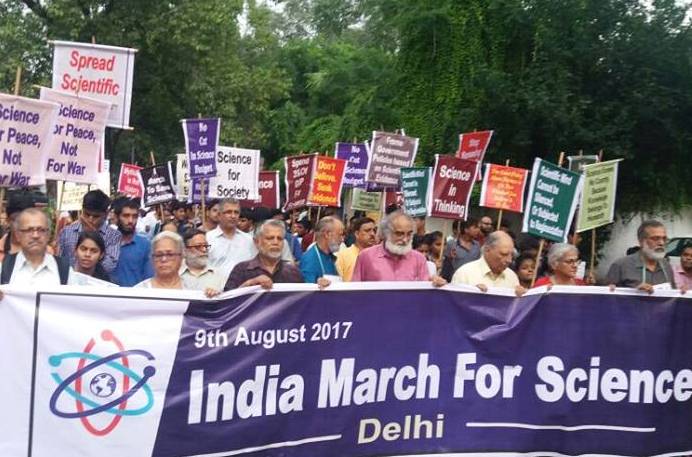
These are scary times for those who practice science in this country. An immediate letter of protest by India’s scientific community has challenged the minister’s anti-science blabber saying: “Statements such as ‘humans did / did not evolve from monkeys’ is an overly simplistic and misleading representation of evolution. There is plentiful and undeniable scientific evidence to the fact that humans and the other great apes and monkeys had a common ancestor.” The letter is in the right direction. So was ‘India March for Science‘ in 2017, though the country’s scientists had joined the global call belatedly.

Scotching pseudoscience and irrational thoughts is at one level, tackling the menace on a case-by-case basis with a letter of protest here or a march of solidarity there. But eradicating anti-science may need a deeper combing operation where scientists, science communicators and India’s science administration come together to make a bigger noise, a bigger dent.