Publishing tips: How not to fall for a predatory journal

In this new blog series called ‘Publishing tips‘, we bring expert advice to help researchers navigate the academic landscape better.

In the first post of the series, Lea Gagnon, Editorial Development Advisor at Nature Research Academies, shares a handy check list that researchers can use to avoid falling prey to predatory journals.
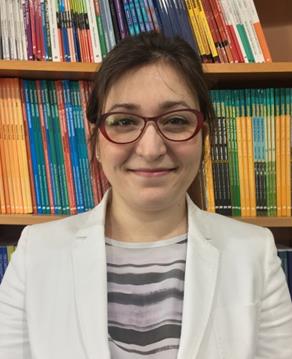
Lea Gagnon

In the  competitive academic landscape where researchers only have one chance of publishing their findings, some might be tempted to publish on the first invitation. Here’s one such classic, ego-flattering invitation:

Dear esteemed doctor, based on your valuable experience and contributions, we are delighted to invite you to submit a manuscript to our journal.

Hold on – if it sounds too alluring, it probably is. Many predatory journals use such aggressive seduction techniques (with repeated emails flooding your mailbox) to earn publication fees before acceptance and without delivering the promised services. Here are four evaluation criteria that could save you from falling prey to predatory journals.

Reputation

The first criterion to evaluate is the journal’s reputation. Is the journal published by an acclaimed publisher (e.g. Springer Nature, Elsevier, Taylor & Francis, Wiley, Sage, etc.)? How well do you and your colleagues know this journal? Are you familiar with the editorial board members? Some illegitimate journals will automatically play audio testimonies of researchers’ positive opinions on their website to influence you. Others will use the names of deceased or acclaimed researchers without their consent. And if they do agree to contribute, their involvement is often minimal. Make sure you discuss with your colleagues and confirm personally with the editors if and how much they are involved with the journal.

Credibility

The second indicator is the journal’s credibility. This can be assessed by its physical and online presence. Is the journal based in the middle of nowhere and only displays a P.O. Box? How easy is it to contact and hear from the editor? Can you find the journal in trustworthy databases such as Pubmed/Medline, Web of Science, Scopus, Embase or Directory of Open Access Journals (DOAJ)? Is the journal a member of the Committee On Publication Ethics (COPE)? Is it listed on the black or white lists of illegitimate or legitimate journals? While Jeffrey Beall’s infamous blacklist was retracted in 2017, Cabells International has since developed both a black and a white list, adding to the DOAJ selective whitelist

Impact

The third benchmark to review is the journal’s impact, evaluated by several metrics such as the famous impact factor (IF). Journal IFs are published annually by Clarivate Analytics and calculated from citations in journals indexed in Web of Science’s Science Citation Index (SCI) but also Emerging SCI (ESCI), Social SCI (SSCI), Arts and Humanities CI (AHCI), Book CI (BKCI) and Conference Proceedings CI (CPCI). Only journals indexed in SCI, SCI-Expanded and Social SCI receive IFs. Homemade bogus IFs are commonly displayed on predatory journals’ websites, such as the “Global Impact Factor”. Therefore it is wise to double check whether they match the official IF released only in the Journal of Citation Reports.

Quality

Lastly, the journal quality needs careful examination. Are there any spelling mistakes on the journal’s website? How is the peer review process (e.g. single-blind, double-blind or open)? Are the published articles sloppy? Can you access all archived full texts? Most predatory journals claim to use peer review but rarely do, leading editors to accept manuscripts either instantly (e.g. a few hours) or within a few days, compared to several weeks in legitimate journals. When a journal fails to provide details of peer review process, you might want to see a few papers and screen for any fake papers, like this Star Wars midichlorians paper. To help you assess a paper that appears legitimate, the Equator Network developed valuable checklists (e.g.  CONSORT for clinical trials) indicating what aspects of a study should be presented. The majority of predatory journals do not follow these checklists. For example, only 40% of 1907 human and animal studies published in predatory journals report having received approval from a research ethics committee. In genuine journals, such an unethical study would have been directly rejected from the editor’s desk.

So, exercise care when choosing your target journal by reading several articles from the journal and cross-checking its claims (IF, indexes). Follow this useful think-check-submit checklist and remember that most open access journals (except economic journals) only charge a fee after acceptance. If you do submit your hard work by mistake, never sign the copyright transfer agreement and insist on having your manuscript removed (see also advice on what to do if this happens).

After all, publishing your hard-earned research is one of the most important steps in your career.

[Lea Gagnon can be reached at lea.gagnon@nature.com]

Nature India Special Issue on ‘Grand Challenges’

coverAs part of Nature India’s 10th anniversary celebrations, we produced a special issue on ‘Grand Challenges’. (Download your free copy here.)

India is headed towards an astonishing population surge. With 1.34 billion people recorded in early 2018, the country is estimated to add another 100 million by 2024 overtaking China, currently the most populous nation in the world. Therefore, her daunting demographics are integral to any discussion around the challenges faced by India.

The mammoth population coupled with limited resources, and growing urbanization and energy needs are important factors behind many socio-economic issues. Be it poverty, healthcare delivery, literacy, pollution or waste management — each of India’s problems can be directly linked to and are intensified by its teeming millions.

Some of the most pressing challenges raised by a large population are in the public healthcare, energy and sanitation sectors. Successive Indian governments have made tremendous efforts to meet public needs and expectations. However, health concerns such as tuberculosis, maternal and infant mortality, vector- and water borne-diseases, malnutrition, hygiene and sanitation remain major problems.

03The Nature India special issue on Grand Challenges takes a closer look at some of these hazards, which are experienced across the developing world. What are the grand challenges for the country’s 1.3 billion people? Can science help find solutions to some of the public health problems? Can innovation provide long-term answers?

Through in-depth commentaries by subject experts, this special issue looks at the state of affairs in malaria
management, maternal and child health, malnutrition and tuberculosis. It also looks at the science-led innovations and solutions already on offer. In a reprint section, we compile some recent articles from across Nature Research publications that highlight the grand challenges and research-based solutions that India and the rest of the developing world have adopted.

The volume also features a special photo section curated from top entries to the 2017 Nature India photo competition, themed ‘Grand Challenges’. These pictures are compelling visual narratives of some deeply moving and familiar circumstances.

With examples and case studies of evidence-based solutions, the Nature India special issue on Grand Challenges hopes to be an enlightening read for scientists, policy-makers, business leaders, and societies across the developing world.


Nature India Annual Volume 2017 is out

NI Annual Volume 2017Nature India stepped into its 10th year in 2018. To mark the occasion, we gave a face lift to our annual volume with a new international design, very similar to Nature. A global team of editors and art designers worked across time zones to produce this annual volume.

In February 2008, Nature Research (then called Nature Publishing Group) launched Nature India in an attempt to chronicle the region’s rapidly changing scientific scene and efforts to embrace globalization. In the decade since, Nature India has witnessed and reported the distinctly Indian essence of science. Thanks to India’s enviable scientific stock that gets an additional 100,000 science post-doctorates every year and to a culture of frugal innovation, the website has seen a plethora of interesting stories.

Nature India has reported this evolution — the moments of glory as well as the difficulties — through in-depth commentaries, news and feature articles and research highlights from the country’s many laboratories and research and development organizations. From rural, low-resource settings to state-of-the-art space facilities, from well-equipped labs in burgeoning cities to makeshift mobile labs in remote islands, this journey of covering science in the world’s largest democracy has been pioneering and meaningful.

Besides producing award-winning editorial content, Nature India has evolved as a useful resource for India’s science community with listings of relevant jobs and events, discipline-specific special issues and the Nature
India annual compendia. Responding to the need for effective communication of science by researchers, Nature India also devised a series of science communication and career workshops in partnership with the Wellcome Trust–DBT India Alliance.

A much-awaited event in our annual calendar is the Nature India photo contest, which has not only enriched our archives with stunning science pictures from around the world but also resulted in a roving exhibition that sparks thought-leading conversations around the visual narrative of science.

Through these years, Nature India has broken major investigative science news stories — from the visible impacts of climate change as the sea gobbles up entire islands in the Bay of Bengal (10.1038/nindia.2013.60) to the poor genetic diversity threatening to wipe out the few surviving population of the Kashmir red deer (10.1038/nindia.2015.35); from the intriguing story of a diabetes-free desert tribe of Madhya Pradesh (10.1038/nindia.2015.23) to the resurfacing of a forest virus that killed more than 100 people in the Western Ghats of India (10.1038/nindia.2016.139).

Among the many engaging investigations we undertook in 2017 was one that looked at why Indian scientists coming back from stints abroad turn out to be less productive once they reached home (10.1038/nindia.2017.82) and a retrospective look at a quietly performed hybridization experiment in 1964 that created a litigon, a cross between a lion and a tigon, in a Kolkata zoo (10.1038/nindia.2017.46).

Our annual volumes are put together by a group of editors and eminent scientists, who curate the contents from our coverage through the year. The affiliations and research interests of some people may have changed after publication of these articles. These annual volumes are handy reckoners for anyone who wants to keep abreast with the research highlights of the year, newsmakers, trends in research and development, careers and policy issues.

As Nature India enters another decade, it will continue to bring to you the best coverage on Indian science in exciting new formats, such as podcasts and possibly videos.

You will find more on our our archival annual issues here:20152014 and 2007-2013.  And some more on the content and subscription of these issues here.

Nature India’s top 10 in 2017

In 2017, Nature India’s page views increased by 21 percent over 2016. We sat down to analyse what our readers liked reading most, in our effort to continue delivering world class science coverage from India to our global readership.

Here are Nature India‘s top ten most read articles for 2017:

1. The litigon rediscovered

Shubhobroto Ghosh, Piyali Chattopadhyay Sinha & Anindya Sinha

A captioned photograph of the litigon Cubanacan, published in The Statesman, Calcutta (now Kolkata) on 12 March 1980.

A captioned photograph of the litigon Cubanacan, published in The Statesman, Calcutta (now Kolkata) on 12 March 1980.

In July 2016, scouring through the archives of the National Library in Kolkata, India, an information scientist and a librarian laid their hands upon a rare photograph published in 1980 in the daily newspaper The Statesman. The photograph was that of a male litigon. It was described in an accompanying news report as a hybrid of a male Asiatic lion Panthera leo persica and a female tigon (hybrid of a male tiger Panthera tigris and a female African lion P. leo of unknown subspecies) from the Alipore Zoological Gardens in Calcutta (now Kolkata).

This review article, analysing the rare rediscovery and its implications for the biological species concept and value systems in science, topped our list of most read articles in 2017.  Read the article here.

2. Supercomputers overturn 50-year-old conjecture of fluid physics

Arati Halbe

Researchers from the Indian Institute of Technology (IIT) Kanpur found a way out of a long-unsolved problem in fluid mechanics with new studies that characterised ‘buoyancy-driven flows’ more accurately, something that could overturn an age-old conjecture in the physics of fluids. New insights into fluid motion could improve marine and air travel and help create better weather prediction models, and even better air-conditioning for households.

Using large-scale numerical simulations on some of the best supercomputers of the world, Mahendra Verma and colleagues at IIT Kanpur ran a home-grown numerical code – TARANG – to create detailed simulations for buoyancy-driven flows. They observed that the buoyancy driven turbulent flow is better characterised by a model, first proposed by the Russian scientist Andrey Kolmogorov, instead of the model proposed by R. Bolgiano and Alexander Obukhov, as was previously believed.

This piece, turning the history of fluid physics on its head, was not surprisingly on number two on Nature India’s most read list. Read it here.

3. Mango leaves yield fluorescent graphene quantum dots

A highlight of research conducted by scientists at the Indian Institute of Science Mumbai, led by Rohit Srivastava, made it to number three.

By heating dried mango leaf extract, the researchers synthesized fluorescent graphene quantum dots that can be used for bioimaging and as intracellular temperature-sensing probes. Existing fluorescent materials, such as organic dyes, metal clusters and quantum dots, are toxic to biological cells and unstable when exposed to light. In search of a biocompatible fluorescent material, the scientists prepared fluorescent graphene quantum dots by heating dried mango leaf extract in a domestic microwave oven. They then explored the quantum dots’ potential for bioimaging and temperature-sensing in specific mice cells.

Read the research highlight here.

4. Prized Muga silkworm’s mitochondrial genome decoded

2427Indian researchers moved a step closer to understanding the evolution of the prized Muga silkworm of Assam by sequencing the mitochondrial genome of the insect. Researchers at Indian Institute of Technology Guwahati, led by Utpal Bora, undertook the sequencing, which might help identify genetic markers or specific gene sequences that reveal the identity of the silkworm.

Muga is among the most expensive commercially available silk fibres and is intricately related to the culture of the north-east Indian state of Assam. In recent years, rampant use of pesticides in the state’s tea gardens and adjoining agricultural fields has greatly affected the growth of Muga silkworms, reducing their silk production.

The research highlight is here.

5. India bans commercial use of stem cells for therapy

K. S. Jayaraman

2413In a move to curb rampant malpractice, India banned commercial use of stem cells “as elements of therapy” and warned of punishments to erring clinicians claiming stem cell cures for diseases through direct-to-consumer marketing. “No stem cell administration to humans is permissible outside the purview of clinical trials,” according to the revised National Guidelines for Stem Cell Research, jointly prepared by the Department of Biotechnology (DBT) and the Indian Council of Medical Research (ICMR) and announced on 11 October 2017.

The news piece can be read here.

6. Quantum physics gets a reverse uncertainty relation

Theoretical physicists from the Harish-Chandra Research Institute (HRI) in Allahabad derived a new kind of relation in quantum mechanics called the “Reverse Uncertainty Relation”, that may have applications in various areas of quantum physics, quantum information and quantum technology.

Debasis Mondal, Shrobona Bagchi and Arun Kumar Pati from HRI showed, for the first time, that there is an upper limit to how accurately one can simultaneously measure the position and momentum of a particle. The original uncertainty principle introduced in 1927 by Werner Heisenberg is a rule in quantum mechanics which sets a “lower” limit on the product of the “variances” of two “incompatible observables” (such as position and momentum), but it was not known if there is any “upper” limit.

Read the research highlight here.

7. Using Indian summer fruit jamun to make solar cells

2254Scientists from Indian Institute of Technology Roorkee used the purple pigment of Indian summer fruit jamun to make an inexpensive ‘sensitizer’ for Dye Sensitized Solar Cells (DSSCs) or Grätzel cells. These natural sensitizers hold promise in replacing expensive chemical dyes to make the solar cells.

Lead researcher Soumitra Satapathi and M. Sc student Nipun Sawhney from IIT Roorkee’s physics department used anthocyanins – naturally occurring pigments that give characteristic colour to jamun, plum, black currant and many berries. They extracted anthocyanin from these fruits using acidified ethanol. The carbonyl and hydroxyl groups on the anthocyanin molecule easily bind with titanium dioxide nanoparticles, which are used to make the photoanode – an important component of DSSCs.

Here‘s the research highlight.

8. India’s modern cave man

K. S. Jayaraman

New Picture (1)Ramanathan Baskar spends much of his time in underground caves exploring miles and miles of rock layers and eerie mineral deposit formations. It’s not the mystery or adventure of caves that drives Baskar, a professor of environmental science at Guru Jambheshwar University of Science and Technology in Hisar. He and his team camp in subterranean caves to identify microbes thriving in these “geologically isolated, always dark, nutrient-limited” environments. They work in the fascinating, new discipline of ‘cave geomicrobiology’, collecting rock samples, extracting DNA from them and culturing microbes to investigate their roles.

In this fascinating interview, he tells Nature India that cave geomicrobiology has the potential to provide invaluable information on subterranean microbial ecosystem processes including microbial-mineral interactions in caves.

Read the interview-based piece here.

9. UGC rules blamed for helping promote fake journals in India

K. S. Jayaraman

A stack of paper magazines, fanned out.

India’s University Grants Commission (UGC), responsible for maintaining standards of higher education, has been blamed for the mushrooming of “predatory journals” in the country. The allegation has come from the Indian National Science Academy (INSA), the country’s premier scientific society, in the form of a scathing editorial in its journal “Proceedings of INSA.”

Predatory journals are fake open access journals which often claim high ‘impact factor’ but publish — for a substantial fee — sub-standard non peer-reviewed manuscripts polluting scientific literature with trash. Forty two per cent of world’s fake journal publishers are based in India.

Here‘s the piece highlighting India’s brush with fake journals.

10. How to hunt down a bare black hole

Biplab Das

2388What happens when a star, tens of times more massive than the Sun, runs out of fuel? Its gravity increases inexorably, pulling all its matter inwards, and shrinking the star millions of kilometers in diameter to a pinprick, smaller than a dot on an ‘i’. Such a super dense mass, known as singularity, is covered by a boundary (or event horizon) that traps everything including light, giving birth to a black hole.

But what if the boundary doesn’t form? Physicists argue that in such case a ‘bare black hole’ or ‘naked singularity’ is born. With the help of a mathematical model, physicists led by Pankaj S. Joshi from the Tata Institute of Fundamental Research (TIFR) in Mumbai and Institute of Mathematics of Polish Academy of Sciences, Poland showed how to detect such naked singularity.

Enjoy the article here.

Announcing winners of NI Photo Contest 2017

In keeping with our annual tradition of heralding the new year, we are happy to announce the winners of the Nature India Photo Contest 2017.

The winners of the fourth edition of this photo contest have been chosen after over a week of unprecedented activity on the Indigenus blog and our social media channels (Facebook and Twitter ), and brainstorming by a global Nature Research jury.

The photographs have been judged for their adherence to this year’s theme ‘Grand Challenges’, for their creative thinking, quality and print worthiness. They were also rated in part on the engagement they received on social media.

Taking top spot amidst some tough competition, here’s the winner of the Nature India photo contest 2017:

Deepak Bhau Kumbharfrom Maharashtra, India

for his image ‘Just one world that provides a superb analogy for the greedy consumption of the world’s limited resources by humans.

In second position is:

Ricky Patel from West Bengal, India with his hard hitting photo ‘Cleaning up my abode’ — a poignant reminder of how humans plunder the earth for their own selfish needs.

The third prize is jointly shared by:

Avinash Surendran  from Bengaluru, India for ‘Children of the Sun’ that celebrates human practicality and ingenuity in finding real solutions to challenges.

and

Dipankar Ghosh from Minnesota, USA for his arresting image ‘Fishy tales’ that beautifully humanises the depletion of our seas.

Congratulations to all the winners! These images will be featured in the Nature India Annual Compendium 2017 and also stand a chance of becoming cover material for one of our forthcoming publications. All winners will receive a special bag of goodies from the Nature Research team soon.

We thank all of our participants for sending in such brilliant pictures. There will be more photo contests soon and we hope to see their beautiful images again — perhaps on top next time!

Nature India’s first photo contest was conceived in 2014. The overwhelming response that captured the resurgence of science in the world’s largest democracy with the theme ‘Science & Technology in India’ was enough for us to make the contest an annual affair.

With 50 entries in 2014, the photo contest has grown massively in size as several hundred entries pour in every year since from all corners of the world. The quality, quantity and novelty of these entries has been overwhelming. We were equally impressed with the way both amateur and professional photographers, scientists and non-scientists captured the rather tough theme ‘Grand Challenges’ with a variety of instruments — from cellphone cameras to high end DSLRs.

We will be back next year with another theme and hopefully equally stunning images. Till then, enjoy these winning images (click on them to enlarge) and the stories behind them. We wish you a very happy new year!

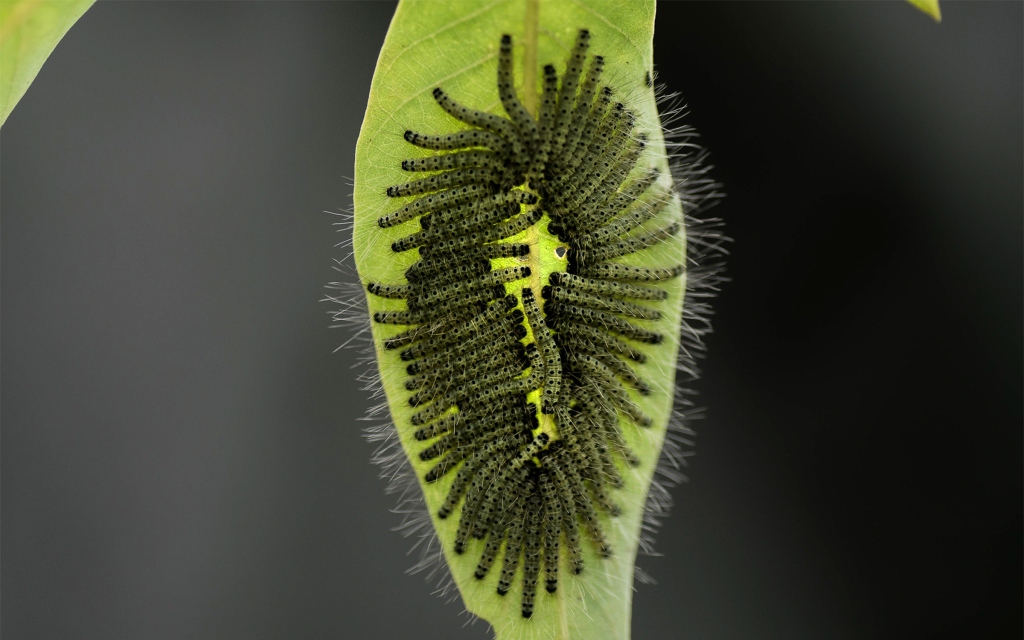
Winner: Deepak Bhau Kumbhar. Picture caption: Just one world.

5-1

{credit}Deepak Bhau Kumbhar{/credit}

Deepak Bhau Kumbhar

Deepak Bhau Kumbhar

“These beautiful caterpillars face severe competition from one another, trying to nibble into a single piece of leaf. That’s what is happening to mankind – we are greedily consuming the world’s limited resources. It is time we realise that soon there won’t be enough left for all of us. Though that realization has dawned among many, out of sheer habit we continue to nibble into the same leaf.

I am a science teacher at a high school, passionate about micro wildlife photography. I photograph nature’s amazing creations and show them to my students with various messages.”

— Deepak Bhau Kumbhar, Maharashtra, India.

Second Prize winner: Ricky Patel. Picture caption: Cleaning up my abode.

3-1

{credit}Ricky Patel{/credit}

Ricky Patel

Ricky Patel

“Can we please use biodegradable material or adopt safer waste disposal practices, at least inside the national parks? My friends and I living in the Ranthambore National Park (Rajasthan, India), have a hard time cleaning up after careless tourists .” This Royal Bengal Tiger, with a plastic bottle in its mouth, would probably say something similar if it could speak to you. Incessant use of non-biodegradable polymers makes a mockery of our national programme of ‘Clean India’, even in highly protected zones.

— Ricky Patel, West Bengal, India

Joint third prize winner: Avinash Surendran. Picture caption: Children of the Sun.

4-1

{credit}Avinash Surendran{/credit}

Avinash Surendran

Avinash Surendran

“Enough sunlight hits the earth in an hour to power it for a year. Why aren’t we using this resource enough? Even five years ago, powering homes or industries using solar power would be considered a billionaire philanthropist’s dream. However, in the last five years, the cost of solar energy has fallen by a fifth, making it cheaper than fossil fuels in many countries around the world. The story of solar energy is not just about sunlight. Its success includes sound technology, innovation and the political will to solve the grand challenge of cheap sustainable energy. It is a story of democratization of energy and leaving the planet a better place for our children. The next generation should inherit this energy from the sun – they should be the children of the sun.

This photo was taken from the terrace of the Indian Institute of Astrophysics, Bangalore. I am a PhD student there and contributed to the installation of a solar rooftop power plant which offsets the energy usage of the entire institute, while providing cheaper electricity than that available from the grid. This photo for me is symbolic of the opportunity we have in solving the problem of cheap sustainable energy for all.”

— Avinash Surendran, Bengaluru, India.

Joint third prize winner: Dipankar Ghosh. Picture caption: Fishy tales.

2-1

{credit}Dipankar Ghosh{/credit}

Dipankar Ghosh

Dipankar Ghosh

“A dramatic increase in population and climate change are depleting global natural resources at an alarming rate. Fishermen on the Puri coast in Odisha, India depend on the ocean’s natural resource for their livelihood. But meeting daily targets of fish haul to earn a living is often a big challenge.”

— Dipankar Ghosh, Minnesota, USA.

NI Photo Contest 2017: Finalist #10

And here’s announcing our final finalist!

The Nature India photo contest 2017 finalist number ten:

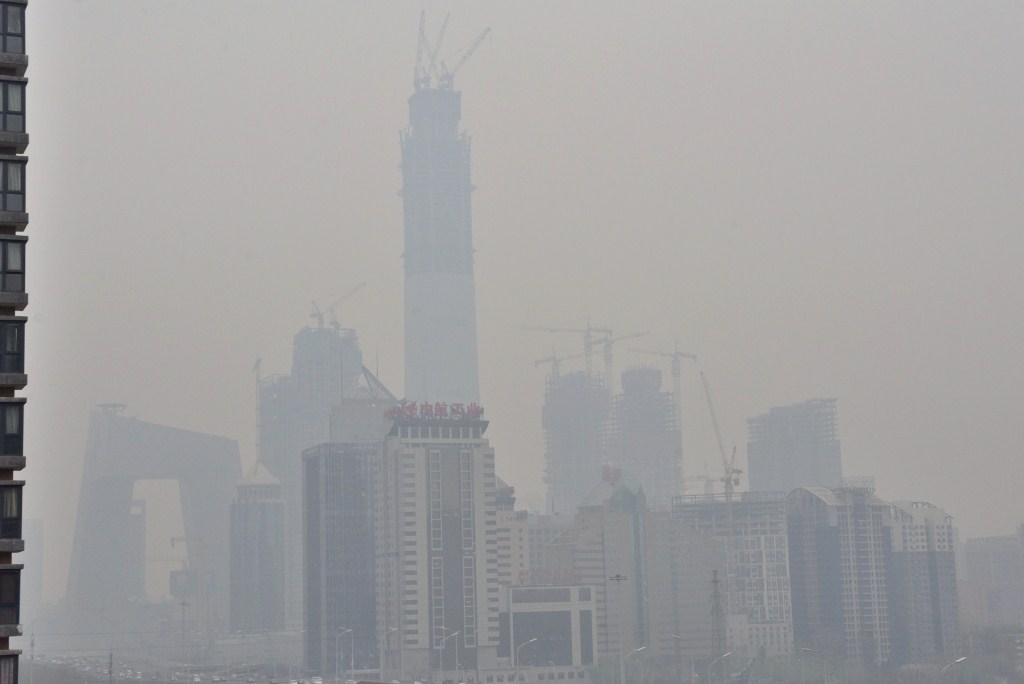
Hinnerk Feldwisch-Drentrup, Karlsruhe, Germany

Photo caption: Unclear vision

10-1

{credit}Hinnerk Feldwisch-Drentrup{/credit}

Hinnerk Feldwisch-Drentrup

Hinnerk Feldwisch-Drentrup

Hinnerk, a science journalist based in Germany, shot this picture in the Chinese capital.

“One morning in April 2017 in Beijing, when I looked out of my window, thick smog obstructed the view of the central business district.

Next to the headquarters of China’s Central Television on the left, the CIVIC tower is under construction. Nicknamed ‘China Zun’, or ‘China’s dignity’, it could hardly serve as a reliable lighthouse or a watchtower, thanks to the smog cover that hazes out everything in sight.”

Well done Hinnerk, and great to have you in the top ten!

And with that we come to the end of this long list for this year’s contest! The Nature India photo contest 2017 brought to us some wonderful entries from around the world. The theme this year was ‘Grand Challenges’, and needed more thought and creativity than our earlier themes.

Despite the challenge, the quality and novelty of some of the entries has been breathtaking. We have had a mix of amateur and professional photographers, scientists and non-scientists, mobile cameras and high-end DSLRs — all vying to portray the complex global problems we face — the world’s grand challenges — and to look for solutions for a healthy and sustainable future.

Tough job as usual for the Nature India editorial and design team in selecting just three winners. The winners stand a chance of seeing their entries grace the cover page of one of our forthcoming print publications. The winner and two runners-up will receive a copy of the latest Nature India Special Annual Volume and an enviable bag of goodies from Springer Nature.

As a run up to the final announcement, we will be rolling out the top 10 finalists of the photo competition (in no particular order of merit) over the next few days on the Indigenus blog as well as our social media platforms (Twitter and Facebook). The final results will be announced somewhere in late December 2017.

Nature India’s final decision to chose the winner will be partly influenced by the engagement and reception he/she receives here at the Indigenus blog, on Twitter and on Facebook. To give all finalists a fair chance, we will take into consideration the social media engagement of each picture only during the first seven days of its announcement.

Watch out for our other finalists and feel free to promote, share and like your favourite entries with the hashtag #NatureIndphoto.

NI Photo Contest 2017: Finalist #9

Two more to go in the longlist!

Announcing the Nature India photo contest 2017 finalist number nine:

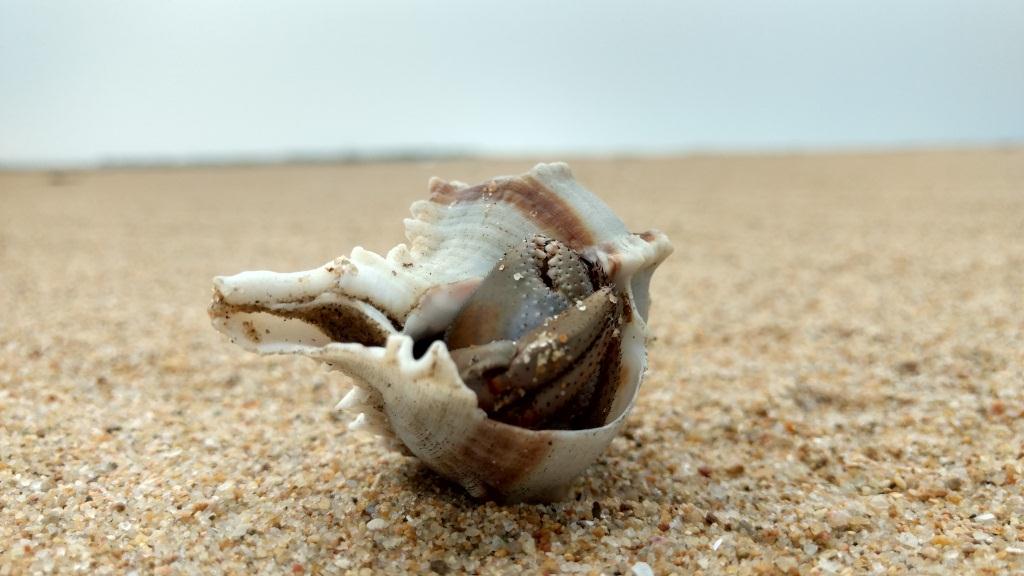
Nirmal Balakrishnan, Chennai, India

Photo caption: Environment refugees

9-1

{credit}Nirmal Balakrishnan{/credit}

Nirmal Balakrishnan

Nirmal Balakrishnan

Nirmal, a digital marketer, finds a human parallel in this symbolic picture of a crab living inside a conch shell on the shores of the Pulicat Lake in Tamil Nadu, India:

“These crabs are faced with the challenge of destruction of their species due to overfishing, as also destruction of their habitats – the seas – due to human-induced pollution. They are forced to travel from one place to another, carrying their belongings on their back, in search of tranquil shores.

This crab lives in a borrowed dwelling inside a conch shell, like an environment refugee. To address the world’s grand challenges, we may need similar skilled crabbing – reaching beyond our comfort zones, collaborating across disciplines and across the seas, and focusing on better, sustainable solutions. Like this crab shows, we are all in it together!”

Congratulations Nirmal for the wonderful catch, and welcome to the top ten!

As we slowly come to a close this year, the Nature India photo contest has regaled us with some wonderful entries from around the world. The theme this year was ‘Grand Challenges’, and needed more thought and creativity than our earlier themes.

Despite the challenge, the quality and novelty of some of the entries has been breathtaking. We have had a mix of amateur and professional photographers, scientists and non-scientists, mobile cameras and high-end DSLRs — all vying to portray the complex global problems we face — the world’s grand challenges — and to look for solutions for a healthy and sustainable future.

Tough job as usual for the Nature India editorial and design team in selecting just three winners. The winners stand a chance of seeing their entries grace the cover page of one of our forthcoming print publications. The winner and two runners-up will receive a copy of the latest Nature India Special Annual Volume and an enviable bag of goodies from Springer Nature.

As a run up to the final announcement, we will be rolling out the top 10 finalists of the photo competition (in no particular order of merit) over the next few days on the Indigenus blog as well as our social media platforms (Twitter and Facebook). The final results will be announced somewhere in late December 2017.

Nature India’s final decision to chose the winner will be partly influenced by the engagement and reception he/she receives here at the Indigenus blog, on Twitter and on Facebook. To give all finalists a fair chance, we will take into consideration the social media engagement of each picture only during the first seven days of its announcement.

Watch out for our other finalists and feel free to promote, share and like your favourite entries with the hashtag #NatureIndphoto.

NI Photo Contest 2017: Finalist #8

Drum rolls for the Nature India photo contest 2017 finalist number eight:

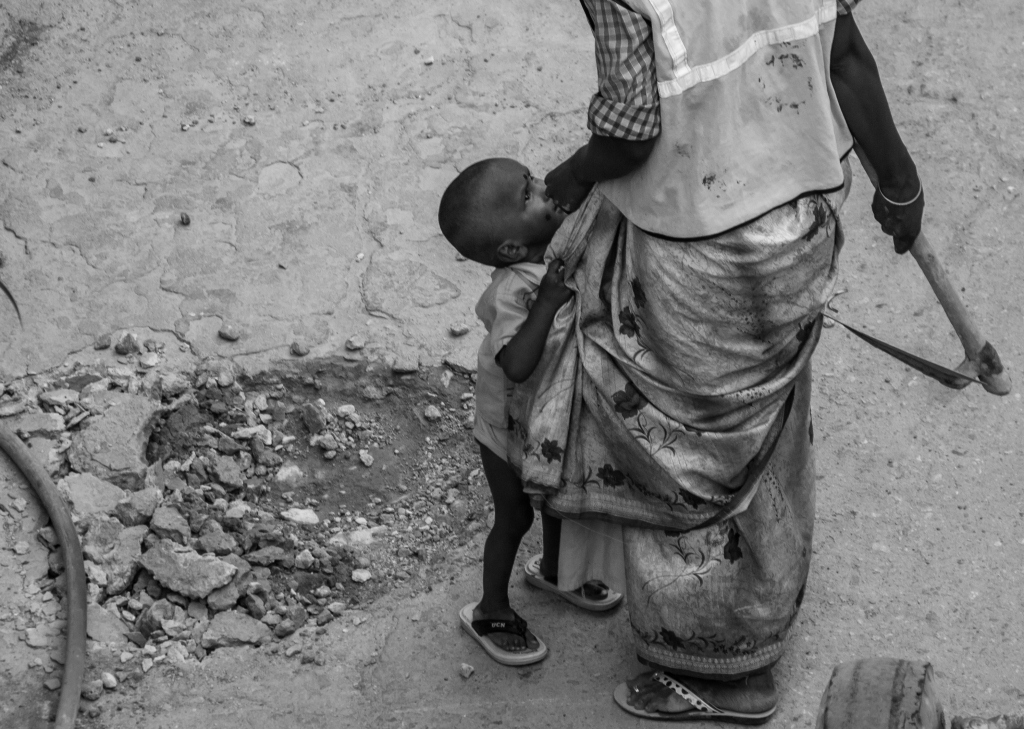
Preethi Krishnamoorthy, Bengaluru, India

Photo caption: Poverty inherited

8-1

{credit}Preethi Krishnamoorthy{/credit}

Preethi Krishnamoorthy

Preethi Krishnamoorthy

Preethi was sitting with her morning cup of tea at her window in a quiet Bengaluru neighbourhood when she saw this little kid running along the street.

“I watched as he ran confident and carefree without the fear of the moving vehicles. I found myself smiling when he was naughty, and gasping at the thought of an imminent fall. I wanted to capture his innocence. He walked over to a woman, perhaps his mother, among some workers mending the road, tugged on her sari for attention and made a sad face when she refused. For her, leaving work to attend to him would probably mean no dinner for him that night. My heart sank as I captured this irony.

She went back to work and he to play. He found a little girl to chat up with and sit next to. She readily shared a packet of chips with him. All was well again in his little world, but there were a lot of questions in mine. Would he grow up to get formal education or a healthy life? Would the underprivileged ever be able to break their inherited cycle of poverty? The burden of these questions should weigh heavy on our collective conscience.”

Well done Preethi, and congratulations for getting into the top ten of the contest!

In its fourth year, the Nature India photo contest continues to receive some wonderful entries from around the world. The theme this year was ‘Grand Challenges’, and needed more thought and creativity than our earlier themes.

Despite the challenge, the quality and novelty of some of the entries has been breathtaking. We have had a mix of amateur and professional photographers, scientists and non-scientists, mobile cameras and high-end DSLRs — all vying to portray the complex global problems we face — the world’s grand challenges — and to look for solutions for a healthy and sustainable future.

Tough job as usual for the Nature India editorial and design team in selecting just three winners. The winners stand a chance of seeing their entries grace the cover page of one of our forthcoming print publications. The winner and two runners-up will receive a copy of the latest Nature India Special Annual Volume and an enviable bag of goodies from Springer Nature.

As a run up to the final announcement, we will be rolling out the top 10 finalists of the photo competition (in no particular order of merit) over the next few days on the Indigenus blog as well as our social media platforms (Twitter and Facebook). The final results will be announced somewhere in late December 2017.

Nature India’s final decision to chose the winner will be partly influenced by the engagement and reception he/she receives here at the Indigenus blog, on Twitter and on Facebook. To give all finalists a fair chance, we will take into consideration the social media engagement of each picture only during the first seven days of its announcement.

Watch out for our other finalists and feel free to promote, share and like your favourite entries with the hashtag #NatureIndphoto.

NI Photo Contest 2017: Finalist #7

The contest is now hotting up!

Here is the Nature India photo contest 2017 finalist number seven:

Samrat Mukherjee, Mumbai, India

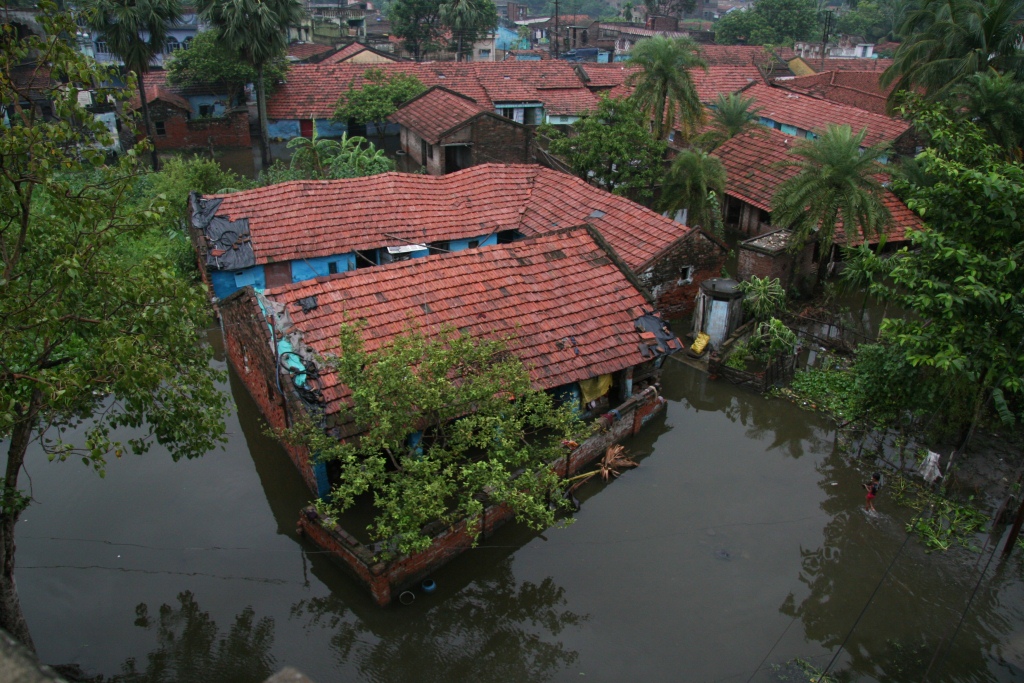
Photo caption: Home alone

7-1

{credit}Samrat Mukherjee{/credit}

Samrat Mukherjee

Samrat Mukherjee

Samrat explains his photo thus:

“Every year the rains are getting unpredictable. Traditional ways of living are unable to cope up with this change.

This image was taken in the Nadia District in West Bengal crippled after a spell of heavy cyclonic rains, a phenomenon that’s more frequent in the Bay of Bengal in recent times.”

Congratulations Samrat for this macro view. And welcome to the long list of the contest!

The Nature India photo contest is in its fourth edition continuing to receive some breathtaking entries from around the world. The theme this year was ‘Grand Challenges’, and needed more thought and creativity than our earlier themes.

Despite the challenge, the quality and novelty of some of the entries has been breathtaking. We have had a mix of amateur and professional photographers, scientists and non-scientists, mobile cameras and high-end DSLRs — all vying to portray the complex global problems we face — the world’s grand challenges — and to look for solutions for a healthy and sustainable future.

Tough job as usual for the Nature India editorial and design team in selecting just three winners. The winners stand a chance of seeing their entries grace the cover page of one of our forthcoming print publications. The winner and two runners-up will receive a copy of the latest Nature India Special Annual Volume and an enviable bag of goodies from Springer Nature.

As a run up to the final announcement, we will be rolling out the top 10 finalists of the photo competition (in no particular order of merit) over the next few days on the Indigenus blog as well as our social media platforms (Twitter and Facebook). The final results will be announced somewhere in late December 2017.

Nature India’s final decision to chose the winner will be partly influenced by the engagement and reception he/she receives here at the Indigenus blog, on Twitter and on Facebook. To give all finalists a fair chance, we will take into consideration the social media engagement of each picture only during the first seven days of its announcement.

Watch out for our other finalists and feel free to promote, share and like your favourite entries with the hashtag #NatureIndphoto.


NI Photo Contest 2017: Finalist #6

Time now to roll out the Nature India photo contest 2017 finalist number six:

Jessy Varghese, South Carolina, USA

Photo caption: No expiry date

6

Jessy Varghese

Jessy Varghese

Jessy, a PhD student in pharmaceutical sciences at the University of South Carolina, has this to say about her picture:

“Some things just don’t have an expiry date! Love and compassion, for example, don’t. Ageing is a challenge. It is a challenge for the person as it comes with functional decline, diseases and mental illness. It is also challenging for the society as an ageing population tells on its economic stability and growth. As a research student in pharmaceutical sciences, I was looking at the growth in availability of medication to help the elderly achieve a healthy and happy old age. Beyond all interventions, I realized, ‘all they need is love.’

I took this photo in May 2017 at a farmer’s market in Columbia, South Carolina, USA.”

Congratulations Jessy for the deep thought that got you into the top ten of this contest!

In its fourth year, the Nature India photo contest continued to receive some breathtaking entries from around the world. The theme this year was ‘Grand Challenges’, and needed more thought and creativity than our earlier themes.

Despite the challenge, the quality and novelty of some of the entries has been breathtaking. We have had a mix of amateur and professional photographers, scientists and non-scientists, mobile cameras and high-end DSLRs — all vying to portray the complex global problems we face — the world’s grand challenges — and to look for solutions for a healthy and sustainable future.

Tough job as usual for the Nature India editorial and design team in selecting just three winners. The winners stand a chance of seeing their entries grace the cover page of one of our forthcoming print publications. The winner and two runners-up will receive a copy of the latest Nature India Special Annual Volume and an enviable bag of goodies from Springer Nature.

As a run up to the final announcement, we will be rolling out the top 10 finalists of the photo competition (in no particular order of merit) over the next few days on the Indigenus blog as well as our social media platforms (Twitter and Facebook). The final results will be announced somewhere in late December 2017.

Nature India’s final decision to chose the winner will be partly influenced by the engagement and reception he/she receives here at the Indigenus blog, on Twitter and on Facebook. To give all finalists a fair chance, we will take into consideration the social media engagement of each picture only during the first seven days of its announcement.

Watch out for our other finalists and feel free to promote, share and like your favourite entries with the hashtag #NatureIndphoto.