NI Photo Contest 2017: Finalist #5

And here is Nature India photo contest 2017 finalist number five:

Deepak Bhau Kumbhar, Maharashtra, India

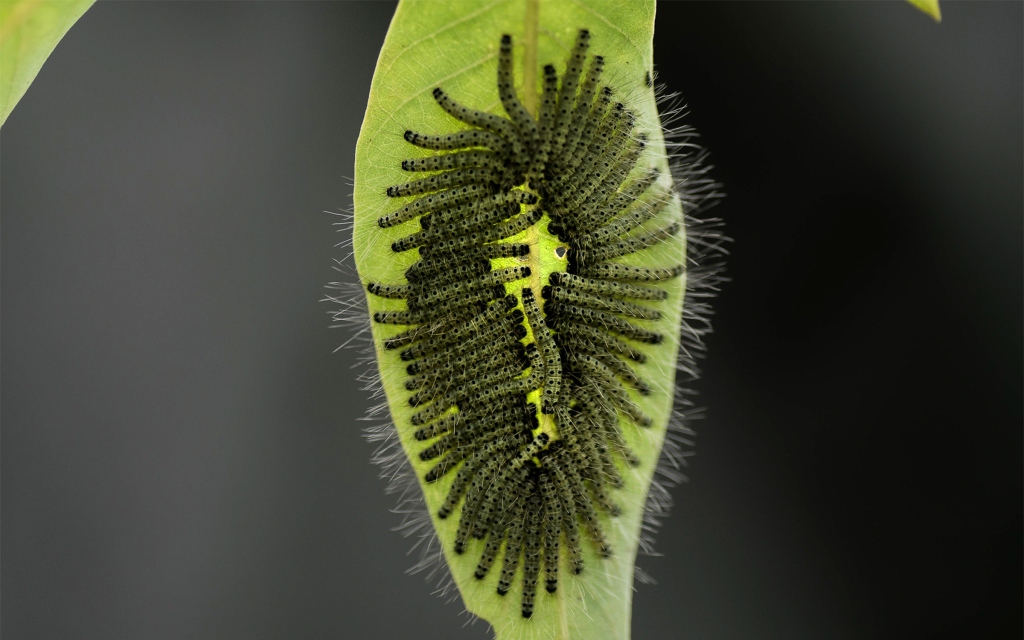
Photo caption: Just one world
5-1

{credit}Deepak Bhau Kumbhar{/credit}

Deepak explains his shot thus:

Deepak Bhau Kumbhar

Deepak Bhau Kumbhar

“These beautiful caterpillars face severe competition from one another, trying to nibble into a single piece of leaf. That’s what is happening to mankind – we are greedily consuming the world’s limited resources. It is time we realise that soon there won’t be enough left for all of us. Though that realization has dawned among many, out of sheer habit we continue to nibble into the same leaf.

I am a science teacher at a high school, passionate about micro wildlife photography. I photograph nature’s amazing creations and show them to my students with various messages.”

Congratulations Deepak for the lovely composition. Welcome to the top ten!

The Nature India photo contest is in its fourth year and continues to receive some breathtaking entries from around the world. The theme this year was ‘Grand Challenges’, and needed more thought and creativity than our earlier themes.

Despite the challenge, the quality and novelty of some of the entries has been breathtaking. We have had a mix of amateur and professional photographers, scientists and non-scientists, mobile cameras and high-end DSLRs — all vying to portray the complex global problems we face — the world’s grand challenges — and to look for solutions for a healthy and sustainable future.

Tough job as usual for the Nature India editorial and design team in selecting just three winners. The winners stand a chance of seeing their entries grace the cover page of one of our forthcoming print publications. The winner and two runners-up will receive a copy of the latest Nature India Special Annual Volume and an enviable bag of goodies from Springer Nature.

As a run up to the final announcement, we will be rolling out the top 10 finalists of the photo competition (in no particular order of merit) over the next few days on the Indigenus blog as well as our social media platforms (Twitter and Facebook). The final results will be announced somewhere in late December 2017.

Nature India’s final decision to chose the winner will be partly influenced by the engagement and reception he/she receives here at the Indigenus blog, on Twitter and on Facebook. To give all finalists a fair chance, we will take into consideration the social media engagement of each picture only during the first seven days of its announcement.

Watch out for our other finalists and feel free to promote, share and like your favourite entries with the hashtag #NatureIndphoto.

NI Photo Contest 2017: Finalist #4

Presenting Nature India photo contest 2017 finalist number four:

Avinash Surendran, Bengaluru, India

Photo caption: Children of the Sun

4-1

{credit}Avinash Surendran{/credit}

Avinash Surendran

Avinash Surendran

Avinash tells us the thought behind this picture:

“Enough sunlight hits the earth in an hour to power it for a year. Why aren’t we using this resource enough? Even five years ago, powering homes or industries using solar power would be considered a billionaire philanthropist’s dream. However, in the last five years, the cost of solar energy has fallen by a fifth, making it cheaper than fossil fuels in many countries around the world. The story of solar energy is not just about sunlight. Its success includes sound technology, innovation and the political will to solve the grand challenge of cheap sustainable energy. It is a story of democratization of energy and leaving the planet a better place for our children. The next generation should inherit this energy from the sun – they should be the children of the sun.

This photo was taken from the terrace of the Indian Institute of Astrophysics, Bangalore. I am a PhD student there and contributed to the installation of a solar rooftop power plant which offsets the energy usage of the entire institute, while providing cheaper electricity than that available from the grid. This photo for me is symbolic of the opportunity we have in solving the problem of cheap sustainable energy for all.”

Congratulations for a brilliant capture Avinash, and welcome to the top ten of this contest!

The Nature India photo contest is in its fourth year and continues to receive some breathtaking entries from around the world. The theme this year was ‘Grand Challenges’, and needed more thought and creativity than our earlier themes.

Despite the challenge, the quality and novelty of some of the entries has been breathtaking. We have had a mix of amateur and professional photographers, scientists and non-scientists, mobile cameras and high-end DSLRs — all vying to portray the complex global problems we face — the world’s grand challenges — and to look for solutions for a healthy and sustainable future.

Tough job as usual for the Nature India editorial and design team in selecting just three winners. The winners stand a chance of seeing their entries grace the cover page of one of our forthcoming print publications. The winner and two runners-up will receive a copy of the latest Nature India Special Annual Volume and an enviable bag of goodies from Springer Nature.

As a run up to the final announcement, we will be rolling out the top 10 finalists of the photo competition (in no particular order of merit) over the next few days on the Indigenus blog as well as our social media platforms (Twitter and Facebook). The final results will be announced somewhere in late December 2017.

Nature India’s final decision to chose the winner will be partly influenced by the engagement and reception he/she receives here at the Indigenus blog, on Twitter and on Facebook. To give all finalists a fair chance, we will take into consideration the social media engagement of each picture only during the first seven days of its announcement.

Watch out for our other finalists and feel free to promote, share and like your favourite entries with the hashtag #NatureIndphoto.

NI Photo Contest 2017: Finalist # 3

And now for Nature India photo contest 2017 finalist number three:

Ricky Patel, West Bengal, India

Photo caption: Cleaning up my abode

3-1

{credit}Ricky Patel{/credit}

Ricky Patel

Ricky Patel

Ricky thought from the animal’s point of view while shooting this photo:

“Can we please use biodegradable material or adopt safer waste disposal practices, at least inside the national parks? My friends and I living in the Ranthambore National Park ( Rajasthan, India), have a hard time cleaning up after careless tourists .” This Royal Bengal Tiger, with a plastic bottle in its mouth, would probably say something similar if it could speak to you. Incessant use of non-biodegradable polymers makes a mockery of our national programme of ‘Clean India’, even in highly protected zones.

A rare catch Ricky! Welcome to the top ten.

In it’s fourth year, the Nature India photo contest continues to receive fantastic response with entries from around the world. The theme this year was ‘Grand Challenges’, and needed more thought and creativity than our earlier themes.

Despite the challenge, the quality and novelty of some of the entries has been breathtaking. We have had a mix of amateur and professional photographers, scientists and non-scientists, mobile cameras and high-end DSLRs — all vying to portray the complex global problems we face — the world’s grand challenges — and to look for solutions for a healthy and sustainable future.

Tough job as usual for the Nature India editorial and design team in selecting just three winners. The winners stand a chance of seeing their entries grace the cover page of one of our forthcoming print publications. The winner and two runners-up will receive a copy of the latest Nature India Special Annual Volume and an enviable bag of goodies from Springer Nature.

As a run up to the final announcement, we will be rolling out the top 10 finalists of the photo competition (in no particular order of merit) over the next few days on the Indigenus blog as well as our social media platforms (Twitter and Facebook). The final results will be announced somewhere in late December 2017.

Nature India’s final decision to chose the winner will be partly influenced by the engagement and reception he/she receives here at the Indigenus blog, on Twitter and on Facebook. To give all finalists a fair chance, we will take into consideration the social media engagement of each picture only during the first seven days of its announcement.

Watch out for our other finalists and feel free to promote, share and like your favourite entries with the hashtag #NatureIndphoto.

NI Photo Contest 2017: Finalist # 2

Rolling out Nature India photo contest 2017 finalist number two:

Dipankar Ghosh, Oakdale, Minnesota, USA

Photo caption: Fishy tales

2-1

{credit}Dipankar Ghosh{/credit}

Dipankar Ghosh

Dipankar Ghosh

Here’s Dipankar’s description of his picture:

A dramatic increase in population and climate change are depleting global natural resources at an alarming rate. Fishermen on the Puri coast in Odisha, India depend on the ocean’s natural resource for their livelihood. But meeting daily targets of fish haul to earn a living is often a big challenge.

Congratulations Dipankar for making it to the longlist!

In it’s fourth year, the photo contest continued to receive fantastic response with entries from around the world. The theme this year was ‘Grand Challenges’, and needed more thought and creativity than our earlier themes.

Despite the challenge, the quality and novelty of some of the entries has been breathtaking. We have had a mix of amateur and professional photographers, scientists and non-scientists, mobile cameras and high-end DSLRs — all vying to portray the complex global problems we face — the world’s grand challenges — and to look for solutions for a healthy and sustainable future.

Tough job as usual for the Nature India editorial and design team in selecting just three winners. The winners stand a chance of seeing their entries grace the cover page of one of our forthcoming print publications. The winner and two runners-up will receive a copy of the latest Nature India Special Annual Volume and an enviable bag of goodies from Springer Nature.

As a run up to the final announcement, we will be rolling out the top 10 finalists of the photo competition (in no particular order of merit) over the next few days on the Indigenus blog as well as our social media platforms (Twitter and Facebook). The final results will be announced somewhere in late December 2017.

Nature India’s final decision to chose the winner will be partly influenced by the engagement and reception he/she receives here at the Indigenus blog, on Twitter and on Facebook. To give all finalists a fair chance, we will take into consideration the social media engagement of each picture only during the first seven days of its announcement.

Watch out for our other finalists and feel free to promote, share and like your favourite entries with the hashtag #NatureIndphoto.

NI Photo Contest 2017: Finalist #1

Like every year-end, we are now ready to roll our the finalists of this year’s Nature India photo contest.

In it’s fourth year, the photo contest continued to receive fantastic response with entries from around the world. The theme this year was ‘Grand Challenges’, and needed more thought and creativity than our earlier themes.

Despite the challenge, the quality and novelty of some of the entries has been breathtaking. We have had a mix of amateur and professional photographers, scientists and non-scientists, mobile cameras and high-end DSLRs — all vying to portray the complex global problems we face — the world’s grand challenges — and to look for solutions for a healthy and sustainable future.

Tough job as usual for the Nature India editorial and design team in selecting just three winners. The winners stand a chance of seeing their entries grace the cover page of one of our forthcoming print publications. The winner and two runners-up will receive a copy of the latest Nature India Special Annual Volume and an enviable bag of goodies from Springer Nature.

As a run up to the final announcement, we will be rolling out the top 10 finalists of the photo competition (in no particular order of merit) over the next few days on the Indigenus blog as well as our social media platforms (Twitter and Facebook). The final results will be announced somewhere in late December 2017.

So here’s Nature India photo contest 2017 finalist number one:

Owais Rashid Hakiem, PhD student, National Institute of Immunology, New Delhi.

Photo caption: The glorious dead lake

1-1

{credit}Owais Rashid Hakiem{/credit}


Owais Rashid Hakiem

Owais Rashid Hakiem

This is how Owais describes his entry:

Dal lake in Srinagar, the summer capital of the state of Jammu and Kashmir in India, has a shoreline of about 15.5 km. Dal used to be a breathtaking freshwater lake till a couple of decades back. Now the capital city empties its wastes into it. Illegal floating gardens and inland farming have added to the lake’s woes. The Indian government has made massive investments (approximately US$275 million) to restore the lake’s original splendor. But poor accountability shows in the declining health of the lake.

Shakil Ahmad Romshoo, head of the Earth Sciences Department at Kashmir University says 32% of the lake is severely degraded, 48% suffers medium degradation and about 20% is relatively clean. The lake, which has shrunk from 31 to 24 square km between the years 1859 and 2014 faces multiple pressures from unplanned urbanisation, high population growth, nutrient load from intensive agriculture and tourism.

Congratulations Owais for making it to top ten!

Nature India’s final decision to chose the winner will be partly influenced by the engagement and reception he/she receives here at the Indigenus blog, on Twitter and on Facebook. To give all finalists a fair chance, we will take into consideration the social media engagement of each picture only during the first seven days of its announcement.

So watch out for our other finalists and feel free to promote, share and like your favourite entries with the hashtag #NatureIndphoto.

Nature India, TDU launch science Media Fellowship

MF2Nature India is proud to partner with the TransDisciplinary University, Bengaluru to launch India’s first dedicated media fellowship for science journalism.

The TDU-Nature India Media Fellowship for Science Journalism will financially support – with a bursary of Rs 100,000 each – four Indian journalists to explore and report on scientific research as well as allied fields such as biodiversity, health and environment, seen through the lens of science. It aims to help the media fellows create a strong body of work by publishing or broadcasting stories in their respective media outlets. (Details here.)

These stories will have a nuanced focus on science while they look at issues such as biodiversity, health and/or environment and build upon the expertise available with the TDU and Nature India. They will, in turn, generate public discussion and understanding in these areas, hopefully leading to improved understanding of policy issues.

Balakrishna Pisupati, Vice Chancellor of the TDU says the media fellowship was envisaged to give an opportunity to science journalists in the country to strengthen their professional acumen as well as generate interest among journalists in other beats to look at issues with a scientific perspective. They will be able to interact closely with scientific experts from the university, Nature India, and international organisations such as the United Nations Environment Programme (UNEP) and the International Union for the Conservation of Nature (IUCN).

The media fellows will be able to access the best in Nature Research and receive active mentoring throughout their reportage during the fellowship. In addition to being able to create a body of good quality reporting, the fellows will also be encouraged to create a peer group that raises the bar for science journalism in the country.

The media fellows will be invited for a three-day orientation workshop at the TDU campus, where they will be introduced to some of the University’s research activities. They will also have time to discuss one-on-one with subject experts in their chosen topic and develop story ideas. There will be an expert coordinator for the media fellowship programme and experts from the TDU and Nature India will also be available for consultation during the fellowship period.

Fellowship Themes: Applicants can choose one of the following themes for pursuing their fellowship: 1. Pure and applied sciences; 2. Biodiversity; 3. Health, and/or 4. Environment. The media fellows can look at ongoing research at TDU on these themes and also elsewhere for their story ideas during the fellowship.

Eligibility: Professional journalists, including freelancers, in Print and New Media in English and any Indian regional language, with at least three years of demonstrated experience in writing on science, biodiversity, environmental, health or allied issues. Regional language Fellows will need to know some English for communication.

Application Deadline: September 24, 2017.  Selected applicants will be notified within four days.

All other application details can be found at https://tdu.edu.in/mediafellowships

Nature India Annual Volume 2016 is out

Our much awaited collection of the year — the Nature India Annual Volume 2016 — is out this week.

In the year gone by (2016), India witnessed events that would go down in the country’s science history. The Indian Space Research Organisation (ISRO) launched 20 satellites on board one single vehicle, a warm-up that was only bettered five times over into a record breaking 104-satellite launch in early 2017.

India’s low-cost space-faring brilliance, bolstering her sense of self-sufficiency, has attracted global attention. It has come with caveats though — the European Union (EU) recognises that with such a mature space programme (and big strides in other areas of scientific research), India can no longer be bracketed together with ‘developing countries’. The EU’s funds for Indian researchers have, therefore, shrunk to a trickle with the premise that India is
now capable of pumping in more funds for collaborative projects with the EU.

This annual volume of Nature India takes a look at the changing landscape of science and research funding in India with a series of articles.

The discovery of gravitational waves marked a high point in theoretical physics last year. It sent ripples of joy for India, which is now all set to implement a multi-institutional Rs 1200 crore astronomy project that will see one advanced LIGO detector from Hanford in Washington being shifted to a site in India. There’s a flurry of activity in India around this international project. We capture that excitement in this issue. Alongside this, India’s leading participation in making the world’s largest radio telescope, the Square Kilometre Array (SKA), in the remote Australian outback makes it to our cover.

In another investigation, we look at the mushrooming of genomic service centres in India, the lack of regulation in the country to cope with the new wave and how even now most genetic conditions remain undiagnosed at birth.

We hop on to the biodiverse Western Ghats of India to report on an ‘evolutionary museum’ of bush frogs, a forest virus that resurfaced after a decade to kill over 120 people, and to inspect why the rice genome is under threat in this unique rice growing valley.

For researchers looking to ward off work blues, a couple of articles offer practical advice on how to overcome research rut and how to make most of conferences.

Our annual volumes strive to be an important addition to the science calendar of India — a must have for anyone interested in keeping abreast with the research highlights of the year, newsmakers, trends in R&D, careers and policy issues. These annual chronicles of the “contemporary history of science in India” are put together by a group of editors and eminent scientists, who handpick the contents from our coverage through the year.

Affiliations and research interests of some people might have changed after publication of these articles. We mention the publication date on top of each article so that they make sense.

Nature India partners with ICRISAT for InterDrought-V

Cover InterDrought-VNature India is proud to be associated with the International Crops Research Institute for the Semi-Arid Tropics (ICRISAT) as media partner for the fifth edition of the InterDrought conference being held in Hyderabad (February 21-25, 2017).

The conference brings togther experts from across the world to debate key issues in improving drought and other stress tolerance in crops. Scientists from around 56 countries will come together to explore the possibilities of scientific and technological applications in crop improvement.

ICRISAT Director General David Bergvinson says the conference will bring together the disciplines of plant and crop physiology, genomics, genetics and breeding. It will talk about recent advances in these fields related to plant responses to water deficit and climate change, phenotyping and genetic variability.

According to the conference chair Rajeev Varshney this is the largest conference in the InterDrought series with 850 participants from 56 countries. Earlier conferences in the series habe been held in France, Italy, China and Australia.

Nature India put together this cover for the abstract book depicting the three important elements of the drought story — the starkness of drought, its deep impact on humans and the science-driven solution to meet the challenge — drought-resilient crop varieties.

Here’s Nature India‘s editorial for the conference abstract book:

Looking for a Plan C in water-scarce times

An issue that stirs emotions among scientists, policy makers and the general public alike is ‘water’. Or, in the present times, the lack thereof.

In these water-scarce times, in India, as in many other parts of the world, the issue of groundwater depletion is a subject of concern and serious study. And so, apart from the parched patches that the world inherited from the 20th century, we are looking at times of new aridity triggered by plummeting groundwater tables. It’s actually a vicious circle – news studies are now suggesting that excessive pumping of water for agriculture may not be the reason behind the plunging groundwater levels after all. Long-term changes in monsoon rainfall could instead be influencing this, and that in turn is forcing farmers to dig deeper for water.

Why this preamble on water? Especially when water-scarcity is an issue almost embedded in the DNA of scientists attending InterDrought conferences.

Essentially because it’s nice to take a step back once a while and look at the larger canvas. For scientists and technologists working on a Plan B to counter drought – that is, to still be able to grow nutritionally-rich, drought-resistant crops – these conferences are a wonderful reminder of the big picture. Interestingly, InterDrought-V is hoping to be the largest such congregation in recent times with over 850 scientists from around 56 countries. This provides a canvas bigger than ever before to create new milestones, fortify strategies that have worked so far, and solemnly bury the ones that don’t work so well in the changing climate scenarios.

The Nature Research Group devotes significant energies to the coverage of the “Grand Challenges”, which include our coverage of climate, water and food – issues that resonate well with InterDrought-V. Nature India, a showcase of India’s science, is proud to be associated with the conference as its media partner. We hope that the conference, bringing together the who’s who of the discipline from across the world, will identify issues and concerns to evolve a futuristic Plan C for drought-friendly agriculture.

Nature India Special Issue: Oral Health Inequalities and Health Systems in Asia-Pacific

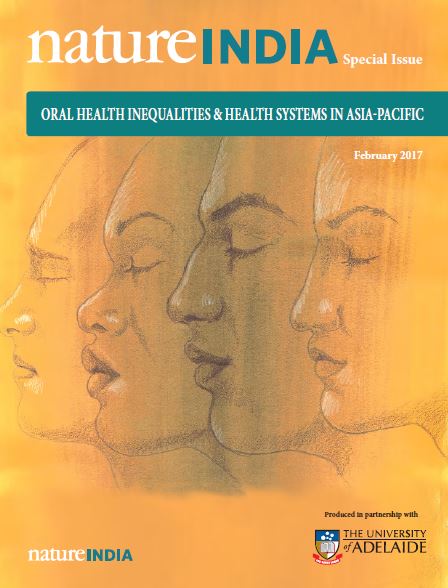
coverNature India is releasing a very timely special issue today in collaboration with knowledge partners University of Adelaide. The special issue on ‘Oral Health Inequalities and Health Systems in Asia-Pacific’ is a ready reckoner of the state of affairs and trends in oral health inequalities in the region. The issue hopes to be of great value to the region’s policy makers, health professionals, the oral health industry and general public.

The special issue has 12 articles and an editorial by the who’s who of oral health research in the region. The authors of these articles are senior academic or policy personnel, who in their own right have made a significant contribution to oral health research both globally and in the Asia-Pacific Region.

Here’s a brief summary of the special issue:

This special issue is a unique effort to address key challenges facing oral health inequalities and health systems in the Asia-Pacific region. A group of experts and leaders have authored pieces to strengthen the “call for action”. Based on the London Charter for Oral Health Inequalities, the special issue stresses the importance of advocacy on oral health inequalities in the region. The issue calls for an agenda further to strengthen essential aspects of health systems, such as dental workforce, service delivery, organisation of care, health financing, governance and leadership.

Asia-Pacific is home to about half of the world’s population. It is a diverse community with deep historical roots, comprising of 38 countries. Health is an intrinsic aspect of economic development in the region, and central towards achieving the global Sustainable Development Goals. Oral health is essentially the health of the mouth and adjacent structures.

Tooth decay, gum disease and tooth loss rank among the most common diseases (or conditions) in the world. The cost of treating oral diseases are high and occupy a large proportion of the overall expenditure on health. For example, direct treatment costs due to oral diseases were estimated at US$298 billion a year globally, corresponding to an average of 4.7% of the global health expenditure. Even though oral diseases are preventable, oral health is a neglected component of health and oral health care is given low priority in most heath care systems. There is an urgency for collaborative efforts among researchers, policymakers, public health practitioners, clinical teams and public, so as to improve oral health in the Asia-Pacific.

You can download the special issue here.

Scientific writing: A very short cheat sheet

Indigenus brings you some interesting and relevant posts from sister blog Naturejobs, a leading online resource for scientists in academia and industry who seek guidance in developing their careers. The blog delivers a mix of expert advice and personal stories to help readers review, set and achieve their career goals.

Today, researcher-turned-science-writer Meenakshi Prabhune talks about the golden rule for effective science writing — keep it simple.

writing-1043622_1920-smaller


The life of a researcher is incomplete without undergoing the trauma of writing scientific documents: papers, grants, protocols, theses, and so on and on. Most researchers find this stressful, time-consuming, and difficult; and, despite the enormous time and effort invested in writing, I for one often come across close-to-incomprehensible papers while digging through the literature. Why is that the case, and how do we fix it?

In my opinion, clarity breeds precision, and vice versa. It’s impossible to summarise a finding precisely if you haven’t understood it. A vague sentence that rambles on into the woods without a solid point will only confuse your readers, and indicate a lack of understanding on your part. Research your references and data thoroughly to avoid this. Preparation is an essential ingredient when writing clear and precise sentences.

Let’s consider the actual writing process—you write a sentence, realize you need a reference, search around for it, re-read the sentence, decide it’s not perfect, edit it, and wonder if you’ll ever finish at this speed.

Sounds familiar? Here’s something I wish I’d known sooner: writing and editing are separate processes. It’s perfectly fine to envision the end product and work in that direction, but don’t expect the first draft to be flawless. An effective writing method is to actively think about the content, write an entire paragraph or two—or three, or four—and then edit for perfection. This approach ensures a logical flow of sentences, as you’re following your own train of thought at a decent pace.

Meenakshi Prabhune

Meenakshi Prabhune

In terms of style, a healthy mix of short and long sentences is the key to a good manuscript. Short sentences read well. Long sentences with multiple conjunctions, punctuations, parts, pieces, bits, bobs, tenses, disclaimers, derivatives and definitions, although grammatically sound, are exhausting, and they also require extra attention on the reader’s part—that is, if the reader hasn’t given up already. Point proven?

Lastly, I think an important issue is that researchers—especially young researchers—often focus far too much on ‘sounding smart’. Your boss, peers, and the rest of the world are going to read something written by you for the first time, and there is often a real fear of coming across as stupid. Researchers should remember that the science in their paper is the only thing they need to validate their intellect.

Your aim while writing should be to spread your scientific findings to a large audience. So, confusing your readers—or potential reviewers—with complicated sentences and thesaurus entries will only discourage them from reading further. Write to express, not impress.

[Meenakshi lives and works in the Bay area, California. You can read her blog, that covers science and travel, here.]

Suggested posts

Uncertain Airspace: Changing career paths is disorienting and exhilarating

Getting an internship in science journalism

The era of big data is coming: Scientists need to step out of their comfort zone