Windback Wednesdays round-up: the Career Expo is back

windbackweds

{credit}Naturejobs{/credit}


Over the last four weeks, as we gear up to this year’s Naturejobs Career Expo and conference in London next Thursday 19th September, we’ve been revisiting some of the best tips and advice to come out of past expos.

We kicked off with a post on top tips for getting recruited abroad, before finding out how to identify those ever-elusive transferable skills.

This was followed by some great advice in our podcast all about the art of networking, and last week we revisited some vital tips from last year’s conference on social media for scientists.

The programme this year is as packed as ever, and there’s still time to register your place. All new this year will be the CV checking service, and an interactive room which lets you spend face-to-face time with our speakers and exhibitors. There will be two streams, covering academia and industry, but delegates are free to switch between the two.

Speakers include nutritionist Claire Hughes from Marks and Spencer talking about science jobs in the food and retail sector, Andrew Mackintosh from the Royal Society Enterprise Fund talking about entrepreneurship, and Nessa Carey from Pfizer speaking about careers in industry.

In the ‘Academia: the reality’ sessions delegates will have the chance to ask those in the know about the nitty-gritty of the job, from running a lab to successful grant submissions and juggling the demands of a career in science and a family. In our panel on science communication, Alok Jha from The Guardian, Jenny Gimpel from Great Ormond Street Hospital, Marek Kukula from the Royal Observatory Greenwich, and Chris Tyler from the Parliamentary Office of Science and Technology,will be speaking about how to get into science journalism, PR, public engagement/museums, and science policy. And of course there’s the keynote from Eva Amsen, Outreach Director for F1000Research.

That’s a mere taster – for the full programme, visit the Career Expo website here.

The expo itself is free to attend, and will feature over 60 companies from around the world, representing both industry and academia, public and private sectors.

We will be blogging and live-tweeting from the event, using the hashtag #NJCE so do join us, either in person or online – and send in any questions for our speakers. You can do so via twitter @naturejobs or on facebook, or by emailing the editor: naturejobseditor@nature.com

See you then!

Where Are Tomorrow’s Jobs in the Natural Sciences?

Ben Thomas PhotoBen Thomas writes articles about a variety of topics for the Riley Guide, an online repository for career and education resources. As a freelancer, Ben also covers scientific research and technological breakthroughs as well as social issues involving the sciences. A regular contributor to several leading science news websites, Ben helps scientists and academics connect with the general public by explaining their latest discoveries and controversies in clear, down-to-earth terms. You can follow Ben on Google+.

If you’re on the path toward a degree in the natural sciences, chances are you’ve already heard more than your share of grim career predictions. Competition for academic tenure is tougher than ever, government jobs often only arrive at the ends of long waiting lists, and even well-paying work in the nonprofit and private sectors may mean making distant detours from your central scientific passions. Still, natural-science jobs in certain sectors do appear to be poised for slow but steady long-term growth in the near future. Here, two experts in scientific career planning explain how your expertise and love of the natural sciences can point the way toward a stable, impactful career path. Continue reading

Mentoring: More than just a pair of hands

By J.T. Neal, contributor

With a bit of structure and extra effort, both mentor and mentee can gain more from the experience.

istock_thinkstock_mentor

{credit}iStockphoto/Thinkstock{/credit}

Our lab, like many labs, has been buzzing with high school and undergraduate summer students over the last several weeks. Many of these students have never set foot in a lab before, and this lack of training, coupled with a mentor’s already busy schedule, can lead to occupying junior mentees only with menial tasks, or worse, make-work (think organizing the lab chemicals alphabetically.) With summer winding down, I’ve taken some time to think about what I’ve learned from mentoring these students, to reflect on my own experiences as an undergraduate mentee, and to come up with a few tips to help new mentors and mentees make the most of the experience. Continue reading

Windback Wednesdays: the Career Expo is back

windbackweds

{credit}Naturejobs{/credit}

It’s just four weeks until the Naturejobs Career Expo in London, with a packed programme full of top speakers offering careers advice on topics including how to get into science communication, breaking into industry, and the reality of working in academia. We also have an impressive list of exhibitors from around the world. For more information on the conference programme, the expo exhibitors, and how to register your place, visit this year’s dedicated website. Tweet us if you’re going to be there, or follow along on the day, using the hashtag #NJCE13.

To get in the mood, this Windback Wednesday series will be revisiting timeless advice from expos past. We’re kicking off with something for those looking for adventure – ten tips on getting recruited abroad.

To follow all these posts over the next four weeks, join us on our social media sites, and look out for #windbackweds and #NJCE13. If you don’t already follow us, you can find us on facebook, twitter, linkedin and google plus by clicking on the links below.

Twitter

Facebook

Linkedin

Google +


Global health careers: starting out

We talk to two young scientists spending their summer in rural Africa in the name of global health. 

Credit: Naturejobs/Catherine de Lange

Jay Bala (L) and Keane McCullum {credit}Credit: Naturejobs/Catherine de Lange{/credit}

Keane McCullum is a senior biochemistry major at Messiah College in Grantham, Pennsylvania, who is currently applying to medical school. Jay Bala is a second year Masters of Public Health student at Vanderbilt University in Nashville Tennessee, having studied chemistry at undergraduate level. Naturejobs bumped into them at the Macha Research Trust laboratories, in rural Zambia, and asked them what they were both doing there…

Keane McCullum: My school offers a course on healthcare in the developing world which is taught here in Macha. Whilst applying for the course, I had the idea that maybe I could continue to do research over the summer. I’d paid for my tickets already so why not just extend my flight dates?

Jay Bala: The reason I chose this public health masters is because they say: go make yourself useful in the world. So I’m spending a little over three months in country working on public health projects and actually understanding how things work with the view of doing this when I graduate.

For the practicum portion of my course, I am  splitting my time between projects in Zambia’s capital, Lusaka, and here in Macha. In Lusaka, I’m working as a chemist on a public health project monitoring nutrition in children who are on antiretroviral therapy. Here in Macha, I am seeing different aspects of how public health works – everything from planning and evaluation to how projects are carried out, so I spend time in the hospital, time in the villages, lots of time with data – a little bit of everything,which is nice.

What’s the long term plan for both of you? Keane, you’re planning to go to medial school…

KM: My time here has shown me that general practice is so versatile in any setting – whether you’re working in America or abroad, in rural, urban, or low income settings. I think it’s just emphasized to me that I want to go into general practice.

JB: I want to work for a few years either in southern Africa or Asia. I really love Zambia at this point – I would love to stay here. I’d love to do some real public health, maybe epidemiological research, but incorporate the basic sciences, which I feel sometimes get overlooked. I really want to find that niche where I can marry my basic science with public health.

Do either of you get put off by the idea of traveling for work for long periods, especially to really remote places?

KM: I have realized that if you’re going to raise a family somewhere like Zambia, it’s probably better than any place I’ve seen in the US. Everybody is always welcome and it’s super safe, but it’s a very unique place. So depending on where an opportunity opened up, that’s part of the adventure. And where a door opens, if you take it you are bound to find some things you like and some things you don’t like. A lot of thought would go in to it, but I think I’d jump at the chance to be almost anywhere.

JB: I agree – there are very few places I wouldn’t go. Life is an adventure, and two years ago I was in an air-conditioned lab in a winery trying a hundred different kinds of wine a day.

That sounds nice- why did you leave?

JB: I was doing research chemistry at Gallo winery in California, one of the largest wineries in the world. I think I left the dream job to go help people…and I wonder why every time because now I have to pay for wine.

What’s been the best thing about your time here at Macha?

KM: I’m not doing a thesis here like Jay, I’m just here to volunteer, so that gives me a lot of freedom. I enjoy the research and I find it challenging, but I’ve also really enjoyed being in the clinic and in the surgical suite, being able to shadow the doctors and seeing how they are able to go about diagnosis and management with minimal resources. That’s been the most exciting thing for me as I prepare for that next chapter.

JB: I am used to spending time in lab and have spent eight years either volunteering or being a clinical scribe in hospitals, so the really interesting thing that I take away from it is to see all the different elements of  public health research actually being implemented, even the small things. It’s really nice to see that actually happen and to cement the theory, so I know what to look for.

Will you be sad to leave?

JB: It’s going to be incredibly tough to leave but I plan on coming back – I don’t think this is my last trip to Africa.

KM: I’ve definitely developed a lot of really meaningful relationships with the guys and girls in the lab, silly things like sitting around and making jokes all the time. I’m going to miss them, and I’m definitely going to miss just being able to walk to peoples’ houses and always feel welcome.  Being a hot-climate culture, you’re always welcome and you’re always part of the community. It’s a really special place.

Do you have any advice for others considering going down a global health career path?

JB: Have pure intentions. You need to know exactly why you’re doing something like this. We’re lucky here, but a lot of our colleagues are hauling water and heating it up so they can wash themselves like a car – when you’re doing something like that, you’ve got to remember why you’re doing it. And if you’re not doing it for the right reasons, you’re going to miserable, and misery spreads here- it’s a disease.

KM: My advice to other undergraduates would be ask a lot of questions and be on the lookout for opportunities. Also, be asking yourself what your intentions are. If you’re just going for the purpose of traveling or seeing a new place, you can do that on your own time and probably stay in a hotel with clean water! A simple question I’ve often asked myself is, would I do the same project in the States? And if the answer is no, or I don’t really care that much, then it doesn’t make sense for me to use all those resources to go and make myself feel that much better in a different setting, because in that case it’s all about me and the feeling I get out of it. So ask yourself that question, and if its something you’re passionate about for the sake of it, then that’s where you should be.

Naturejobs has been travelling in Zambia with the International Reporting Project, speaking to people working in global health, in particular those studying malaria, HIV/AIDS and TB. 

What is the reality for disabled STEM students and job-seekers?

Nick von Behr, Contributor 

Barriers still exist for disabled graduates looking for jobs in STEM. How can we bridge the gap?

Credit: STEM Disability Transition Group

STEM Disability Transition Group Conference London 2013 Moving up, Moving on{credit}Credit: STEM Disability Transition Group {/credit}

Earlier this month, the STEM Disability Transition Group, of which I am a member, organised a conference about in and out of university transitions for disabled students in the STEM subjects.

The conference was a great success, bringing together a range of delegates from the English university sector, other parts of the education system and employment. Many mentioned how useful it was for them to be able to engage face-to-face on shared issues around supporting disabled students in the STEM subjects.

There were fascinating speakers, including two STEM graduates who explained in a very personal way the obstacles they had to overcome at university and in accessing employment because of their particular disabilities. An official from the UK Government’s Department for Work and Pensions (DWP) explained the Government’s forthcoming employment strategy for the disabled. One shocking statistic was that the employment rate for people with mental health conditions is as low as 15%. While higher levels of qualifications increase the employability of disabled people, there are still significant gaps a few years after graduation between their employment rates and those of the non-disabled. Continue reading

Using maths and IT to help tackle HIV

Maths and IT play an essential role in most public health campaigns, and offer the chance for mathematicians to use their skills for social good. 


Global health and statistics

{credit}Credit: iStock/Thinkstock{/credit}


Crispin Sapele is Director of Systems and Operations at CHAMP, a not for profit organisation which was set up to respond to the growing need for corporate HIV/AIDS programmes within Zambia. In December 2003 CHAMP set up a dedicated HIV hotline that offers a 24/7, 365 day counseling and information service. At CHAMP, Sapele’s role has been in planning, analyzing and evaluating the impact of such programmes, using his statistical background. Naturejobs spoke to Sapele about why maths is such a vital part of global health campaigns.

How did you get into global health?

I started off studying mathematics at the University of Zambia almost 20 years ago. I actually originally wanted to do engineering but after the first year I met one of the first mathematics professors here in Zambia and got inspired by him to do maths, so I made the switch.  After my degree, which lasted four years, I immediately got a job at the national statistics office (CSO). And with that I got my first taste of managing and running statistical health programmes, such as surveys and censuses.

How did you end up at CHAMP working on HIV prevention programmes? Continue reading

Working in global health: Jennifer Stevenson

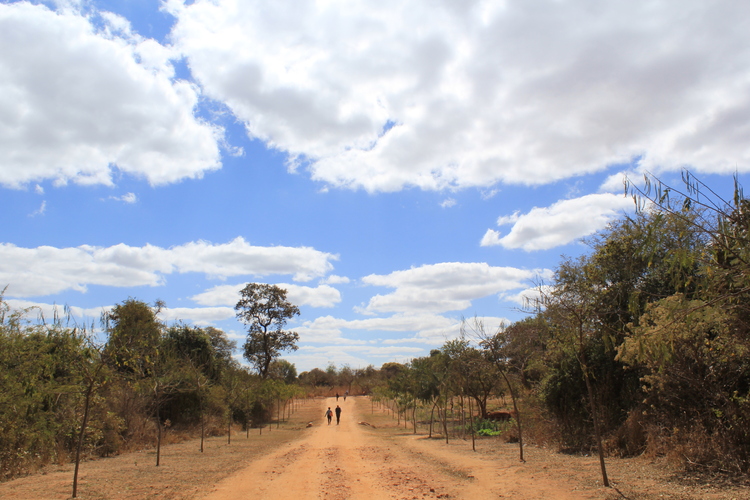
Jennifer Stevenson is a research associate at the Johns Hopkins Malaria Research Institute, Johns Hopkins Bloomberg School of Public Health, and resident entomologist at the Macha Research Trust in Zambia, where she is working on new techniques for malaria control. Stevenson studied biological sciences at the University of Oxford, and did both an MSc and PhD at the London School of Hygiene and Tropical Medicine investigating ways to control mosquitoes. After spending 5 years working in Kenya on malaria research, she moved to Macha, Zambia in March this year. Macha is a small rural community area in the Southern Province of Zambia, which is made up mainly of traditional villagers who live in homesteads scattered over the savannah. Stevenson has spent 12 years working in public health, and has spent much of that time working in remote locations in Uganda, Venezuela, Kenya, and now Zambia. Naturejobs caught up with her in Macha to find out more about her work and career.


Macha

{credit}Credit: Catherine de Lange{/credit}


When did you decide that global health was what you wanted to do?

When I started research on mosquitoes I was very interested in the biology and the behaviour of mosquitoes but really with the aim of eventually doing that somewhere where it actually means something. When I started my job in Kenya I became more involved in the global health side and that really grabbed my attention. I really enjoyed the epidemiology – how to roll out surveys and plan operational research. Here in Macha, it’s going to be more on the entomological side, with some field-work. Going back further, my father was a researcher in topical medicine in Kenya so I got to tag along with him and see the work he was doing, and right from an early age I was fascinated by that.

What is it about global health that really appealed to you?

There’s a lot of challenges and I like a challenge! You also learn something new almost every day, you get to work with some fantastic people, fantastic communities, some great academics in the field. And being able to work in Africa, you really get to see what the challenges are and get a feel for what can work: it really focuses your mind on driving towards something that could really help.

There are setbacks and there are a lot of times when it can be quite difficult though. But at the end of the day when you can see a change it’s really worthwhile. In the project I was working on in Kenya, we were doing a randomised controlled trial where we were proving bed-nets, spraying houses, testing and treating people for malaria. We had a great community involvement there and we were able to help some of the families. There were some very sick children we were able to help, which was very fulfilling.

Do you ever worry that when you leave the field your efforts will be undone?

That is always a challenge because with these research projects you come in with a set amount of money over a set timeline. What we try to do is to train people up and be able to find positions for them afterwards. For instance in Kenya, it was great seeing people [we trained] who had just left school getting into the position where they were applying for permanent roles at, say, the Kenya Medical Research Institute, and really seeing them thrive. So part of this work is capacity building as well, and obviously that’s very rewarding.

How do you feel about spending such long periods away from home?

I normally try when I’m out in these places to think: home is here. I come from a family who moved around the world anyway so actually defining where home is is difficult. Although I’m british I was brought up in Kenya and we also spent some time in Indonesia. It was only when I was 16 or 17 that I moved back to the UK.

Credit Jennifer James

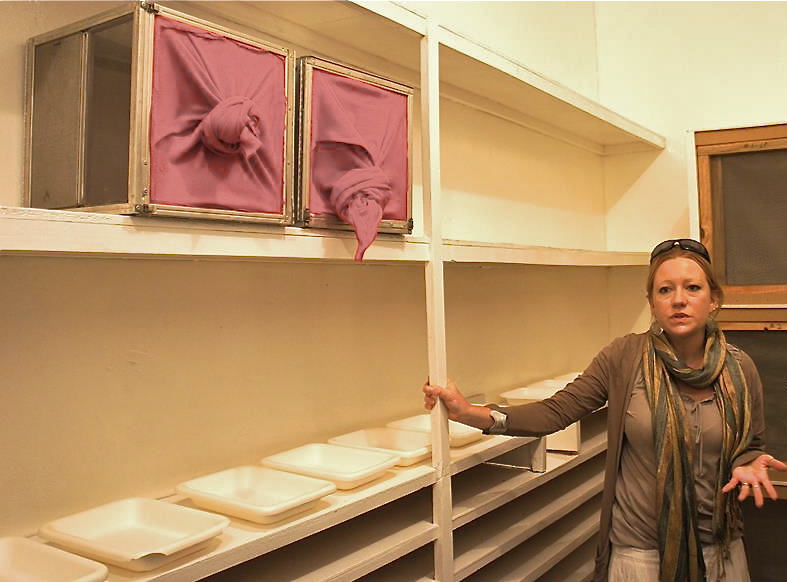
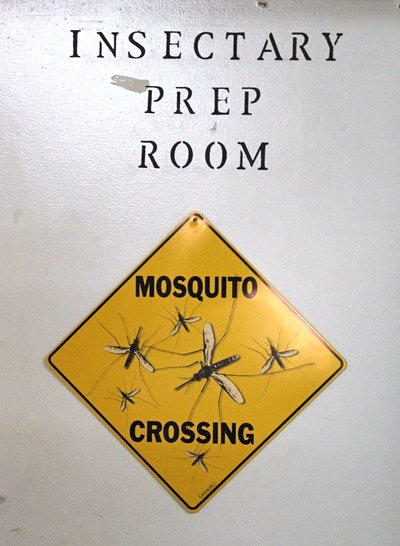
Jennifer Stevenson in the newly refurbished insectary at Macha {credit}Credit: Jennifer James{/credit}

Entomology is one part of these projects. What other kinds of  roles are there in global health?

There’s a great range. There are people who have done pure science – biochemistry or molecular biology – who then move into public health. A colleague of mine went down that route and is now doing a masters in public health with a view to get into policy. There are people who are mathematical modellers and get into epidemiology. So I don’t think there’s a set route, it’s a real mix.

Any advice you’d give to someone thinking of a career in global health?

I think the key thing is to get experience. I had an upbringing that gave me a lot of exposure anyway. A lot of people won’t have that chance, but getting to volunteer on projects and getting that experience is really key. Go out and work in areas that you might be interested in, like Africa. I think it’s also important to speak to people in the kinds of fields you might be interested in. In terms of leading up to my degree I think one regret I always had is not doing maths at A-Level. Whatever you get into in the science world in public health, maths is key.


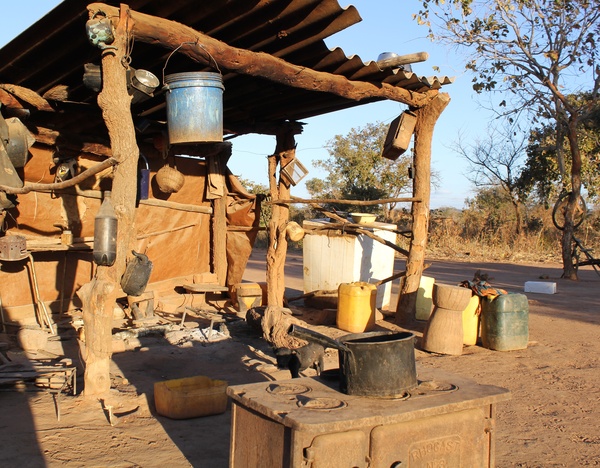
Stevenson's work is split between entomological studies in the Macha labs, and field work, where she visits homesteads in the area, such as the one below.

Stevenson’s work is split between entomological studies in the Macha labs, and field work, where she visits homesteads in the area, such as the one below. {credit}Credit: Catherine de Lange{/credit}


homestead small

{credit}Credit: Catherine de Lange{/credit}

Naturejobs is in Zambia with the International Reporting Project, speaking to people working in global health, in particular those studying malaria, HIV/AIDS and TB. 

So you want to work in global health?


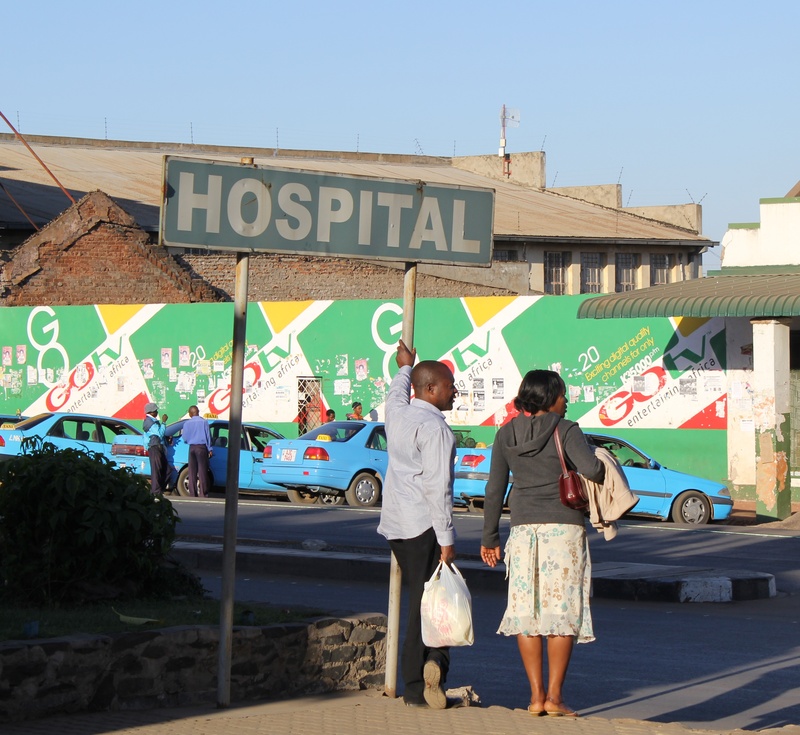
Zambia Hospital

{credit}Credit: Catherine de Lange{/credit}

With advances in healthcare and modern medicine, its often the poorest and most hard to reach people who get left behind. Careers in global health can take you on incredible adventures, and can be an rewarding way to use your science to make a difference to some of the world’s biggest health issues.

What is more, there are diverse career paths into global health roles as a range of skills are needed, from mathematical modelling to medicine. Over the next couple of weeks, Naturejobs will be travelling to Zambia with the International Reporting Project to speak to people working on the front-line of global health, to discover what those jobs involve, what kinds of issues they are working on, what skills are needed, and to find out what it’s like working often far from home on some of the most complex and intractable issues in public health. Not all jobs are on the front-line though, so we’ll also be looking at ways to work on global health nearer to home.

The series will be kicking off later today, when we speak to entomologist Jennifer Stevenson, who has travelled the world to work on new methods for controlling malaria.

Join us here on the Naturejobs blog, and on our social media sites – follow us on Twitter at @naturejobs and on Facebook.

You can also take part in our global health jobs poll, here: Global health jobs often involve long stints abroad. Would it put you off?


Robert Winston: Why students should bother with science communication

By Chandrika Nair, contributor

RobertWinston

{credit}Imperial College London{/credit}

As a PhD student myself,  I know too well that taking ‘time out’ from your research to gain so-called soft skills like communication might feel like an unwanted distraction, or a waste of time. Which was why I turned up to listen to Robert Winston – medical doctor, scientist, and science communicator – address PhD students at Imperial College London last week, where he strongly advised us to brush up on our storytelling skills.

Better science communication means better papers.

During the talk, Winston pointed out that storytelling is a powerful and innate communication tool.“We’ve been telling stories around campfires since the early days of human evolution,” he said, and scientists need to take that tool and apply it to their research. In order to publish in top journals, we must get the narrative right. Leading them through the story, we first convince readers and editors that the rationale behind our work is sound. Then, we strive to remain intelligible as we walk them through how we obtained our data. Finally and crucially, we persuade them that our results are relevant and that our research was worth doing at all. So stories matter, even in science.

Science ‘miscommunication’ is dangerous. Continue reading