Big data: Collaborative science

The rise of data-intensive research is increasing the need for collaborative science.

Guest contributor Lakshini Mendis
data-naturejobs-blog

{credit}Image credit: iStock/Thinkstock{/credit}

Big data, a term thought to have originated in the mid-90s, is a current buzzword amongst scientific communities. Rather than a sole reference to the size of complex datasets, the term broadly encompasses all aspects of working with large datasets from acquisition to analysis.

Big data in science

At its core, scientific research is driven by our curiosity to understand the relationship between cause and effect. Traditionally, ‘hypothesis-driven’ experiments are designed to answer a specific question about a cause-effect relationship.

However, over the last sixty years there has been a trillion fold increase in computing performance. The per-capita capacity to store information has roughly doubled every forty months since the 1980s. These technological advances are revolutionising almost all facets of human life, including how scientific research is conducted.

In contrast to the traditional ‘hypothesis-driven’ approach, advancing technology allows us to acquire larger, more complex datasets, encompassing as many variables as possible, without bias from preconceived ideas. Powerful computation also enables us to finally realize the full potential of decades-old mathematical and statistical concepts. We can now sift through many variables and identify numerous cause-effect relationships in the same dataset, which would have previously been undetectable to the unaided human mind. These principles are now being applied to diverse fields, from astronomy to neuroscience, from particle physics to genomics.

The need for collaboration

The National Human Genome Research Institute reports that the cost of sequencing a human-sized genome was almost US$10 million in 2001, which had halved a couple of years later. The Human Genome Project took 13 years and cost about US$2.7 billion; however, human whole-genome sequencing is now more affordable and accessible than ever. Today, Illumina’s HiSeq X Ten System can sequence “over 18,000 human genomes per year at the price of about $1000 per genome”. Advances such as this have allowed scientists like Theordora Ross from UT Southwestern Medical Center to identify novel mutations in “mystery breast cancer patients” – those with a strong family history of cancer but who did not possess the BRCA mutation – using human whole-genome sequencing. Advances in human whole-genome sequencing are also paving the way for large-populations studies, which in turn is inching us toward precision medicine.

Thus, a lack of data is no longer the bottleneck to discovery. Rather, it is the effective management, analysis, and sharing of large datasets that now pose a challenge.

Initiatives such as the Open Science Data Cloud and the Multi-Institutional Open Storage Research InfraStructure provide an online repository to efficiently store large datasets and share them between different groups. Effectively analysing complex datasets requires abilities that often extend beyond a single researcher’s immediate skillset. Even the most tech-savvy researcher can struggle with some of the mathematical and computational expertise needed to correctly interpret large datasets. Thus, collaboration is key. Having a versatile team comprised of researchers, software engineers, bioinformaticians and statisticians, helps each focus on what they do best. There is no longer a requirement for the sole researcher to become a ‘jack-of-all-trades’. However, there is a need for clear communication between the experts of each field.

Current global big data projects, such as the Sloan Digital Sky Survey, the Blue Brain Project, and the Human Proteome Project, HapMap effectively demonstrate the value of collaboration.

Addressing the barrier to collaboration

However, when it comes to projects that are being conducted on a smaller scale, many researchers are still apprehensive about openly sharing their data. The reasons cited include intellectual property concerns and the fear of being scooped. These concerns have been generated, in part, by the hypercompetitive environment of research, where a high impact factor publication alone has become the ultimate goal of scientists, no matter the cost.

Journals such as Scientific Data and GigaScience help encourage researchers to share their data openly by recognizing their contributions as publications. Further, disseminating the entire dataset helps validate the interpretation of the data and the findings from it. It also opens the door to enable other researchers to reuse the data to investigate their own hypotheses, while guaranteeing proper acknowledgment of the source. For instance, different researchers can make maximal use of a large mass spectrometry dataset to investigate different proteins of interest, without the need for additional time and resources. This approach can help streamline scientific discovery with efficient use of funding.

There are already discernible changes to the scientific research landscape that address the challenges of big data projects. However, the rise of data-intensive research requires a change of mind-set amongst scientists. There is an increased need for multidisciplinary research teams, with clear communication between experts of different fields. Scientists also need to be innovative and become more aware of the tools that will enable them to widely collaborate and openly share data. These changes will help us fully grasp the potential of big data and accelerate understanding.

Lakshimi-mendis-naturejobs-blog

{credit}Image credit: Lakshimi Mendis{/credit}

Lakshini Mendis is a winner of the 2015 Scientific Data writing competition. She is also a PhD student at the Centre for Brain Research in Auckland, and studies how the human brain changes in Alzheimer’s disease. She is passionate about good science communication and is a strong advocate for women in STEM, and volunteers as the Editor-in-Chief at The Scientista Foundation! Follow her musings on Twitter!


Sharing data: Why it should be done

As data continues to be produced at staggering rates, scientists need to become more aware of the benefits of data sharing, says Eleni Liapi.

Guest contributor Eleni Liapi

CD-stack-naturejobs-blog

{credit}PhotoDisc/Getty Images{/credit}

The scientific community is currently experiencing an explosion in data generation. At CERN (the European Council for Nuclear Research), the rate of data production is 1 petabyte (=1015 bytes) per day inside the Large Hadron Collider (LHC), which is comparable to 210,000 DVDs.  At the European Bioinformatics Institute, 20 petabytes of biological data had been stored between 2004- 2012.  In the US alone, the volume of data produced by the healthcare industry in 2011 was estimated at 150 exabytes (=1018 bytes). Undoubtedly, this volume of information brings with it several problems, including data storage and sharing.

Access to data is a topic that initiates numerous discussions and opinions between scientists and other communities for a plethora of reasons, including concerns about inappropriate use, institutional or industrial restrictive policies where the gigabytes of obtained genomic data are to be utilised for pharmaceutical research, for example. To date, there have already been attempts to estimate the extent of the problem. In one survey, 67% of the participants expressed the view that inaccessible data hinder scientific progress. Continue reading →

Data sharing: Making it happen

Sharing of ideas and data could remove the barriers to scientific discovery.

Guest contributor Lorraine Clark

I’m currently working as a postdoctoral research associate in the field of chemical biology at Scripps Florida and over my past eight years in academia, I have come to some conclusions based on personal experiences and conversations with colleagues: Teamwork and collaboration are considered the most valuable qualities in the chemical and pharmaceutical industry. However, in an academic setting, people often still commonly believe the only way to advance their careers is by independently achieving as many accomplishments as possible. This point of view is perpetuated by the tendency of some investigators to pit their students and postdoctoral researchers against each other. This may involve, for example, having two people work on the same project and only giving recognition to the person who completes it first. This process can breed a hostile, overtly competitive atmosphere leading to mistrust and an unwillingness to share data, particularly if the data represent negative results, because of the negative connotations it has. Rather than quickly leading to scientific achievements, this practice might actually decelerate the speed of discovery.

Much more progress could be made if academic researchers were willing to collaborate more by sharing not only their ideas but also their data, especially considering the time and resources often spent on dead end avenues of a research project. Continue reading →

Data sharing: Why it’s all ‘mine’

Data sharing makes scientific sense, but the career-conscious nature of scientists may stand in the way.

Guest contributor Rachel Yoho

As with many aspects of society, human nature shapes interactions in science research. When we consider “data sharing,” the likely response is probably a shrug. We’ve all been there. Group work and competition at its finest. The increasingly competitive environment for grant funding, and the ‘publish or perish’ attitude promotes the “mine, mine, mine” attitude among scientists. To focus on the issue of overcoming career-protecting objections to data sharing however, we can focus on several trends.

Data ownership
With many factors, including budget cuts, sequestration and economic downturns, the current scarcity of grant funding creates financial stress in labs. ”Big grants” like the NIH R01, had lower success rates for new grants in 2014 as compared to the last four of five years. In turn, data ownership becomes possessive to the PI and lab, even beyond that of the funding agency or institution. Simply, it’s our grant money, it’s our data. By working for and finally achieving a grant, often after many attempts, a sense of accomplishment and pride in ownership develops. Continue reading →

Data sharing: Why it doesn’t happen

The advent of big data has caused scientists to rethink data sharing, but several problems are preventing it from happening, says Nina Divorty.

Guest contributor Nina Divorty

Data-sharing-naturejobs-blog“If I have seen further, it is by standing on the shoulders of giants.”  – Isaac Newton.

This classic quote sums up the nature of scientific collaboration: only by building on the work of our predecessors can we make scientific advancements, and only by sharing our own discoveries can they be built upon by others. Most researchers understand this, but only since the recent surge in technologies that generate very large datasets have we begun to recognise the value of sharing raw data, in addition to publishing results in their processed and polished form. The advantages are clear: raw data offers complete transparency so that other scientists can compare their own results and analyses when attempting to replicate findings, and also allows others to ask novel questions of existing datasets. Despite this, the majority of researchers across a variety scientific disciplines report that lack of access to data detracts from the progress of research in their field, yet 64% admit to not making their data easily accessible. So what’s stopping them? Continue reading →

Announcing the Publishing Better Science Through Better Data writing competition

Enter a new writing competition for the chance to attend the Publishing Better Science Through Better Data 2015 event (#scidata15) in October, have your writing published on the Naturejobs blog and work with Nature Publishing Group editors.

SciData-logo-naturejobs-blogAfter a rapidly sold out first conference in 2014, we are looking for five budding science writers to help with news coverage of Publishing Better Science Through Better Data 2015. The day-long conference, held at Nature Publishing Group’s offices in Kings Cross on October 23rd 2015, will explore the practical implications, for early career researchers conducting and publishing their work, of data sharing policies and tools.

This year’s full-day conference will include advice on publishing, advancing careers and include discussion of emerging tools and resources available to researchers to help them, and society, derive maximum benefit from scientific research. The focus of the 2015 conference is on natural sciences and medicine, from academic and industry research perspectives.

Speakers will include representatives from leading journals, research organisations, funding agencies and technology providers. Also, lightning talks and demos will enable conference delegates – researchers and technologists – to present case studies of data sharing and analysis tools in action. Continue reading →

Data transparency: Making the most of your data

How to bring your hard-earned data from the lab to the world.

Contributor Anthea Lacchia

Scientific-data-NJCE15-naturejobs-blog

Catherine Goodman

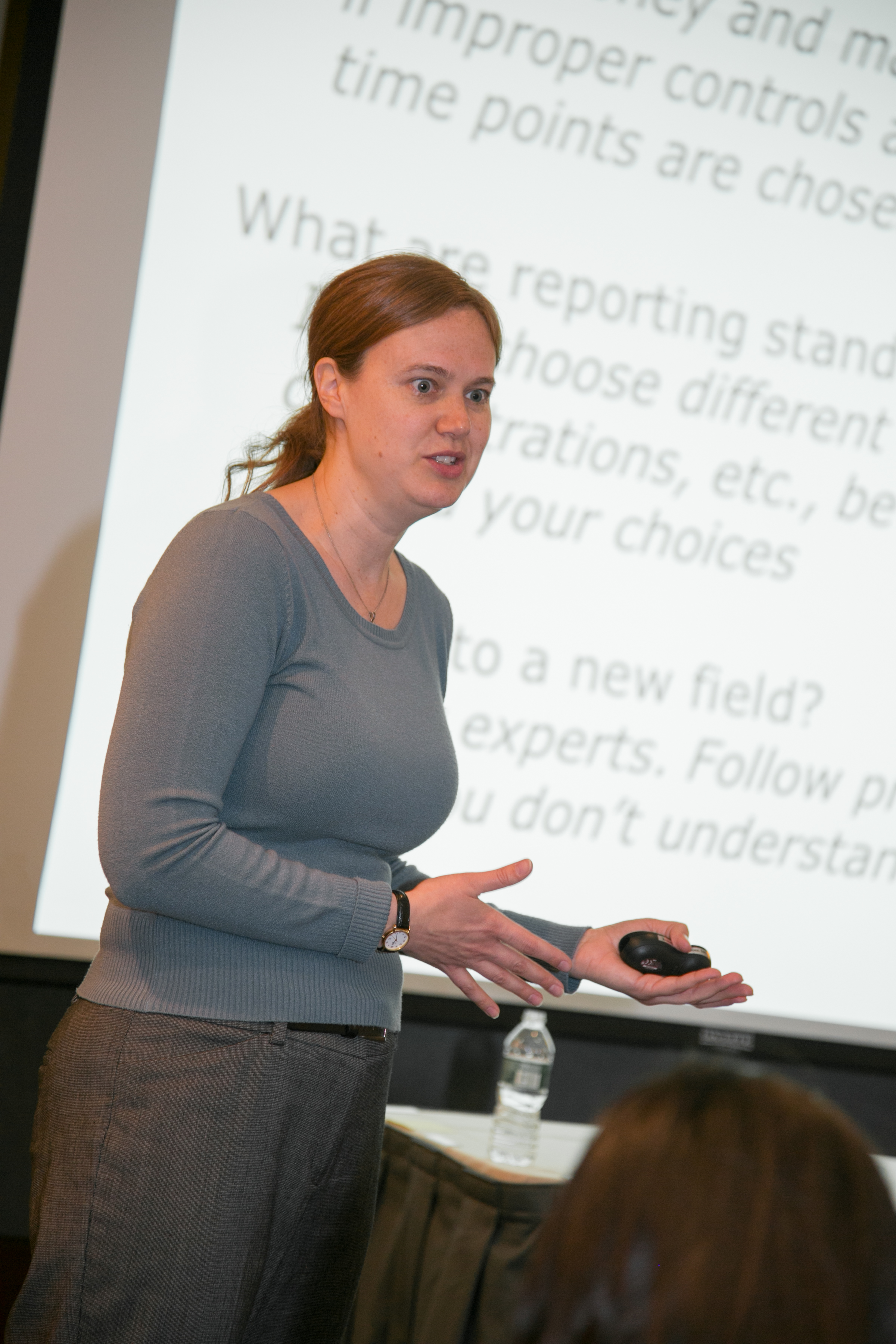
Amongst the scientific community, there is increasing awareness of the value of data transparency and reproducibility. But how can we achieve transparency in practical terms? Catherine Goodman, Senior Editor at Nature Chemical Biology, delivered a workshop on handling scientific data during the Boston NatureJobs Career Expo 2015.

“Careful experimental design is the foundation of data transparency and will also avoid wasting time with referees later on,” said Goodman. Different scientific fields have different requirements as to how much data are needed to make meaningful interpretations and how they should be collected, so it is important to be aware of your community’s standards.

Keeping good records can help clarify why a given experiment didn’t work. “If you are collecting data in a field new to you, it is useful to consult the experts in the field, follow protocols and collect all the data you can,” Goodman said.

Proper training in the lab and good communication among team members is fundamental to achieving high standards of data collection and interpretation. In fact, many of the papers that end up on Retraction Watch, a blog that reports on retraction of scientific papers, are born out of a disconnect between PI and postdoc or trainee. “Getting the killer paper is not as important as doing science properly and rigorously, because you want to contribute positively to the scientific community, not find yourself on Retraction Watch,” Goodman said. Continue reading →

Metrics with meaning: Shaping your scholarly identity

Tracking scientific output can be beneficial to a researcher’s career, says Catherine Chimes.

Contributor Catherine Chimes

lab-scene-naturejobs-blog-2

{credit}Image credit: Getty Images/Thinkstock/Catherine Yeulet{/credit}

Establishing yourself in your field is a challenge faced by many early-career researchers and academics. Accruing status as indicated by traditional methods (such as journal citation counts, public speaking opportunities and, at the pinnacle for some, being awarded tenure) can be fraught with difficulty in more ways than one.

As more and more scholarly work is reviewed, published and made publicly available each year in an increasing variety of formats, one question stands out: what other indicators are there that scholars can utilize to evidence the impact of their work?

Achieving recognition and credit for the work accomplished is crucial to advancing any scientific career. Recent articles have discussed the danger in publishing for publishing’s sake – instead, experts enthuse, the emphasis should be on publicly available, reproducible, robust data and outputs that extend far beyond the journal article. Continue reading →

How to publish your data in a data journal

A big picture view for researchers on data repositories and data journals from Andrew Hufton at Publishing Better Science through Better Data.

andrew-hufton-scidata14

{credit}Image credit: Scientific Data{/credit}

More and more, funding bodies are requiring scientists to make their data open-access and available to the research community and others. So, why not wrap a publication around it at the same time, build your CV and get credit for all the hard work you’ve done?

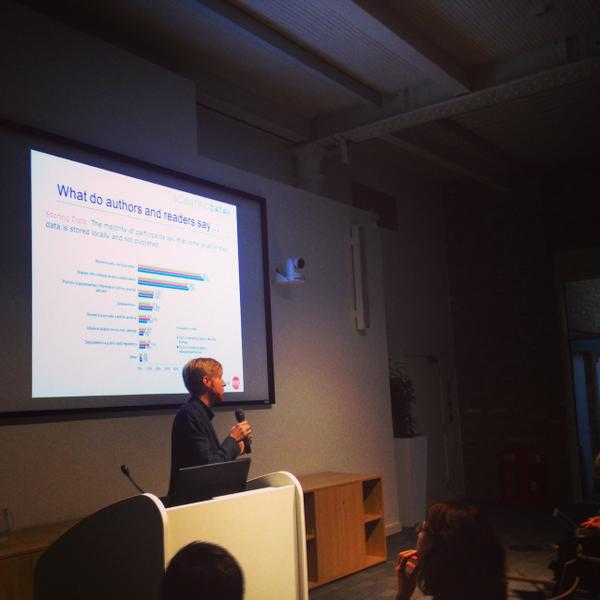
Andrew Hufton, Managing Editor of Scientific Data, gave a great talk on the big picture view of publishing your data. I’ve reproduced some of it below for your reading pleasure along with further advice from Hufton. Have a read and tell us what you think – do you agree with the list? Do any ring particularly true for you? Are there any others you would add? Share your views in the comments section below.

Before even thinking about finding a repository to store your data, you need to make sure that your data is fit for storing. Hufton suggests a three-point checklist where you should:

–          Make sure that your data is well structured

–          Have lots of metadata to aid others’ understanding of your data

–          If dealing with human data, have the appropriate consent forms organised

When you’ve prepared your data, it’s time to think about finding a repository for it. Continue reading →

Top Ten Tips for Research Data Management

Sally-Rumsey-Scidata14At the Publishing Better Science through Better Data (#scidata14) event hosted by Nature Publishing Group and Scientific Data, University of Oxford librarian, Sally Rumsey, presented her top ten tips for successful Research Data Management (RDM) for researchers. We’ve reproduced them below for your reading pleasure along with further advice that Rumsey gave at the event. Have a read and tell us what you think – do you agree with the list? Do any ring particularly true for you? Are there any others you would add? Share your views in the comments section below.

Imagine the worst case scenario. What if someone stole your laptop, your department went up in flames, or your data were infected with a virus or some other disaster were to take place? Would your data be retrievable?  These are all questions you should ask yourself to make sure that you don’t get caught out and find yourself being made an example of a data-loss horror story. Continue reading →