NI Photo Contest 2018: Finalist #3

And now, the Nature India photo contest 2018 finalist number three:

Rajib Schubert, Postdoctoral scientist, California Institute of Technology, USA.

Caption: Fighting virus nano-style

{credit}Rajib Schubert{/credit}

Here’s what Rajib has to say about this image that unveils a nanotechnology-aided probable solution to viral infections:

Rajib Schubert

Vector borne diseases such as dengue continue to plague the world today with no concrete solution in sight. Nanotechnology may offer a potential solution. To believe that nanotechnology works we need to see it in action. However, this is challenging as the subject at hand is very small — smaller than what the naked eye can see (in the nanometre range or tinier than a needle tip).

This scanning electron microscope image shows nanoparticles (the big spheres) coated with special chemicals which can trap the dengue viruses (the small spheres) from whole blood serum. It points us to one of the future solutions to dengue — trapping the infectious virus particles and making them ineffective.

I acquired this image in September 2017 at the Swiss Tropical Institute in Basel, Switzerland.

Congratulations for making it to top ten, Rajib!

The Nature India editorial and design teams will shortlist the top three from the ten stunning images we are rolling out now in no particular order of merit. Nature India’s final decision to chose the winner will be partly influenced by the engagement and reception these pictures receive here at the Indigenus blog, on Twitter and on Facebook. To give all finalists a fair chance, we will consider the social media engagement each picture gets only during the first seven days of its announcement. The final results will be announced sometime in late January 2019.

The winner of the Nature India photo contest 2018 will get a cash award of $350, the second prize is worth $250 and the third $200. Photographs will be judged for novelty, creativity, quality and printability by a panel of Nature Research editors and photographers alongside a leading Indian scientist working in the area of vector-borne diseases. The winner and two runners-up will receive a copy of the Nature India Annual Volume 2017 and a bag of goodies (including Collector’s first issues of Nature and Scientific American and some other keepsakes) from the Nature Research. One of the winning entries also stands a chance of being featured on the cover a forthcoming print publication.

So watch out for our other finalists and feel free to promote, share and like your favourite entries with the hashtag #NatureIndphoto.

NI Photo Contest 2018: Finalist #2

Announcing finalist #2 in the Nature India photo contest 2018 themed “vector-borne diseases”:

Sudip Maiti, Photographer, Kolkata, West Bengal India.

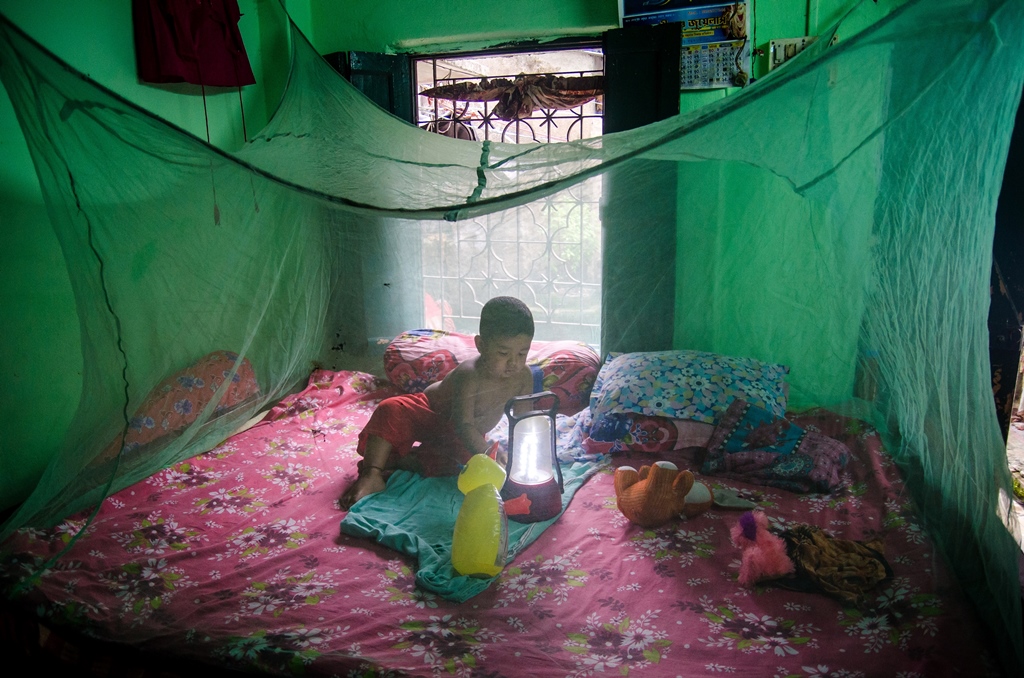
Photo caption: Safe from dengue

{credit}Sudip Maiti{/credit}

Sudip says this about his image, which focuses on prevention as a key aspect in the fight against vector-borne diseases:

{credit}Sudip Maiti{/credit}

This two-year-old boy plays safely inside a mosquito net in Kolkata,West Bengal, India. Over 13,000 people were affected by the vector-borne disease in the State of west Bengal alone in the year 2017, while the official death count reached 30.

As a simple preventive measure, the use of mosquito net is widespread among the residents of this eastern metropolis.

Congratulations Sudip for making it to the long list of the Nature India Photo Contest 2018.

As the Nature India editorial and design teams get busy shortlisting the top three from these ten stunning images, we will be rolling them out (in no particular order of merit) over the next few days. Nature India’s final decision to chose the winner will be partly influenced by the engagement and reception these pictures receive here at the Indigenus blog, on Twitter and on Facebook. To give all finalists a fair chance, we will consider the social media engagement each picture gets only during the first seven days of its announcement. The final results will be announced sometime in late January 2019.

The winner of the Nature India photo contest 2018 will get a cash award of $350, the second prize is worth $250 and the third $200. Photographs will be judged for novelty, creativity, quality and printability by a panel of Nature Research editors and photographers alongside a leading Indian scientist working in the area of vector-borne diseases. The winner and two runners-up will receive a copy of the Nature India Annual Volume 2017 and a bag of goodies (including Collector’s first issues of Nature and Scientific American and some other keepsakes) from the Nature Research. One of the winning entries also stands a chance of being featured on the cover a forthcoming print publication.

So watch out for our other finalists and feel free to promote, share and like your favourite entries with the hashtag #NatureIndphoto.

NI Photo Contest 2018: Finalist #1

Here’s beginning the New Year with some cheerful news.

The 5th edition of the Nature India photo contest is now ready to roll out its long list of top ten. The contest themed “vector-borne diseases” was announced in November 2018 and has received some fabulous entries from around the world.

It was a tough theme but the thought and creativity behind some of the entries compelled us to sit up and think. Like always, in these entries we saw a mix of amateur and professional photographers, scientists and non-scientists, mobile cameras and high-end DSLRs.

As the Nature India editorial and design teams get busy shortlisting the top three from these ten stunning images, we will be rolling them out (in no particular order of merit) over the next few days. Nature India’s final decision to chose the winner will be partly influenced by the engagement and reception these pictures receive here at the Indigenus blog, on Twitter and on Facebook. To give all finalists a fair chance, we will consider the social media engagement each picture gets only during the first seven days of its announcement. The final results will be announced sometime in late January 2019.

So here’s finalist number one in the Nature India photo contest 2018:

Nitin Gupta, Assistant Professor, Indian Institute of Technology Kanpur, Uttar Pradesh, India.

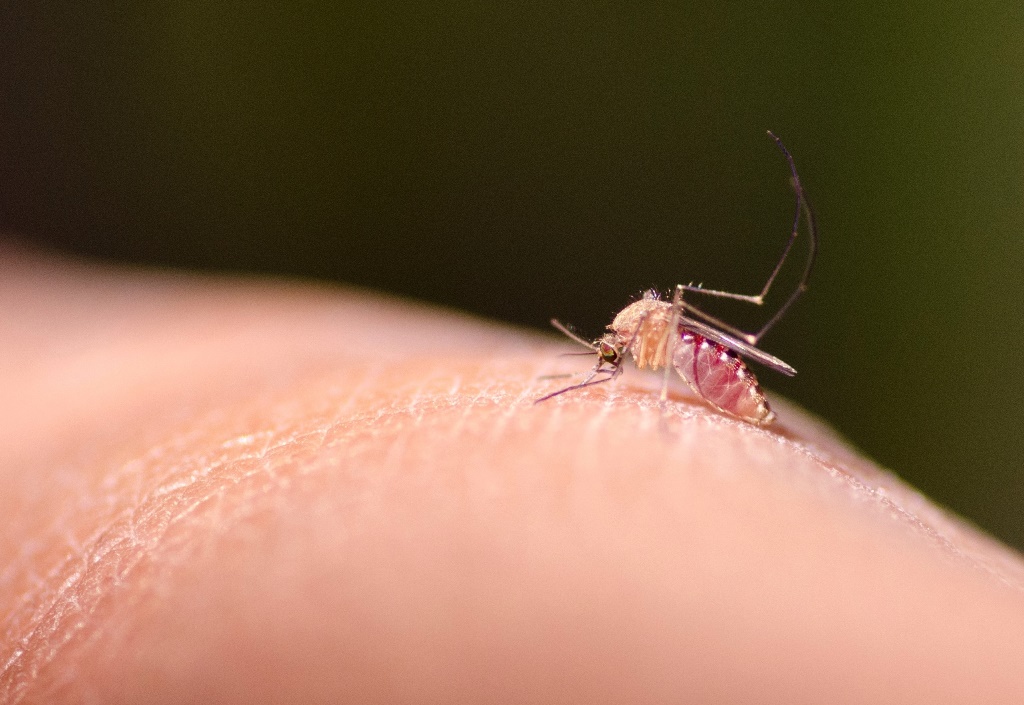
Photo caption: Mosquito, an accidental killer

{credit}Nitin Gupta{/credit}

This is how Nitin describes this image of a mosquito feasting on his hand for a blood meal:

Nitin Gupta

Female mosquitoes bite us because they need blood to nourish their eggs. The bite itself is not harmful: the tiny belly of a mosquito, seen in the photograph, can take no more than a few microliters of blood at a time, while the human body produces 10 times more every minute. What makes the bite dangerous occasionally is what the mosquito leaves behind, which could be a deadly parasite.

The photograph shows a female Culex mosquito gorging on my left hand, which I captured using a camera held in the right hand.

The photograph was taken on the morning 18 March 2018, at my home in the Indian Institute of Technology campus in Kanpur, Uttar Pradesh, India.

Many congratulations Nitin, for making it to the top ten in the Nature India Photo Contest 2018.

The winner of the Nature India photo contest 2018 will get a cash award of $350, the second prize is worth $250 and the third $200. Photographs will be judged for novelty, creativity, quality and printability by a panel of Nature Research editors and photographers alongside a leading Indian scientist working in the area of vector-borne diseases. The winner and two runners-up will receive a copy of the Nature India Annual Volume 2017 and a bag of goodies (including Collector’s first issues of Nature and Scientific American and some other keepsakes) from the Nature Research. One of the winning entries also stands a chance of being featured on the cover a forthcoming print publication.

So watch out for our other finalists and feel free to promote, share and like your favourite entries with the hashtag #NatureIndphoto.

Nature India’s most read in 2018

Nature India celebrated its 10th anniversary in 2018, making it a time to sit back and review what we have been doing right, and more importantly, not so right. Our swelling readership figures make us happy every passing year, and this year was no exception, with a more than 120 per cent increase in unique readers over 2017.

In our mission to deliver world class science coverage from India to a global readership, we hope to experiment with some new and exciting formats in 2019. To wrap up a happening year at Nature India, here’s a peek at the most engaging stories from 2018, the ones that our readers loved as much as we did.

Nature India‘s top ten most read articles in 2018 were:

1. India’s universities are feebling away

Shahid Jameel

The University way of life is in trouble in India, said Shahid Jameel, CEO of the Wellcome Trust DBT India Alliance, in an analysis that pointed to the twin maladies of poor governance and trickle funding.

The commentary — an insightful analysis of the age-old ills plaguing India’s university system and recommending ways to stem the rot — topped our list of most read articles in 2017.

Read the article here.

2. Electrons travel faster than light in glass

Using ultrashort laser pulses, an international research team of physicists, including some from the Tata Institute of Fundamental Science in Mumbai, were able to generate hot electrons that travel faster than the speed of light in a piece of glass. The research opened a new avenue for understanding several areas of high-energy science, ranging from laser-driven fusion to developing advanced radiation sources that may have potential applications in the industrial and medical fields.

This exciting research — a significant step towards developing a method that will help understand hot-electron transport through solids — was not surprisingly on number two on Nature India’s most read list.

Read it here.

3. PhD researcher quits citing data forgery by seniors

Biplab Das & Subhra Priyadarshini

A disgruntled PhD scholar from the biochemistry laboratory of Calcutta University in Kolkata quit her research in infectious diseases alleging scientific malpractice by her PhD guide and other senior research fellows. Following her exit from the lab, biochemist Jayita Barua wrote a public post on Facebook detailing how she was forced for years to carry out malpractice, including ‘creating’ papers with forged data. The post created quite a stir on social media, as many researchers joined in revealing similar experiences from across research facilities in India.

Though Jayita Barua continues to seek redressal, her travails and fight for justice resonated with many, making this article the third most read this year. Here’s the reportage.

4. Microbial fuel cell degrades toxic dye, generates power

Researchers from Indian Institute of Technology Guwahati developed a microbial fuel cell that can simultaneously break down a harmful organic colour dye in synthetic wastewater while generating power. The fuel cell could be potentially useful for treating dye-contaminated industrial wastewater.

The industrial application of the research contributed to its wide readership.  Here it is.

5. Inkless pen to protect secret documents

Scientists from CSIR-National Institute for Interdisciplinary Science & Technology (NIIST) in Thiruvananthapuram, University of Calcutta in Kolkata, India, and New York University Abu Dhabi in United Arab Emirates  came together to make an interesting light-emitting organic material.

The material can be used to print patterns, write documents and even sneak in secret codes on a filter paper using just sunlight. Sunlight can also erase the printing and writing, visible only under ultraviolet light.

The mystery attached to detective-style secret coded messages perhaps got it more eyeballs. You can read the research highlight here.

6. Why extreme temperatures in South Asia should jolt governments into action

Subhra Priyadarshini

Extreme summer temperatures have become the new normal for much of South Asia, home to a fifth of the world’s population. Last year, the region saw more than 1,400 people succumbing to extreme heat alone.

The signs of a future malady are beginning to show – whether it’s in the muggy, sweltering heat of Delhi, where schools remained closed past summer holidays this year, or in the scorching daytime temperatures of Karachi, accentuated by massive power outages that left at least 65 people dead.

We analysed scientific evidence around predictions that major Asian cities will become unlivable within a couple of decades, and that the urban poor would be the worst sufferer. Read our analysis here.

7. Entry gates of Japanese encephalitis virus into brain identified

Scientists from the National Brain Research Centre in Haryana along with collaborators from Institute of Life Sciences, Bhubaneswar, University of Calcutta and Barasat State University in West Bengal identified the ‘entry gates’ that allow the Japanese encephalitis virus (JEV) to invade the brain and strike the neurons, resulting in crippling brain function.

Working for the first time on mouse models, the collaborative group identified these doorways in two protein receptors inside the rodents’ brain.

Here‘s the research highlight.

8. Indian scientists concerned over funding crisis

K. S. Jayaraman & Subhra Priyadarshini

An editorial in a Proceedings of the Indian National Science Academy published by the apex peer body of Indian scientists raised an alarm over funds crunch hitting the Indian academia hard. The lament was, however, dismissed as a wrong perception among a section of scientists by the country’s leading science funding agency Department of Science and Technology (DST). DST claimed that research allocation has actually doubled in the last four years.

The editorial also rued that an increasing number of research proposals were being turned down by India’s science funding agencies, and money was not being released in time for current projects.

We took a look at the ground situation. Read the article here.

9. Spider silk helps generate electricity  

Biplab Das

An international research team led by Indian Institute of Technology Kharagpur scientists used the inherent strength of spider silk to make tiny devices that can generate electricity with the help of simple pressure-inducing acts such as finger tapping, walking, swallowing, drinking or even gargling.

These devices can be used to turn on light-emitting diodes, power mobile displays and charge capacitors that run pacemakers.

Here‘s the research highlight about the wondrous material and its many potential uses.

10. Herbal drug to prevent antimicrobial resistance in cattle

When cattle are given antibiotics to treat mastitis – a bacterial inflammation of the mammary glands – their milk retains the antibiotics for a long time, increasing the probability of antimicrobial resistance (AMR). Researchers at West Bengal University of Animal and Fishery Sciences (WBUAFS) reported how to overcome this problem with a known polyherbal drug.

Experimenting with Bengal goats, the researchers showed that the commercially available mammary protective drug fibrosin, when given alongside the antibiotics, can prevent antimicrobial resistance.

We leave you with the piece here and with a picture of the cutest possible goat you will have seen this year.

Suggested reading:

Nature India’s top 10 in 2017

SciArt scribbles: Bringing art and science together for greater good

Many scientists embrace the artistic medium to infuse new ideas into their scientific works. With science-art collaborations, both artists and scientists challenge their ways of thinking as well as the process of artistic and scientific inquiry. Can art hold a mirror to science? Can it help frame and answer uncomfortable questions about science: its practice and its impact on society? Do artistic practices inform science? In short, does art aid evidence?

Nature India’s blog series ‘SciArt Scribbles’ will try to answer some of these questions through the works of some brilliant Indian scientists and artists working at this novel intersection that offers limitless possibilities. You can follow this online conversation with #SciArtscribbles .

Public engagement of science opens up interesting opportunities for scientists and artists to join hands to impact societal opinions and behaviours. Sarah Iqbal, public engagement officer at the biomedical research funding body Wellcome Trust/DBT India Alliance, finds herself at this exciting crossroad very often. Trained as a biomedical scientist, she says together the disciplines open many more doors than they do in isolation.

Sarah Iqbal

“All religions, arts and sciences are branches of the same tree. All these aspirations are directed toward ennobling man’s life, lifting it from the sphere of mere physical existence and leading the individual towards freedom.” – Albert Einstein.

For as far long as one can go back in history, the sciences and the arts and those engaged in them have informed each other’s practices, shaping societies. But in recent times, active exchange between the two fields has progressively waned. Yet, practitioners of the arts and sciences have more in common than is apparent. Both are curious about the world around them – they might use different tools to explore the magnificent cosmos we inhabit but their processes are strikingly alike.

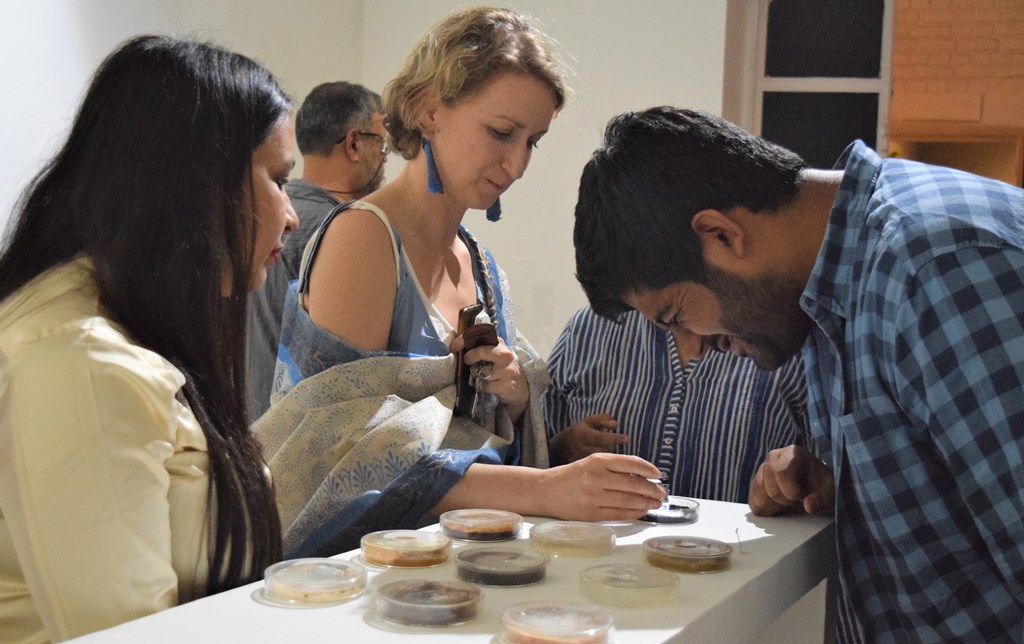
These were some of my early observations after facilitating the first art and science programme ‘The Undivided Mind’ through the Wellcome Trust/DBT India Alliance (or India Alliance) at Delhi-based Khoj International Artists’ Association. The programme had contemporary art practitioners interact with life scientists, technologists, social scientists and the general public to produce art work that reflected on terrestrial (and extra-terrestrial) scientific principles and various human conditions.

An open studio ‘The Undivided Mind’, where artists shared their ideas and science-inspired artwork with the public.{credit}Sarah Iqbal{/credit}

Having been trained as a scientist, I am aware of the strengths and limitations of the scientific process but what pleasantly surprised me was how I could fundamentally connect to the artist’s process of enquiry and see the world through their creative lens. It left me asking the question – why have artists and scientists and the fields drifted apart?

“Art is born of the observation and investigation of nature.” – Marcus Tullius Cicero

 Educationist Ashish Jaiswal observes in his recent book “Fluid” that our inflexibility of learning from other disciplines is a deficiency of our current education system that restricts knowledge within boundaries of disciplines. This reinforces the “two-culture” divide of art and science. Jaiswal gently goads the reader to reflect on whether an artist can only pursue art and a scientist only science – can or should they cross over to other disciplines to enhance their line of questioning?

The answer is an obvious and resounding yes, and the author illustrates this through examples of famous scientists, artists, philosophers and technologists who have straddled multiple disciples with natural ease and a sense of wonder.

Crossing over, blending in

“Objective” science and “subjective” art complement each other naturally. Sci-art projects have become increasingly popular world over, with more scientists opening their labs (and themselves) to the art world, and artists keen to discover the scientific world through their line of reasoning. This has given rise to broadly three types of art and science engagements in the recent times:

  • Artists employing scientific processes to produce art – popularly known as ‘bioart’
  • Scientists/science communicators using art to simplify and communicate science
  • Artists and scientists exchanging ideas, collectively framing questions and exploring the unknown

The first two types of engagement are the most common forms of collaboration. Art is most often used by the scientific community to convey the complexity of their research and to raise the public’s awareness of scientific and health issues. On the other hand, artists have embraced the possibility of experimenting in or outside the laboratory with biological materials and technology that can provide new direction to their work. This cross-disciplinary engagement has benefits for both.

Science empowers, so does art

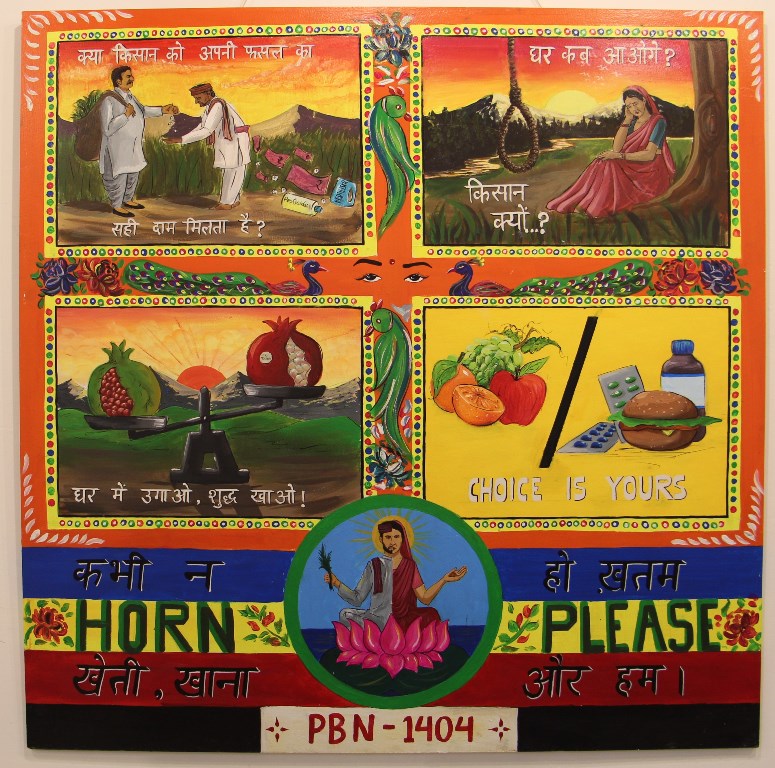
During a public engagement project in Chandigarh, Punjab, we used traditional Indian truck art to understand and reflect on the agrarian and health crisis in India. A young participating truck artist shared with me, quite emotionally, that she never realised that her art had the power to influence the public and raise awareness on important health matters. Another truck artist researching on the topic said it had encouraged him to think more critically about how their actions impact their health and that of others, and to change behaviours.

Sample of truck art used to spread awareness on the link between agriculture, food and nutrition.{credit}Sarah Iqbal{/credit}

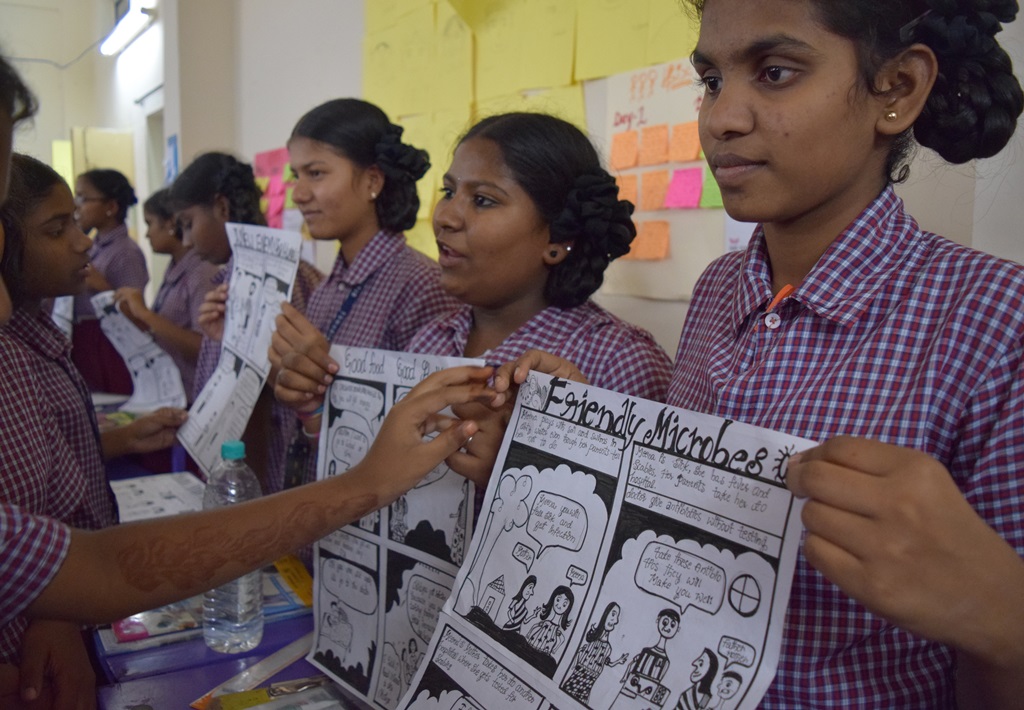
Similar sentiments were shared by a young girl in Hyderabad, where we encouraged school children to develop stories around the problem of drug-resistant infections in India through comics. “I always thought comics were to tell jokes. I never knew I could develop my own comics and use them to talk about important issues.”

Young school students using comics to talk about drug-resistant infections with their peers. {credit}Sarah Iqbal{/credit}

An engineer-turned-artist who collaborated with us on a multi-country programme to raise awareness on mental health felt it enabled her to delve deeper into this important subject. The rigour of research and understanding the science behind mental health had transformed their beliefs on the subject. These examples demonstrate that artists don’t merely act as translators of complex science and health issues but get new perspectives on their practice and can act as ambassadors for the scientific community.

Giving back

During the Khoj experiment that brought scientists and artists together, it was interesting to observe how science is shaping contemporary artistic practice. There is an ongoing discussion in the arts and sciences about whether art can also inform science. Can scientists feed this engagement back into their research?

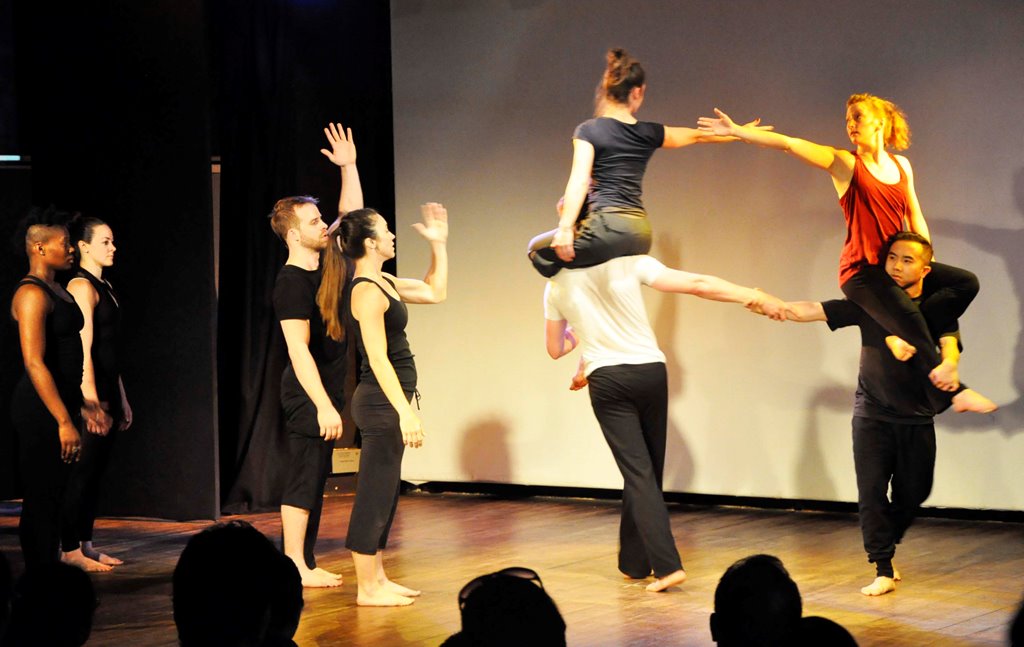
In 2014, India Alliance funded a project to explore this question. “Bodystorm hits Bangalore” was a unique creative collaboration between dancers and scientists, where each of them helped inform the other’s practice – the scientist got three-dimensional insights into their scientific problem through the physicality of dance whereas the dancers improvised on scientific structures to create new art. The wares of this unique collaboration were open to the public.

Dancers from a group called  Black Label Movement present complex scientific concepts to a non-specialist audience at a public event in Bangalore. {credit}Poornima Kartik{/credit}

The real beneficiaries of this type of engagement are the scientists and artists themselves. A longer and sustained engagement between them is needed to realise the true potential of these exchanges and their impact on society. We need more formal spaces, where scientist can explore open-ended experimentation with arts, and where artists can learn from and shape the culture of science as also participate in scientifically-informed creative activism.

It isn’t essential to define what art and science collaborations should look like – let them unravel, and let each be unique. My experience with such collaborations has made me realise that these dialogues are important, not just to popularise science or to provide new media for artists to convey their ideas but also to help both artists and scientists challenge their own way of thinking. And to imbibe a level of sophistication in their enquiry that can be understood by all.

[Sarah Iqbal can be contacted at sarahiqbal@indiaalliance.org. She tweets from @SarahHyder]

Suggested reading:

SciArt scribbles: The mellifluous gene editor

SciArt scribbles: The molecule painter

SciArt scribbles: Coupling creation and analysis with collages

SciArt scribbles: Technology to aid dance

SciArt scribbles: Music to tackle PhD blues

SciArt scribbles: Playing science out

Artists on science: scientists on art

SciArt scribbles: The mellifluous gene editor

Many scientists embrace the artistic medium to infuse new ideas into their scientific works. With science-art collaborations, both artists and scientists challenge their ways of thinking as well as the process of artistic and scientific inquiry. Can art hold a mirror to science? Can it help frame and answer uncomfortable questions about science: its practice and its impact on society? Do artistic practices inform science? In short, does art aid evidence?

Nature India’s blog series ‘SciArt Scribbles’ will try to answer some of these questions through the works of some brilliant Indian scientists and artists working at this novel intersection that offers limitless possibilities. You can follow this online conversation with #SciArtscribbles .

When Debojyoti Chakraborty isn’t engrossed in gene editing experiments in his lab, you will find him rehearsing for his next sitar recital. A senior scientist at the CSIR Institute of Genomics and Integrative Biology in New Delhi, Debojyoti has a parallel career as a performing sitarist, trained in the Maihar school of music. The musician scientist tells us how CRISPR Cas9 and raga megh beautifully balance his creative energies.

Debojyoti Chakraborty{credit}Ashish Gupta{/credit}

Very recently, we lost one of the doyens of Indian classical music, the surbahar and sitar player Shrimati Annapurna Devi. In times when terms like ‘legend’ and ‘irreplaceable’ are used indiscriminately, Annapurna Devi is perhaps one of those artists whose lifelong devotion to music will compel us to remember her as a ‘musician’s musician’ long after she is gone.

Music, like science, is a journey of a lifetime and for the few fortunate people like me who have just begun to scratch the surface of both, they are a constant source of satisfaction and gratification.

I have been learning and playing the sitar for more than 24 years, way longer than I have been in science as my main profession. Perhaps the excitement of pursuing two fields that are seemingly infinite in scope and yet extremely rewarding for the creative mind is what still drives me to pick up my instrument for practice after a long day in the lab. Needless to say, science on most occasions for a young group leader is an extremely frustrating venture — juggling grants, research and administration. Music is thus not only a source of comfort but also a medium to vent out the nervous energy, a constant companion of the scientist.

The sitar is a seven stringed instrument (with thirteen additional sympathetic strings) that requires several parts of the body to work in unison: the vigorous right hand movements that evoke the sound, the gliding left hand that pulls on the main string and above all the continuous brain stimuli which channelise inputs from both into the shape and form of a raga or the melodic interpretation of a mood.

[Watch Debojyoti perform raga Khamaj at the Indian Embassy in Berlin, accompanied by Pt. Debaprasad Chakraborty and Ashis Paul: https://youtu.be/om5bR9eNj3M]

In many ways, there is a lot of consonance between the job of a researcher and a musician — both involve multitasking at various levels. Thus marrying music and science has traditionally not been difficult for serious enthusiasts.

For me, the initial phase of learning was marked by the general unwillingness to practice but half-hourly candy bribes from my father made sure I complied. It was only much later, when I really began to like the sounds I produced, that self-motivation crept in and I could spend long hours without feeling any stress. Several years down the line during my PhD, the belief that with persistence my project will take shape helped me wade through those doctoral blues. Music thus teaches life lessons that come handy in various situations.

For a musician, listening to good music is of paramount importance. Just like a toddler learns new words by continuously repeating them, listening to various improvisations and compositions on the same melodic structure or percussive element allows a classical musician to develop a refined, original and personal style. A lifelong devotee of masters like Ustad Ali Akbar Khan, Pt. Nikhil Banerjee and Ustad Vilayat Khan, I grew up buying records and hearing them every night. I attended nightlong music conferences and tried to emulate everything about the artists — from their stage mannerisms to the color of their kurtas! This helped when I later became a performer myself. After all, an artist is a package of creativity and every aspect of that package needs to be perfectly aligned to deliver a memorable performance.

Similarly, in my scientific pursuits I have been fortunate to meet scholars and laureates who have shaped our understanding of the natural sciences. In most of these meetings, I felt that humility, devotion and a child-like excitement for knowledge are hallmarks of musical or scientific greats, regardless of their age or nationality. Once I spent an hour with the outstanding dance guru Pt. Birju Maharaj, listening to compositions that he learnt forty years ago. The glee in his eyes as he recounted the tunes told me how much he loved his art form and how much pleasure he still derived. It was no different from the expressions of Edmond Fisher, the Nobel laureate, whom I had the good fortune of meeting in Lindau.

My training in both music and science has given me access to the international and truly plural nature of both fields. At the Technical University of Dresden, I have worked as a guest researcher in music, trying to model Indian ragas mathematically with musician scientists from Europe. We still tour as the musical group Dhun. Our compositions universal, an example being the interpretation of a melody by Rabindranath Tagore that has the influence of the Scottish highlands and is set to notes of raga Gaud Sarang.

The time I spent in learning from European musicians has been enriching and filled with great camaraderie. This is in stark contrast to the somber and introspective nature of pure classical performances that I give. Musical associations are creative exercises that build long distance bonds just like scientific collaborations. At least on one occasion, it had also helped me finance my stay in a foreign country when transitioning between jobs.

My area of research is focused on developing better gene editing strategies using CRISPR Cas9 to target monogenic disorders like sickle cell anemia in Indian patients. The field of genome editing is fast paced and of late, balancing research, fatherhood and music has been challenging. However the support and encouragement of close family members and friends keeps me motivated to play and perform.

Being in science makes me pursue music for its aesthetic beauty and not purely for financial reasons. This is a refreshing thought to wake up everyday to since music, like most professions, comes with cut throat competition that often undermines its inherent beauty and soulful character. Being in science also makes me work with exceptional colleagues who appreciate creative art and share similar passion.

It has been an invigorating journey so far.

[Debojyoti Chakraborty can be contacted at debojyoti.chakraborty@igib.in]

Suggested reading:

SciArt scribbles: The molecule painter

SciArt scribbles: Coupling creation and analysis with collages

SciArt scribbles: Technology to aid dance

SciArt scribbles: Music to tackle PhD blues

SciArt scribbles: Playing science out

Artists on science: scientists on art


Writing a postdoctoral fellowship grant

Are you in your final year of PhD, struggling to tie up the loose ends of your thesis? Also dodging the elephant in the room — “what next”?

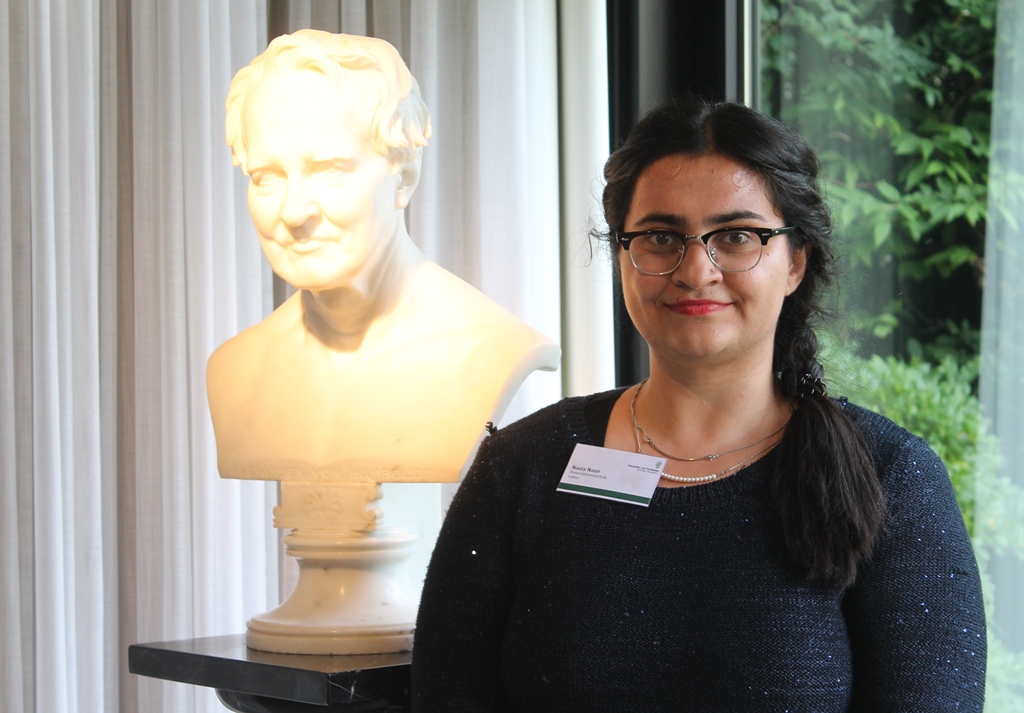
In this guest post, Nazia Nasir, a visiting research fellow at the University of Leeds, United Kingdom, shares why ignoring the elephant won’t make it disappear. And what you must do if you decide to write that postdoctoral fellowship grant.

Nazia Nasir

Stop all your work, grab a coffee, and devote some time to the all-important question — if I want to continue in academics, do I want to look for open positions or write a fellowship grant?

Here’s why and how I took up the latter option.

Why opt for a fellowship?

If you wish to pursue postdoctoral research on a topic of your expertise or in a significantly different field (the Human Frontier Science Program offers good options if this is your calling), writing a fellowship would be your go-to option.

A fellowship award in your CV also showcases your ability to lead funded research. Most fellowships also pay a little more than the standard postdoctoral salary and some interesting perks.

Now that you have decided on writing a fellowship, what should you look for in your host lab?

First, make sure you can justify how your work aligns with that of the host in terms of research interests and skill sets. Second, the host should be willing to support your application and research work with infrastructure available at the institute. After having interacted with many fellowship holders, I found that contrary to the popular belief, the name and fame of a host institute doesn’t necessarily aid or hinder the success of your application.

How long is a fellowship application process? Usually it takes a year’s time from start to finish. After finalising the host, it is wise to spend a good 3-4 months preparing for your research proposal. The application review process can take anywhere between 4 t0 9 months to complete. The time frame may also shift if there is only one application deadline a year, such as the Marie-Skłodowska Curie individual fellowship. Other fellowships, such as the one awarded by the Alexander von Humboldt foundation, accept applications throughout the year but evaluate them during specific periods usually mentioned on their website. It is best to submit your application at least a couple of months in advance of the next evaluation period.

How to nail a research proposal

This is the most important aspect. To begin with, make sure to carefully go through the application guidelines and always stick to them. I cannot emphasise enough how important and usually overlooked this point is. I have personally seen applicants not succeeding merely due to carelessness in following guidelines. Put in sincere effort and time to prepare the proposal.

Some quick points to keep in mind when drafting your proposal:

  • State the rationale, aims, objectives and timelines very clearly.
  • Make your proposal easy to read by organisingit under headings and sub-headings and using bolds and italics to emphasise points.
  • If the guidelines permit, insert a figure or two to illustrate your aim(s).
  • Be diligent when preparing and organising additional documents such as your CV, list of publications etc.

What makes an application successful? The originality, usefulness and innovative potential of a research proposal are key criteria of assessment of an application, in addition to the applicant’s academic record.

Caroline Kisker, Dean at the Graduate School of Life Sciences, University of Würzburg in Germany, who has served on the selection panel of many prestigious fellowships, says many factors play an important role in the success of an application. Was the student productive in his/her PhD thesis? Is the proposed research topic realistic for the period of the fellowship and sufficiently well described? Has the applicant made the effort to delve deeply into the topic and conveyed that he/she understands the topic well? Does the applicant consider possible pitfalls within the research proposal and provide suggestions on how do deal with them? She also strongly advises to avoid jargon and to write the proposal in a way that even a non-specialist can understand and evaluate it.

Writing a fellowship can be very rewarding in terms of the experience of the writing process itself. However, always be mindful that fellowships are usually very competitive. So even though you may have a decent track record and a good proposal, you may not get lucky always. It is always good to discuss this possibility with your host or look to for alternatives while your application is under consideration.

[Nazia Nasir can be reached at nazia.nasir85@gmail.com. She tweets from @NaziaPCL]

Suggested reading:

Beginnings – How to write your first grant proposal

A winning proposal

Nature India Photo Contest 2018 is now open

[Update on 10 December 2018: Deadline extended to 20 December 2018]

Nature India’s annual photo competition is back!

This year, we are delighted to announce three cash prizes worth $350, $250, $200 for the top three winners. The top 10 winning entries will be part of a roving exhibition across venues in India.

Submit your entries now for a chance to win these exciting prizes and to be featured on Nature India‘s blog Indigenus.

The theme for this year’s contest is “Vector-borne Diseases”.

About 700,000 people around the world die every year from diseases transmitted by vectors such as mosquitoes, sandflies, blackflies, ticks and tsetse flies. Major vector-borne diseases such as malaria, dengue, schistosomiasis, human African trypanosomiasis, leishmaniasis, Chagas disease, yellow fever, Japanese encephalitis and onchocerciasis account for around 17% of all infectious diseases.

They are most prevalent in tropical and subtropical regions, and among the poorest. Since 2014, major outbreaks of dengue, malaria, chikungunya, yellow fever and Zika have caused large-scale devastation.

We invite entries that focus on the gravity of vector borne diseases. You could choose any aspect of the issue to highlight – disease manifestation; hygiene and sanitation; breeding grounds; the science and pseudoscience; new and emerging solutions; mitigation; preparedness and whatever else can creatively and aesthetically convey the subject in question.

Prizes

There are three cash awards to be won – the first prize worth $350, the second worth $250 and a third prize of $200. In addition, ten finalists will be featured on Nature India.

Photographs will be judged for novelty, creativity, quality and printability. Winners will be chosen by a panel of Nature Research editors and photographers alongside a leading Indian scientist working in the area of vector-borne diseases. The winner and two runners-up will receive a copy of the Nature India Annual Volume 2017 and a bag of goodies (including Collector’s first issues of Nature and Scientific American and some other keepsakes) from the Nature Research. One of the winning entries also stands a chance of being featured on the cover a forthcoming print publication.

Eligibility

The contest is open to all – any nationality, any occupation, any profession. You may use whatever camera you wish – even your cell phone – as long as the photograph you send us is unedited, original, in digital format and of printable quality. Just make sure you are not violating any copyrights. Also, no obscene, provocative, defamatory, sexually explicit, or other inappropriate content please (refer to the contest terms and conditions below).

Please send your entries in jpeg format to npgindia@nature.com with your name and contact details. Please mention “Nature India Photo Contest 2018” in the subject line of your email. The photograph must be accompanied by a brief caption (please see some photo captions here for reference) explaining the subject of the picture along with the date, time and place it was taken.

We will accept a maximum of two entries per person. The last date for submissions is midnight of December 20, 2018 Indian Standard Time. On social media, please use the hashtag #NatureIndphoto to talk about the contest or to check out our latest updates.

The theme for our inaugural photo competition in 2014 was “Science & technology in India”. In 2015, it was “Patterns”, in 2016 we made it simple with “Nature” and last year it focussed on the “Grand Challenges”. We have received some breathtaking entries from across the world all these years. You might want to take a look at the winning entries of the Nature India Photo Contest 20142015, 2016 and 2017 for some inspiration or the entries that made it to the top to get an idea of what we look for while selecting winners.

[TERMS AND CONDITIONS

Please read these terms and conditions carefully. By entering into this Nature India Annual photo contest (“Promotion”), you agree that you have read these terms and that you agree to them. Failure to comply with these terms and conditions may result in your disqualification from the Promotion.

  1. This Promotion is run by Nature Research, a division of Springer Nature Limited a company registered in England with registered number 00785998 and registered office at The Campus, 4 Crinan Street, London N1 9XW (“Promoter”).
  2. To enter this Promotion you must be: (a) resident in a country where it is lawful for you to enter; and (b) aged 18 years old or over (or the applicable age of majority in your country if higher) at the time of entry. This Promotion is void in Cuba, Iran, North Korea, Sudan, and Syria and where prohibited or restricted by law.
  3. This Promotion is not open to directors or employees (or members of their immediate families) of Promoter or any subsidiary of Promoter. Promoter reserves the right to verify the eligibility of entrants.
  4. The Promotion is open for entries between 00:00 on 14/11/2017 and 00:00 on 20/12/2017 IST.
  5. No purchase is necessary to enter this prize Promotion and will not increase your chances of winning.
  6. You can enter this Promotion by emailing npgindia@nature.com
  7. Only two entries per eligible person. More than two entries will be deemed to be invalid and may lead to disqualification.
  8. Promoter accepts no responsibility for any entries that are incomplete, illegible, corrupted or fail to reach Promoter by the closing date for any reason. Proof of posting or sending is not proof of receipt. Entries via agents or third parties are invalid. No other form of entry is permitted. Please keep a copy of your entry as we will be unable to return entries or provide copies.
  9. The prize for the Promotion consists of the following: Three cash awards worth $350, $250 and $200 for the top three entries respectively, a copy of the Nature India Special Annual Volume 2017 and a bag of goodies (which includes Collector’s first issues of Nature, November 1869 and Scientific American, August 1845; and some other keepsakes) from Nature Research.
  10. The prizes shall be awarded as follows: The prize will be decided in the week following the close of the Promotion. The winners will be notified via email. Winners will be selected by a four person panel of Nature staff, at least one of which will be independent from the Promotion, based on photographic merit, creativity, photo quality, and impact. Full names of the judging panel will be available on request. Any decision will be final and binding and no further communication will be entered into in relation to it.
  11. Ownership of entries: for consideration into this Promotion, you must sign a license to publish form granting the intellectual property rights to Nature Research for your image. This may be used in promotional or marketing material in print and online. You confirm that your entry is your own original work, is not defamatory and does not infringe any laws, including privacy laws, whether of the UK or elsewhere, or any rights of any third party, that no other person was involved in the creation of your entry, that you have the right to give Promoter and its respective licensees permission to use it for the purposes specified herein, that you have the consent of anyone who is identifiable in your contribution or the consent of their parent, guardian or carer if they are under 18 (or the applicable age of majority), it is lawful for you to enter and that you agree not to transfer files which contain viruses or any other harmful programs.
  12. The winner(s) of the Promotion shall be notified by email no more than two weeks after the Promotion closes.
  13. The winner(s) will be required to confirm acceptance of the prize within ten working days and may be required to complete and return an eligibility form stating their age and residency details, among other details. Promoter will endeavour to ensure that winner(s) receive their prizes within 30 days of the date they confirm acceptance of the prize. If a winner does not accept the prize within ten days of being notified, they will forfeit their prize and Promoter reserves the right to choose another winner(s). Promoter’s decision is final and Promoter reserves the right not to correspond on any matter.
  14. The name, region of residence and likeness of the winners may be used by Promoter for reasonable post-event publicity in any form including on Promoter’s website and social media pages at no cost.
  15. You can find out who has won a prize by sending an e-mail to npgindia@nature.com or checking the Nature India blog website Indigenus (https://blogs.nature.com/indigenus).
  16. Promoter reserves the right to cancel or amend these Terms and Conditions or change the Prize (to one of equal or greater value) as required by the circumstances. No cash equivalent to the Prize is available.
  17. All personal data submitted by entrants is subject to and will be treated in a manner consistent with Promoter’s Privacy Policy accessible at https://www.nature.com/info/privacy.html. By participating in this Promotion, entrants hereby agree that Promoter may collect and use their personal information and acknowledge that they have read and accepted the Promoter Privacy Policy.
  18. Promoter may at its sole discretion disqualify any entrant found to be tampering or interfering with the entry process or operation of the website, or to be acting in any manner deemed to be disruptive of or prejudicial to the operation or administration of the Promotion.
  19. Other than for death or personal injury arising from negligence of the Promoter, so far as is permitted by law, the Promoter hereby excludes all liability for any loss, damage, cost and expense, whether direct or indirect, howsoever caused in connection with the Promotion or any aspect of the Prize. All activities are undertaken at the entrants own risk. Your legal rights as a consumer are not affected.]

SciArt scribbles: The molecule painter

Many scientists embrace the artistic medium to infuse new ideas into their scientific works. With science-art collaborations, both artists and scientists challenge their ways of thinking as well as the process of artistic and scientific inquiry. Can art hold a mirror to science? Can it help frame and answer uncomfortable questions about science: its practice and its impact on society? Do artistic practices inform science? In short, does art aid evidence?

Nature India’s blog series ‘SciArt Scribbles’ will try to answer some of these questions through the works of some brilliant Indian scientists and artists working at this novel intersection that offers limitless possibilities. You can follow this online conversation with #SciArtscribbles .

Shraddha Nayak paints to bring clarity to complex biological phenomena. A PhD. from the Department of Pharmacology and Toxicology at the Medical College of Wisconsin, USA, here’s how this Bangalore-based biomedical scientist and illustrator finds stunning art in everyday biological processes.

Shraddha Nayak

Towards the end of my doctoral studies in Milwaukee, Wisconsin, I was strolling down the city sidewalks one chilly evening and came across a beautiful art store. The last time I made an oil-painting was in middle school. At that moment, I felt like a small fish that fell for the bait. Of course, I was enticed into buying a few paints that looked and smelled delicious.

At first, I made some random art, but those days my mind was swirling with lymphocytes and macrophages and interleukin production and it made an appearance on my canvas (Image 1 below).

Image 1: Oil colour depiction of the dendritic cell (far right) frantically prodding the sleepy lymphocyte to wake up: “We have been invaded. You gotta head to battleground NOW buddy”{credit}S. Nayak{/credit}

I liked how it turned out and made a few more. I am not sure if this helped me with research, but time slowed down while painting and I was wrapped in peace.

Visual bias

Research on adenosine biology (my laboratory interest during PhD) has been going on for almost 90 years. The amount of literature that exists is phenomenal and I often found myself drowning in it. I wanted to put my readings in one frame, in one big picture to see how all these studies connected. I also relished making graphs and little representations of data, and spending hours under the microscope to get the perfect shot, more than doing wet-lab experiments.

Consequently, the day I stumbled upon a whole fascinating world of biomedical visualisation, I was off the diving board. Since then, I have realised the significance of design. Look at our good old paper clip for example, or an iron box or a spoon among numerous others. We tend to take these products for granted, but they are designed so efficiently that within milliseconds of laying sight on them we know what they are meant for. The same applies to scientific figures and illustrations. There are design strategies one could follow, that helps the message jump out instantly at readers.

For example, see Image 2 below. The scientist wanted a depiction of the above discovery in context of cardiovascular disease. I used colour sparingly, only for the main characters, to enable distinction between wild type and mutant. The background contextual illustration being important to convey the message has been presented, but greyed out to prevent distraction from the main point.

Image 2: 2D illustration for a scientific paper showing how somatic mutations in hematopoietic stem cells can undergo clonal expansion and lead to cardiovascular disease. {credit}S. Nayak{/credit}

Thinking 3D

Cellular and molecular biology are very visual. Textbooks and scientific articles are replete with diagrams and illustrations. We have come a long way since the hand-drawings of the Renaissance period to digital renditions to communicate research and hypotheses. What we study, more often than not, involves looking at structure and/or dynamics and/or interactions from the bustling lives of characters that are invisible.

We only see a part of this drama unfold under the microscope. Why restrict ourselves to 2D thinking when our data is 3D, and when we have 3D tools to visualise the above facets? A few clever and creative scientists have developed (and are constantly expanding) ways of exploiting 3D animation software for research and its communication.

These are the very 3D programs used to create animated Disney-Pixar movies, or even used for automobile and architectural design beside other uses. They enable us to create context, test our hypotheses, consolidate data and simulate reality. And so, my journey as a molecular animator began. For example, see Image 3, where I use 3D animation to to help a lipid researcher visualise structural facets of a high-density lipoprotein (HDL) receptor.

Image 3: A 3D animation snapshot image to partially solve 3D structure, oligomerisation and ligand-binding of the HDL receptor.{credit}S. Nayak{/credit}

These programmes also provide wings to my imagination in fun ways. Working on an animation around a popular family of proteins found at the cell membrane (G protein-coupled receptor or GPCR), I drifted a little to create Image 4, from the adenosine receptor point of view, considering how much coffee the world drinks. (Caffeine, the stimulant found in coffee binds to adenosine receptors temporarily preventing drowsiness.  Adenosine receptors are an example of  GPCRs.)

Image 4: A 3D illustration titled “Why does it always caffeine on me?”{credit}S. Nayak{/credit}

I am not sure if I am creating art. The cell and molecular representations that we currently use, appear to be pieces of art on their own. Don’t you agree?

[Shraddha Nayak can be contacted at shraddha.m.nayak@gmail.com. She tweets from @Na_y_ak ]

Suggested reading:

SciArt scribbles: Coupling creation and analysis with collages

SciArt scribbles: Technology to aid dance

SciArt scribbles: Music to tackle PhD blues

SciArt scribbles: Playing science out

Artists on science: scientists on art

Science without borders: The Bhabha legacy

As young physicists at the Tata Institute of Fundamental Research (TIFR), Mumbai circa 1981, Alak Ray and Prajval Shastri experienced an exciting era in the life of the institute, set up by visionary scientist Homi Jehangir Bhabha in 1945.

In this guest post, Ray, now a Raja Ramanna Fellow at the Homi Bhabha Centre for Science Education (TIFR) and Shastri, a Professor at the Indian Institute of Astrophysics, Bangalore peer into the institute’s history, armed with Indira Chowdhury’s book Growing the Tree of Science, Homi Bhabha and the Tata Institute of Fundamental Research.

The campus of Tata Institute of Fundamental Research around the time of inauguration of its new buildings in January 1962 in south Bombay (now Mumbai).{credit}TIFR archives{/credit}

After seventy years of the government of independent India nurturing scientific enterprise, even in the face of criticism of its investment in the fundamental sciences, it is a good moment to review the story of what many regard as the prized jewel of them all – the Tata Institute of Fundamental Research (TIFR), which was founded in 1945 by the physicist Homi Jehangir Bhabha with the help of the Dorabji Tata Trust.

Growing the Tree of Science (Oxford Univ Press, New Delhi 2016) by Indira Chowdhury treats us to a visit of this famous institute and its history. The reference to a growing tree in the title comes from an address by Bhabha in 1963 at the National Institute of Sciences of India: “A scientific institution… has to be grown with great care, like a tree.”

Chowdhury distills the history of the institute from years of effort she put in to set up the TIFR archives. She explores the early efforts of scientific institution building around the time of India’s independence in 1947, when science was envisaged as being serviceable to the nation and a tool of nation building, but the need to nurture institutional spaces without borders was also recognised.

Bhabha undertook this nurturing with enthusiasm, though juggling multiple responsibilities within a few years of founding the institute left him little time for research. He concentrated on creating the conditions for conducting good research, in enticing stellar scientists to visit, and to recruit established scientists to lead various programmes. A largely unknown initiative by Bhabha was his invitation in 1952 to Richard Feynman “to spend a couple of years or more here as a Professor of Theoretical Physics”, which Feynman declined.

A poignant story of Bhabha’s sense of science without borders concerns the Chinese mathematician S. S. Chern. During the intense civil war in China (1948), Bhabha wrote to Chern at the Mathematical Institute of the Academia Sinica at Nanking, which Chern himself had founded in 1946 after returning from Princeton. Bhabha wrote, “Although we know the patriotism which prompted you to prefer to work in your own country despite the many attractive offers from abroad, we realise that the present conditions must make work in your neighbourhood extremely difficult, if not impossible… I am therefore, writing to you to offer you the hospitality of this institute… to spend one year in the first instance as a Visiting Professor?” By this time Chern had already accepted J. R. Oppenheimer’s offer at the Institute of Advanced Study at Princeton, but was deeply grateful “for the concern of my foreign friends, which has never failed me”.

Bhabha smoothly and successfully recruited the mathematician K. Chandrasekhar in 1948 and the physicist M. G. K. Menon in 1955, though he failed with astrophysicist S. Chandrasekhar. In 1962, he offered George Sudarshan an Associate Professorship. Sudarshan had worked in TIFR’s emulsion group earlier (1952-1955) at the Old Yacht Club. Then, while on leave from TIFR at the University of Rochester, Sudarshan, with his thesis advisor Robert Marshak, worked out the universal V-A theory of weak interactions, for which they were nominated for the Nobel Prize multiple times. But the effort to repatriate Sudarshan failed because Bhabha tried putting Sudarshan on par with others who stayed on in the institute and did their research in India.

Indeed, Chowdhury writes about Bhabha’s notion of “self-reliance which had instilled in him an unswerving faith in the scientists who had trained at his institute”. She elaborates, “It was this group that had been responsible for growing the roots of the tree of science and Bhabha the master gardener was unwilling to carry out any process of grafting a foreign branch which could potentially disturb the stability of the tree itself.”

Chowdhury asks, “The institutional model itself had an unresolved paradox at its core – was it national or international?” She opines that the “ambiguity at the heart of Bhabha’s grand vision presented a troublesome dilemma – how to be international and national at the same time”.

The idea of using modern science for social transformation has been debated among the Indian elite since social reformer Raja Ram Mohan Roy’s time in the 1820s. The debate has touched on questions such as: What are the priorities for development? What types of scientific activities are most appropriate for a developing country like India? How can a scientific community be best established within a traditional society? How can scientists working in such a society keep their loyalty to the internationalism of science and at the same time deal with the more local and immediate needs of their own countries? [see “India’s Scientific Development”, William Blanpied, Pacific Affairs, vol 50, 91,1977)].

In the first two decades after India’s independence the international network that Bhabha built worked together with India’s nationalism and was happy to contribute to the development of institutions for a newly independent India. (The most notable scientist in this network was Nobel prize-winning experimentalist P. M. S. Blackett – see “Empire’s Setting Sun?”, Robert Anderson, Econ. Pol. Weekly, vol 36 (39), 3703, 2001). Chowdhury points out, “The sense of national self-realisation and an awareness of international cooperation went hand in hand.”

Bhabha also successfully drew a strong connection between fundamental science and technology development. Bhabha in his letter to the Sir Dorabji Tata Trust in 1944 wrote, “It is absolutely in the interest of India to have a vigorous school for research in fundamental physics, not only in the less advanced branches of physics, but also in the problems of immediate practical interest to industry. If much of the applied research done in India today is disappointing and of very inferior quality, it is due to the absence of sufficient numbers of outstanding pure research workers who could set the standards for good research.”

Growing the Tree of Science paints the picture of TIFR and its journey of undertaking science in a newly developing nation on a wide canvas. The story however is somewhat less richly textured for the period after Bhabha’s death. Chowdhury does discuss the beginnings of molecular biology, radio astronomy and other disciplines in TIFR with the recruitments of the geneticist Obaid Siddiqi in 1962 and the radio astronomer Govind Swarup in 1963. Her story is however mainly concentrated in the earlier phase of these groups. The hits and misses of the Bhabha era affected TIFR’s later development and the future it looks into. One wishes that a deeper appraisal of the era that followed could be put together in greater detail.

[This blog was originally posted on ‘On Your Wavelength’].