Publishing tips: How not to fall for a predatory journal

In this new blog series called ‘Publishing tips‘, we bring expert advice to help researchers navigate the academic landscape better.

In the first post of the series, Lea Gagnon, Editorial Development Advisor at Nature Research Academies, shares a handy check list that researchers can use to avoid falling prey to predatory journals.
Lea Gagnon

In the  competitive academic landscape where researchers only have one chance of publishing their findings, some might be tempted to publish on the first invitation. Here’s one such classic, ego-flattering invitation:

Dear esteemed doctor, based on your valuable experience and contributions, we are delighted to invite you to submit a manuscript to our journal.

Hold on – if it sounds too alluring, it probably is. Many predatory journals use such aggressive seduction techniques (with repeated emails flooding your mailbox) to earn publication fees before acceptance and without delivering the promised services. Here are four evaluation criteria that could save you from falling prey to predatory journals.

Reputation

The first criterion to evaluate is the journal’s reputation. Is the journal published by an acclaimed publisher (e.g. Springer Nature, Elsevier, Taylor & Francis, Wiley, Sage, etc.)? How well do you and your colleagues know this journal? Are you familiar with the editorial board members? Some illegitimate journals will automatically play audio testimonies of researchers’ positive opinions on their website to influence you. Others will use the names of deceased or acclaimed researchers without their consent. And if they do agree to contribute, their involvement is often minimal. Make sure you discuss with your colleagues and confirm personally with the editors if and how much they are involved with the journal.

Credibility

The second indicator is the journal’s credibility. This can be assessed by its physical and online presence. Is the journal based in the middle of nowhere and only displays a P.O. Box? How easy is it to contact and hear from the editor? Can you find the journal in trustworthy databases such as Pubmed/Medline, Web of Science, Scopus, Embase or Directory of Open Access Journals (DOAJ)? Is the journal a member of the Committee On Publication Ethics (COPE)? Is it listed on the black or white lists of illegitimate or legitimate journals? While Jeffrey Beall’s infamous blacklist was retracted in 2017, Cabells International has since developed both a black and a white list, adding to the DOAJ selective whitelist

Impact

The third benchmark to review is the journal’s impact, evaluated by several metrics such as the famous impact factor (IF). Journal IFs are published annually by Clarivate Analytics and calculated from citations in journals indexed in Web of Science’s Science Citation Index (SCI) but also Emerging SCI (ESCI), Social SCI (SSCI), Arts and Humanities CI (AHCI), Book CI (BKCI) and Conference Proceedings CI (CPCI). Only journals indexed in SCI, SCI-Expanded and Social SCI receive IFs. Homemade bogus IFs are commonly displayed on predatory journals’ websites, such as the “Global Impact Factor”. Therefore it is wise to double check whether they match the official IF released only in the Journal of Citation Reports.

Quality

Lastly, the journal quality needs careful examination. Are there any spelling mistakes on the journal’s website? How is the peer review process (e.g. single-blind, double-blind or open)? Are the published articles sloppy? Can you access all archived full texts? Most predatory journals claim to use peer review but rarely do, leading editors to accept manuscripts either instantly (e.g. a few hours) or within a few days, compared to several weeks in legitimate journals. When a journal fails to provide details of peer review process, you might want to see a few papers and screen for any fake papers, like this Star Wars midichlorians paper. To help you assess a paper that appears legitimate, the Equator Network developed valuable checklists (e.g.  CONSORT for clinical trials) indicating what aspects of a study should be presented. The majority of predatory journals do not follow these checklists. For example, only 40% of 1907 human and animal studies published in predatory journals report having received approval from a research ethics committee. In genuine journals, such an unethical study would have been directly rejected from the editor’s desk.

So, exercise care when choosing your target journal by reading several articles from the journal and cross-checking its claims (IF, indexes). Follow this useful think-check-submit checklist and remember that most open access journals (except economic journals) only charge a fee after acceptance. If you do submit your hard work by mistake, never sign the copyright transfer agreement and insist on having your manuscript removed (see also advice on what to do if this happens).

After all, publishing your hard-earned research is one of the most important steps in your career.

[Lea Gagnon can be reached at lea.gagnon@nature.com]

Careers in science: Research management

Given constraints on independent positions across India’s scientific institutions, a new career option — research management — beckons PhD degree holders, says our guest blogger and seasoned research management consultant Savita Ayyar.

Backed by a decade of research management experience at Wellcome Trust London and National Centre for Biological Sciences, Bangalore, Savita says attractive remuneration makes this  profession a good alternative for scientists keen on exploring a non-academic research-related career.

Savita Ayyar

No more a lonely path

Nobel Laureate Sir John Gurdon’s elegant experiments in 1958, transplanting whole nuclei into frog eggs, have laid the ground for much of our current thinking in the field of stem cell research. While the same spirit of enquiry and joy of experimentation still exists in research today, the current generation of scientists have to grapple with a far more complex research environment. Researchers have to master the art of raising and managing funds from diverse sources, navigating ethical considerations around research, doing ‘team science’ in large consortia, scrutinising research impact and translating basic research to benefit society.

The good news is that scientists don’t need to walk this path alone. A new army of ‘research managers’ offer that helping hand needed to facilitate their science. These research managers juggle work across several fields and help researchers navigate a labyrinth of processes and details, making modern research possible.

Research management has evolved as a profession over several decades. The need for this profession arose from institutional needs to manage a diversity of research awards. It has continued to develop in response to the changing international funding landscape1. Many research-intensive organisations worldwide have research offices catering to the needs of both individual researchers and institutions. Research managers and administrators play key roles in such offices, working proactively to manage a gamut of processes enabling external research funding. Success in this field hinges upon helping researchers make optimal use of all available opportunities while minimising risk to institutions.

So, what are the key skills that could make you an effective research manager?

• It’s a combination of professional skills, personal attributes and an enabling environment.
• A broad-based background in science and administration, such as knowledge of funding agency processes, can significantly enhance a research manager’s reach.
• A natural flair for working with people, willingness to learn about new areas, attention to detail and strong organizational skills are crucial, as is an enabling institutional work environment that recognizes the value of facilitation.
• There is room here for a diversity of skills and interests, ranging from academic to administrative, all of which add value to the organization seeking to raise and manage external funding.

Research management in India

In India, science-led research management has taken wings in the last decade. The National Centre for Biological Sciences in Bangalore was among the first to start a research development office in 2010 to support the external funding needs of a growing campus. The office was unusual for India, and quickly began growing a team of scientist administrators who facilitated research funding.

Several others such as the Translational Health Science and Technology Institute (THSTI), Indian Institute of Science Education and Research (IISER) Pune, Centre for Stem Cell Research (CSCR) Vellore, National Centre for Cell Science (NCCS), Shiv Nadar University, Ashoka Trust for Research in Ecology and the Environment (ATREE), Public Health Foundation of India (PHFI), Tata Translational Cancer Research Centre (TTCRC) and George Institute for Global Health (GIGH) have been recruiting research managers and building research offices. There is now a growing group of scientists in non-academic roles including grant management, scientific outreach, ethics and others, working alongside researchers, administrators and staff at external agencies to facilitate research at Indian institutions. Individuals with a first-hand understanding of the research process are taking up such roles, gaining professional acceptance from their academic peers and building trust-based working partnerships.

With attractive remunerations, the profession is also proving to be a good alternative for individuals with PhD degrees, who wish to develop their careers in non-academic research-related roles. This is particularly significant, given constraints on independent scientific positions across India’s scientific institutions. Such efforts have considerably expanded the scope of support available to researchers at these institutions, bringing in much needed links between science, external funding and societal engagement. There is now a growing awareness of the role of research management as a new and important element of India’s developing research ecosystem.

The road ahead

While these are welcome developments for Indian research, much of these efforts have been isolated. Research management is needed for science in India to progress and for Indian research institutions to be globally competitive. For it to secure firm footing in India, more institutions need to create such structures and research managers in India need to be trained with the requisite skills and to gather into a professional network that aids their career development.

Earlier this year, the Wellcome Trust/DBT India Alliance launched the India Research Management Initiative (IRMI) with workshops that brought research managers together to share their career stories and experiences (Linkedin page). The collective is designing online training courses and networking events. Indian research managers also participated at INORMS 2018, a large international conference, interacting with peers from 45 countries. These developments demonstrate the immense value of creating training and networking opportunities for current and future research management professionals in India.

So, what does the future hold for research managers in India? Science in India needs additional support from non-government sources such as industry and philanthropy. Research-intensive institutions would do well to have structures in place that allow their researchers to tap into diverse sources of funding with ease and clarity, participate in collaborative research and work to find solutions for national and global challenges. It is time India boosts its research ecosystem with research managers as academic support workforce. With good training and a supportive environment, this dynamic new profession is poised to make a welcome and significant change in the research landscape of the country.

Ref.
1. Langley, D. Perspectives: Policy and Practice in Higher Education. 16, 71-76 (2012) doi: 10.1080/13603108.2012.659289

(Savita Ayyar can be reached at sayyar@jaquarandatree.com. She tweets from @SavitaAyyar)

Suggested reading:

Research management: Priorities for science in India

Discovery relies on strong support staff

Away from home: Using science for societal good

Our ‘Away from home’ interactive map features 50 bright Indian postdocs from around the world. Write to us at npgindia@nature.com to suggest names of postdocs from countries and disciplines we haven’t covered yet.

Saidulu Mattapally, a Postdoctoral Fellow at the Department of Biomedical Engineering at The University of Alabama at Birmingham, USA, is enamoured by the translational aspect of science. From exploring coronary genetic defects to unraveling the secrets locked in India’s traditional system of medicine, this molecular geneticist from Osmania University, Hyderabad, strives to do application-based science that has immediate benefits for people.

Saidulu Mattapally

Driven by the relevance of science

Molecular genetics is not just a fascinating field of science but also offers immediate medicinal applications. This therapeutic relevance triggered my early interest in the field. I tried to explore the molecular and hereditary premise of coronary illness in my graduate and doctoral studies.

Scientific investigation helps shape the broader questions we ask – for me an investigative approach is also a state of mind. From a young age, I have been inspired to think of the broader relevance of things. Science has been eternally interesting to me and I always wanted to be in research.

After a bachelor’s from Osmania University, Hyderabad, I got into a master’s course in genetics at the same university learning advanced experimental techniques in molecular biology, biochemistry, immunology and genetics. I was selected as a research scientist in the pharmacology division of CSIR-Indian Institute of Chemical Technology, Hyderabad, one of the best chemical technology institutes in India.  My Ph.D. under Sanjay K. Banerjee at the same institute involved genetics (Sanger sequencing).

I also got the opportunity to work with Kumarasamy Thangaraj and Lalji Singh’s group at CSIR-Center for Cellular and Molecular Biology (CCMB), Hyderabad. They published two papers in Nature, which was a great learning experience.

Combining molecular genetic and pharmacology

Though my interest was in the molecular and genetic basis of congenital heart disease, I spent a year to learn advanced molecular genetic techniques. During this time I worked on a project exploring malaria risk among ancestral Indian tribal populations. We needed to collaborate with a hospital to get samples. Although CCMB scientists were helpful, doctors were not convinced except in one Hyderabad hospital, which gave us the opportunity to work with congenital heart disease samples.  My supervisor urged me to explore the work of two Indian origin scientists Deepak Srivastava and Aravinda Chakravarti. We wrote a grant on their work for the Indian scenario, and although we didn’t get funded, we continued to work on the project.

During Ph.D., I got the opportunity to present this work at the prestigious international conferences of the American Society of Human Genetics in 2013 and 2014. There I met Aravinda Chakravarti, the scientist who had influenced my project. Around the same time, I got an opportunity to attend a next-generation sequencing event in Boston. There, I heard a lecture by Eric Topol, one of best-individualized medicine and genome and digital technologies researchers. A five-minute chat with him and later his book ‘The Creative Destruction of Medicine’ continue to inspire me.

I was also awarded a DBT travel grant in 2015 to attend the next American Society of Human Genetics meeting in San Diego. In addition to molecular biology and genetics, I learned an immense lot about pharmacology, development of different types of animal models to study different diseases, and pharmacological screening of small molecules. My doctoral stint had already convinced me of the strong relationship between molecular genetics and pharmacology.

During my doctoral stint with Dr. Banerjee, we traced a genetic mutation associated with congenital heart disease in south India. Our work shed light on a very important aspect of gene mutation as we reported a novel mutation associated with ventricular septal defect (VSD).

Postdoc years – when life and career intertwine

Around this time, my father and best friend Yellaiah Mattapally passed away when he fell from a toddy (palm) tree. He was a farmer and always talked about the problems he faced in his agricultural practices on account of being illiterate. He would always egg me on to become a scientist and work for the society.

Fulfilling my father’s dreams, I finished my Ph.D. in 2014. I got married the same year and received a postdoc opportunity from the University of Minnesota in Dr. Nobuaki Kikyo’s lab soon after. I decided to take my spouse along though we couldn’t go since my visa didn’t arrive in time. Following many ups and downs, one year later, I took up an offer from Dr. Jianyi (Jay) Zhang at the University of Alabama at Birmingham. Our son was born that year.

In life as in a postdoc career, many problems come interspersed with solutions – and a lesson I learned was that one should be mentally prepared for these years when both personal and professional lives face a lot of changes. In the end, they work out fine.

As a postdoctoral student, I trained in CRISPR-Cas9 in skeletal muscle cells and mouse induced pluripotent stem cell (iPSC) culture. I studied how gene expression and epigenetic modification change during differentiation of mouse skeletal muscle cells. I have completed 3 years of post-doctoral work and hope to wrap it up by end of 2018. In the first year, I tested the hypothesis that fetal genes linked to congenital heart defects can treat adult heart failure (myocardial infarction). We reported the effectiveness of transplanted, human iPSC-derived cardiomyocytes in the treatment of ischemic myocardial injury. Currently, I am working on the development of universal human iPSC by CRISPR-cas9 mediated Knockout MHC class I and MHC class II expression. Also, the differentiation of these cells into three lineages – cardiomyocytes (iPSC-CM), endothelial cells (iPSC-EC) and smooth muscle cells (iPSC-SMC) – to treat myocardial infarction in swine.

Traditional knowledge needs more exploring

Though medical practice in India majorly involves western medicine, the Indian traditional system of medicine Ayurveda is now being practiced and accepted all over the globe.

I remember my mother Ankulamma treating abdominal pain with medicinal plants. She also talked of Ayurvedic formulations to treat chronic diseases such as diabetes.  In Telangana, where I was born, we celebrated the annual floral festival of Bathukamma, when we brothers brought home beautiful yellow flowers of the native tree Senna auriculata and other flowers for our sisters. Interestingly enough, when I recently started researching Ayurveda I learned that Senna auriculata is used for the treatment of diabetes and cardiovascular diseases.

I strongly feel that these traditional knowledge linkages need more scientific exploring.

During my undergraduate years, I used to help my father in our cotton and rice fields. I haven’t gone back to the fields in a long time. I wish to come back someday and work for my homeland, and dig deeper into the traditional knowledge wealth that India is so rich in.

SciArt scribbles: Coupling creation and analysis with collages

Many scientists embrace the artistic medium to infuse new ideas into their scientific works. With science-art collaborations, both artists and scientists challenge their ways of thinking as well as the process of artistic and scientific inquiry. Can art hold a mirror to science? Can it help frame and answer uncomfortable questions about science: its practice and its impact on society? Do artistic practices inform science? In short, does art aid evidence?

Nature India’s blog series ‘SciArt Scribbles’ will try to answer some of these questions through the works of some brilliant Indian scientists and artists working at this novel intersection that offers limitless possibilities. You can follow this online conversation with #SciArtscribbles .

Neuroscientist Leslee Lazar dabbles in collages. A visiting faculty at the Indian Institute of Technology Gandhinagar, Leslee’s research interests lie in neuroscience of design, science communication, cultural cognition and behavioural change. He combines his training as a neuroscientist with his passion as a collage artist to create what he calls a ‘hazy amalgam’ of creation and analysis.

Leslee Lazar{credit}Devarsh Barbhaya{/credit}

Collage needs just a few scraps of paper, some glue and not even a steady hand. But, this humble hobby has exalted origins, “invented” by great artists like Picasso and instrumental in the birth of modern art.

My own foray into collage was rather fortuitous – the only available slot in my high school cultural team was for the collage competition. Making the team meant skipping classes for two full days. So, I put my name in and made my first collage. To everybody’s surprise, I won a prize. I did not make more collages after that glorious start. Almost two decades later, I found myself falling back on collages to unwind from a stressful postdoc stint.

When I make or see collages, I switch to a ‘dual mode’, described beautifully by the polymath Vladimir Nabokov; “I cannot separate the aesthetic pleasure of seeing a butterfly and the scientific pleasure of knowing what it is”. As a cognitive neuroscientist, I study how we perceive visual artwork and how it gives us that special feeling when we look at it – the aesthetic emotion. However, my process of creating collages is not driven by scientific theories, its impulsive, urgent, chaotic and a meditative process.

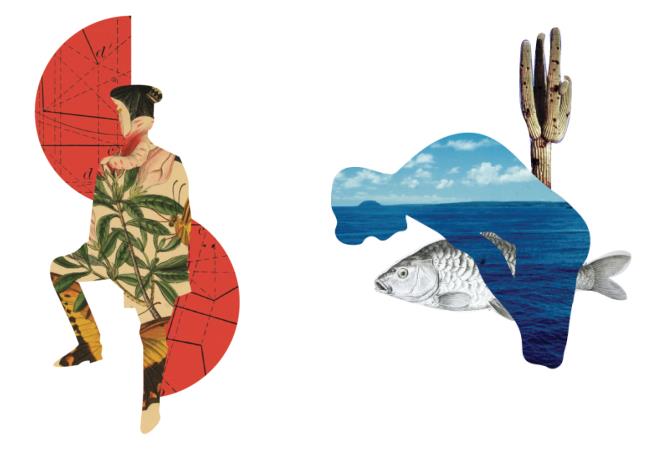
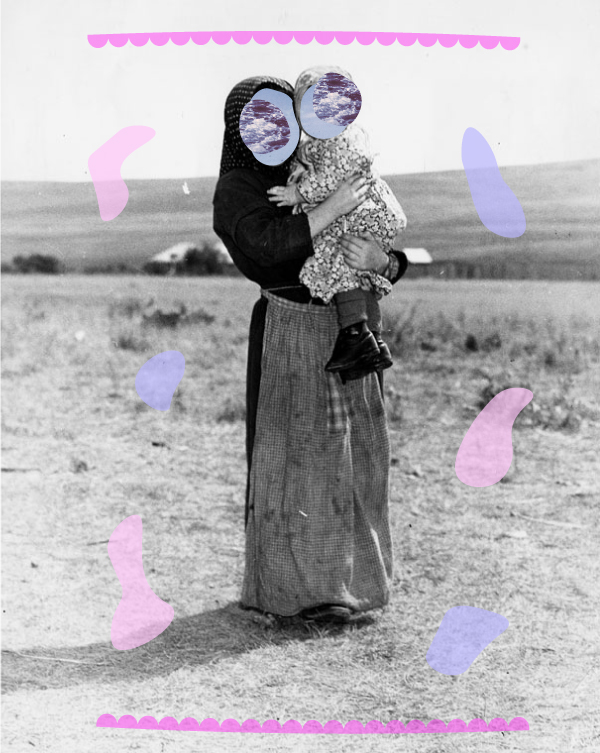
For my collages, I extensively use images from internet photo archives. The power of collages is that I can manipulate an element of an image, like form, colour or perspective giving new meaning to the original image. Sometimes, just a juxtaposition of images from different eras or styles can create a powerful reinterpretation. In a series called Pro:Postures, I explored how body postures reflect subtle meanings. In vintage portrait photographs, I manipulated certain features to remove skin colour, expressions, markers of ethnicity, social background etc. — the attempt was to amplify meanings embedded in the posture of the person. Postures reflect many of our emotions and realities. Using these manipulated images, I was attempting to highlight how postures convey subtle aspects of history, gender, politics and power (Fig. 1)

Fig. 1: Two separate collages created out of vintage portrait photographs to show how postures convey subtle aspects of history, gender, politics and power.{credit}Leslee Lazar{/credit}

The technique of collage was invented by artists Pablo Picasso and Georges Braque, when they were exploring ways to create spatial illusion in their art. They wanted to represent space from different perspectives. The painting could appear deep or shallow depending on where the viewer focused attention. To do this, they pasted textured wood and fabric on to their painting canvas, giving birth to collage. Soon, collage became an established method for western artists.  Of the many methods and means of collage, two kinds stand out – one that plays with our ability to group objects, detect patterns and relationships (called ‘gestalt’ perception) and the other that appeals to our inherent preference for human-like forms.

The first kind was made popular by artists like Hans Arp, who used shapes and arrangements to create forms and meanings. It exploits our visual system’s gestalt property. We give meanings to seemingly random stimuli, like the Dalmatian’s random white and dark patches in the famous collage where Arp is playing with composition. Many collages exploit this principle, much like other art, of deriving pleasure in “completing” a form.

The second kind of collages use the human form, especially the face. We can recognize faces effortlessly, read emotions, and communicate through expressions. In the brain, there is a special area to process visual information of faces. Any damage to this area and we lose the ability to recognize faces, made famous by Oliver Sack’s classic “Man who mistook his wife for a hat”. The way we process faces is different from other objects; it happens faster than objects and we read emotions before we register the identity of the face.

We also perceive faces holistically, which means we do not make mentally put the parts of the face, eyes, nose and ears together to recognise a face. Because the brain is set up to process face in such a way, it is prone to some illusions, like the Thatcher illusion, where inverted eyes and lips are perceived as normal when seen inverted. This special relationship with faces has been exploited in many artworks. In a collage I made in response to the treatment of Syrian war refugees in Europe, I used a stock image of European refugees from the past and manipulated their faces to represent the yearning for freedom and normal life (Fig. 2).

Fig. 2{credit}Leslee Lazar{/credit}

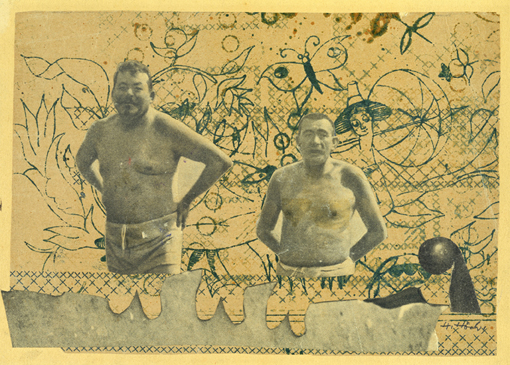
Although, art can evoke emotions purely by its visual features, there is also a strong cognitive, social and cultural element. Collage, with its borrowed imagery offers a ready-made way to contextualise art with pop and political reference. Some of the earliest collages were made in reaction to World War 1. Hannah Hoch used images of German Prime Minister and defence minister on an embroidered background as an anti-war statement.

Hannah Hoch’s anti-war collage {credit}Wikiart{/credit}

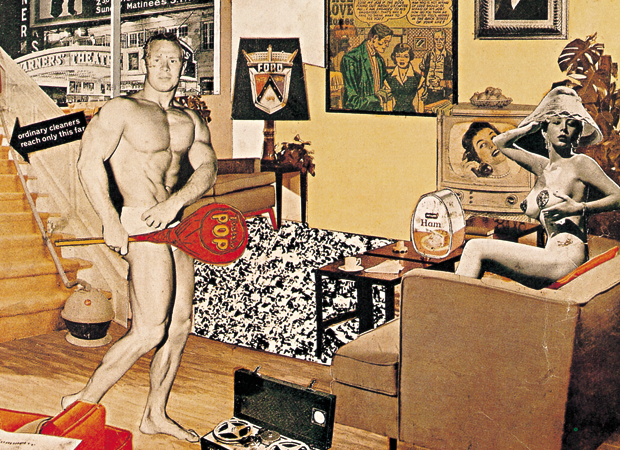
Collage also was influential in the pop art movement, an art movement with everyday objects, made famous by Andy Warhol’s painting of soup cans. However, the first pop art was a collage made with fashion magazines and sales catalogues.

A collage titled “Just what is it that makes today’s homes so different, so appealing?” by English artist Richard Hamilton is the first pop art.{credit}Wikiart{/credit}

The great art historian E. H Gombrich said “There really is no such thing as art, there are only artists”. And neuroscience claims that the artist is a neuroscientist. Will my training as a neuroscientist give me added insight into the artistic process? It’s too early to say, there is only a hazy amalgam of the two ways of thinking and interacting with the world. The forces that drive to create and to analyse are not necessarily opposite. I hope they merge into something greater than the sum of individuals. Till then, my collages will try to write visual poetry with other people’s words.

(Leslee Lazar can be contacted at leslee.lazar@gmail.com. He tweets from @leslee_lazar.)

Suggested reading:

SciArt scribbles: Technology to aid dance

SciArt scribbles: Music to tackle PhD blues

SciArt scribbles: Playing science out

Artists on science: scientists on art

Away from home: Doubling research fun with twin subjects

Our ‘Away from home’ interactive map features 49 bright Indian postdocs from around the world. Write to us at npgindia@nature.com to suggest names of postdocs from countries and disciplines we haven’t covered yet.

Varun Warrier, a postdoctoral researcher at the Autism Research Centre in University of Cambridge, UK, talks about the beautiful marriage of genetics and neurosciences . And how he has come to combine these two complementary subjects to carve out a meaningful research career. An alumnus of the Jawaharlal Nehru Centre for Advanced Scientific Research (JNCASR), Bangalore, Varun works on the genetics of autism and related traits.

Varun Warrier

It helps to know what you don’t want to do

When I finished high school, I had no idea what I wanted to do. I knew what I didn’t want to do, and in retrospect, that was very helpful. I didn’t want to study engineering or medicine. I didn’t have the inclination for the former, and was too squeamish for the latter. I ended up pursuing a degree in zoology, something I was reasonably good at.

At the end of the three-year undergraduate programme, I was faced with exactly the opposite problem. I knew what I wanted to do, but had to make a choice. I was lucky enough to get a three-summer undergraduate fellowship at the Jawaharlal Nehru Centre for Advanced Scientific Research (JNCASR), Bangalore. There, I worked with Anuranjan Anand on the genetics of stuttering. We searched for genetic regions linked to stuttering using an old genetic mapping technique called genetic linkage mapping. Many of the interesting genes were involved in brain development or neural signalling. I soon realized that I was as excited by neuroscience as genetics, and I had to decide between the two for my graduate programme. Since I already had some research experience in human genetics, I chose neuroscience for master’s at University College London (UCL).

People ask me if it was a big jump from zoology to neuroscience. I don’t think it was. The zoology degree was panoramic and, in effect, a life sciences degree. So, while some concepts like cognitive neurosciences were new, I was never completely at sea.

At UCL, I was required to conduct a 9-month research project. I was very much looking forward to this. Perhaps I wasn’t adventurous enough and ended up choosing a genetics project again! I worked on an extremely rare and debilitating childhood neurogenerative disease called Neuronal Ceroid Lipofuscinoses and thoroughly enjoyed it.

Coupling favourites

Towards the end of the project, when I had to make another choice, it came easy. I was enjoying the beautiful coming together of the two disciplines – neuroscience and genetics. I wanted to investigate research questions in neuroscience, using genetic methods. These silos are all a bit arbitrary though and don’t really matter too much. Once you start working on something, you’re likely to ‘borrow’ ideas from multiple fields.

It was this happy marriage of genetics and neuroscience that got me working with Simon Baron-Cohen at the University of Cambridge in the United Kingdom for an MPhil and a PhD. Getting into Simon’s lab was a matter of being at the right place at the right time. I had read some of Simon’s work, and wrote to him. I didn’t expect to get in. But as luck would have it, Simon had genetic data that needed to be analysed.

At Cambridge, I gradually pivoted towards human genomics, which required a lot of programming and statistics. I worked (and still do) on the genetics of traits related to autism, such as empathy, emotion recognition, and an interest in systems. People are surprised when I tell them of my work on the genetics of these traits – many don’t think something like empathy is genetic. But all human attributes are partly genetic despite what my sociologist friends will tell you.

Autism is complex, and no two autistic persons are alike. There are subgroups within the autism spectrum. Large scale genetic studies have had some success in subgrouping this spectrum by identifying variants in specific genes linked to specific syndromes. My most exciting research so far suggests that the two core domains of autism – social interaction difficulties (the social domain), and the unusually repetitive and restricted interests and behaviour (the non-social domain) – are genetically dissociable. I am not the first to suggest this as there have been a few studies to come to similar conclusions, but ours was the first to provide molecular genetic evidence in support of this hypothesis.

Choose your lab, supervisor well

So much of this journey has been made less arduous by very supportive and inspiring mentors and supervisors. When you don’t get along with your supervisor, your project can be extremely stressful. It’s always important to think carefully about doing a PhD, and finding the right supervisor. A PhD is always challenging, and it’s meant to be.  To paraphrase the author Jhumpa Lahiri, writing a novel is like jumping off a cliff and not knowing where you’re going to land. I think this is true of a PhD as well. Ideally, you’re doing something new and you’re never sure if you’re going to get it right. That for me was the most exciting aspect of the PhD.

When I embarked on doctoral research, I knew three years would be enough for me to decide whether to stay in academia or not. I found the PhD experience so enjoyable that I’ve decided to stay on at the University of Cambridge, and have transitioned into postdoctoral research.

The first few months as a postdoc were daunting. I guess the lack of a structured medium or long-term goal is difficult to get used to. I’m now used to the rhythm of a postdoc, and continue researching the genetics of autism and related traits.

Something that people don’t necessarily tell you but becomes quickly apparent is the number of rejections you get as an academic. Experiments fail, manuscripts are rejected, applications are unsuccessful. Perhaps this is true of all human endeavour, but I have nothing else to compare this to. I am still learning to develop a thick skin and take failures and rejection in my stride. But it’s not always a rejection – the intermittent successes are enormously exciting and make everything worthwhile.

SciArt scribbles: Technology to aid dance

Many scientists embrace the artistic medium to infuse new ideas into their scientific works. With science-art collaborations, both artists and scientists challenge their ways of thinking as well as the process of artistic and scientific inquiry. Can art hold a mirror to science? Can it help frame and answer uncomfortable questions about science: its practice and its impact on society? Do artistic practices inform science? In short, does art aid evidence?

Nature India’s blog series ‘SciArt Scribbles’ will try to answer some of these questions through the works of some brilliant Indian scientists and artists working at this novel intersection that offers limitless possibilities. You can follow this online conversation with #SciArtscribbles .

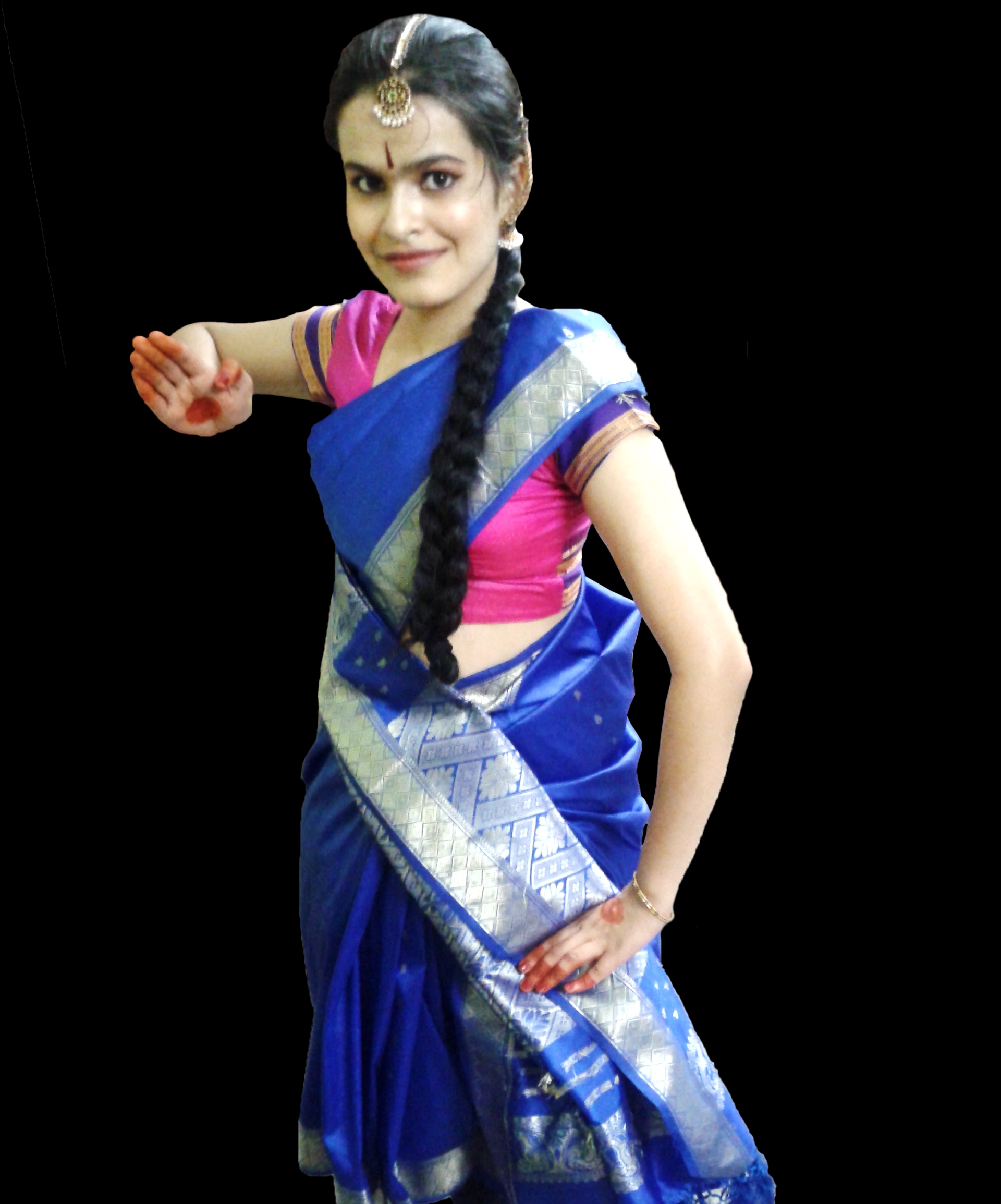
Today we learn the other side of the story from trained Baharatanatyam dancer and cognitive scientist Pranjali Kulkarni  — can science influence the arts? Pranjali, a research scholar at the Centre for Cognitive Science, Indian Institute of Technology Gandhinagar, uses technology to take her performing art lessons to another level – that of intelligent learning.

Pranjali Kulkarni

“Dance is like wine; it matures with every performance,” Alarmel Valli, the famous Indian classical dancer, once said. Even with great tutors, artists could take a lot of time and practice to become experts.

I have been learning the Indian classical dance form Bharatanatyam for 15 years now. I also taught it for almost 2 years, during which I realised that learning never ends.

Despite my best efforts to teach young students, my instructions were unable to convey to them what I had experienced while learning those very dance movements. Something was missing from my teaching. Why wasn’t I able to evoke the same experience in the learners?

This question was the basis of my quest to unravel the missing link.

As a student at the Indian Institute of Technology, Gandhinagar, I started looking at this challenge from a cognitive science perspective. Studying dance literature and experiential processing while dancing, I quickly learnt that dancers develop expertise through subconscious processes. These processes make performances by experts both mesmerising and very personal, something that can’t be easily transferred to another person – they can neither be shown nor taught.

But these subconscious processes can certainly be recorded through specific devices.

I wanted to unearth these subconscious techniques that an expert dancer puts to use in achieving finesse in dance movements. Technology came to my aid in integrating these two things — learning Bharatanatyam and tracking subconscious processes from bodily movements. I tried deconstructing these expert techniques in Bharatanatyam based on five bodily parameters – posture, balance, speed control, accuracy and synchronisation.

Technology helped me understand Bharatanatyam better

Bharatnatyam, like most other classical dance forms, is deeply rooted in religion, devotion and social practises. Intricate details of skilled Bharatanatyam movements have traditionally been passed on through family lineages. These hereditary traditions are preserved in ancient scripts, and in recent times, in audio-visual recordings.

A teacher, a video or a script could provide enough details to learn the basics of a dance form. But the subconscious skilled moves of expert dancers – the peculiar angles, postures, movement progressions or balance – don’t get conveyed in these forms of learning.

I used high precision cameras and algorithms to decode these micro movements through a technology called the motion capture system (Mocap). These unseen and unrecorded skilled moves have been defined as ‘dance primitives’, equivalent to notations in music, and considered the fundamental building blocks of a particular step. For instance, a fine movement such as a waist tremble can be recorded through a movement coordinate system on Mocap.

[Watch Pranjali use Mocap while teaching Bharatanatyam to students: https://youtu.be/ZUDB10b12DA]

To test my idea, I conducted Bharatanatyam workshops for students at the Japan Advanced Institute of Science and Technology in Ishikawa, Japan over two months. I taught them a few basic Bharatanatyam steps – Tatta Adavu and Natta Adavu – involving coordinated posture, hand and leg movements, in increasing order of difficulty.

I then used a virtual reality set up in Mocap that can read subtle movements and give feedback. I recorded both expert and novice dancers and used the virtual reality model of the expert dancer to give feedback to the novice dancers. The precision was unimaginable – I don’t think the feedback can be matched even by an expert human teacher. To my surprise I found that the novices quickly picked up some movements that I had taken many years to master.

To cite another example, the virtual reality model showed how experienced dancers use techniques of transition in steps at fast speeds. The balance between posture and movement maintained at peculiar angles is traditionally achieved through meticulous practice. But Mocap captured those angles at all speeds and helped learners correct their steps using real time feedback.

What’s more, novice dancers formulated some techniques on their own to learn better and faster. For example, they were using the torque of ankles to balance their body at fast speeds, a technique I had not taught them. Learners were innovating subconsciously and these innovations could be traced through Mocap. Such data can be very useful for self-reflection – to understanding a learner’s positives and negatives.

These two new insights from the Mocap data open doors for detailed research in various movement-based art forms.

I was extremely fascinated that something like Mocap could become a reflective learning tool. During my initial days as a Bharatanatyam student, I split dance videos into small clips to learn from them. But a technology like Mocap is a leap ahead in not just recording dance but also as a powerful teaching tool.

Experts and traditional tutors are not available everywhere. Technological experiments with art can now deconstruct expert techniques and help anyone master his or her passion for the performing arts.

According to Indian art philosopher Ananda Coomaraswamy, “The art remains in the artist and is the knowledge by which things are made.” I do agree that technology can never compete with the qualia of knowledge passed down through art traditions, learning and practice. But research such as Mocap can certainly aid learning and strengthen the appreciation and preservation of the art forms.

Suggested reading:

SciArt scribbles: Coupling creation and analysis with collages

SciArt scribbles: Music to tackle PhD blues

SciArt scribbles: Playing science out

Artists on science: scientists on art

SciArt scribbles: Music to tackle PhD blues

Many scientists embrace the artistic medium to infuse new ideas into their scientific works. With science-art collaborations, both artists and scientists challenge their ways of thinking as well as the process of artistic and scientific inquiry. Can art hold a mirror to science? Can it help frame and answer uncomfortable questions about science: its practice and its impact on society? Do artistic practices inform science? In short, does art aid evidence?

Nature India’s blog series ‘SciArt Scribbles’ will try to answer some of these questions through the works of some brilliant Indian scientists and artists working at this novel intersection that offers limitless possibilities. You can follow this online conversation with #SciArtscribbles .

Today Manasi Kulkarni- Khasnis, a biologist at the National Centre for Cell Science in Pune, India, underlines the importance of music, a passion that became an important tool to constructively shape her research career. Manasi, who investigates the structural underpinnings of molecular cross-talks in host-pathogen interactions, formed a musical band (called ‘Vadyankit’ or ‘ornamented with instruments’) with peers — all of whom ultimately became a life-long emotional support group to tackle career blues.

Manasi Kulkarni-Khasnis{credit}Akash Pawar{/credit}

When I joined a PhD programme at the Indian Institute of Science Education and Research (IISER) in Pune, I was triumphant. That was in August 2010, and it was another highlight in an already happy year: a few months earlier, I got engaged to my boyfriend of seven years. Everything felt like it was in place. I chose my favourite PhD project, had long discussions with my supervisor, plotted aims, objectives and experiments and started my journey towards a doctoral degree.

But as days and months of hard work in the lab went by, small failures in my experiments hijacked my mental health — something I think many others are familiar with. Despite my great year — we were married in May 2011 — I started to sink into depression.

I would get easily discouraged if something did not work. Unusual results started bothering me. Later, this became so pronounced that I started blaming myself for every tiny thing that went wrong. Did I prepare my buffers correctly? Did I forget to add primers to my polymerase chain reactions? I started forgetting my past achievements, and began to belittle myself. I wasn’t sleeping properly. I was losing weight. In a nutshell, I was depressed. I could see more negatives than positives. Nothing interested me. I would cry over small things and nothing could make me smile.

My husband noticed this change in my behaviour and wanted to help. One evening, he wrote some lyrics and handed them over, encouraging me to compose something. He said he’d booked a slot for us to go on stage in a couple of months and perform a song.

I’ve played the harmonium since I was seven, but over the course of my PhD I’d lost interest in music. I didn’t immediately accept his offer, but he persisted, and I eventually picked up my harmonium and composed something that worked with his lyrics. We had a song! It was the first time I had felt satisfied with an accomplishment for over a year. Almost immediately, I was feeling better.

I never imagined that a hobby could be powerful enough to breathe enthusiasm and enjoyment back into my life (and for many people, it might not be — if depression persists, please seek professional help). My harmonium was sitting idle, and the daily grind of work at the bench had taken over everything else. Before I could realize that I was missing something important, my mental health had begun to deteriorate.

The challenge of going on stage and performing my own compositions fuelled my day-to-day life. I woke up fresh with a new aim and enthusiasm. I started planning my work efficiently so that I could get home in time and devote time to music. Every composition I made came with a neurological boost. My experiments started working, or, more accurately, the failures weighed upon me less. I started to see each unexpected result as a new question to explore, rather than as a roadblock in my own work. Two months later, we went on stage in front of a full house. My PhD supervisor and other scientists from the institute came to support us, which was a huge boost to my confidence. We had a great night together.

Music became the secret to my happiness, and I shared this with my peers. We created a band (called ‘Vadyankit’; literally ‘ornamented with instruments’) and started playing together. We performed on stage 11 times in our entire PhD tenure.

We have now all graduated. I’m working as a scientist for the National Centre for Cell Science here in Pune, India; our keyboardist is a medical writer; our percussionist is at the Indian Institute of Science, Bengaluru; our guitarist is in South Africa for his postdoc. Music is still our true companion. We’re scattered post-PhD, but we’re all careful to support others struggling in the research environment, and to encourage colleagues to take up hobbies outside of work.

If you are also struggling with your emotional health, make sure that you spend a good amount of time doing the thing that you like the most. Be it music, painting, writing, reading, hiking or anything else. Remember what you enjoyed that you’re now missing out on. In my experience, a hobby that might at first seem like an indulgence helps to beat stress and to set the mind free.

[This article originally appeared in Nature Careers].

Suggested reading:

SciArt scribbles: Coupling creation and analysis with collages

SciArt scribbles: Technology to aid dance

SciArt scribbles: Playing science out

Artists on science: scientists on art

SciArt scribbles: Playing science out

Many scientists embrace the artistic medium to infuse new ideas into their scientific works. With science-art collaborations, both artists and scientists challenge their ways of thinking as well as the process of artistic and scientific inquiry. Can art hold a mirror to science? Can it help frame and answer uncomfortable questions about science: its practice and its impact on society? Do artistic practices inform science? In short, does art aid evidence?

Nature India’s blog series ‘SciArt Scribbles’ will try to answer some of these questions through the works of some brilliant Indian scientists and artists working at this novel intersection that offers limitless possibilities. You can follow this online conversation with #SciArtscribbles .

In the opening blog of the series, we feature neuroscientist-dramatist-playwright Prabahan Chakraborty, a PhD student at the National Centre for Biological Sciences, Bengaluru, who fondly refers to his twin love for science and theatre as ‘the two vices of my life’. In dividing his time between the two, Prabahan says he finds a symbiotic give and take that enriches each of his passions in more ways than one.

Prabahan Chakraborty

Everyone loves a good story. It could be about how brain cells store memories or a comedy about travelling musicians. Told well, stories have the wondrous ability to captivate an audience like nothing else can.

This is the invaluable lesson looking me in the face as I stand at the crossroads of two decades of theatre training and many years of graduate school. Right now, I am getting ready to submit my doctoral thesis and have just published an anthology of short plays – the story-teller in me embracing the scientist in a loving sort of way.

Nurturing the twain

Though I had been acting in plays since I was two and a half, my love for theatre blossomed with my first ‘big’ play at school when I was ten. Around the same time, I was presenting a field-based research project on medicinal properties of indigenous plants – first at a National Children’s Science Congress in 2000, at Indian Institute of Engineering Science and Technology, Shibpur, West Bengal and the very next year at the Indian Science Congress in New Delhi.

In the decade that followed, my summer vacations were filled with science camps, my weekends with theatre classes under the stalwart of modern Bengali theatre Ramaprasad Banik, and the last few pages of my notebooks with poems, stories and doodles.

My parents made sure I never missed a single tuition class (which I wanted to miss sometimes) or a single theatre rehearsal (which I never wanted to miss). Growing up, therefore, theatre and science coexisted peacefully in my life. Twenty years down the line, I feel incredibly lucky that none elbowed the other out.

The symbiosis

Connecting the dots on hindsight, my scientific curiosity around animal behaviour probably has its roots in how I saw characters behave in a play. A sudden crisis-inducing dialogue on stage seemed fascinating. A burst of song and dance that left a smile felt wonderful. Later, I learnt about the amygdala, and how it processes such emotional stimuli – how principles of Hebbian plasticity lead to long term changes that leave a lasting memory of fear. I learnt how amygdala was to be blamed for the anxiety I felt before every stage show and how the friendly hippocampus helped me remember precise cues for dialogues and choreography during a performance.

During the day, I study how stress affects neurobiological processes such as learning, memory and fear. By night, I am de-stressing and recharging myself with theatre. My scientific training, on the other hand, helps me structure each play with logic and reason. The canvas of a stage mirrors in its emptiness an unwritten Power Point slide. A stage looks ‘balanced’ with sets and actors, a slide with graphs and text.

As the twain merged, science instilled in me the belief that nothing is impossible. That helped me step out of my creative comfort zone and challenge myself. This spirit reflected amply in the plays I wrote about ‘nothing’, or a ludicrous black comedy about a man who suddenly finds a newspaper growing out of his nose, or telling one woman’s incredible life story using only two chairs, or even devising a musical on how we are rarely punctual. My scientific training was egging me to dare, to probe into the seemingly improbable ‘what if’.

Feeding back into science

I should accept, however, that I am not beyond the quirks of a usual scientist who tends to start paragraphs with ‘in conclusion’ and thinks of decisions in terms of ‘statistical significance’. Practicing theatre has given me an added feather in the cap – that of communicating science better to an uninitiated audience. Most recently, I attempted it in a play called ‘Triangles and Squares’, a short musical about habitat loss, man-animal conflict and animal cruelty through song and dance. When the audience saw a drunkard killing a puppy with a stone, they shivered. When they saw the animated movements of a lowly peddler caging a common sparrow, they laughed their guts out. But they got affected. When the show got over, they came to discuss all the above ‘ecological’ terms we never stated even once in the play.

Prabahan (in front) in one of his plays ‘Triangles and Squares’, a musical on habitat loss and man-animal conflicts.

At this time, if you ask me whether I can survive without either of my two vices, my answer would be no. Theatre is my therapy for scientific roadblocks, science my caffeine for the ‘little grey cells’.

If you ask me if it is really possible to manage both simultaneously, a question that I get asked very often, my answer would be yes, absolutely. Sure, three hours of intense rehearsal at the end of a whole day of experiments is tiring, but it gives you a creative high and a sense of exhilaration which is irreplaceable. The happiness in designing a novel experiment is as much as writing a new script. The joy of having my research published is as much as a standing ovation at the end of a show.

For me, it all boils down to telling captivating stories that I want everyone to remember. When the curtain falls, that is all that matters.

(Prabahan Chakraborty can be contacted at prabahan.ncbs@gmail.com )


Suggested reading:

SciArt scribbles: Coupling creation and analysis with collages

SciArt scribbles: Technology to aid dance

SciArt scribbles: Music to tackle PhD blues

Artists on science: scientists on art

Being rocket woman

Physicist Moumita Dutta from the Indian Space Research Organisation’s Space Applications Centre in Ahmedabad, Gujarat, was part of the team that put a probe into Mars orbit in 2014.  In an interview with Elizabeth Gibney, a senior reporter for Nature based in London, she talks about the lure of optics, the challenge of crafting super-light sensors, and the rise in Indian women entering space science.

Moumita Dutta and colleagues in her lab.

Tell me about your work with the Indian Space Research Organisation (ISRO).

The Polar Satellite Launch Vehicle of the Indian Space Research Organisation, which carried the Mars Orbiter Mission satellite Mangalyaan. The payload included instruments developed by Dutta and her team.{credit}ISRO{/credit}

In my childhood I dreamed about space, aliens, the Universe, the stars – particularly the aliens! But I didn’t think I would be involved in space science. I became interested in physics when I saw the magnificent colours coming out of a prism in an experiment at school.

I ended up doing a master’s in applied physics, specialising in optics. Then one morning in 2004 I read in the local newspaper that India was preparing for its first lunar mission, and I thought ‘What a phenomenal thing’. From that moment on I wanted to join the ISRO. A year and a half later, I did, ending up working on two sensors that would fly on the Chandrayaan-1 project [India’s first lunar mission, which launched in 2008 and found evidence of water before losing contact with Earth.]

My base is the Space Applications Centre in Ahmedabad, mainly working on optical sensors for studying Earth and for planetary missions. For India’s 2018 lunar mission, Chandrayaan-2, we will use advanced versions of the sensors flown in the last mission, carrying out a very detailed study of the lunar surface and mineralogical mapping. There will be an orbiter, a lander and a rover, with mounted instruments to carry out experiments on the surface.

Methane sensor for Mangalyaan.{credit}SPACE APPLICATION CENTRE, ISRO{/credit}

Mangalyaan launched just 18 months from its conception, costing a relatively low US$75 million.  What challenges did you face in building its sensors? 

All the sensors were designed in India: a colour camera, an infrared spectrometer generating a thermal map of the Martian surface and a methane sensor. We had 15 months or so to develop them. The main challenge was to make them very compact, lightweight and low-power, because the mission was to be launched with minimum fuel. We fought for every gram. The sensors were all first of a kind, and to develop them quickly we had to use off-the-shelf — rather than space-qualified — components, then test each under extreme conditions. The team of almost 500 engineers working  across the centres on the mission worked day and night.

I feel like people worked from their heart and no one cared about the clock. The mindset was that they were working for our country, and the mission had to be successful. When we received the first signal after the spacecraft was captured into Mars orbit, a wave of joy spread across the country. The project team members became the superstars of India, with people even holding their pictures on placards, like film stars. Eagerness about Indian space research has rocketed. Three years on, the orbiter still transmits data from all the sensors, which we are analysing today.

Colour camera for Mangalyaan. {credit}SPACE APPLICATION CENTRE, ISRO{/credit}

Is space science in India welcoming women?

In the past few years we have seen a significant increase in the number of women joining Indian space science: right now, they constitute 20% or 25% of ISRO. The organisation is always ready to welcome women. As a government body, we get a minimum of six months’ maternity leave, for example, and women are given equal responsibilities. I feel like it’s not about whether someone is a man or woman, it is all about how they can handle the challenges.

Now, whenever I give a talk and a small girl comes up to me and says, “I want to work for ISRO, I want to be an astronaut,” I feel wonderful. Women scientists of ISRO have also featured in the media, including Vogue India; and when our work is recognised, we represent the contributions of all the women involved.  That is the best part of it.

[This interview was edited for brevity and clarity. It first appeared in ‘A View from the Bridge‘, Nature’s books and arts blog.]

Speak up if you experience intolerance, racism in your lab

Senior academics must step up and take the lead in discussing intolerance, says Devang Mehta, a postdoctoral fellow in the Laboratory of Plant Genomics at the Department of Biological Sciences, University of Alberta in Edmonton, Canada.

Mehta, who moved to Europe from India as a graduate student, regrets not having talked about such concerns with supervisors during his PhD.

{credit}Pixabay{/credit}

Last month, anti-Asian graffiti was painted in residences on the campus of my PhD alma mater, the Swiss Federal Institute of Technology (ETH) Zurich, and Asian students’ work was vandalized with racist slogans. That same week brought allegations that a leading astrophysicist at the Max Planck Institute for Astrophysics in Garching, Germany, had used racist language towards trainees, among other bullying. (The astrophysicist has defended her behaviour, and says her comments were distorted and taken out of context; see news story.)

When blatantly racist incidents occur in our universities, we academics usually prefer not to address them. We leave their handling to university administrators, who tend to deal only with the most serious cases, frequently long after they have happened. In my experience, scientists often do a poor job of recognizing and dealing with racism in our workplaces. In fact, several colleagues I spoke to while writing this article expressed scepticism that racial bias even exists in the often highly international scientific work environment. This blindness to the issue keeps us from addressing racism within the close-knit structures of academic labs.

{credit}devang mehta{/credit}

My own experiences pale in comparison to others’, but are still worth recounting. I came to Europe as a graduate student from India in 2012, just as terrorism and the refugee crisis were sparking a sharp increase in anti-immigrant rhetoric. However, working in incredibly diverse labs, I felt largely insulated.

This changed when a colleague asked me to tell a Muslim colleague off for having an untidy workbench because ‘they’ respond better to male authority. All I could do was stare, dumbstruck. In another instance, when asked about supporting diversity in a meeting with students, a European professor laughingly admitted to not hiring Asian researchers because he found ‘them’ difficult to work with. And I’ve heard many scientists casually dismiss all published papers from labs in certain countries as bad science, in the presence of students from those very countries.

I deeply regret that during my PhD I did not talk about these experiences with my supervisors. By not doing so, I denied them the opportunity to learn from and address my concerns in the manner in which I’m now confident they would have done. Why didn’t I work up the courage to report my concerns? I didn’t want to rock the boat. Like many scientists from ethnic-minority groups, I was an immigrant lacking the social and economic safety nets that citizens enjoy. It was so much easier to put my head down and race towards that PhD.

Although official policies such as institutional codes of conduct and instruments of redress for serious offences are essential, individual principal investigators (PIs) also need to model the sort of communication that is lacking today. If the reluctance of junior researchers like me to talk about racism is regrettable, the silence, and hence complicity, of senior faculty members is unconscionable. Scientists, as a community, must practise having tolerant conversations about intolerance, unconscious bias, unfair power structures and a friendlier workplace for everyone. And that just isn’t happening: both the targets of and witnesses to microaggressions worry that they are reading too much into certain actions. Relevant incidents rarely reach the attention of PIs.

The lead must come from the top — from PIs, deans, provosts. The first step could be something as simple as showing a willingness to hear about racism and intolerance from students and employees. I have asked around, and I have not heard of a single instance in which a lab head, of any race or ethnicity, male or female, held a lab meeting or sent a welcome e-mail explicitly recognizing that these are real problems they are willing to discuss. I write publicly about these topics, but I find it hard to even imagine raising racism or inequality with supervisors in face-to-face meetings unless they first signalled an openness to talk about them.

It’s not easy to call out colleagues over racist comments or intolerant behaviour, but we must. For inspiration, I sometimes consider the universal ethical code for scientists devised in 2007 by David King, then the UK government’s chief scientific adviser, which requires high standards of integrity for evidence and society (go.nature.com/2u7ydtd). And guidelines exist for essential conversations, for example those from the Massive Science Consortium, a group of more than 300 young scientists of which I’m a member. One tenet is “assume good intentions and forgive”. Talking about race can lead to people feeling persecuted, fairly or unfairly, and forgiveness is needed to move on from a confrontational or racist incident. (Assuming, of course, that the incident was minor, and apologies were offered.)

Another guideline is “step back and step up”. This asks privileged individuals to make sure they don’t dominate a discussion, and to listen to contributions from minorities and less powerful groups.

Perhaps the most important guideline is “speak and listen from personal experience”. In other words, do not instinctively question the validity of someone else’s experience; this happens so often with women and minorities. It is especially apparent when institutions reflexively defend the accused. It is up to tenured professors to protest and demand more introspection from their employers and employees.

Fundamentally, tackling racism and intolerance in science requires an acknowledgement from us all that it exists. I call on senior scientists to speak up and to invite others to do so.

[This piece was first published as a ‘World View’ article in Nature.]