TechBlog: Need an instrument? Build it!

The 6 April issue of Nature included a Toolbox feature on the growing use of DIY electronics in scientific research.

Daniel Cressey writes:

Arduinos and similar devices, such as the Raspberry Pi, pack considerable power on their diminutive boards, providing tremendous opportunities for automation, networking and data collection and analysis. For researchers, those features can translate into benefits both economic and practical. Users can shoehorn the systems into tiny spaces, deploy them without monitors or keyboards, buy them in bulk, and pack them into autonomous devices that need to be taken to (and transmit data from) remote field locations. All it takes is a little ingenuity.

A recent article on the bioRxiv preprint server provides a case in point.

Continue reading

TechBlog: My digital toolbox: Lorena Barba

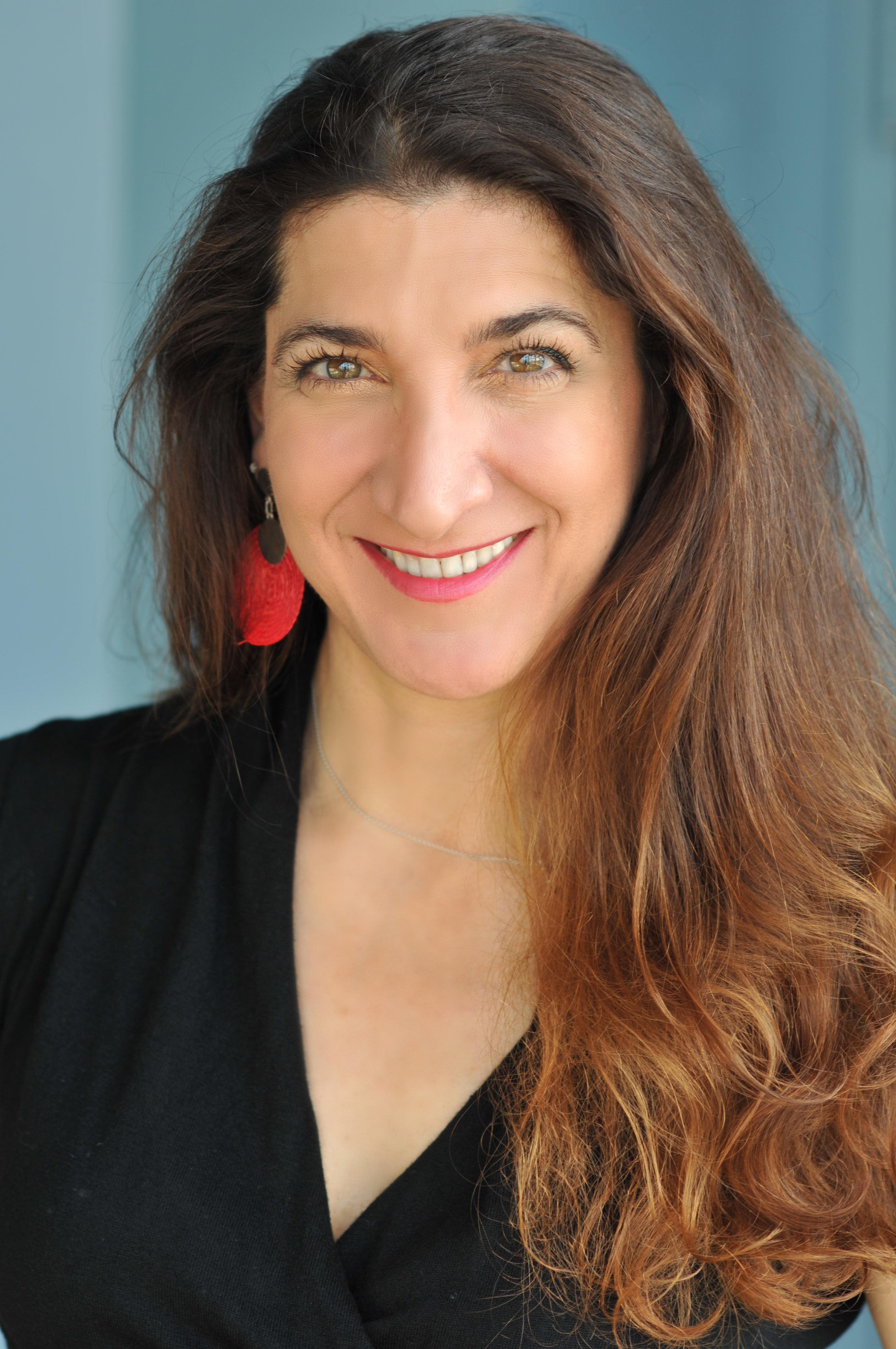
Lorena Barba; © Eleanor Kaufman 2013.

Lorena Barba, a mechanical and aerospace engineer at George Washington University in Washington, DC, has long championed research reproducibility. In January, she traveled to Chile to run a weeklong course on reproducible research computing; the month before, she was awarded a 2016 Leamer-Rosenthal Prize, which celebrates those “working to forward the values of openness and transparency in research.” Here, she talks about flying snakes, “repro-packs,” and copyright.

Continue reading

TechBlog: JOSS gives computational scientists their academic due

JOSS_banner

{credit}JOSS{/credit}

The currency of science is–duh!–publication. You do the work, you write a paper. Acceptance advances a researcher’s career in every way that counts: tenure, promotion, reputation, and funding. Continue reading

TechBlog: Santiago Perez De Rosso on Git, reimagined

Santiago Perez De Rosso, a PhD student in the Software Design Group at MIT’s Computer Science and Artificial Intelligence Laboratory, talks about Gitless—a kinder, gentler form of version control software.

Screen Shot 2017-03-24 at 1.11.30 PM

{credit}Santiago Perez De Rosso // https://dspace.mit.edu/handle/1721.1/106271{/credit}

Continue reading

Genome editing meets version control

BioStudio screenshot

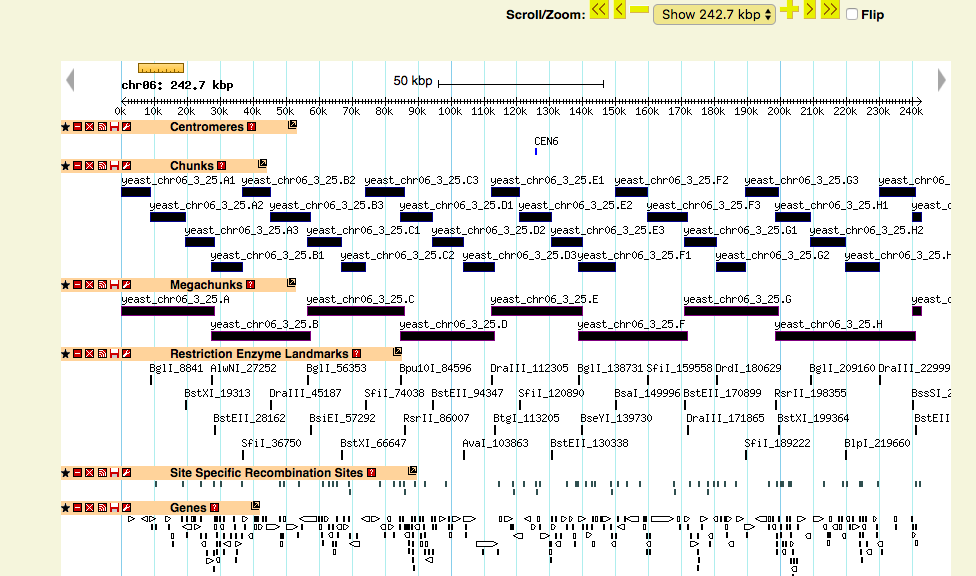
Consider for a moment the logistics of rewriting a genome from scratch. Starting from a reference genome sequence, you nip and tuck, recode and reorganize. Changes to any one element changes the genetic coordinates of every element downstream, meaning the process requires consider genetic bookkeeping.

Joel Bader, Jef Boeke, and an international team of colleagues faced precisely that problem as they rebuilt five chromosomes from the yeast, Saccharomyces cerevisiae – an effort Amy Maxmen covered yesterday in Nature News. Continue reading

Painting with yeast

Science magazine

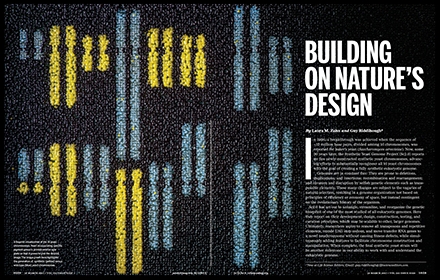
Today, an international research team led by Jef Boeke of New York University Langone Medical Center and Joel Bader at Johns Hopkins University in Baltimore, Maryland, reported in Science a remarkable feat – the complete de novo synthesis and redesign of five yeast chromosomes, a first step towards a completely synthetic model eukaryote. Over at Nature News, Amy Maxmen has done an admirable job covering that achievement, part of a project called Sc2.0. What I’d like to talk about is one of the artistic flourishes used to illustrate it. Continue reading

Escape gene name-mangling with ‘Escape Excel’

It’s been nearly a decade since Eric Welsh first noticed some weirdness with Microsoft Excel. A senior staff scientist in the Cancer Informatics Core at the H. Lee Moffitt Cancer Center and Research Institute in Tampa, Florida, Welsh was using Microsoft’s venerable spreadsheet application to view mouse and human gene expression data, the better to sort and understand the numbers. But a quick glance revealed the import hadn’t gone exactly as planned. “Excel would screw them up every time,” he says.

How so? When data are imported into Excel, the program works hard to figure out what kind of value each cell holds. Most of the time, Excel is smart enough to do that correctly, and values like ‘BRCA1’ and ‘12345’ are converted into text and integers, as expected. But “Excel is a little too smart for its own good,” Welsh says. If a cell reads “SEPT7,” the program assumes the author meant to write a date, and converts it automatically. It also sometimes translates what appear be numbers in scientific notation – say, ‘2310009E13’ – into actual scientific notation (‘2.31E+13’). The problem is, those two terms are neither dates nor numbers – they are proper names, scientifically speaking: gene names, sample identifiers or accession numbers. And by autoconverting them, those names are lost, or at least, obscured.

https://bmcbioinformatics.biomedcentral.com/articles/10.1186/1471-2105-5-80

Continue reading

Science meets Netflix with data streaming

XCMS_logo_online

{credit}Gary Siuzdak{/credit}

In today’s web-connected world, we’ve come to expect instant gratification. When you select a video on Netflix, you don’t wait for the file to finish downloading. Thanks to ever-increasing bandwidth, video can stream to your computer, playing as it arrives. Thus was the concept of binge-watching born, and many a fan of “Stranger Things” went to bed exhausted, but mostly satisfied. (#justiceforbarb). As it turns out, data streaming is being used in the life sciences, too. Nature technology editor Jeffrey Perkel finds out more.

Continue reading