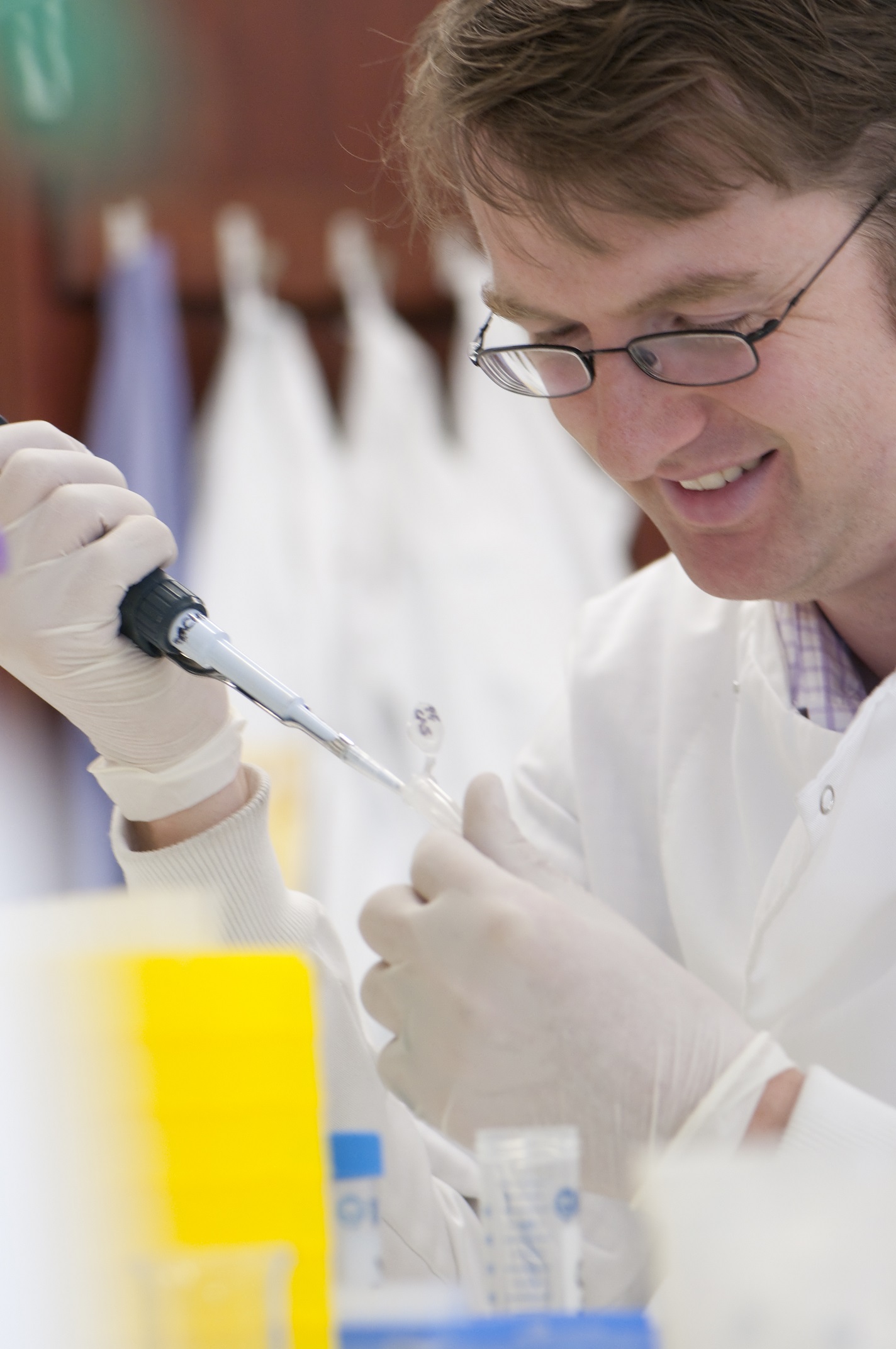
Careers in academia: How to manage work-life balance with families

If having a family is something you are considering, then chose an employer that will accommodate your needs.

Frances Aschroft, physiology professor at the University of Oxford, James Hadfield, manager of the genomics core facility at the University of Cambridge, Cancer Research UK Cambridge Institute and Lisa Fox, senior trials manager at the Institute of Cancer Research (who has recently returned to work after having children), tackle the question of how to manage work-life balance whilst having families.

Top tips:

  1. Pick the right employer.
  2. Manage your time wisely.
  3. Financial support.
  4. Plan ahead when considering your career.

Further reading:

Women in science: A returner’s perspective

Careers in academia: The different options

Careers in academia: How to get a PhD position

Careers in academia: How to avoid getting pigeon-holed


Careers in academia: How to avoid getting pigeon-holed

Developing experimental techniques that can be applied to multiple projects will help broaden your scientific experiences.

At the 2015 London Naturejobs Career Expo, Frances Aschroft, physiology professor at the University of Oxford, and James Hadfield, manager of the genomics core facility at the University of Cambridge, Cancer Research UK Cambridge Institute, gave advice on how to develop skills that will avoid you getting pigeon-holed into one field of research.

Top tips:

  1. Follow your passions and interests. If you succeed, it won’t be a problem. Determination, application and patience will help.
  2. Learn experimental techniques that can be applied in different situations.
  3. If you want to set up a lab, long term, you need to be able to adapt.
  4. Find the question you want to answer, then find the technology to help you do so.
  5. Don’t spend all your time working on one research question. Find time to stay up to date with research on the fringes of your field.

Further reading:

Careers in academia: The different options

Careers in academia: How to get a PhD position

Careers in academia: How to get a PhD position

Regular, targeted applications and demonstrating how you can benefit a lab will go a long way to securing a PhD position.

Frances Aschroft, physiology professor at the University of Oxford, and James Hadfield, manager of the genomics core facility at the University of Cambridge, Cancer Research UK Cambridge Institute, tackle the question of how to get selected onto a PhD programme, as part of the 2015 London Naturejobs Career Expo panel on careers in academia.

Top tips:

  1. Look for advertised, four-year, PhD programmes offered by departments
  2. Look for PhD positions that aren’t part of larger programmes. Some principle investigators won’t have access to an official PhD programme, but will have funding for individual students.
  3. Write to the lab leaders whose work you’re really interested in. They might not be advertising a position, but they might have some funding available for enthusiastic students.
  4. Whilst looking, write to people who working on a subject you’re interested in, and ask if you can work for them on a short-term (six months – one year) basis. Labs might not have funding for a whole PhD, but they might for a little bit. This would allow you to build up work experience, and develop skills in a field that you want to be in during the long term, and who knows what other doors it might open in the future.
  5. Justify to your potential supervisor why you think you would be a good hire, whether for a full PhD or just for a short-term project. Even if you are volunteering, you are a cost to the supervisor in terms of time and effort they put in. If you can demonstrate what you can bring to the table that would benefit them, you’re in a much better position to get hired.

Further reading:

Careers in academia: The different options

Finding job satisfaction as a venture capitalist

After a brief stint as a general surgeon, and a PhD in translational cancer research from the MRC Cancer Cell Unit, University of Cambridge, UK, Bali Muralidhar changed career direction to venture capital investment.

Read more about Bali’s career transition here.

Bali-Muralidhar-naturejobs-blog

{credit}Image credit: MVM Life Science Partners LLP{/credit}

What happened after you graduated from your PhD in 2008?

Throughout my academic and medical training I had seen a few start-ups come and go, and thought that investing in them could be something I might find interesting.

So after I completed my PhD in 2008, I moved to Bain & Company, a global consulting firm, where I spent time working with healthcare companies. It gave me a wider view of business and essentially replaced an MBA. This proved to be a great introduction for venture capital investment careers.

What skills did you acquire in academia that have been useful during your career in venture capital?

It’s helpful to understand where and how the pitfalls lie in science and how to read a paper. My understanding of the scientific method and ability to analyse different data sets have also been extremely useful.

For example, I’ve been looking at a potential drug that needs to go through a clinical trial before it is approved. Part of my diligence process is to comb through all the patient data, scientific literature, clinical papers, pre-clinical papers etcetera, to work out whether the thesis to the drug makes sense. I then need to work out if the clinical trial design is sound.

What was one of the biggest challenges you faced when switching from academia to venture capital?

As a scientist, you need to do all experiments and collect all the data before making a conclusion. In venture capital, this isn’t always possible. Sometimes you cannot get the data or collecting it is going to take too long, so you need to make the best decision you can with the information that you have. This mindset isn’t easy, but it comes with time and experience.

What do you enjoy most about your work?

I find I’m in a privileged position, seeing cutting edge science and potentially patient-changing companies that you might not see if you were doing niche research in academia, where, often, you’re stuck thinking about one field.

What advice do you have for any scientists looking to work in venture capital?

I wholeheartedly recommend that you get some experience with a consulting firm. These companies give you a wider view of what’s out there. You see lots of different science, work with lots of different people and you get an insight into the commercial world.

The training and professionalism that you get is a really great addition to a PhD. In a PhD you’re used to working in a lab and just with a supervisor; you don’t understand or have much experience of management. A consulting firm gives you the opportunity to develop these skills, which are essential for working in venture capital.

Interview by Julie Gould

Entrepreneurship: You’ve got the edge to found

Young scientists have substantial advantages over others when it comes to founding a start-up.

Guest contributor Leonie Mueck

Ideas-naturejobs-blog

{credit}Topp_Yimgrimm/ThinkStock{/credit}

Eoin Hyde has been running from meeting to meeting. His start-up, Innersight, is in a critical phase and he has to convince investors to give him and his co-founder enough funds to get it off the ground. Even with his hectic schedule, he’s full of energy.

“Everything is happening very fast,” he says. Until just a few months ago, Hyde had been working as a postdoc at King’s College London, following a PhD in computational biology at the University of Oxford. He enjoyed his research, but when a former colleague approached him with the request to co-found Innersight, a medical imaging company that constructs 3D images from patients’ scans to help doctors during minimally invasive surgery,  he didn’t think twice. “I had been playing with the idea to found a start-up for a long time,” he explains.

Hyde belongs to a minority. Not many science PhDs choose to found companies, at least not in the UK. According to the UK GRAD programme, only 2% of UK-based physical science and engineering PhD graduates are self-employed; it is unknown how many of those have the goal to found fast-growing technology start-ups with global reach. Alex Crompton, programme director at Entrepreneur First, finds these low numbers regretful because in his opinion, science PhD graduates are perfect founders. Continue reading

Careers in industry: Is an industrial PhD worth it?

A PhD with an industrial partner will give an indication of whether or not an industry-based research career is suitable for you.

If you want to work in industry, it isn’t necessary to do a PhD, says Steve Martin from GSK. If you have a passion for the science, then you could work your way up. However, a PhD can offer some training which is relevant to a specific role. Some researchers opt to take on a PhD in a part-time capacity whilst working in industry, but others, like Helen Pappa from Quintiles, start a PhD that is supported by industry. “I had the best of both worlds,” she said at the 2015 Naturejobs Career Expo in London. She spent half at Imperial College, London, and half in industry. The industrial contacts that she made through her PhD also helped carve out her future career path.

If you are contemplating a career in industry and you have the opportunity to do a PhD with an industry element in it, then “the answer is resoundingly yes,” said Martin. Understand what industrial research is like, and will give you an indication of whether or not it is suitable for you.

Further reading:

Careers in industry: The options.

Careers in industry: How to transition into a new field

Careers in industry: How to make a good elevator pitch

Careers in industry: How to make a good elevator pitch

Preparing a key message, and demonstrating enthusiasm and passion will certainly get you noticed, say speakers at the 2015 London Naturejobs Career Expo.

Top tips:

  1. Use your network to find out about different jobs that you think you would be interested in or good at.
  2. Think about the key points and skills that you have that will catch someone’s attention.
  3. Provide examples of how the skills have been demonstrated.
  4. Rehearse your pitch before interviews/conferences to non-scientists, family and friends and ask for feedback.
  5. Break the conversation if there is no interest. Say thank you very much, and move on.
  6. Tailor your pitch to who you speak to.
  7. Get across your passion for what it is that they are interested in.
  8. Make sure that you make it clear what you want from the conversation, whether it’s information or another interview.

Further reading:

Careers in industry: The options.

Careers in industry: How to transition into a new field

The faculty series: Balancing the books

It is important to get the balance between your different responsibilities right when starting your academic post, John Tregoning suggests some ninja tips to help you choose.

_ME08443

{credit} John Tregoning {/credit}

Guest contributor John Tregoning

So you have just read my first blog post, Nobody rides for free, and have come to terms with the idea that academia is more than just research. Now you face a dilemma – how best to add value and still be productive. One of the biggest challenges facing early stage academics is not over-diluting your effort and getting the balance of activities right. Whilst everyone is different and the balance can change over the trajectory of a career, with teaching/grants predominant early on and admin/impact coming later, the following approaches can help you to decide how best to spend your time.

Mentoring. You are not the first person to start a career and academics love to give advice. The simple act of talking through problems can often clarify the solutions. Find someone local, trustworthy (and ideally not your boss) who is willing to give up a bit of their time and sound them out. If you can’t find someone, many institutions now have mentoring schemes to help guide you through the maze. “At my university, new faculty are enrolled into a formal mentorship programme,” says Jamie Mann, assistant professor at the University of Western Ontario, Canada. “This non-supervisory process ensures new faculty members can access the critical support and assistance of more experienced colleagues, enabling new recruits to better achieve their professional goals.” Don’t limit yourself to one person; it may be that you get prudent political advice from one professor and great grantsmanship guidance from another. Continue reading

Scientific communities: How to avoid getting scooped on social media

Being prepared before broadcasting is a sure way to avoid being scooped, says Jon Tennant at the 2015 London Naturejobs Career Expo.

Many scientists are nervous about sharing their scientific work before publishing. The fear of being scooped is there when it comes to social media, but it will be difficult for someone to scoop your work based on a 140-character sentence.

Sharing your science on social media is all about being selective. You can make data and methods open when you’re ready – there is no rush to get things out before you are prepared.

Further reading:

Scientific communities: Build your own.

Scientific communities: How to follow the right people on Twitter

Scientific communities: From Twitter to paper

Scientific communities: Membership at learned societies

Scientific communities: How to get your blog noticed


Scientific communities: How to get your blog noticed

Increasing engagement and using social media can help get your blog posts to wider audiences, says Jon Tennant.

At the 2015 London Naturejobs Career Expo, Scientific communities panelist Jon Tennant, an avid science blogger, shared a few top tips on getting your blog noticed.

Top tips from Jon Tennant:

  1. Tag your posts so that they are easily searchable.
  2. Share your posts on social media (Google+, LinkedIn, Facebook, Twitter…).
  3. Ask for feedback by getting people to comment on your posts. This can stimulate conversations around the topics covered, which will increase engagement.
  4. Ask people to share your content in their own circles so that it reaches a broader audience.

Further reading:

Scientific communities: Build your own.

Scientific communities: How to follow the right people on Twitter

Scientific communities: From Twitter to paper

Scientific communities: Membership at learned societies