Let’s talk about #SciComm

Science communication is a young field with many voices and few guidelines. Let’s find a way to combine our voices in order to protect the integrity of research endeavors, says Judith Reichel.

There are plenty of reasons to become active in the field of science communication, and for many early career researchers (ECRs) still exploring research, it’s a great way to find their niche and voice their opinions.

Yet, like many of its participants, the field of science communication itself is fairly young, and is constantly evolving from its original aim — to translate scientific findings to the public, in order to raise awareness and funding for the grand scientific endeavor. When 3000 new academic papers are published every day, it‘s impossible for any single scientist to keep track of every development.

GettyImages-550382899-smaller

Science communication is practiced by a range of journalists, editors, freelance writers and free-time writers, yet the aim remains the same: to communicate important findings in quick soundbites that provide enough information for scientists but are still digestible to the general public. Continue reading

Getting the message out

How do you engage people with your science?

So you’re all over Twitter and Facebook and you even have a blog. Good on you – you’re your own public-relations and outreach specialist, getting the word out about your science. But what about the other kind of outreach – what’s still called science communication? Can you talk with a member of the press for an interview, or deliver your message to key thought leaders – such as government officials who decide on funding agencies’ annual budgets? Is it just a bit scarier than tweeting?

Continue reading

Skills for your next networking adventure

Networking may seem terrifying, but once you master the basics, it can be a real career boost

Naturejobs journalism competition winner Andy Tay

Networking during academic events such as conferences and seminars can be nerve-wrecking. Most of us can remember when we pretended to be engrossed in a programme booklet, wishing we could finally muster the courage to speak to the speaker with ground-breaking research standing ten feet away. You’re not alone, and there is a solution. Effective networking is a skill and anyone can benefit from more practice.

Do your homework

It’s a good habit to read the abstracts of presenters and download their papers to learn more about them before you join a conference. If you’re interested in their work, look up their profiles on platforms like Google Scholar, PudMed and ResearchGate. These platforms automatically update publications and can be better sources of information than many lab webpages, which are less regularly updated. By being diligent, and finding out more about the presenters and their research, you’ll be more confident and ready to ask critical, intelligent questions.

{credit}iStockphoto/Thinkstock{/credit}

Continue reading

Social media: Handling casual sexism

Don’t let unwelcome comments muffle your voice, instead speak out about your experiences, says Virginia Schutte.

Guest contributor Virginia Schutte 

virginia-schutte-naturejobs-blog

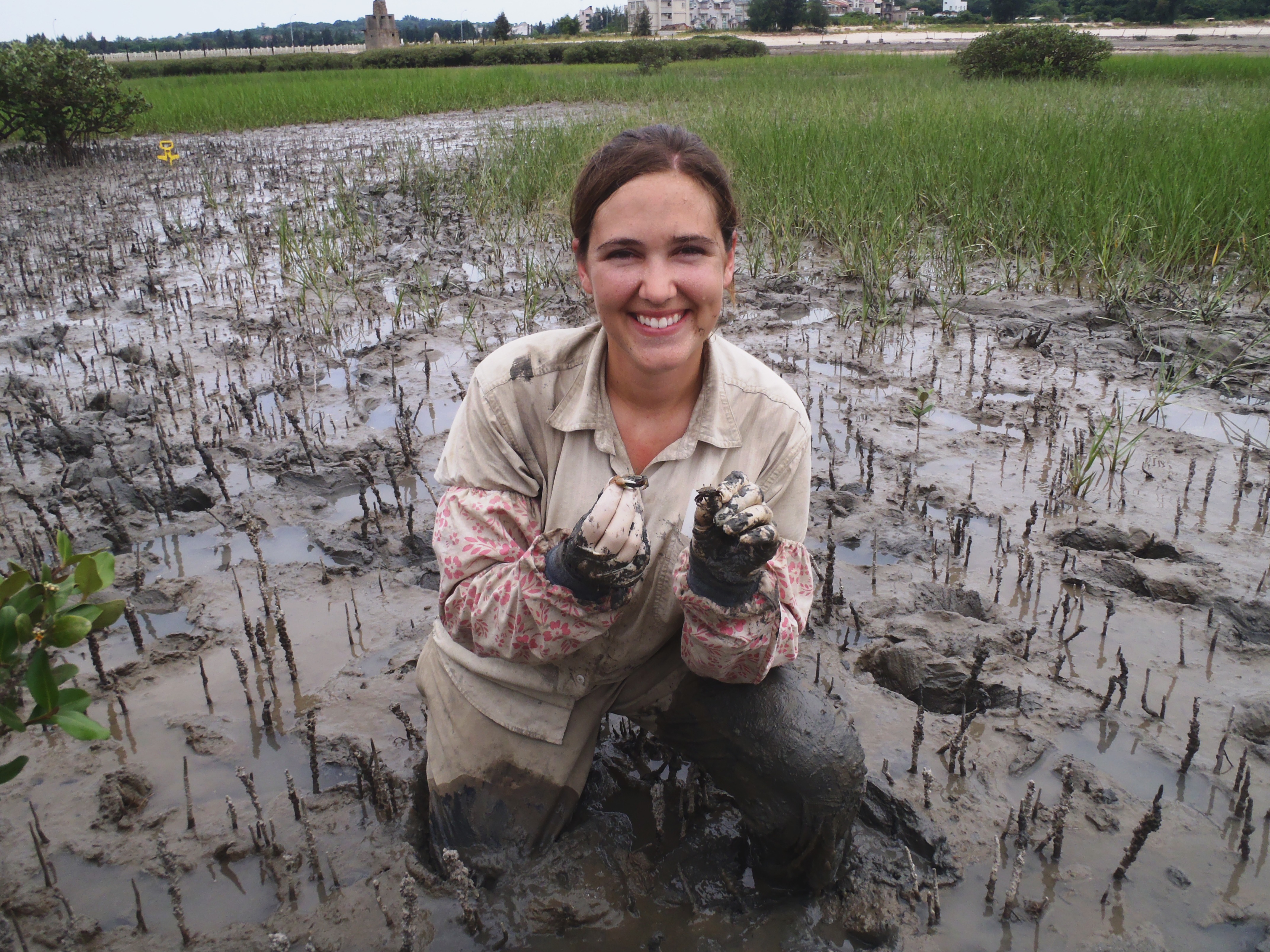
Virginia Schutte studying fiddler crabs in Taiwan’s salt marshes {credit}Virginia Schutte{/credit}

As scientists increasingly use social media for outreach, they open themselves to interactions with anyone who has access to the internet. This contact isn’t always going to be positive and may get personal. I recently had to decide what to do after someone said some unsavory things on my science website.

What I experienced is “casual” or “everyday” sexism. Sometimes sexism is so blatant or is acted upon in such a way that it has big repercussions (#distractinglysexy, I’m looking at you). This wasn’t that – this was a thought just about me that wasn’t particularly vulgar. But this kind of passing thought is common, even for scientists. For example, the Field Museum’s Emily Graslie devotes an episode of The Brain Scoop to discussing the frustrating comments she deals with “on a daily basis”. Some people are shocked less by casual sexism itself and more by the fact that people may not even react to it because it is so pervasive.

This person made it clear why he was visiting my website: it had nothing to do with my science and everything to do with my appearance. But this comment revealed his focus without damaging mine, so it didn’t rile me like his next assertion did: “[It’s] good to feel sexy, but it’s bad to mask it behind other means”. He implied that the only reason I have a science website at all is to give myself a place on the internet to post sexy pictures of myself. As if my site’s real purpose is so ludicrous as to be unbelievable.

I’m a marine ecologist. I’ve worked with everything from whales to fiddler crabs, but I’m pursuing a career in science communication. I want to connect people with science. Engaging non-scientists with the right information is the key to helping them make informed decisions that limit environmental impacts, therefore increasing quality of life.

I regularly post about my research and science in general on my professional Facebook page, “Virginia talks science with you”. The page is an outlet for my passion for science education and is also a way for me to gain experience communicating science. His comments popped up on my Facebook page after a post about Discovery’s Shark Week, so I can only assume he was reacting to photos of me around the site wearing a wetsuit. I’ll skip discussing most of my initial emotional reactions and focus on those that have risen to the fore now that more time has passed. Continue reading

PhD students: how to improve your communication skills – and why you should

Many employers think that PhD students often lack ‘soft’ skills such as being able to communicate well, according to a new report from the UK Department for Business Innovation and Skills (see ‘Survey shows science graduates neglect career planning’ for other findings). One of the report’s authors, Robin Mellors-Bourne from the Careers Research & Advisory Centre, says a lot of employers are sceptical that PhD candidates will fit in. “They’re deemed almost to be too specialised,” he says. Christine McCary, the employment concerns chair of the US National Association of Graduate-Professional Students (NAGPS) and a full-time PhD student at Northwestern University in Chicago, Illinois, says the situation is similar in the United States. So what can you do to improve your soft-skill set?

Science careers consultant Sara Shinton, of UK-based Shinton Consulting, says PhD students should always be proactive about developing their soft skills because of the high number of people being awarded postgraduate qualifications. “It’s like it used to be with [an undergraduate] degree,” she says. “A PhD on its own isn’t enough. You are going to be competing against people with the same baseline.”

Stand out from the crowd

Shinton’s advice is to look for unusual activities that will make your communication skills stand out from the crowd, such as being a representative on a committee for a professional body. “That’s not something everybody can do,” she says. It’s also something that will get an employer’s attention – in a recent survey of graduate employers, researchers from Oklahoma State University found having a leadership position in an academic organisation comes second only to the personal interview in importance for showcasing your communication skills.

Shinton says you should join the society or association first, and then get involved at a local level to raise your profile. Just being a young scientist can also help. “The voice of the young researcher at the front line is one that most professional bodies are very keen to hear from,” she says.

McCary says another way to stand out is to take a leadership role in your local community, for example by starting a science club for younger students. If you succeed, she says, “that would be direct evidence of your ability to communicate with people”.

Show initiative

Another major plus is showing initiative by making something happen that wouldn’t have otherwise, such as arranging your own scientific roadshow or conference, or setting up an informal journal within your university.

Remember to cover the basics

That’s not to say you can forget about the more traditional ways of developing communication skills, such as getting involved in outreach – Shinton says companies now expect to see this as standard on a candidate’s CV or résumé. “It’s worth doing on every sort of imaginable level,” she says, “but it isn’t something that an employer would highlight.”

And the basics include getting to grips with social media websites such as LinkedIn, Twitter and Facebook. “These days every single scientist should have [a LinkedIn profile], even while they’re a student,” says McCary.

Get outside the box

Both Mellors-Bourne and McCary advocate developing your skills outside of academia. “Spending some time with different people or in a different environment is very valuable,” says Mellors-Bourne. “Even academic employers are looking for well-rounded people to work for them,” adds McCary. Shinton, however, cautions against this approach if you intend to stay in research: “It very much depends what your career trajectory is. If you intend to be a scientist, showing that you are having an impact in lots of different ways as a scientist possibly has more value.”

All three agree that studying overseas can be a boon for your communication skills. “The whole experience of overseas study strengthens you as an individual,” says Shinton. “It challenges you and it helps you to grow.” Mellors-Bourne spent four months in the United States as part of his PhD, which he found to be a life-changing experience: “I restarted my research afterwards with a completely different view of the world.”

Have your say

Do you have any other tips to add? Have you found a particular approach or method to be more effective than others? Share your thoughts by leaving a comment.


Will the iPhone revolutionize research?

One of the first scientists to use an iPhone application as a research tool thinks ‘apps’ could revolutionize psychological and social research.

Kathy Rastle, a cognitive psychologist at Royal Holloway University of London, is part of an international team that has adapted a classic behavioural psychology experiment so it can be downloaded as an app for the iPhone or iPad.

Apps offer access to a much wider audience than the typical pool of university undergraduates, and preliminary results suggest the data is as reliable as that from similar experiments under controlled laboratory conditions. Rastle adds that downloading an app is a much more attractive prospect for users than asking them to visit a website. “There’s something quite sexy about doing it on an iPhone,” she told Naturejobs.

The app, ‘Science XL: Test your word power’, presents users with a series of real and made-up words and tests how quickly and accurately the user can spot fake words. It was launched at the beginning of February and within the first few days had been downloaded and completed by around 500 people, thanks in part to Royal Holloway students promoting it on Facebook.

Rastle expects the number of people participating to increase further now that the app has started to attract greater attention, and says the method could be applied to a wide range of research. “Using the iPhone or iPad to conduct scientific research is a revolutionary new concept,” she says. “The possibilities are endless.”

The app is free to download from the iTunes app store – search for “Science XL”.

What do you think about using an app as a research tool? Do you have any suggestions for experiments that would work well as an app? Share your views in the comment box.