TechBlog: Mike Goodstadt: A circuitous route to bioinformatics

Mike Goodstadt (2)

{credit}CNAG-CRG{/credit}

Most coders come to bioinformatics by one of two routes. They’re either biologists skilled in programming, or programmers with an interest in biology. Mike Goodstadt, the programmer behind the genome-visualization tool TADkit, took a different approach.

In the early-to-mid 1990s, Goodstadt was a student at the University of Bath in the UK. His course of study: Architecture. Continue reading →
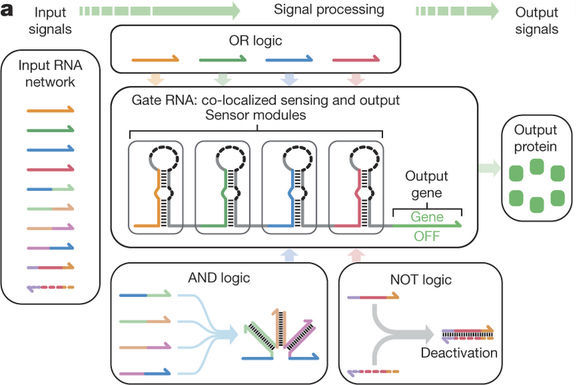
TechBlog: Building synthetic circuits from RNA

nature23271-f1

{credit}Nature 548, 117–121 (03 August 2017) {/credit}

As my recent Technology Feature made clear, the technology to synthesize large genomes is advancing at a remarkable pace. So too are technologies for wiring genetic circuits to endow those genomes with novel properties. In the 3 August issue of Nature, researchers at Arizona State University in Tempe describe a new technology to do just that.

Synthetic biologist Alexander Green of the Biodesign Institute at ASU, and colleagues, describe simple ‘ribocomputing devices‘ that can function as logical AND, OR, and NOT gates — circuit building blocks that control the translation of a reporter gene based on the presence one or more small input RNAs. As those inputs can reflect exposure to different environmental agents or stimuli, the system could serve as a kind of biological sensor.

Continue reading →

TechBlog: Jupyter Joins the Galaxy

journal.pcbi.1005425.g001

{credit}PLoS Comput Biol 13(5):e1005425{/credit}

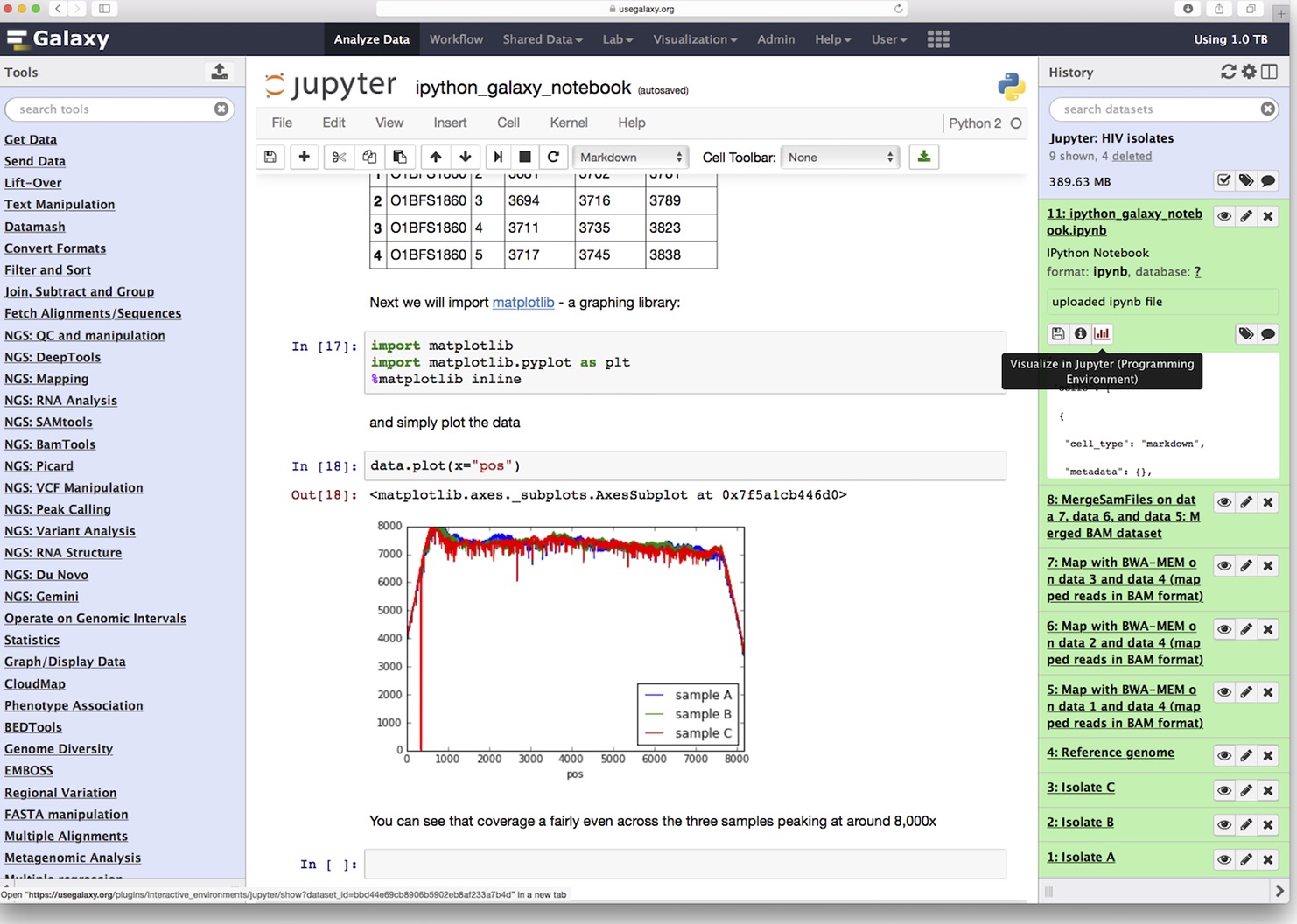
There’s a galaxy of tools in the Galaxy bioinformatics environment — 4,807 at last count. With them, researchers can do just about anything, computationally speaking. One thing they couldn’t do was work with their data programmatically. Now, thanks to a recent software update, that gap has been filled.

In a paper published on 25 May in PLoS Computational Biology, the Galaxy team describes a plug-in that provides access to both Jupyter (neé IPython notebook) and RStudio.

Continue reading →

TechBlog: How to build long DNA

547477a-i1

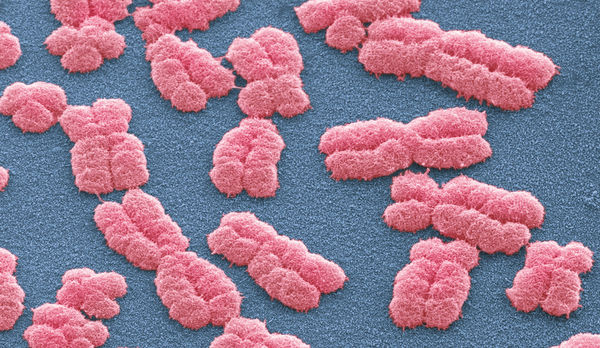
My most recent Technology Feature, on the technology of genome synthesis, describes advances in the field of large-scale genome hacking. Researchers are rewriting the genomes of organisms from E. coli to yeast, with millions of bases written from scratch. Now, through projects like Genome Project-write, they are turning their attention to even more complex organisms, with concomitantly larger genomes.

How, though, does one actually write a genome? As I note in the article, researchers don’t do that in one step. The molecules are assembled hierarchically, from synthetic oligonucleotides to ever larger pieces, first in a test tube and ultimately in living cells.

That said, it is possible to purchase “gene-sized” pieces of synthetic DNA. But, since DNA today is synthesized mostly using the same error-prone phosphoramidite chemistry researchers have used for decades, the question is: how are those molecules made?

Continue reading →

TechBlog: The sound of DNA

DNA sonify pic UPDATE

{credit}Mark Temple{/credit}

With an alphabet comprising just four letters, DNA sequence isn’t much to look at. So, when sequence analysis tools want to highlight key elements, they typically do so using colour, font, or by overlaying other types of information. In the not-too-distant future, there may be another option: Audio.

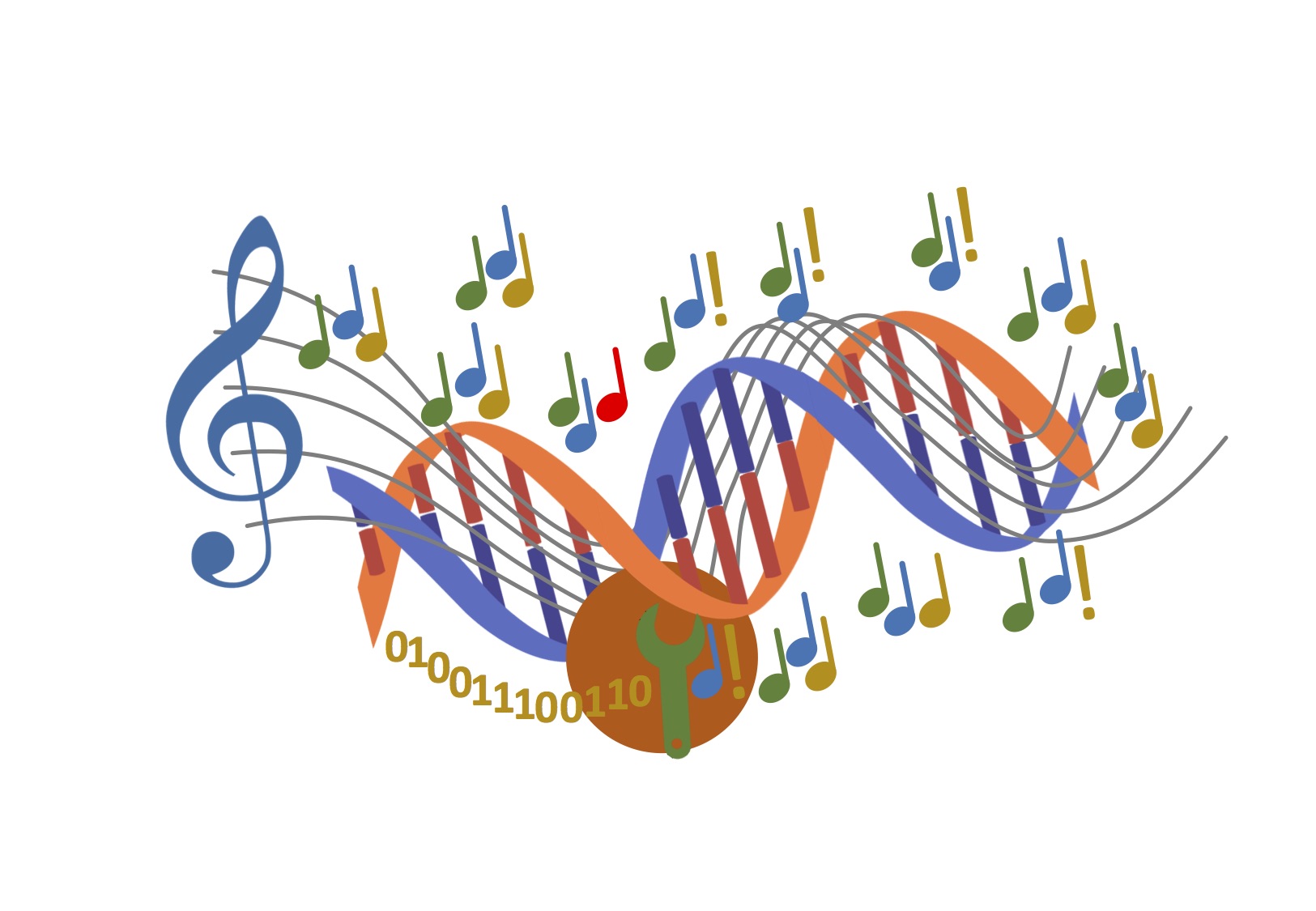
In a paper published this past April in BMC Bioinformatics, molecular biologist and part-time drummer Mark Temple of Western Sydney University, Australia, describes “an auditory display tool” for DNA: sequence in, audio out.

Available online at dnasonification.org, the tool does precisely what it sounds like: Given a sequence of DNA, it will convert the As, Cs, Gs, and Ts into notes played by a virtual piano, guitar, and organ. An ancillary browser extension, called Jazz-Plugin, is required to play the resulting MIDI files, though Temple has made a number of example MP3 files available on his web site and on YouTube.

After uploading a sequence, the user can select precisely how the musical transcription is accomplished. The simplest mode maps each base to a single note, providing a four-tone auditory landscape. Another maps dinucleotides to notes, increasing the complexity to 16 total sounds.

Most informative, says Temple, is the trinucleotide mode. Here, the software maps each nucleotide triplet to one of 20 notes, and outputs the audio in each of three reading frames at once, just as the genetic code maps 64 codons to 20 amino acids. The result is a series of three-note arpeggios – CGF-ADD-CFF-DFG-AFC-GCD-FCD-FCD, for instance. Optional parameters allow the user to flag start and stop codons, or to cause audio in each reading frame to turn on and off as start and stop codons arise. Continue reading →

TechBlog: My digital toolbox: Julia Stewart Lowndes

Julia Stewart Lowndes, a marine data scientist at the National Center for Ecological Analysis and Synthesis (NCEAS) at the University of California at Santa Barbara, published a paper this week laying out the challenges her team faces as they try to share and reuse data on the world’s oceans. Here, some key lessons.

{credit}Elliot Lowndes{/credit}

Continue reading →

TechBlog: Smartphone science, no programming required

MIT App Designer 2

MIT App Designer 2

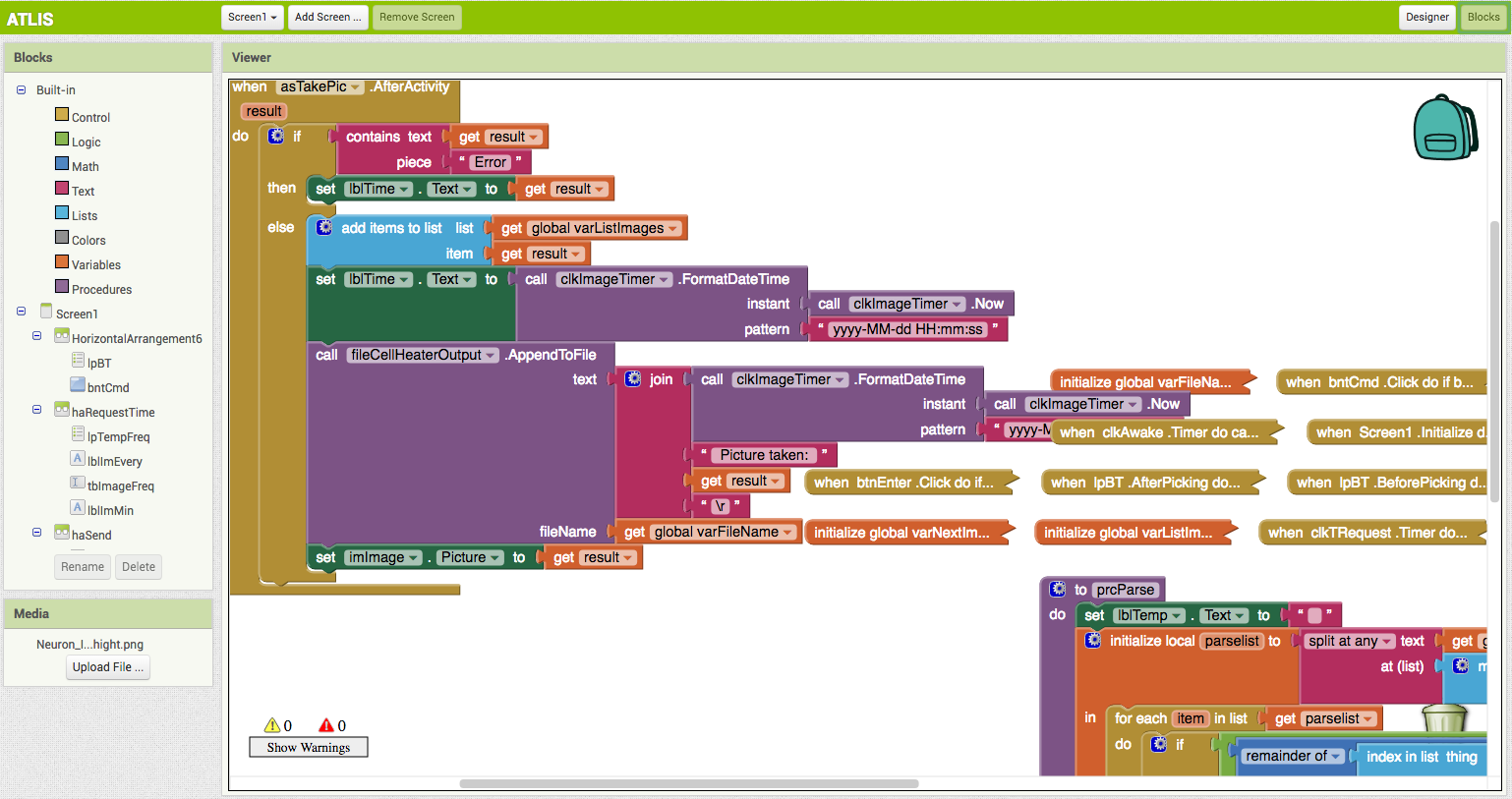
In the 4 May Nature technology feature, I explore the growing use of smartphones to drive scientific research. Today’s phones are so full-featured, they’re often ready for use out-of-the-box. Sometimes, though, a custom app is required, and that can be a sticking point, as programming a mobile app isn’t easy.

Continue reading →

TechBlog: Need an instrument? Build it!

The 6 April issue of Nature included a Toolbox feature on the growing use of DIY electronics in scientific research.

Daniel Cressey writes:

Arduinos and similar devices, such as the Raspberry Pi, pack considerable power on their diminutive boards, providing tremendous opportunities for automation, networking and data collection and analysis. For researchers, those features can translate into benefits both economic and practical. Users can shoehorn the systems into tiny spaces, deploy them without monitors or keyboards, buy them in bulk, and pack them into autonomous devices that need to be taken to (and transmit data from) remote field locations. All it takes is a little ingenuity.

A recent article on the bioRxiv preprint server provides a case in point.

Continue reading →

TechBlog: My digital toolbox: Lorena Barba

Lorena Barba; © Eleanor Kaufman 2013.

Lorena Barba, a mechanical and aerospace engineer at George Washington University in Washington, DC, has long championed research reproducibility. In January, she traveled to Chile to run a weeklong course on reproducible research computing; the month before, she was awarded a 2016 Leamer-Rosenthal Prize, which celebrates those “working to forward the values of openness and transparency in research.” Here, she talks about flying snakes, “repro-packs,” and copyright.

Continue reading →