Science communication: A solution to the upcoming Brexit funding gap?

Effective science communication could be key to making science part of the identity of the UK, says Naturejobs journalism competition winner Helen Robertson.

Post-Brexit furor is hard to avoid in the UK media at the moment. Endless speculation surrounds what looks to be a socioeconomic experiment on a national scale, and it goes without saying that the implications will be far-reaching across all UK industries.

piggybank

Leaving the EU has been projected to cost British science one billion rapidly-falling pounds a year

Continue reading

Mobilise your creativity

How do you break into the publishing world?..

…That is, media and publishing, not publishing your manuscript. It isn’t the easiest path ever, but there is a breadth of opportunities and creativity, as celebrated this week by the UK Department of Culture, Media & Sport and the Creative Industry Council. And ‘break’ is not the key word – you don’t need a break. You just need to get creative – and get started.

newspaper-pile-naturejobs-blog-2

{credit}Getty Images/Mateusz Zagorski{/credit}

Continue reading

Science communication: How to deal with the media

Robert Dawson gives scientists a PR 101 at the 2015 London Naturejobs Career Expo.

Top tips:

  1. Understand what your audience wants from you.
  2. Figure out the three key messages.
  3. Practice and volcalize your pitch!

Further reading:

Science communication: Whose responsibility is it?

Science communication: Sculpting your role

Science communication: How to deal with misrepresented science in the media

Science communication: Do you need a PhD?

Science communication: Making the transition

Science communication: How to get a job

What isn’t science communication?

Naturejobs-science-communication

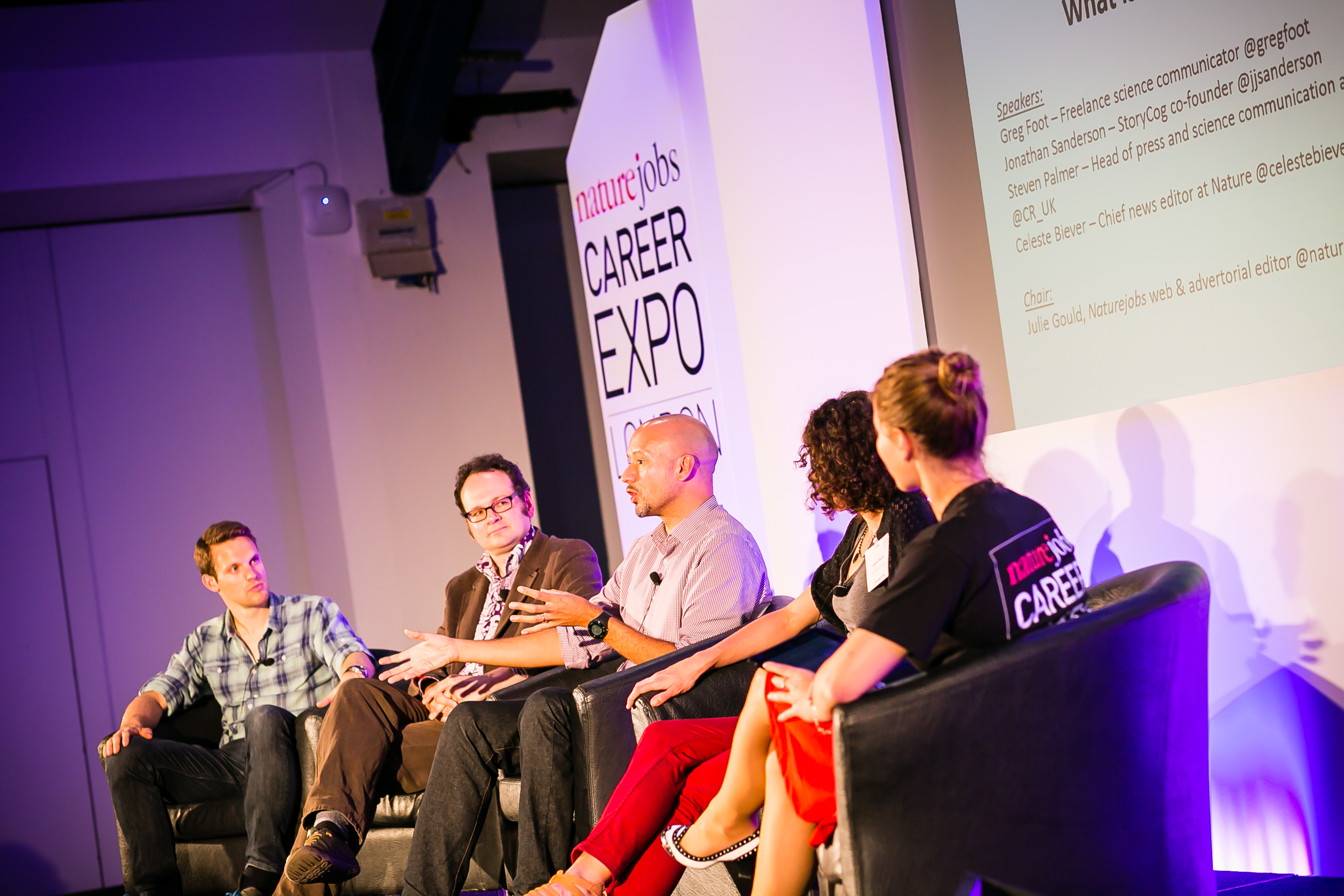
L-R: Greg Foot, Jonathan Sanderson, Steve Palmer, Celeste Biever, Julie Gould

Things to consider if you’re thinking about working in the field of science communication.

Contributor Samuel Brod

“A full house”, someone muttered as a besieged looking member of staff rushed out extra chairs for the hundreds of researchers filtering their way into the auditorium. Sci-comm, as it’s often termed, seemed a hot topic this year. A panel at the London Naturejobs Career Expo on September 19th, 2014 asked the question: What is science communication?  The panelists were Steve Palmer, Cancer Research UK; Jonathan Sanderson, StoryCog; Greg Foot, BBC; Celeste Biever, Chief news editor for Nature. Chair: Julie Gould, Naturejobs.

The talk began with the panelists describing their current jobs and how they’d found them, followed by a more general discussion around pursuing a career in science communication. On stage, the panel was at ease and their comments often induced laughter from the crowd, not out of politeness but genuine amusement. Within the audience, there was a definite sense of expectation–it seemed that they were waiting for answers. Continue reading