Career paths: Beyond the ivory towers

Take control of your own career by doing some self-reflection and going to informational interviews.
Naturejobs-podcastAt the end of 2014, we set our Naturejobs podcast listeners, especially the PhD students, a challenge: Take control of your own careers.

Earlier this month I attended a one day careers conference in Edinburgh called Beyond the Ivory Towers, where 7 speakers took to the stage to share their transitions from academia into “other”. The “other” included law, entrepreneurship, research in industry, tech transfer, public engagement, clinical science, publishing, and more. What struck me about each of these speakers is that from the outside, it looked as though their careers had been perfectly planned from the day they started at a university. This was definitely not the case. Each speaker had their own challenges to face, from the expected (no more funding) to the unexpected (becoming allergic to rubber gloves).

Transitions are never easy, but there are things you can do to make them smoother. In this podcast I’m joined by two of the speakers, each one taking a different approach to tackling their transitions from academia into “other”

Elizabeth Fairley from EFB Services took an outward approach: find out what she needed to do to become successful in her chosen career in industry. This included going out and speaking to industry professionals who could give her insight into what her future career might look like and what she would need to do to make it.

Phill Jones from Digital Science took the inward approach: determine what skills I learned by self-reflection so that I can market them and sell them to industry. This included analysing what he had done whilst in academia, not just the technical stuff, and learning to convey it in an appropriate way.

Listen to the podcast to find out more!
Companies on campus: The blossoming relationship between academia and industry

Naturejobs-podcastHaving companies based on campus can have career benefits for everyone, says Jana Capson-Watts.

Industry and academia have had a long, and often rocky relationship. Each referring to the other as “The Dark Side”. But it’s continuously improving, and now they’re moving in together: Companies are on campus.

In this podcast I speak to Jana Capson-Watts, associate director at The BioFrontiers Institute, a company based on campus at the University of Colorado, Boulder. She is also a co-author of a comment article in this week’s Nature University Special. And at the end, there’s a short piece from Geoff Marsh and the Nature podcast about cross-disciplinary research at universities.

The relationship between academia and industry started in the early 11th Century, when Europe first started establishing universities. Since then they have developed into the beacons of society, becoming a space for learning and discovery, for study and understanding, for scholarship. It’s walls have housed some of the most intelligent brains in the world and have seen some extraordinary things. But one thing was for sure: before the early 20th century, not much thought was given to collaborating with technology and industry.  Continue reading

Nature Biotechnology podcast: First Rounders with Julian Davies

Julian Davies

{credit}Image courtesy of Julian Davies{/credit}

Contributor Brady Huggett

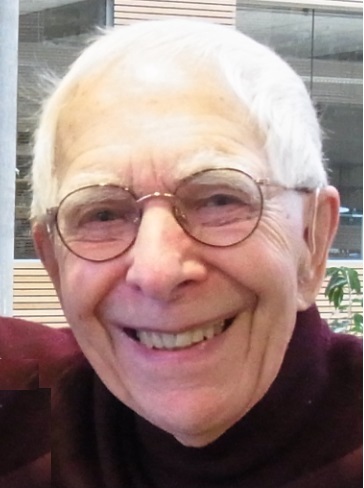
Julian Davies has a long history in biotechnology research, particularly in antibiotics and resistance, and he also served as head of research at Biogen’s European division in the 1980s. But for more than 20 years now, he’s been at the University of British Columbia (UBC), where he’s the principal investigator at the Davies Lab. I spoke to Julian for the Nature Biotechnology First Rounders podcast, which was recorded in his office on the UBC campus, with the door closed to help with audio quality, and the overhead lights off. A light rain fell against his office window.

We talked at length about his early family life during World War II, his education in chemistry and biology, and his research across countries. A Nature Biotechnology profile in 2008 had covered TerraGen, Davies’ spinout from UBC, and it’s a topic in the podcast, too. But the element that perhaps stands out most is his eagerness to move around: he’s lived in New York, Manchester, Boston, Paris, Geneva, and beyond – partly to follow research he found interesting, and partly, it seems, because he was perpetually invited to work alongside others. This willingness to relocate helped facilitate his career, as well as allowed him to see the world.

Hear more about Julian’s life on the Nature Biotechnology First Rounders podcast.

Brady Huggett is the Business Editor for Nature Biotechnology

Why you should come to the Naturejobs Career Expo in London on 19 September 2014

Naturejobs-podcast

The Naturejobs team hosted their first Naturejobs Career Expo in the USA on May 20th 2014. Their chosen spot: Boston, MA, a state known for its biotechnology hubs and world renowned institutions: Harvard University and Massachusetts Institute of Technology.

In between welcoming the delegates and hosting panels, I put on my reporting hat and found out what the organisers, delegates, speakers and exhibitors had to say about the event.

The conference hosts sessions with experts and careers advisers from industry and academia, providing practical advice on transferable skills, career paths and CV writing. “The Naturejobs Career Expo is an extension of what we offer online,” says Nils Moeller, global head of sales and advertising at Naturejobs. The Naturejobs Career Expo also offers a career exhibition, where employers showcase their companies and offer advice (and potential job opportunities) to visiting delegates. Listen to the podcast to find out more.

You can read all about the Boston Expo conference sessions from the reports written by the Naturejobs Career Expo competition winners by looking in the #NJCEBoston category archive on the blog.

You can register for free for the 2014 London Naturejobs Career Expo, which will be on September 19th at the Business Design Centre in Islington. We’re also running the Naturejobs Career Expo journalism competition for our London event, but the deadline for entries is tomorrow (August 1st), so get them in quick!

Big data with Susanna-Assunta Sansone

susanna-sansone

With Big Data come big problems and big responsibilities. Digital Science recently ran a #datadramas tag on Twitter, asking scientists about their own data dramas. It’s scary, but what it and the Naturejobs poll show is that many scientists still use the laptops and USB sticks to store data long term. To talk about this, we spoke to Susanna-Assunta Sansone, the associate director of the University of Oxford e-Research Centre, and a data consultant and honorary academic editor for Scientific Data, a new open access data publication by Nature Publishing Group that launched this week.

The first question to tackle is: what is big data? Sansone says people often only mean size and volume, but from her point of view big data is also about “variety and complexity.  So, data is multidimensional. You have video, audio files, text files, you have physical specimens which you have recorded information about.”

Sansone is a biologist by training, and now works with life sciences data, of which there is an incredible amount, especially within the genomics fields of research. How scientists manage all this data varies on the data types, says Sansone. “There are different tools for different data types. And there are different enablers like terminology or format, which work for different data types.” If you are a newcomer to the field of life sciences, this can be incredibly confusing. There are some general tools that are available, and the one that is used most is Microsoft Excel. “It’s better than nothing, but there are better tools nowadays.” Continue reading

Nessa Carey answers your questions

Nessa CareyOn February 11th 2014, Naturejobs relaunched their podcast with a very interesting interview. We spoke to Nessa Carey: from academia to Industry and got some great responses on Twitter, Facebook and LinkedIn. In the accompanying podcast, we asked you if you had any questions for Nessa, and she has kindly answered your questions below! Continue reading