Don’t let unwelcome comments muffle your voice, instead speak out about your experiences, says Virginia Schutte.
Guest contributor Virginia Schutte
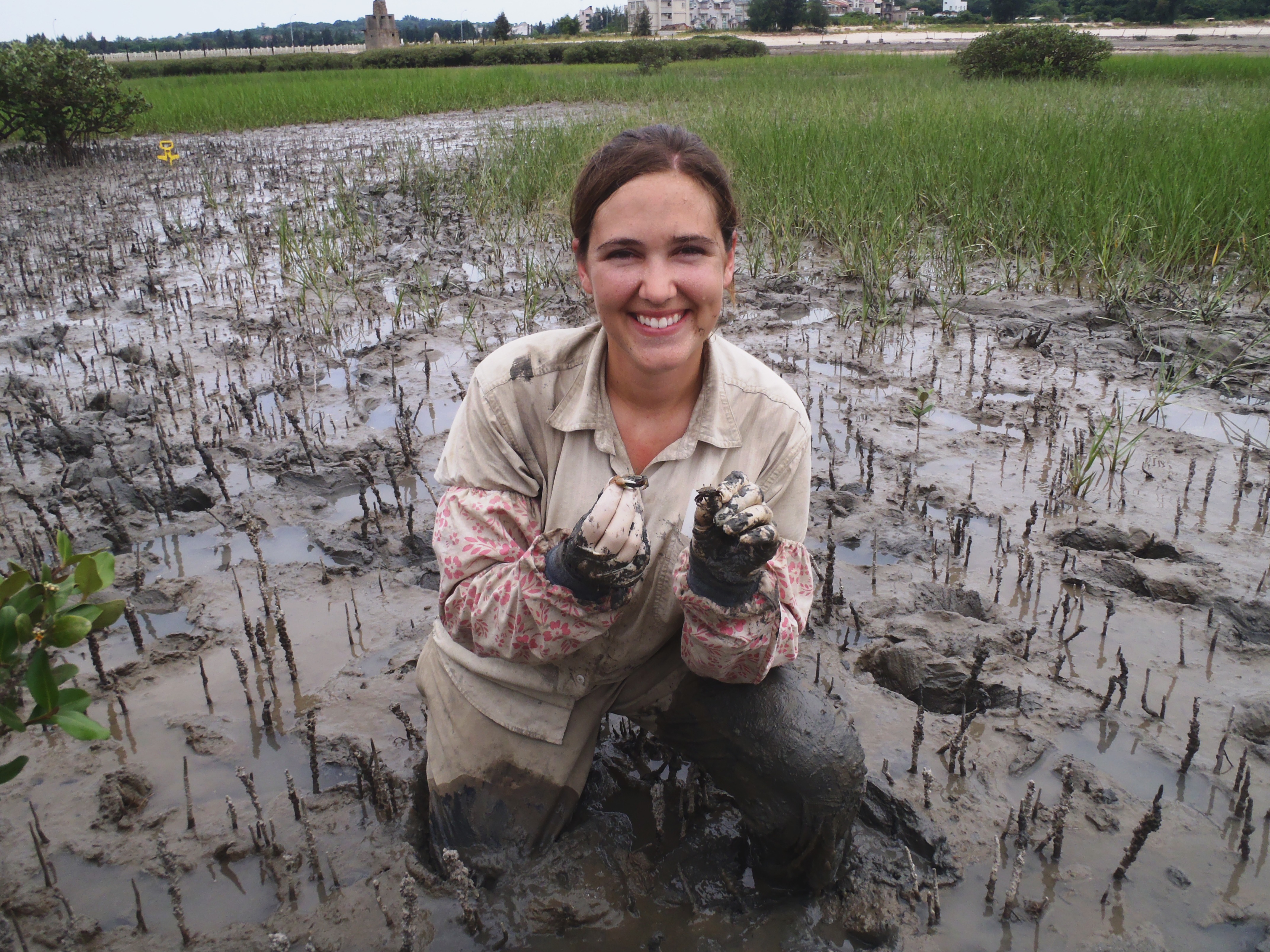
Virginia Schutte studying fiddler crabs in Taiwan’s salt marshes {credit}Virginia Schutte{/credit}
As scientists increasingly use social media for outreach, they open themselves to interactions with anyone who has access to the internet. This contact isn’t always going to be positive and may get personal. I recently had to decide what to do after someone said some unsavory things on my science website.
What I experienced is “casual” or “everyday” sexism. Sometimes sexism is so blatant or is acted upon in such a way that it has big repercussions (#distractinglysexy, I’m looking at you). This wasn’t that – this was a thought just about me that wasn’t particularly vulgar. But this kind of passing thought is common, even for scientists. For example, the Field Museum’s Emily Graslie devotes an episode of The Brain Scoop to discussing the frustrating comments she deals with “on a daily basis”. Some people are shocked less by casual sexism itself and more by the fact that people may not even react to it because it is so pervasive.
This person made it clear why he was visiting my website: it had nothing to do with my science and everything to do with my appearance. But this comment revealed his focus without damaging mine, so it didn’t rile me like his next assertion did: “[It’s] good to feel sexy, but it’s bad to mask it behind other means”. He implied that the only reason I have a science website at all is to give myself a place on the internet to post sexy pictures of myself. As if my site’s real purpose is so ludicrous as to be unbelievable.
I’m a marine ecologist. I’ve worked with everything from whales to fiddler crabs, but I’m pursuing a career in science communication. I want to connect people with science. Engaging non-scientists with the right information is the key to helping them make informed decisions that limit environmental impacts, therefore increasing quality of life.
I regularly post about my research and science in general on my professional Facebook page, “Virginia talks science with you”. The page is an outlet for my passion for science education and is also a way for me to gain experience communicating science. His comments popped up on my Facebook page after a post about Discovery’s Shark Week, so I can only assume he was reacting to photos of me around the site wearing a wetsuit. I’ll skip discussing most of my initial emotional reactions and focus on those that have risen to the fore now that more time has passed. Continue reading →