When conferences collide with family needs

As a busy scientist with two young children, one of Rebecca Calisi’s most vexing challenges is figuring out how to attend scientific conferences without a huge disruption in family life. Bringing children to conferences is an option, but not all are especially welcoming to the needs of families, especially to mothers with young children.
1008602_10151664484247933_418737272_o (3)

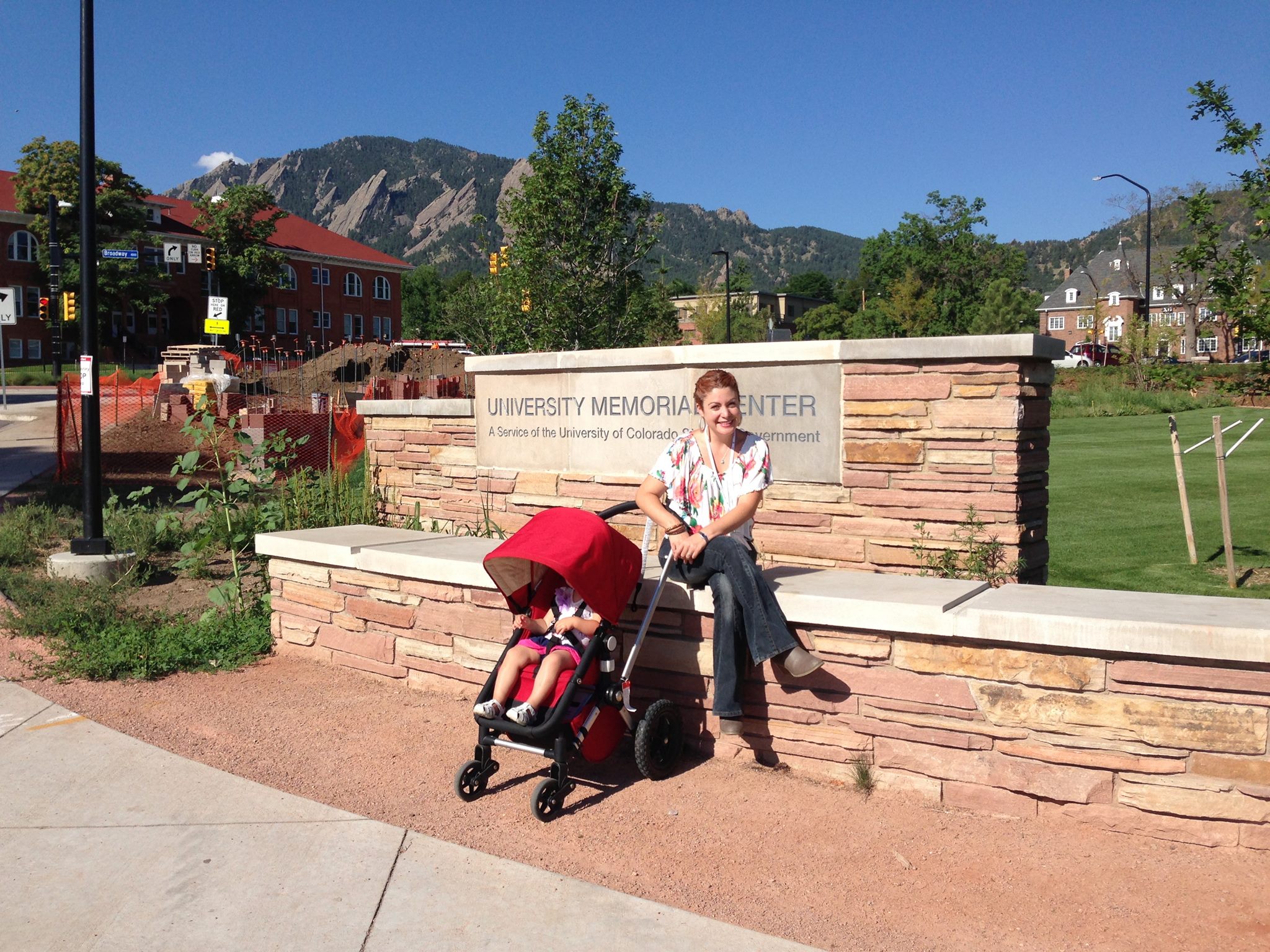
Rebecca and her daughter at the annual conference for the Animal Behavior Society at the University of Colorado in 2013

Calisi, a behavioural neuroscientist at the University of California, Davis, and a group of 45 other scientist-parents, have turned their frustrations into a call for action. In a paper published online Monday in Proceedings of the National Academy of Sciences, the researchers detail the shortcomings of past conferences and offer a blueprint for making conferences more welcoming and accessible to parents of young children.

By not providing accommodations for children, Calisi says, conferences can unintentionally create barriers that exclude large swaths of scientists—especially early-career scientist-mothers who may not be able to afford childcare. “One part of promoting diversity is supporting women with children,” Calisi says. “If institutions say they want to support diversity, they should put their money where there mouth is.”

In the paper, Calisi and co-authors suggest that conferences could fund on-site childcare services, lactation rooms and other amenities by asking for voluntary donations during registration. Exhibitors who make a donation could receive a sign or emblem that show their support. “I guarantee you they would get more foot traffic,” Calisi tells Nature. The paper also calls for all conferences to clearly state that parents are allowed to bring babies to talks and poster sessions. For now, she says, rules about children seem to change from conference to conference and even from hour to hour. She notes that researchers with babies were recently turned away from a poster session at a large conference even though the official policy permitted children in the exhibit area.

A practical, comfortable space for breastfeeding or pumping breast milk is an especially important accommodation, Calisi says. “A lactation room tells you a lot about how much a [scientific] society values women,” she says. In November, she turned to Twitter to complain about the facilities at the Society for Neuroscience (SfN) annual meeting, held last year in Washington DC.  Within hours of that tweet, the society provided more comfortable lounge chairs for mothers. “It’s not that the society was anti-women,” she says. “They just didn’t know.”

SfN, for its part, aims to become more inclusive. “The society is actively exploring ways to continue to enhance the spaces for nursing mothers in San Diego [California] this year and at SfN’s future meetings,” says society spokesperson Kara Flynn in a statement to Nature. She adds that the society is committed to “fostering a welcome and diverse community in which all scientists are able to contribute fully.”

Some conferences are already parent-friendly, Calisi says. She recently attended the annual meeting of the American Academy for the Advancement in Science in Austin, Texas, where the lactation room was comfortable and easily accessible. “I gave them two thumbs up,” she says.

Chris Woolston is a freelance writer in Billings, Montana.


Suggested posts:

The single scientist-parent

Motherhood and science 

From the frontlines 

Have you ever had to compromise your personal life?

We ask speakers at the Naturejobs career expo, San Francisco, if they’ve had to compromise on their personal life to make it in academia.

https://youtu.be/3oRQWv30XN0

Babies or career: How to keep young researchers in science

Could shared post-docs improve work-life balance and make academia more attractive for early career scientists?

Naturejobs journalism competition winner Ulrike Träger.

If you look for advice on work-life balance in science online, the message seems clear: it’s possible to fit a 10-hour work day around quality time with your kids and family as long as you’re organized. Flexible hours of working in the lab help. Experiments don’t mind when you do them, and can be postponed until your kids are asleep. But still, long hours are expected in order to be successful, and finding childcare during midnight experiments is not always easy if you don’t live close by. So for many (including myself, a post-doc in my late twenties pondering the right time to start a family) the prospect of having to plan each and every minute of the day to be a good parent and scientist is daunting. This leaves promising young scientists everywhere feeling like they have to choose between family and career.

Continue reading

Juggling science and motherhood

Balancing life inside and outside the lab is not always easy, but it’s possible to be a parent, a carer, #AndAScientist, says Seralynne Vann.

Guest contributor Seralynne Vann.


I have always had a love of science and always knew I wanted to be a mother. I’ve managed to combine a career in neuroscience with motherhood although at a numerous points over the years I questioned whether I would be able to have either, let alone both.

{credit}Seralynne Vann{/credit}


Continue reading

How to control your career as a female physicist

Don’t let having a family restrict your future career goals, says Emma Chapman.

Guest contributor Emma Chapman

In November 2015, I gave a talk at the Institute of Physics’ “How to Control your Career as a Female Physicist” event for PhD students. After the talk, an attendee said she welled up hearing me recount my choice to have a child during my PhD. For this attendee, I was the first person to tell her she didn’t have to choose between a career she loved and the family she wanted to have soon. I remember that feeling.Illustration of a dome telescope in an observatory, and the planets in the sky. Space. Astronomy.

Continue reading

PhD applications: Your science or your story?

Contributor Aimee Eckert

Aimee-Eckert

{credit}Courtesy of Aimee Eckert{/credit}

When I started my first year of A-Levels, my father sat my younger sister and I down and told us he was terminally ill. Despite surviving previous tumours of the throat and lymph, cruelly and almost mockingly, a melanoma scattered its metastases and took residence in his brain. I cannot remember much of that conversation apart from that he might ‘have a year left.’  After the most courageous fight imaginable, he passed away at home eight months later in May, aged only 43 years old.

Biology has always been a passion for me, as during school I was astounded by how the individual units of our bodies – our cells – work, and what goes wrong in the event of disease. My family’s experience was a key factor in cementing my decision to study cell biology at university and pursue a scientific career. However, due to the prevalence of cancer (in the UK, 1 in 3 people will be diagnosed with it) my story is far from unique; throughout my undergraduate and now postgraduate study, I continue to meet people who have had extremely similar experiences. This has reinforced the fact that I am not alone and it is a powerful source of inspiration when lab work gets stressful.

When it was time for me to apply for PhD positions, questions that needed to be answered on the application forms and personal statements included ‘why do you want to do a PhD?’ and ‘why are you interested in this area of research?’ For me, thinking about my father helped me describe my motivation and discipline and to write a strong application. I was concerned as to whether it was appropriate to briefly mention my experience of cancer in PhD applications. I imagined unpleasant images of my application going straight into the ‘No’ pile if I did. In the end, I decided that what had happened to my family was relevant: it had contributed to my development as a scientist and that the laboratories I was applying to should know about it. Continue reading

Careers hold scientists back from having children

Many scientists at top US institutions have had fewer children than they wanted as a result of their careers, according to a new study.

Nearly half of all female scientists and a quarter of male scientists said they would have liked more children — and a quarter of both women and men said they are likely to consider moving to a career outside science as a result.

Sociologists Elaine Howard Ecklund from Rice University and Anne Lincoln from Southern Methodist University surveyed 2,500 scientists at more than 30 leading universities in the United States for the study, which was published last week in PLoS ONE.

The survey showed that 36 percent of male postdocs and 22 percent of female postdocs had children, rising to 75 percent of male faculty members and 64 percent of female faculty members. Female faculty members had fewer children on average than their male colleagues — 1.2 children for women versus 1.5 for men.

Despite women being more likely to have wanted more children, men were unhappier about having fewer children than desired. Both men and women with children worked fewer hours than those without children. However, contrary to the researchers’ expectations, women with children worked the same number of hours as men with children — approximately 54 hours a week on average.

“Academic science careers are tough on family life,” says Ecklund, citing long hours and the pressures of working towards tenure as the main pressure points. She and Lincoln suggest on-site day care and improved mentoring programmes may help improve scientists’ work-life balance. “Universities would do well to re-evaluate how family-friendly their policies are,” says Ecklund.

What’s your reaction? Are you putting off having children as a result of your career? Is the situation similar outside the United States? Share your thoughts below.