The faculty series: Recruiting staff

Modern and traditional networking techniques can help junior faculty attract top students and postdocs to their labs.

Guest contributor Viviane Callier

Recruiting a critical mass of good students and postdocs is one of the first challenges for a new investigator to establish their lab. “It is easy to order equipment, but much harder to staff the lab and create a lab culture,” says Courtney Babbitt, assistant professor of biology at UMass Amherst, MA since fall 2014.

Recruiting is especially challenging for those who do not have a big name or a history of steady funding to attract trainees, like new faculty. It can be difficult to draw talent to geographically undesirable locations and/or less prestigious institutions, because big cities may offer a variety of career and networking opportunities (in academia and elsewhere), as well as cultural activities that contribute to quality of life. But students and postdocs are needed to help collect data that and move the lab’s long-term research agenda forward; they also bring complementary skill sets, fresh ideas and new research directions. Continue reading


How to control your career as a female physicist

Don’t let having a family restrict your future career goals, says Emma Chapman.

Guest contributor Emma Chapman

In November 2015, I gave a talk at the Institute of Physics’ “How to Control your Career as a Female Physicist” event for PhD students. After the talk, an attendee said she welled up hearing me recount my choice to have a child during my PhD. For this attendee, I was the first person to tell her she didn’t have to choose between a career she loved and the family she wanted to have soon. I remember that feeling.Illustration of a dome telescope in an observatory, and the planets in the sky. Space. Astronomy.

Continue reading

The faculty series: Becoming independent

Gradual transitions to independence can help new faculty establish themselves in their field.

Guest contributor Viviane Callier

149423545

{credit}Thinkstock{/credit}

When Tak Sing Wong became a newly minted professor of mechanical and nuclear engineering at Penn State University in University Park, he realized he was walking a tightrope.

Maintaining a productive collaboration with his postdoc mentor was important, but he also knew he had to show his tenure committee that he was intellectually and financially independent.

Wong isn’t the only one facing this challenge. Many assistant professors struggle to establish themselves, and most universities provide little formal guidance for making the transition, though informal mentoring from more established faculty can help. Many young scientists have likened the process of going up for tenure to a black box. “As a new principal investigator, you are really starting over from scratch. It’s a different skill set” than that of a postdoc, says Dan Speiser, a first-year biology assistant professor at the University of South Carolina in Columbia, South Carolina.

Still, many young academics have learned, by trial and error and informal mentoring, to establish themselves as independent investigators. Continue reading

Entrepreneurship: You’ve got the edge to found

Young scientists have substantial advantages over others when it comes to founding a start-up.

Guest contributor Leonie Mueck

Ideas-naturejobs-blog

{credit}Topp_Yimgrimm/ThinkStock{/credit}

Eoin Hyde has been running from meeting to meeting. His start-up, Innersight, is in a critical phase and he has to convince investors to give him and his co-founder enough funds to get it off the ground. Even with his hectic schedule, he’s full of energy.

“Everything is happening very fast,” he says. Until just a few months ago, Hyde had been working as a postdoc at King’s College London, following a PhD in computational biology at the University of Oxford. He enjoyed his research, but when a former colleague approached him with the request to co-found Innersight, a medical imaging company that constructs 3D images from patients’ scans to help doctors during minimally invasive surgery,  he didn’t think twice. “I had been playing with the idea to found a start-up for a long time,” he explains.

Hyde belongs to a minority. Not many science PhDs choose to found companies, at least not in the UK. According to the UK GRAD programme, only 2% of UK-based physical science and engineering PhD graduates are self-employed; it is unknown how many of those have the goal to found fast-growing technology start-ups with global reach. Alex Crompton, programme director at Entrepreneur First, finds these low numbers regretful because in his opinion, science PhD graduates are perfect founders. Continue reading

The faculty series: Balancing the books

It is important to get the balance between your different responsibilities right when starting your academic post, John Tregoning suggests some ninja tips to help you choose.

_ME08443

{credit} John Tregoning {/credit}

Guest contributor John Tregoning

So you have just read my first blog post, Nobody rides for free, and have come to terms with the idea that academia is more than just research. Now you face a dilemma – how best to add value and still be productive. One of the biggest challenges facing early stage academics is not over-diluting your effort and getting the balance of activities right. Whilst everyone is different and the balance can change over the trajectory of a career, with teaching/grants predominant early on and admin/impact coming later, the following approaches can help you to decide how best to spend your time.

Mentoring. You are not the first person to start a career and academics love to give advice. The simple act of talking through problems can often clarify the solutions. Find someone local, trustworthy (and ideally not your boss) who is willing to give up a bit of their time and sound them out. If you can’t find someone, many institutions now have mentoring schemes to help guide you through the maze. “At my university, new faculty are enrolled into a formal mentorship programme,” says Jamie Mann, assistant professor at the University of Western Ontario, Canada. “This non-supervisory process ensures new faculty members can access the critical support and assistance of more experienced colleagues, enabling new recruits to better achieve their professional goals.” Don’t limit yourself to one person; it may be that you get prudent political advice from one professor and great grantsmanship guidance from another. Continue reading

The faculty series: Nobody rides for free

Faculty need to learn how to add value to their institution when starting their first role, says John Tregoning.

Guest contributor John Tregoning

Congratulations, you have your first academic appointment and are now a member of faculty.

Commiserations, you are now a massive financial burden to the faculty and will need to continually justify your appointment.

As a postdoc, financially you were someone else’s problem: your salary came from whoever funded your project. Now, as a member of faculty, the cost of your salary comes from the university’s pocket. But it doesn’t stop at salary. The university also pays for bench space, utilities, parental leave, and – if you were better than me at negotiating – consumables, equipment and possibly even a technician’s salary. None of which comes cheaply. In this age of austerity, heads of department are forced to make budgetary decisions and salaries are not only the biggest cost to most departments, they often account for more than 50% of the total budget. In business speak, these costs mean that not only do you need to demonstrate that the department is making a return on its investment in you, but you also need to add value. Continue reading

#Scidata15: Make the most of your research: Publish better data

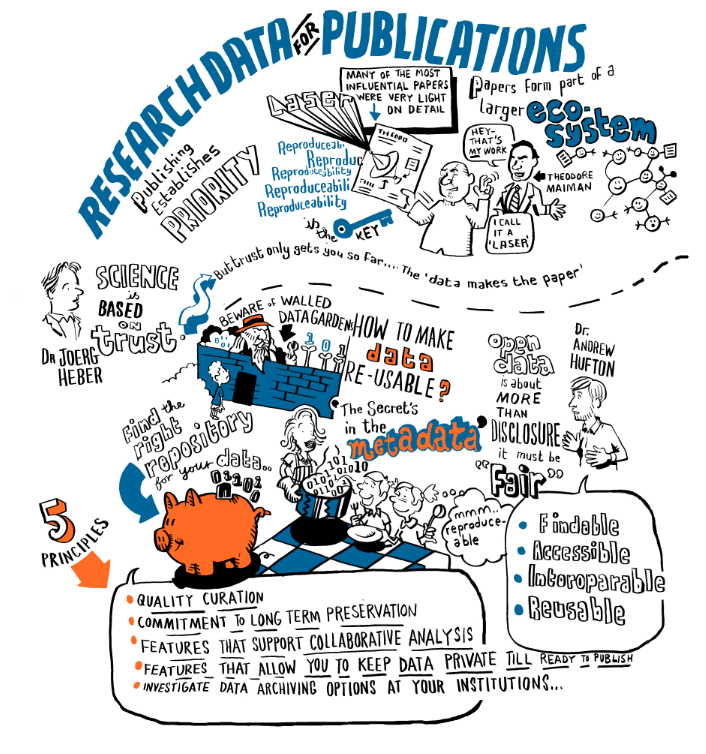
Primary research papers are the currency of academics, but they’re also part of a much wider body of knowledge that is restricted by a lack of transparency.

Guest contributor Lakshini Mendis

naturejobs-blog-Scidata15-ResearchData-for-Publications

{credit}Image credit: SCIENTIFIC DATA/LUDIC GROUP{/credit}

Historically, a great deal of trust has been placed in statements made in research papers for which the underlying data have not been shared. The invention of the laser was described in a paper containing just three data-points, for instance, and Watson and Crick first described the structure of DNA in a paper without any data at all. But with about 1,500 papers retracted since 2012, and 26.6% due to misconduct, scientific papers are now firmly under the microscope.

Improving the availability and readability of original research data would go a long way to improving matters. And as scientific publishers largely determine how research data is disseminated, their involvement will be central to any change. Speaking at Publishing Better Science Through Better Data in late October 2015, Dr Joerg Heber and Dr Andrew Hufton, editors at Nature Communications and Scientific Data respectively, emphasised that to make the most of research data it must be more open.

Overcoming the data-sharing challenge

According to Hufton, the status quo is for researchers to only share data with others directly. As well as being inefficient, data associated with published work disappears at a rate of about 17% a year as a result of researchers failing to properly catalogue findings. There is now, therefore, a move from scientific publishers to make data findable, accessible, interoperable and re-useable – or, to use an acronym as those of a scientific persuasion are so often inclined to do, FAIR. Continue reading

#Scidata15: Big data: Challenges create opportunities

The era of big data brings with it a sea of opportunities for development and innovation.

Guest contributor Daniela Quaglia

naturejobs-blog-Scidata15-Opportunities-from-Research-Data

{credit}Image credit: SCIENTIFIC DATA/LUDIC GROUP{/credit}

Big data is here to stay. As scientists, we stand to benefit by being part of this exciting revolution. At the second Publishing Better Science through Better Data conference, held in London on October 23rd, Dr. Ewan Birney, joint associate director of the European Bioinformatics Institute (EBI), and Dr. Timo Hannay, founder of SchoolDash (a website that provides statistics about schools in England), walked us through some of the opportunities that arise from working with big data.

Opportunities in biology

Birney spoke about how the increase in big data is influencing the way we do biology. He promised to give the audience “an EBI centric view of the world”. I’m glad he did, because every scientist wanting to use big data should understand how EBI can help them.

EBI takes data provided by laboratories and stores, verifies, classifies and shares it. This approach means that a wealth of molecular-biology data, from DNA sequences to full systems (such us biomolecular pathways and metabolomics data), can be found in one place. As most scientists do not want to have to work from shared data in their raw form, the institute also works with the scientific community to convert original data into useful formats. Data from the Human Genome Project provides a compelling example of how such transformations can benefit the community — as Birney pointed out, not even the most experienced researchers want to analyse such complex raw data. Continue reading

Women in science: A returner’s perspective

Although prospects are challenging, help is indeed out there for women looking to get back into academia after having a career break.

Guest contributor Sara Burton

sara-burton-naturejobs-blog-small

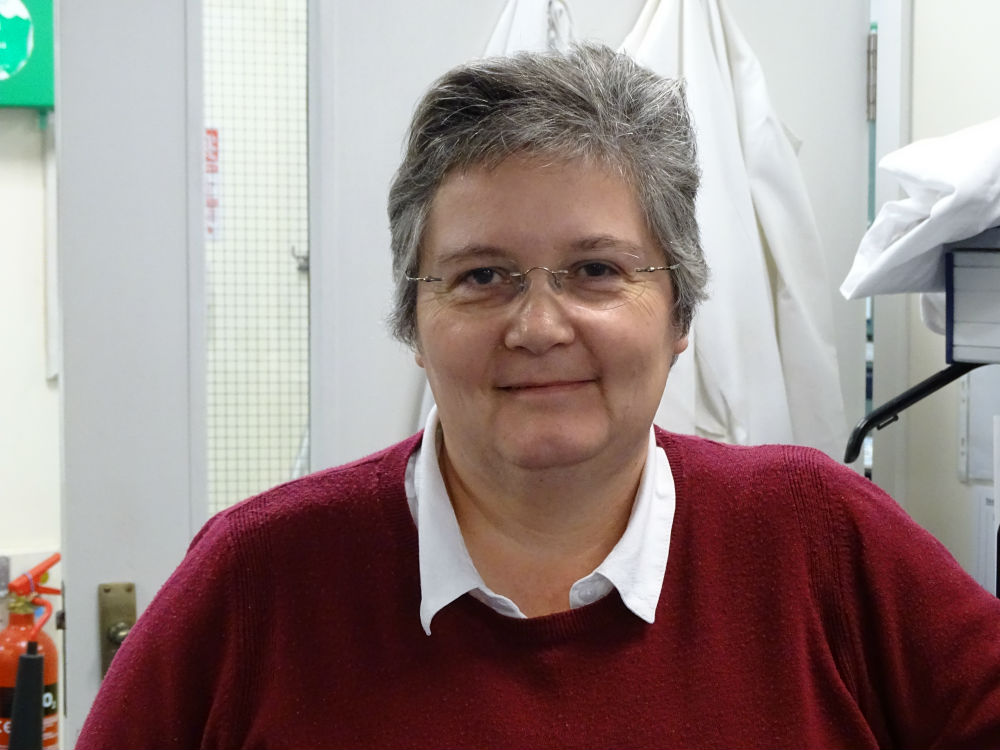
Sara Burton, now senior lecturer at the University of Exeter, took time off to look after her children full time before returning to academia.{credit}Image credit: University of Exeter- Heather Ford{/credit}

As I sat in my PhD viva voce exam in 1994 year I was fighting distraction – I had just found out I was pregnant and was wondering whether I could drink champagne if I passed.

Having worked in university labs before my first degree and in a small biotechnology company for four years before my PhD – it wasn’t difficult to decide this was the time for motherhood.

So I looked after my two sons full time from 1995-98. When my youngest son was two years old I decided that I wanted to return to my academic career. I noticed a newspaper advert for an associate lecturer with the Open University in the UK. The opportunity was perfect: I could teach in the evenings and at weekends while my husband looked after the boys. Indeed, this worked well for us all.

In addition to my OU role during my sons’ early years I was contacted by an academic I knew when I was a PhD student. And thus I was employed to help manage a research group. Once again, flexibility in working hours was key and enabled me to start at just two days a week allowing me to be both a mum and an academic. Continue reading

#SciData15: Get more out of your research data

Researchers shared their tools to help scientists use and share data more effectively at the 2015 Publishing Better Science Through Better Data conference.

Guest contributor Rehma Chandaria

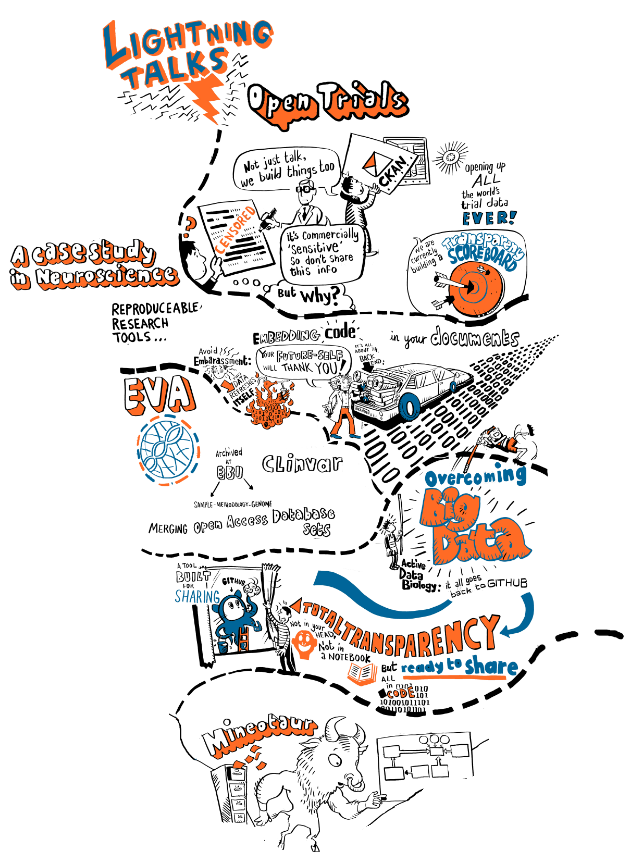
naturejobs-blog-Scidata15-Lightning-Talks

{credit}Image credit: SCIENTIFIC DATA/LUDIC GROUP{/credit}

The session of lightning talks at the 2015 Publishing Better Science Through Better Data conference was strategically scheduled to combat the post-lunch lull that often occurs. Five speakers had seven minutes each to tell the audience about their tools for helping scientists to use and share data more effectively.

Dr Sam Payne and Dr Balint Antal have both written programmes that allow researchers to collaboratively analyze and visualize large amounts of data. Payne of the Pacific Northwest National Laboratory in Washington State developed Active Data Biology, a tool for interactively exploring and analyzing ‘big data’. He demonstrated how the programme can be used to assess proteomics data in the form of a heatmap — you can click on various proteins, conduct real-time analytics, save the proteins you find interesting and look at what your collaborators have saved. Rather than having the information hidden away in your notebooks or in your head, everything is stored on GitHub so it’s transparent and available to everyone involved. Mineotaur, developed by Antal of the University of Cambridge, UK, is based on a similar idea. It is an open-source tool designed for biologists to explore high-throughput microscopy data. Mineotaur can also be used to share research findings and allow others to analyse them further. It can even be embedded in publications to allow readers to explore the data for themselves. Continue reading