A David Letterman-like countdown to the 10 biggest pitfalls in scientific presentations

Making a good scientific presentation takes time, but awareness of common mistakes is the first step to improving performance.

Guest contributor David Rubenson

The slide presentation has become the most ubiquitous form of scientific communication and it is causing havoc.  Scientists spend enormous amounts of time preparing presentations, travelling to conferences to deliver them, and listening to them almost every day.   But most scientists simply aren’t very good at them – we should change that.
image_0.img.full.high

David Rubenson

I previously argued that this problem underlies a significant communication crisis in research.  As I’ve learnt as a scientific presentation coach at Stanford, there’s a broad understanding of this problem, but insufficient incentive for the time-intensive training many scientists need.  Still, following simple lists of “dos” and “don’ts” is a great way to improve presentation skills.

In that spirit, and to supplement an earlier list of eight positive suggestions, here’s a David Letterman-like countdown of the 10 biggest pitfalls in creating and delivering a scientific presentation:
 

Continue reading

The faculty series: Conclusion

We wrap up the long-running faculty series in style.

Since our podcast introducing the faculty series in May, we’ve published 13 more pieces designed to help new and aspiring faculty members flourish in their positions. From applying to the job all the way to mentoring new members of staff, we’ve seen it all, and we hope you’ve enjoyed the ride. Here’s a brief summary of all of the posts we’ve published so far. Make sure to catch the ones you’ve missed, and let us know what you think! Continue reading

Science communication: The predatory open access “journals”

Having a web page with scientific articles isn’t all it takes to be a scientific journal, says Victor Morais.

Guest contributor Victor Morais

The number of open access journals available to scientists has grown enormously in recent years. They offer the possibility of fast and easy publishing to get research out in the world as soon as possible. Unfortunately, not all open access journals are as they appear.

Photo 2

Victor Morais

Every day, email invitations to new open access journals drop into my inbox. Recently I decided to investigate further. On the publisher’s site I found more than 30 journals covering a variety of areas, but fewer than half of them had published articles and none of them had more than 10 articles. There were more places to publish than there were publications!

I wondered if these journals were real. They could be predatory journals – a web page where scientists publish papers in a form more like a personal page or a blog than a legitimate scientific journal. The real purpose of a scientific journal is to share and preserve knowledge and to protect the minimum quality requirements of a scientific publication. If scientists publish their work on personal web pages, there are no quality controls and it’s not possible to guarantee the visibility or protection of articles. Predatory journals do not do the job of a scientific journal in terms of quality, visibility or preservation, and most of the time lack the peer review process that makes science reliable. As a researcher, how do I guarantee that as soon as I’m charged for publication, my work won’t be lost in the ether?

In my ensuing research, I found some interesting resources like Think. Check. Submit that give guidelines to choose the right journal. Here, I want to share some of the clues that helped me to distinguish between established, emerging and predatory journals.

Continue reading

A Masterful decision

Many universities now offer master’s programmes in science-related subjects. These can be a great springboard to a new career.

Guest contributor Simon Hazelwood-Smith


SHSpic2

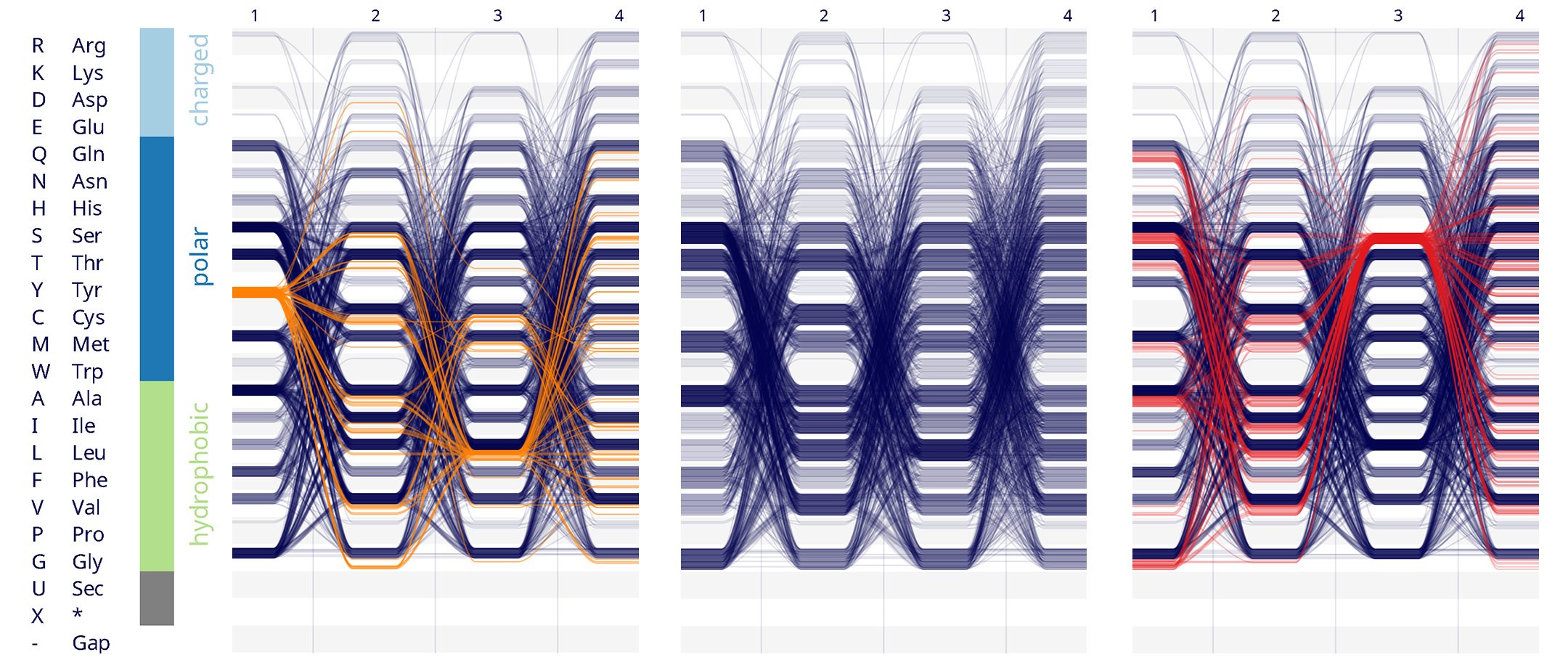
Sequence Bundles: A new method of visually displaying sequence data developed by Science Practice, where Simon works

There have never been more ways to be employed in science. Today, science is communicated, critiqued, shaped, applied and incorporated into political decisions by a multitude of people who rarely – if ever – set foot in a laboratory. For the organisations that work in these areas, there are tangible benefits to have employees with scientific experience. However, knowing how, when, and if to make the move into these areas is often a challenge for many young scientists. Continue reading

Naturejobs career expo: What a day among classic cars told me about my future career

Lessons can be learned from the cars that crowded the background at the Naturejobs Career Expo in Düsseldorf, says Thais Moraes.

Guest contributor Thais Moraes


On the 26th of November in Düsseldorf, the Naturejobs career expo took place at the perfect venue. The Classic Remise center displays a collection of classic and historical cars that we all admired during the short breaks at the event.20151126_133138-edit

It was my first time at a career fair, and my first impression was that there were only young people there, starting the ignition in their professional lives. Since I already have many years on the road, I didn’t think it was for me. I was completely wrong: after listening to the talks, I was reminded that I don’t need to keep driving in the same direction just because it’s a road I’ve already started down.

The environment could have been just novel and enjoyable, but it also made me think about my future career plans, especially the fears and challenges that arise when you go for something new. There are four things that these machines brought to my mind.

Continue reading

Finding job satisfaction as a science strategist

After completing his PhD and postdoc at The University of California, Berkeley in the biophysics of cancer cell growth, Gautham Venugopalan completed a science policy fellowship sponsored by the American Association for the Advancement of Science (AAAS). He describes how that experience led him to a job as an analyst at Gryphon Scientific, a consultancy focused on public health and national security.

Tell me how you planned your career path.

I could tell you a story that I thought I should do this, and then I thought I should do that, and it all prepared me for this grand thing. But let’s be real. That’s not how that works.

Venugopalan Head Shot-2

{credit}Richard Novak{/credit}


Why did you get a PhD?

I have a history of just jumping off and doing things that I’ve never done before.  I went into the biology program in my senior year. And I decided to try grad school. At the time I was thinking, all these programs that I’m applying to are really solid, I’ll have an interesting skill set that I can use to do something, and I’ll work that out.


Did you do much outside the lab during your training?

I ended up starting a nonprofit in grad school with a few of my friends. I spent time at the career center at UCSF; I did a fellowship at the U.S. State Department.

Continue reading

Jobs of the Future: What will a science career look like in 2030?

Scientists should be the ones designing the jobs of the future, say Michael Fischer and Mandë Holford. The Jobs of the Future initiative enables them to do so.


The modern growth in cross- and multidisciplinary research in academia has already had huge impact on the world around us, and is set to reshape the jobs market for scientists globally. With this in mind, the UN recently announced their 2030 Sustainable Development Goals (SDGs), which includes the goal to create jobs with competitive salaries that lead to sustainable economic growth. We believe young scientists should be the ones establishing the new fields and areas of employment for the future, to address the 2030 SDGs.


JOF-2

The JOF team

The Jobs of the Future (JOF) initiative will provide a platform to do just that – it’s a that allows young scientists and engineers to describe their dream job of the future.


To answer this call, a group of early career scientists and engineers at the 2015 World Science Forum pitched ideas on tangible ways to address the SDGs to a panel of international judges composed of high profile decision makers from UNESCO, InterAcademy Panel, and The Academy of Science of South Africa. The winning pitch, made by a team including the authors, was the JOF initiative.


Continue reading

The faculty series: Applying for grants

A successful grant application is dependent on making your science and your message clear, says Viviane Callier.


Guest Contributor Viviane Callier


For many new investigators, applying for and winning grants is one of the biggest hurdles that will determine success on the tenure track. As federal grant budgets tighten, all investigators — and especially new investigators — are struggling to find ways to finance their research.


viviane c-6463_cropped copy_April2015

Viviane Callier

Obtaining federal grants is the criterion for obtaining tenure at research universities, according to David Lowry, assistant professor of plant sciences at Michigan State University. The pressure to obtain funding is even larger than the pressure to publish. “Grantsmanship — the ability to write a simple, compelling grant — is hands-down the single most important skill for assistant professors starting out,” says Alexander Shingleton, a tenured associate professor of biology at Lake Forest College, Illinois.

Continue reading

Five top tips for getting your paper noticed

Your research breakthrough doesn’t just need to be read by the experts, says Mark Lorch.

Guest contributor Mark Lorch

You’ve just made the breakthrough you’ve been dreaming of. The days-weeks-months-years in the lab or field have all paid off, and everything has dropped into place. It’s the sort of moment that we scientists live for – the buzz of discovery. So now it’s time to publish.New Image

Tell your peers about your work and hope it leads to new and even greater things for you, your fellow scientists, and society. But is that really enough? Maybe there’s a wider audience for your science, outside of the narrow confines of your academic circle. Maybe it has applications in other fields, or perhaps the public would like to (or even should) know about it. Plus of course if you get your paper noticed it’s much more likely to have the citations and impact that you, your department and all the metric measurers have been hoping for.

In the open access era there’s nothing stopping anyone from downloading your paper. But there are still hurdles to overcome before getting the wide readership your paper deserves. Based on my experience, here’s five tips for helping your paper reach the widest possible audience. Continue reading

The faculty series: Learning to collaborate

Collaborations are the key to success in modern scientific research, says Michelle Ma.

Guest contributor Michelle Ma

In contemporary science, collaborative research is the norm. The majority of my work as a PhD student, a postdoc and most recently as a research fellow has involved collaboration with physicists, engineers, pharmacists, biologists and clinicians, from the fields of cancer diagnosis to dye-sensitised solar cells. Whilst I occasionally endure nostalgia on a bygone era where a single scientist or a solitary duo authored papers, today research happens in teams. This is perhaps a result of the current climate: innovative science that will provide public benefit needs a range of different skills.

Michelle Ma-medium

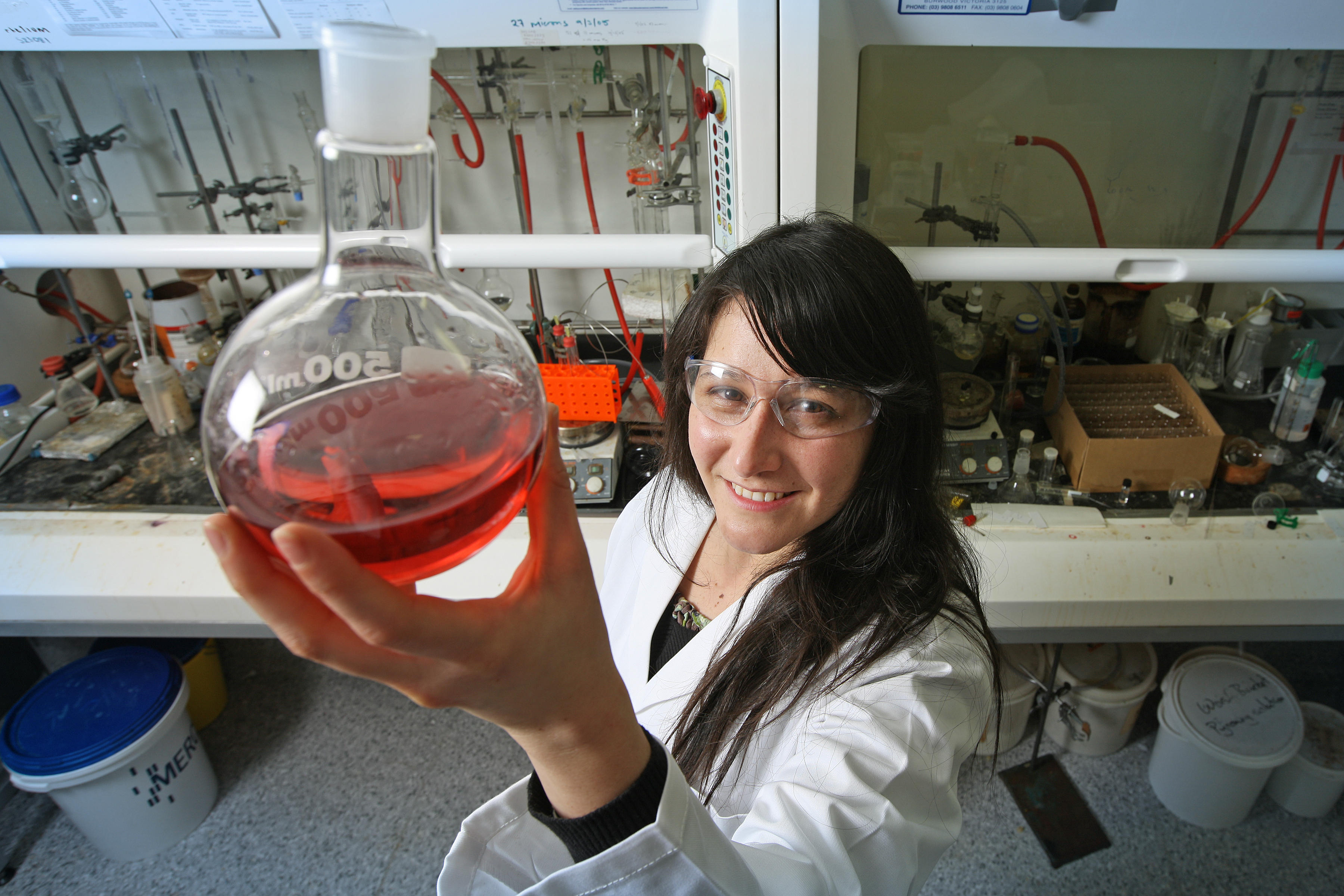
Michelle in her lab

I’m a research chemist and aim to develop new pharmaceuticals for diagnostic imaging. To show that these chemicals work, I need to undertake preclinical studies. And the best way to accomplish this is to collaborate. I synthesise new molecules, and then work with others to test them. If they have clinical utility, I need commercial collaborators to develop them so they meet pharmaceutical requirements, and I need clinical collaborators to take the compounds all the way into a clinic where they can help people. In short, if I want to make a difference, I can’t be a one-man-band. Continue reading