Networking: How to make the most of professional societies

Like-minded individuals, networking and career advancement opportunities are just some of the things professional societies can offer, says Alaina G. Levine.

Guest contributor Alaina G. Levine

Network-societies-naturejobs-blog-small

Professional societies bring together like-minded people in a scientific discipline.

Although professionals may know about their own professional society, many people do not consider the wealth of career advancement, networking and self-promotion opportunities that they offer. Yes, they know about the conference and maybe they read the newsletter, but there is so much more that you can experience from being a member or simply demonstrating your interest in membership.

A professional society is typically a non-profit dedicated to advancing the profession and the professionals of a given discipline, field, industry or sector. (In fact, this is essentially the tagline of the American Statistical Association.) In science and engineering in particular, professional societies are often are founded with the original intent of bringing together like-minded individuals to discuss topics of interest and potential collaborations, and to provide a collective voice for policy, advocacy and even funding concerns. As they grow, these same societies strive to provide opportunities for professionals in the community to become involved in the governance of the societies as official, or paid, members. Continue reading
#SciData15: Research Data for Discovery: Prepare to Share

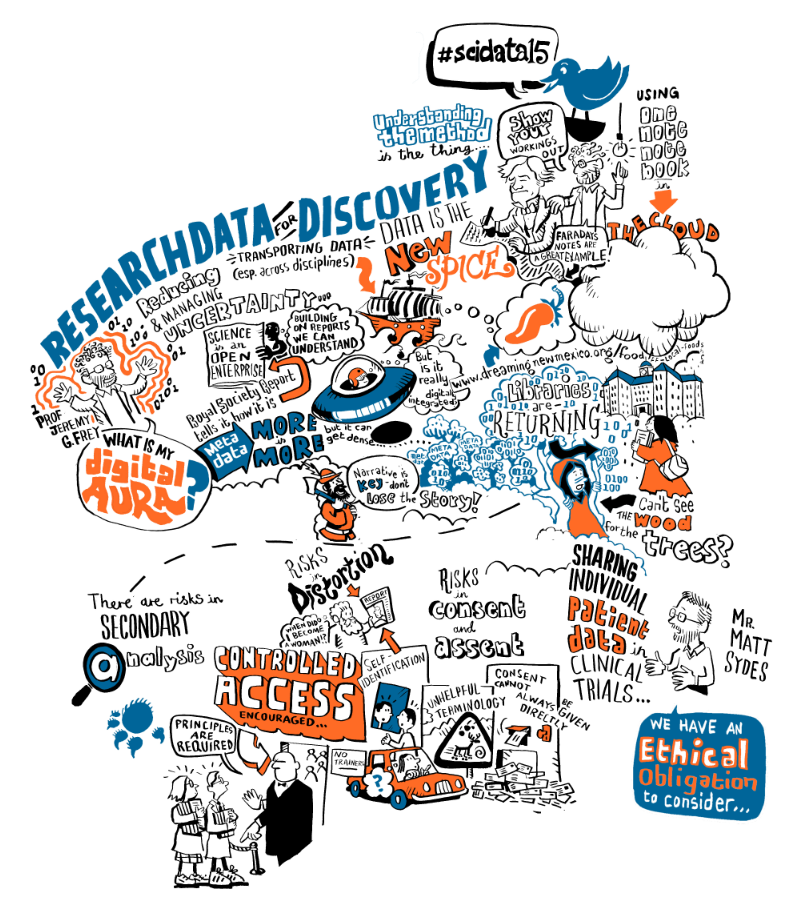
Speakers at #SciData15 advocated for a wider degree of awareness of the field of data science and the implementation of data sharing technologies.

Guest contributor Caroline Weight

naturejobs-blog-Scidata15-Research-Data-for-Discovery

{credit}Image credit: SCIENTIFIC DATA/LUDIC GROUP{/credit}

“We must engage in the idea of sharing,” said conference chair Iain Hrynaszkiewicz as the 2015 Publishing Better Science through Better Data meeting kicked off at the headquarters of Nature Publishing Group (NPG) in London on 23rd October.

Hrynaszkiewicz, who develops new areas of open research publishing and data policy within NPG/Macmillan, noted that 30 funding bodies — including the Engineering and Physical Sciences Research Council and The Royal Society — have written policies that outline requirements for data-sharing. Examples include detailed methods and protocols, microscopy images and mathematical workings, as well as meta-datasets of, for example, genotypes and microarrays.

The meeting’s aims were to increase awareness of ways to effectively share data and to discuss how to improve the efficiency, implementation and overall impact of sharing among the scientific community. A recurring issue throughout the day was how to enforce sharing, and get the concept to become part of standard, everyday scientific practice –one that seeps into the lives and habits of working researchers. Continue reading

Career decisions: Too complex for the rational brain?

Combining our rational thought process and gut instinct may give us the best of both worlds, says Julia Yates at the 2015 Naturejobs Career Expo in London.

Guest contributor Catherine Seed

Yates-NJCE15-naturejobs-blog

{credit}Image credit: Catherine Seed{/credit}

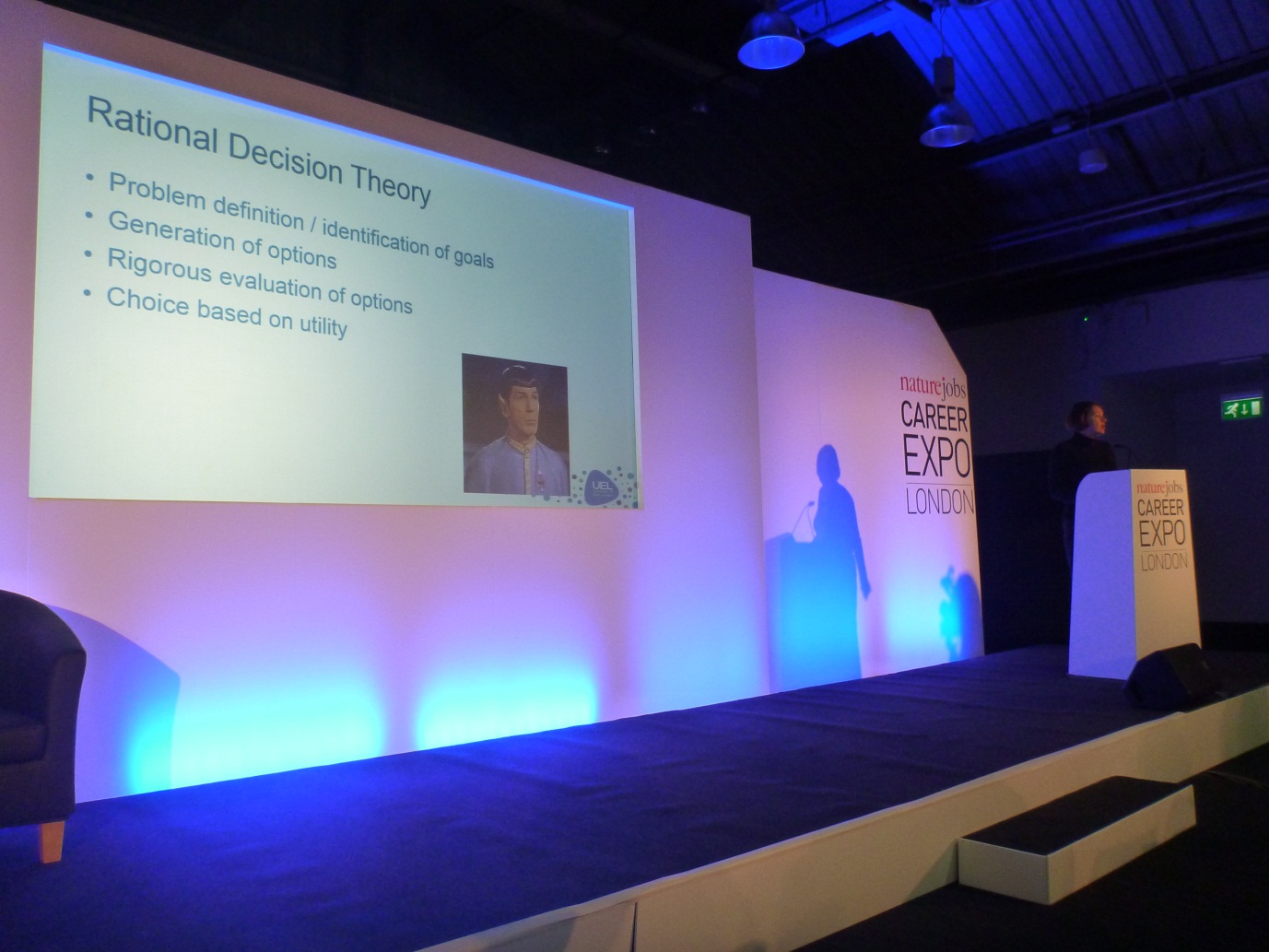
Deciding on our next career move is a struggle over which many of us have lost sleep. Whether we stay within academia or decide to start looking beyond the ivory tower, there are many paths to choose from. Conventional wisdom stresses the importance of logically thinking through the decision and weighing the available options before we decide. After all, career decisions are life changing: it is important to take time and care in making them, isn’t it? Well, maybe not. This rational approach may leave us unhappier in the long term, argues Julia Yates, a psychologist and career coach at the University of East London, UK.

While the idea of keeping career options open has traction, the reality is that there are more options than we can properly evaluate. “Actually, our brains can cope with about six,” Yates said. She noted that the UK Office of National Statistics recently catalogued some 37,000 available job titles, far more than can be rationally assimilated at once. Continue reading

Science communication: Sculpting your role

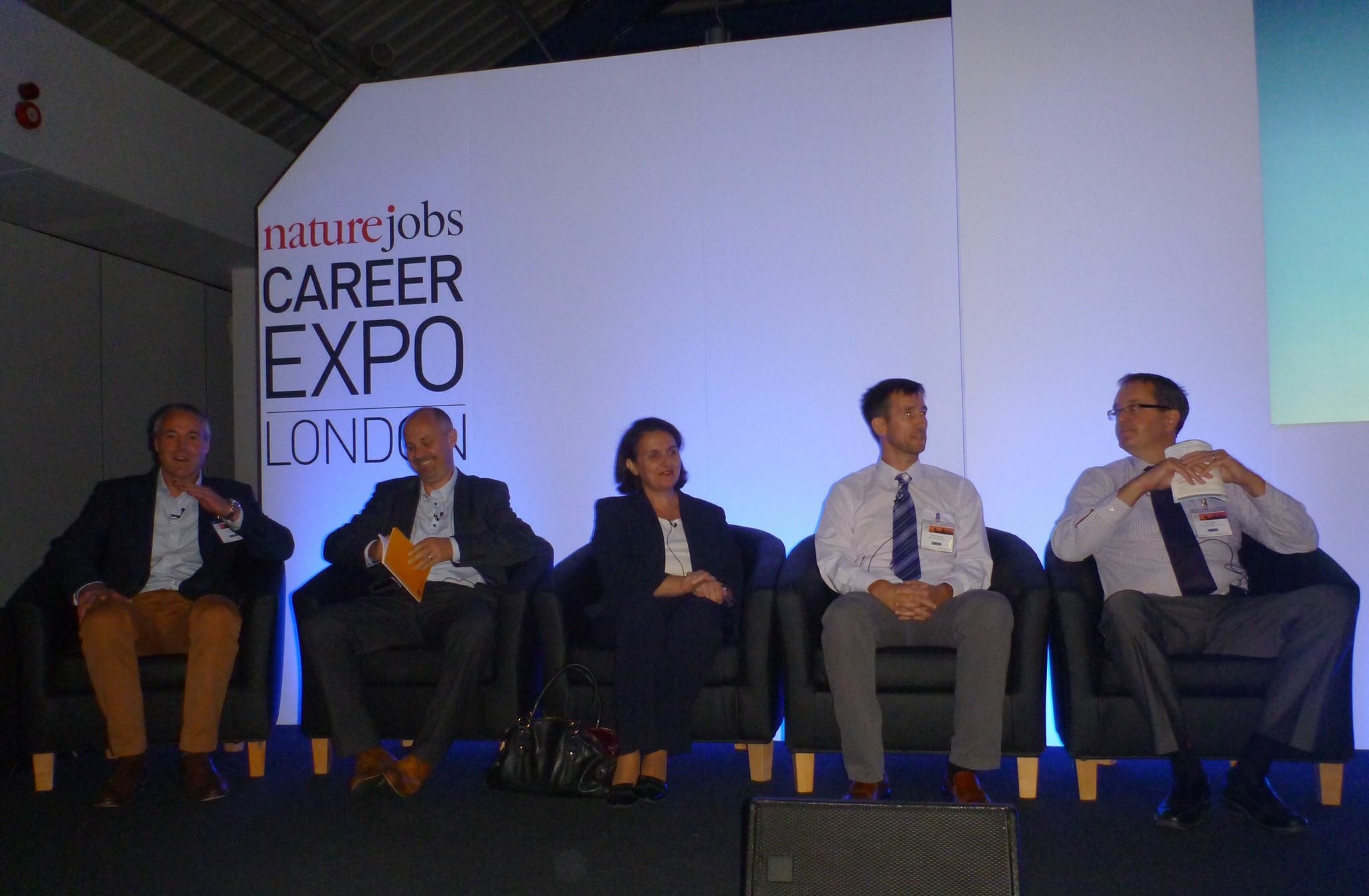
The field of science communication is highly varied, so don’t be afraid to find what works for you, says the panel of experts in science communication at the 2015 Naturejobs Career Expo in London.

Guest contributor Catherine Seed

science-communication-NJCE15-panel-naturejobs-blog

Left to right: Robert Dawson, Catherine Ball, Anke Sparmann and Belinda Quick{credit}Image credit: Catherine Seed{/credit}

Science communication is rapidly becoming a core requirement for scientists, and has long been a highly sought-after career in its own right.

There is a huge breadth and diversity in the field of science communication, agreed the panel members, yet the use of ‘science communication’ as an umbrella term often obscures this variety.  Panellists agreed that the key to developing a successful science communication career is in finding how you prefer to communicate, and determining which avenues of communication match your style. With options ranging from news reporting to working for academic institutions or societies, or in simply starting your own blog, the options are countless. The process, they said, requires much experimentation; test different forms of communication to discover what works best for you.

The objectives of organisations shape the form of communication that they use, said Robert Dawson, head of news at the BBSRC. He stressed the importance of familiarising yourself with different media outlets, universities, research institutions, and companies and their communication style.  In his own role, he communicates to scientists, journalists and other members of the media. “Science PR is about balancing the need to encourage the public to be enthusiastic about your organisation and about science, with the need to produce accurate and balanced coverage,” he said. Continue reading

Career paths: How to decide which path to take

Rui Pires Martins, researcher development advisor at Queen Mary University of London, encourages scientists to self-reflect in order to make future career decisions.

Guest contributor Rui Pires Martins

Career-path-decisions-naturejobs-blog-small

{credit}iStock{/credit}

I love cities, especially large, diverse ones. Moving from Toronto to Detroit for my PhD studies in 2000 made me appreciate the importance of the place I live in beyond just ‘somewhere near work’. I took the post knowing very little of the complex socioeconomic history that led to the city’s decline. After almost seven years of tough-love, it became apparent that Motown wasn’t really able to provide “city” at the level that I craved.

Even as starved for “urbania” as I was, my next move in 2007 was more guided by the reputation of the The Gurdon Institute, and of its scientists, than location (Cambridge, UK). The logistics of studying a stage of embryonic development that happened in the early morning hours would soon start to impact my work-life balance. So while my fellowship was a tremendous opportunity for my development, when I began to search for my next post, I set my sights on London. I also focused my search on groups working with embryonic stem cells, thinking I’d have more control over my working hours. In 2009, I took a position as a postdoctoral research assistant at QMUL, where I would work for just over four years.

Location: check. Work-life balance: fingers crossed. Continue reading

Data sharing: Contribute to the community

Data sharing can make a significant contribution to the scientific community, but it comes with challenges, says Caroline Weight.

Guest contributor Caroline Weight

We have all heard of it. We are all worried about it. We hear whispers of it in the corridors. We are advised to be careful what we say to ‘others’. We constantly check the literature. It matters to us. After all, it is our careers on the line.

‘Scooped’.

The process of publication is vigorous, competitive and tricky. It’s not uncommon for five years to pass between writing the grant application and publishing the work. Big labs with state-of-the-art facilities stand a better chance of getting their work out there first, given the extra manpower and often more-established protocols. This race for ownership of the data makes it difficult to share information and present new findings at meetings or conferences. Even at manuscript submission, there is often a chance to actively inhibit particular referees in case of conflicts of interest or personal competitors, to retain the novel concepts and data until they have been made public. Not until the publication has been accepted and is in print can you heave a sigh of relief and move on to the next project. Yet, sharing of data is essential to the progression of science in the modern world. Continue reading

Data sharing: Fewer experiments, more knowledge

Data sharing will reduce the experiments needed in the lab and will increase the speed of knowledge generation by decreasing the time spent on the generation of equivalent datasets.

Guest contributor Ana Sofia Figueiredo

biological-model-naturejobs-blogI’m a postdoctoral scientist in systems biology at the University of Magdeburg, Germany. There, I build mathematical models to understand the mechanisms behind certain biological processes, such as the process of energy production by cells under extreme conditions. These mathematical models are representations of reality and some of them can be useful, although all of them are wrong. When well parameterized with data, these models give a quantitative representation and better understanding of such biological processes. Using a systems biology approach, I can do experiments in silico that are very difficult or technically impossible to do in vitro or in vivo.  However, a model is only as good as the data it incorporates.

When I have access to publicly available experimental datasets, I can plug the data into my models and, from the synergy of combining mathematical models with experimental data, learn more about the biological system I have at hands.

Sharing data, models and experimental protocols can push forward the generation of knowledge in science. Continue reading

Open research: Open up to open access

Six myths about open access were addressed in an open research workshop at the 2015 Naturejobs Career Expo in London.

Guest contributor Gaia Donati

OpenResearch-NJCE15-workshop-naturejobs-blog2

{credit}Image credit: Gaia Donati{/credit}

How open-minded do you feel about open access publishing?

The Open Research workshop at the 2015 London Naturejobs Career Expo, led by Mithu Lucraft (head of Open Research Marketing at NPG) and Ros Pyne (Research and Development manager of the Open Research Group at Springer Nature, who manage the Open Research portal), explored several myths about open access publishing, now a well-established alternative route to disseminating scientific results.

Myth 1: Open access benefits readers, but not authors

Open access is great for readers, but the advantage for researchers may seem less obvious at first. A study of open access and subscription-only PNAS articles found that earlier, more frequent citations characterize the former category when compared with the latter. A more recent study of the citations for papers published in Nature Communications (before it became fully open access) seems to confirm these findings and extends the observations to downloads and social-media interest, with open access articles experiencing higher downloads. Interestingly, these also appear to be sustained over a longer period of time – “attention lasts longer,” said Lucraft. In this way, open access – together with similar initiatives such as open data – may well be a primary route to accelerate and facilitate science while ensuring reproducibility. Continue reading

Careers in industry: The options

As PhD studentships far out-number the quantity of post-doctoral opportunities, young researchers might want to consider a career in research outside of academia.

Guest contributor Zoe Self

Careers-in-industry-NJCE15-naturejobs-blog

{credit}Image credit: Zoe Self{/credit}

“There are careers available in academia, but they are becoming more and more limited,” said Naturejobs editor Julie Gould as she introduced the session on careers in industry at the 2015 London Naturejobs Career Expo on 18 September 2015. The auditorium was packed, with many delegates sat on the floor. Chairing the panel was Dr Ric Allott, business development manager at the Central Laser Facility, part of the UK’s Science and Technology Facilities Council. In opening, he said that he’s keen to break down the misconception that basic science occurs only in academia, while industry focuses just on applied science. “That is not the case,” he said. “There’s a real spread — a real broad application of science, research and development across both of those [academia and industry].”

Allott introduced a panel of experts from different areas of industry to give their take on careers outside of academia.

Government laboratories

Dr Dave Worton is a senior research scientist at the National Physical Laboratory (NPL), a government-run laboratory in the UK. He supervises a team of scientists and oversees multiple research projects. Worton also spends time applying for funding and attends academic meetings, much like a university researcher. The career ladder at the NPL has a similar structure to that in universities, including research scientist roles (graduate level), his position of senior research scientist (post-doctoral experience) — and beyond. “It’s very much like working in a university,” he said, but with opportunities to move laterally, into business. Continue reading