University drops test scores from graduate-admissions criteria

PhD students have led a successful push for greater inclusivity of under-represented groups in science, technology, engineering and maths.

{credit}Cody Anthony Hernandez{/credit}

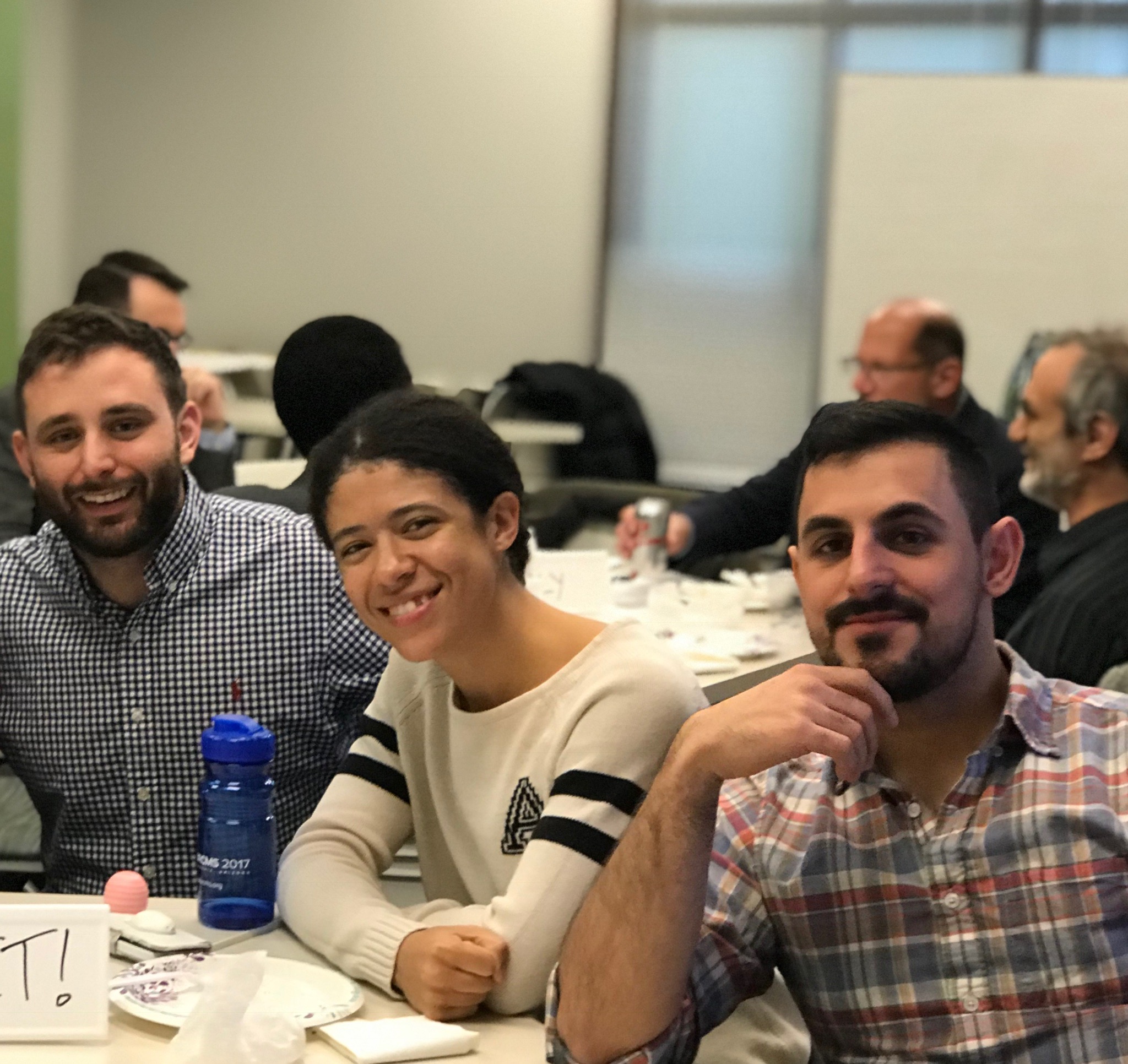
Above, GRIT co-founders Cody Hernandez, Christina Roman, and Mat Perez-Neut, PhD students at the University of Chicago in Illinois, take a break.

By Kendall Powell

Continue reading

Lowering the stakes on exams could help close the gender gap in STEM classes

Women tend to underperform in introductory STEM (Science, Technology, Engineering and Mathematics) courses, but tweaking how courses are graded could help change that.

By Diana Crow

In many undergrad STEM courses, high-stakes exams — such as mid-terms and finals — determine as much as 60-70% of the student’s overall grade. However, this emphasis on tests may be inadvertently putting some students at a disadvantage.

An emphasis on high-stakes exams at undergraduate level may be a contributor to the gender gap

Continue reading

How to mentor undergraduates as a postgraduate, and why it’s important

Spending more time mentoring undergraduates as a postgrad is good for everyone, says Jenn Summers.

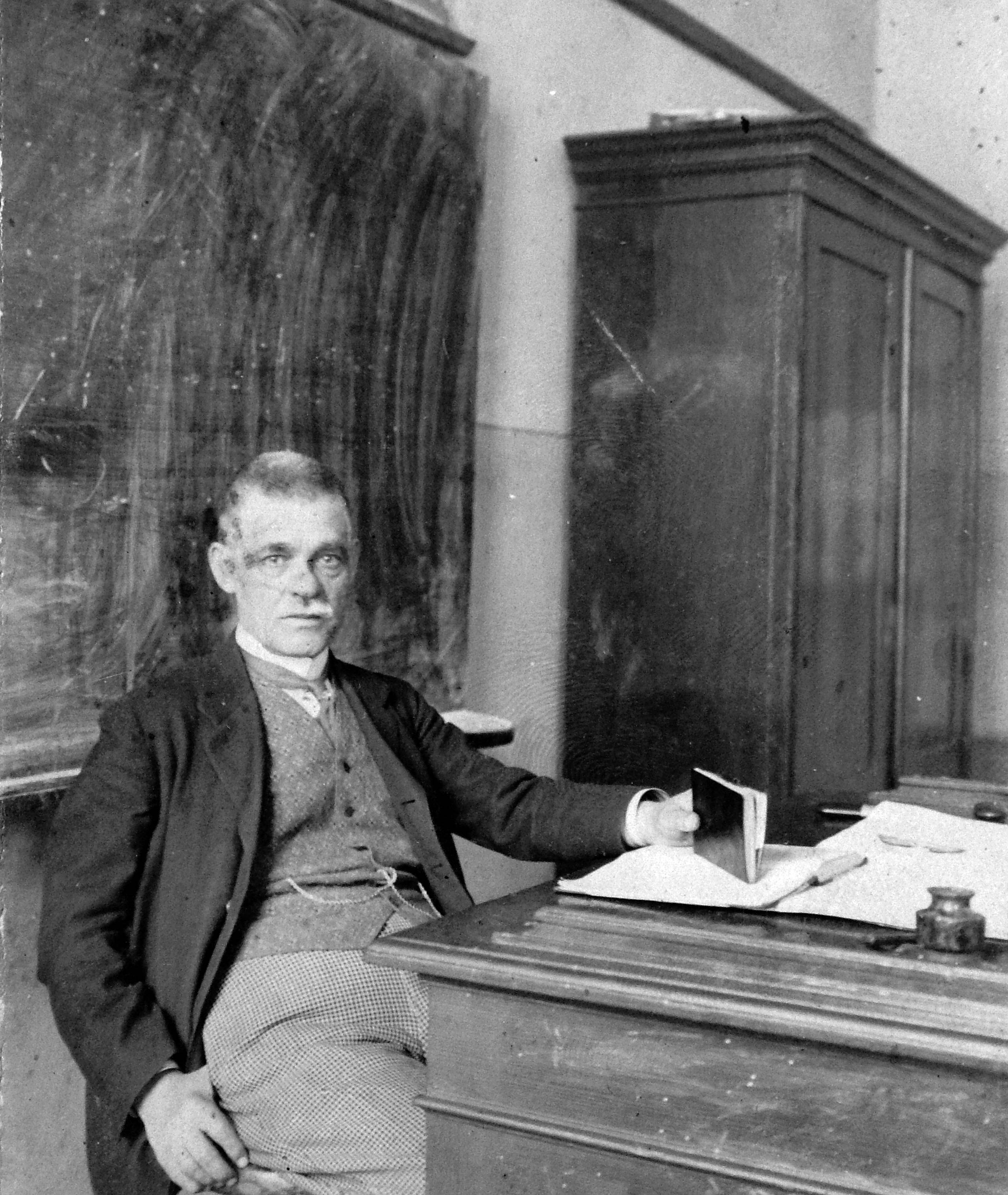
To-do lists work for some, but a more holistic approach to researcher development may bring larger rewards.{credit}By FOTO:Fortepan — ID 2278: Adományozó/Donor: Unknown. [Public domain or Public domain], via Wikimedia Commons{/credit}

There’s a difference between mentoring and doling out to-do lists. This is something I’ve learned over the past year, my first as a mentor. Mentoring undergrads became part of my job only recently – in the past, research came first. Most advisors value research outcomes over mentoring, and departments certainly place more value on publications. Before this past year, I was used to just a single undergrad working in my lab, and I thought of them as worker bees, not as future colleagues.

Put simply: I did not think about teaching in the lab.

Now, after guidance from recent research on mentoring, I realize that if graduate students like myself were more invested in mentoring, there would be many more small-but-important teaching opportunities.

Continue reading

Last-author spot tough to nail for scientists who are not white or male

Many scientists mark the evolution of their careers by publications: Their first paper, their first stint as a lead author, the first time they earn a final or senior spot. But for women and members of some minority groups, those benchmarks can be especially hard to reach, according to a study published in the May 2018 issue of AEA Papers and Proceedings.

By Chris Woolston

scales

The analysis—which covered 486,644 biomedical articles with two to nine authors published between 1946 and 2009—found that female, black and Hispanic authors were less likely than were white men to hold prestigious last-author spots. And while all scientists tended to land more last-author spots as their careers went on, that trend was slower for women and minorities. “There’s a lack of progression for those groups,” says Bruce Weinberg, a co-author of the study and an economist at Ohio State University in Columbus. Continue reading

Gender inequality in the sciences: Why is it still with us?

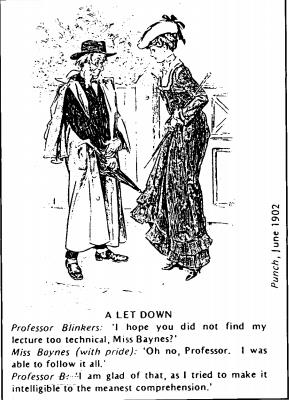
victorianwomenWomen make up 50% of our community. That should include science. There are simple steps universities and research institutes can take to make it happen, says Kate Christian.

When I was struggling though my double major in chemistry back in the early 1970s I was a rarity. I was one of two women. On the more difficult days, when the environment was feeling particularly male dominated or when I was being particularly patronized, I would try to imagine what it had been like for my grandmother when she was studying to be a doctor at the University of Sydney, straight after World War 1, or for her five sisters, who all trained for professional jobs. Compared to theirs, my situation was a breeze.

Continue reading

Women in science: Building (and drawing) the right role models

bysunnyscott

bysunnyscott

Scientists must recognise progress in the advancement of equality, but there is more to be done, Jack Leeming discovers at the 2018 L’Oréal-UNESCO For Women in Science Awards.

Amy Austin has spent her life in the sun. She grew up in Florida, studied for her PhD in Hawaii, and did work in California before moving to Argentina to continue her research. Using the sun, she’s revolutionised our understanding of the world’s carbon cycle.

Before her seminal paper, published in Nature in 2006, scientists thought that when a leaf falls to join the ground below, it is bacteria and insects that take the leaf apart. She demonstrated that the sun does most of the hard work. Zoom out to the trillion leaves that fall every autumn, and that insight becomes crucial to understanding how CO2 enters our atmosphere. Continue reading

Fewer women lead top universities

Female leadership at the world’s top 200 universities in an international ranking fell this year to 17%, according to a report – a reminder that gender equity in science remains a distant goal.

The University of Oxford has had a female vice chancellor, Louise Richardson, who took up the post in January 2016.

The University of Oxford has a female vice chancellor, Louise Richardson, who took up the post in January 2016. {credit}Getty{/credit}

Just 34 of leading universities named in this year’s annual Times Higher Education (THE) World University Rankings have female presidents, down 1% from the 36 that were led by women in 2017. Continue reading

Where are the female first and last authors?

Women remain under-represented in many areas of science, but they are especially scarce in the pages of high-impact journals, according to an analysis published online 2 March in bioRxiv.
scales

Researchers at the University of Washington in Seattle gathered names of first and last authors from papers published from 2005-2017 in 15 major science and neuroscience journals, including Nature, Science, PNAS, Nature Neuroscience and Neuropsychology Review. Nearly 10% of the names were excluded because they were relatively gender neutral, but the rest told a clear story: In these journals, authorship is a male-dominated enterprise.

For example, women accounted for roughly 25% of all first authors in Nature and Science and just over 35% of first authors in PNAS. Female first authors outnumbered men in only one journal, Neuropsychology Review, but just barely (53% vs 47%). Women made up an even smaller proportion of senior (or last) author spots, ranging from about 15% in Nature and Science to just under 40% in Neuropsychology Review.

The study found an inverse relationship between the prevalence of female authors and the impact factor of the journal—the higher the impact, the lower the chances that a woman was involved. Because publication in high-impact journals is so crucial for a scientific career, any gender gap could have serious consequences, says Ione Fine, a neuroscientist and co-author of the study. “If you aren’t published in high-impact journals, you don’t get awards or jobs,” she says. “It becomes a cascade of events.”

The scarcity of women in journals doesn’t simply reflect a lack of women doing high-quality science, Fine says. The study notes that roughly 30% of prestigious R01 grants from the US National Institutes of Health go to women. But in almost all of the journals studied, the percentage of women in senior author spots falls below that mark, a sign that the gender disparity in authorship exceeds disparities in other measures of academic excellence and productivity. “That’s the smoking gun that we have a real problem here,” she says.

Subtle biases by reviewers may make it harder for women to get published, Fine says. But she notes that women themselves may be contributing to the gender gap through a reluctance to submit to top-tier journals. “My feeling is that women are self-censoring because it’s just a more brutal process for them,” she says. “I know my male colleagues submit papers that I wouldn’t submit, and they seem to do just fine.”

Fine and colleagues call for all journals to keep statistics on papers submitted by women and minorities. They also suggest that journals could greatly reduce the possibility of bias by adopting mandatory double-blind reviews, a system in which the reviewer doesn’t know the identity—or the gender—of the study’s authors. Nature and other journals provide double-blind reviews on request, but Fine says that practice won’t protect women from bias. If an author requests double-blind review, she says, the reviewer is likely to assume that the request came from a female researcher, thus defeating the purpose.

In response, Nature Research, the parent organisation of Nature, issued a statement that read, in part: “Nature Research is committed to gender equality and our journals strive to support women in science.” The company says that it does not ask submitters to indicate gender, so it doesn’t systematically track gender statistics. It also says that it will “continue to assess the merits” of mandatory and voluntary double-blind reviews.

A 2017 Nature editorial noted that the journal has made slow progress in other areas of gender equality. For example, women accounted for just over 20% of reviewers in 2015, a small improvement over previous years. In 2013, 13% of reviewers were women. But Fine says that hiring more female reviewers won’t necessarily close the publication gap. “Women can be biased too,” she says.


Chris Woolston is a freelance writer in Billings, Montana.


Suggested reading:

Women in physical sciences

Fight the brain drain

Science is failing women


Celebrating International Women’s Day 2018: A Naturejobs roundup

Whilst young scientists working in academia today might face huge problems, women within that group face larger problems still, many of which we cover across Naturejobs. To mark International Women’s Day 2018, here’s some of our coverage of women in science and the hurdles they face.

https://www.youtube.com/watch?v=rdfqXdibc0k
Continue reading