Some science and some serendipity

What at first looks like a setback may be an opportunity in disguise, says Flavia Scialpi

I keep my business cards in the top drawer of my desk at work. They are in two bulky boxes and take up a lot of space, but I like them there because I can see them every time I pull out a pen. They are a memento of how very often you can’t foresee where an opportunity lies – and therefore to seize each and every one of them.

I have been in academia for almost half my life, and I am now engaged in my first position in industry at Synpromics, a biotech company. It is the first time in my professional career that I hold a position that requires and provides business cards.
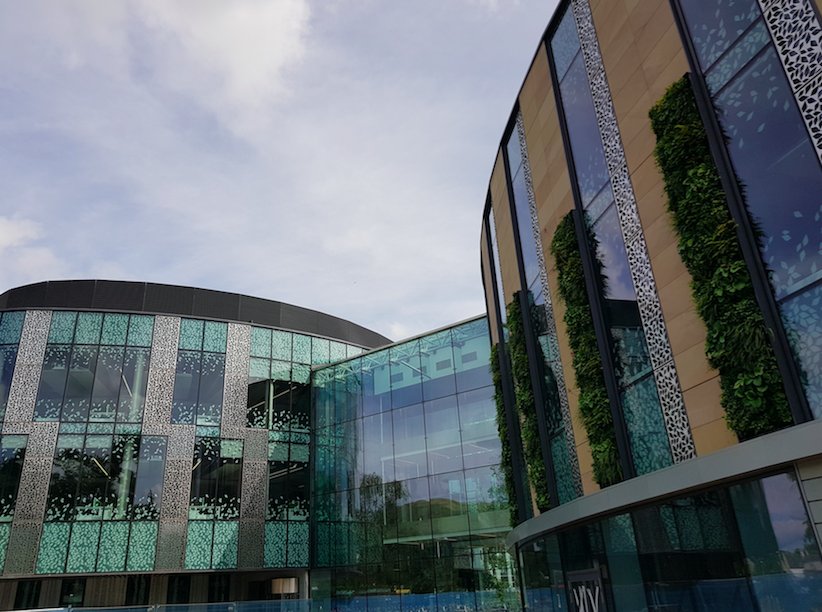
New Accomodation at Roslin Innovation Centre

Scialpi’s new Accomodation at Roslin Innovation Centre

A few years ago I thought I wouldn’t have any chance to land a job in industry. Nor was I very interested in it, to be honest; I was content with academic research, greatly enjoying the highs and bitterly venting about the lows. I went for a well-trodden path; I got my PhD in Italy, where I’m from, and then ventured abroad for a postdoc. I felt the world was my oyster and I found a second home in beautiful Scotland. Continue reading

More to science: working as a Communities Manager

Pixabay

This piece was originally published on the BioMed Central blog network, part of Springer Nature.

There’s more to science than being a scientist! Anna Perman, Communities Manager at the British Science Association, explains more about her role and how her science background has helped her along the way as part of our ‘Science > Careers’ series.

How did you get interested in science?

I never actually liked science very much when I was at school. I was much more of a fan of English, History and Drama. But when I was 15 and studying for exams, I had to teach myself about plant hormones, because I’d been absent for that part of the year.

I found the subtlety and complexity of the topic far more interesting than the multiple choice questions and fact sheets we’d studied from in class, and so I realized that actually science was a really fascinating way to understand and discover new things about the world.

What is your scientific background?

While I could always read, write and act as a hobby, I realized I could only do science as a job, so decided to study biology at University of Bristol. I still think it’s a shame that it’s so hard to do science as a hobby, and so after university, I did a Science Communication Masters at Imperial College London.

Here I learned more about people doing innovative science communication, which actively involved non-scientists in the scientific process. I worked in policy and media for a while, including in the media team at BioMed Central, before joining the British Science Association. Their vision of bringing science out of its silo, involving everyone in it, and putting it at the heart of culture and society really chimed with me.

How do you spend your day in your job?

In my job, I work with professional communities, encouraging and helping them to actively involve the public at the heart of science. I work with science communicators, to encourage best practice in creating truly two-way conversations with their audiences – we recently ran some research on the community and their needs, so that our work is really evidence-based.AnnaPerman

I run our work with Sciencewise, a government program to encourage deliberative dialogue – a technique where the public meet with scientists and policymakers to discuss science policy issues, in order to create better policy.

Finally, I run our Media Fellowships, where we link up scientists with journalists to help create understanding between these two groups. Every once in a while, I also help out on a few other campaigns and programs, including our essay series, Not Just for Scientists, and Science Matters, a series of films we released just before the general election.

All of this work involves a lot of relationship building, so lots of my time is in meetings and on the phone, or finding new and important thinkers and ideas. And because we want our ideas to be challenging and evidence-based, it’s amazing how much thinking, analysis and planning is involved.

What makes this a science job?

I spend much of my time at work thinking about the different ways that science can play a role in everyone’s lives. Whether that’s in more traditional ways, as a job, or watching documentaries and learning about science, or in some of the newer ways that are emerging – citizen science, makerspaces, and home experimentation.

It could be people having a more democratic involvement in science – in decisions about funding in the way that some medical research charities do, or in conversations and discussions with researchers to design experiments. Or even as a mindset that any of us can apply to our daily lives.

What do you like most about your job?

Within my team of five, only two of us did a science degree, which really helps make sure we’re constantly challenging each other, asking questions and thinking really openly about the role science can play in people’s lives.

I like the ambition and creativity that we’re able to bring to this work, and being able to be part of an organization that listens to a range of viewpoints, and working with people in and outside of science to challenge our views of what science can do.

Mostly, this involves being truly open to new ideas, which you can only really learn by listening, critiquing and challenging deeply held assumptions – both your own and other people’s. A lot of the same skills involved in science really!

What would you tell your younger self?

The most rewarding things I’ve done have been things that scared me a little. Taking on curating the program for TEDxAlbertopolis – an event in the Albert Hall for 4,000 people, was terrifying, but one of the best experiences I’ve had.

We brought together scientists, designers, historians, musicians, dancers and a crossword compiler, who all shared a fascinating common ground in the space between science and other subjects. I would advise myself that sometimes areas and ideas like these that seem scary or unfamiliar are actually the most valuable, because that’s where you find and learn the most.


danaberry

Building a Scientific Community – DIY for Young PIs

Growing the next generation of scientists

Development and debate about the March for Science

Science communication: A solution to the upcoming Brexit funding gap?


More to science: working as a Science Policy Analyst

This piece was originally published on the BioMed Central blog network, part of Springer Nature.

There is more to science than being a scientist! As part of our ‘Science > Careers’ series, Dana Berry asks Chris Pickett from The American Society for Biochemistry and Molecular Biology more about his role as a Science Policy Analyst.

Chris Pickett is a Policy Analyst at the American Society for Biochemistry and Molecular Biology in Maryland, USA. You can read more from Chris on the ASBMB Policy Blotter, or follow him on Twitter.

How did you get interested in science?

I always had an interest in science, but my passion for it grew through high school. I enjoyed biology and physics and started studying both as an undergraduate. About a year in, I realized physics wasn’t for me, and I was also losing interest in biology. After a particularly difficult semester, I seriously considered dropping biology altogether.

However, I had already enrolled in Molecular Biology for the spring semester, and I decided I would make my decision about my major during the summer. About two weeks into the class, I was hooked again. For good this time. This class reignited my passion for biology, and it was in this semester that I decided to go to graduate school.

What is your scientific background?

I earned my BA in Molecular, Cellular and Developmental Biology from the University of Colorado at Boulder. For two years during my studies, I worked in a lab helping them with their contributions to the Human Genome Project.

I moved on to the University of Utah for graduate school. My thesis work characterized orthologs of putative oncogenic transcription factors in the nematode, Caenorhabiditis elegans. I then worked as a postdoc at Washington University in St. Louis for five years. Here I used C. elegans again to study the intersection of aging and reproduction.

Toward the end of my graduate studies and then through my postdoc, I became increasingly fascinated by the role federal policy plays in the functioning of the scientific enterprise. Specifically, I was interested in policies that affected the training of graduate students and postdocs.

Once I realized I was more interested in policy rather than academic jobs, I began applying for science policy fellowships. The American Society for Biochemistry and Molecular Biology offered me its fellowship in 2012 and I’ve been here ever since.

How do you spend your day in your job?

ChrisPickett

Congress and federal agencies appear to move quite slowly, but science policy is a pretty fast-paced field. Because of this I’ve found it difficult to describe a standard day. However, my days are often characterized by four different activities:

Research: Keeping up to date on current events and the actions of Congress and the administration is essential to a job in policy. It also means taking closer looks at policies or legislation that the society is interested in so that we can determine our best course of action.

Meetings: We meet regularly with members of Congress and their staff, staff at the NIH, the NSF and other science-related federal agencies, and representatives of other scientific societies. These meetings can be 30-minutes long, or they can take an entire day.

Organization: Keeping all of my projects on schedule can require a fair amount of organization. Furthermore, large events, like coordinating the ASBMB Student/Postdoc Hill Day, takes a lot of preparation and organization.

Writing: I would say 85% of my time is spent writing, and it’s all kinds of policy writing. Position statements, white papers, news releases, blog posts and even emails. Clear written communication is vital to a career in science policy.

Each day brings a different mix of these four tasks. Some days I’m on Capitol Hill all day, whereas others I’m writing one specific document because of a time crunch. And then some days see a healthy mix of all four.

What makes this a science job and what do you like most about it?

Many of the skills needed for science policy do not differ so much from the skills gained working at the bench. First, you need to think critically, and be able to discern changes to the forest and the trees. Policy and politics have many moving parts, and you need to understand how your group’s position or policy will affect other parts of the research enterprise.

Second, you need to pay attention. While at the bench, you read scientific publications. In policy, you read the news and policy-specific publications. Understanding what is going on in the larger government is essential.

However, some skills need to be learned on the job. I had limited policy-writing experience before landing my fellowship. But once I arrived, I was writing many different pieces, sometimes in the same day, for a variety of audiences. This is actually what I like most about the job.

News releases have a different audience than blog pieces, for example. Being able to switch communication styles depending on the audience takes quite a bit of practice. Similarly, understanding how each federal agency works with one another and how they work with Congress is something that is best learned while doing the job of policy.

What advice would you give your younger self?

It’s a romantic notion that putting all of your effort into a single career path, like becoming academic faculty, will result in success. So many things, foreseen and unforeseen, can alter your path and planning for only one outcome is foolish.

To put it another way, do you focus all of your time on a single line of experiments, or do you mitigate the risk of failure and work on multiple lines of experiments?

I would tell myself to sit down and figure out Career Plan A. And once that was mapped out, to figure out what Career Plans B, C and D were. Then I’d tell myself to put the majority of my effort into Plan A, and recognize just how much of that work is also relevant for following Plans B, C and D.

Furthermore, should the opportunity arise to participate in something that improves your resume for one of your possible career paths, take it. If Plan A works out, you will be able to contribute much more to your organization due to your broad experiences and training.

Should the time come to bail on Plan A, you will already have a body of work for your other career paths, and it will be straightforward to gauge what you need to do to follow one of these paths.

danaberry

Dana Berry graduated with a MS in Microbiology from New York University before joining BMC in 2014, where she manages the infectious diseases portfolio.


Suggested posts

Finding job satisfaction as a policy analyst

Q&A with Gerjon Ikink: Using policy to change science

Science careers are careers that involve science


Science careers are careers that involve science

This piece was originally published on the BioMed Central blog network, part of Springer Nature.

Dana Berry announces the launch of a new series ‘Science > Careers’ putting the spotlight on scientific careers outside of academia. Here she talks about her own experiences and how she hopes the series will inspire others that are searching for something different.

ScienceCareers640c

Dana Berry. Originally published 9 Feb 2016.

During my senior year of high school I decided that I wanted to be a research biologist. From there it was a straight path; I got my bachelor’s degree in biology, while also working in a lab, spent a year at the NIH after graduation, and then started at NYU for a PhD program in biomedicine.

Two years in I decided to leave. Not only was I not happy with what I was doing in the short term, I wasn’t happy with where it would take me. Leaving school with my masters was a difficult decision, and absolutely right for me, but figuring out what to do next was even more difficult.

I still wanted to be involved in science, I still loved biology, but being in a lab just didn’t fit. How do you do science without being a Scientist?

Searching for advice

I sought out as much advice as I could from other students, postdocs, professors, friends of friends, blogs, anyone and everyone. Because I only had research experience on my CV, and I was opting to not continue lab work in any form, I didn’t know what I was looking for, never mind how to find it.

Searching for a job is difficult at the best of times, but when you don’t know what you’re looking for? Seemingly impossible.

On the whole, the job advice I got was either vague or was only helpful in retrospect. Much of it left me more confused about my future than I was before. What exactly are those jobs that are supposedly so plentiful for graduate students? Typing ‘science communication’ into a job search engine gave me search results that were broad, baffling and relatively useless.

Where I work now

By what still seems like sheer luck, I actually found a job that would utilize my experience and involved my interests. For more than a year now I have been working as a Journal Development Editor at BioMed Central, working mainly with microbiology journals.

Seeing as I got my masters in microbiology, it’s been a pretty good fit. Working at a desk, instead of at the bench, has been great. I get to keep up with the latest research, in a much broader context than as a student, attend conferences to meet with our editorial boards and other leading researchers, and work towards improving the lives of researchers and citizens alike.

More than that, and outside of the obvious publishing experience, I’ve gained experience in marketing, science communication, content management and social media. I’ve also come to discover just how vast the world of science is beyond the lab.

So much out there

The web of scientific careers is bigger than most people realize, and definitely bigger than most graduate students see on a regular basis or are even made aware of. Although career training in graduate school is getting better, there’s still an entrenched feeling of two opposing monolithic choices for students: ‘lab research’ or ‘other’.

These two options are not separate, and they’re significantly more than just two categories. Since I started at BioMed Central, I’ve learned about new science jobs nearly every day. Both jobs that I’ve never heard of and jobs that I knew about, but didn’t know that they could revolve around science. I love finding out about these like-minded people, people who love science but aren’t ‘Scientists’.

Using our experience to educate others

I still think back to the difficulties I had looking for a job two years ago, and I wish I could tell the person I was then everything I know now. But since we haven’t invented that technology yet, I am going to share this knowledge with others who are currently going through it.

I am very happy to announce a new series all about careers in science. Previous posts on our network have touched on career exploration, but with this series I want to delve deeper into what these careers truly involve.

Science is not a solitary pursuit, but a team effort, made up of teachers, journalists, policy makers, publishers, as well as researchers. But how does this team work? What do they do and where do they do it?

Starting right here at BioMed Central, our next post will identify and explain four job types in our publishing team, and how the employee’s previous experience lends itself to their current day-to-day tasks.

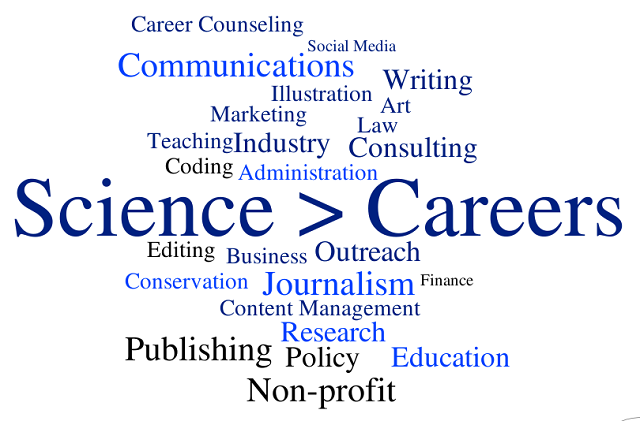
Beyond that we’ll have in depth interviews with people in science policy, outreach, teaching, communications, art, administration, technology and probably more publishing. We want to explore every nook and cranny of every sector you’ve heard of, those you haven’t, and then some.

danaberry


Dana graduated with a MS in Microbiology from New York University before joining BMC in 2014, where she manages the infectious diseases portfolio.


Suggested posts

Surviving academia as an early career researcher: an unreliable guide

Careers for scientists away from the bench

Adios to academia

African astronomy and how one student broke into the field

Africa is investing in a future of astronomy research, but students need access to inspirational lecturers, says Gina Maffey.

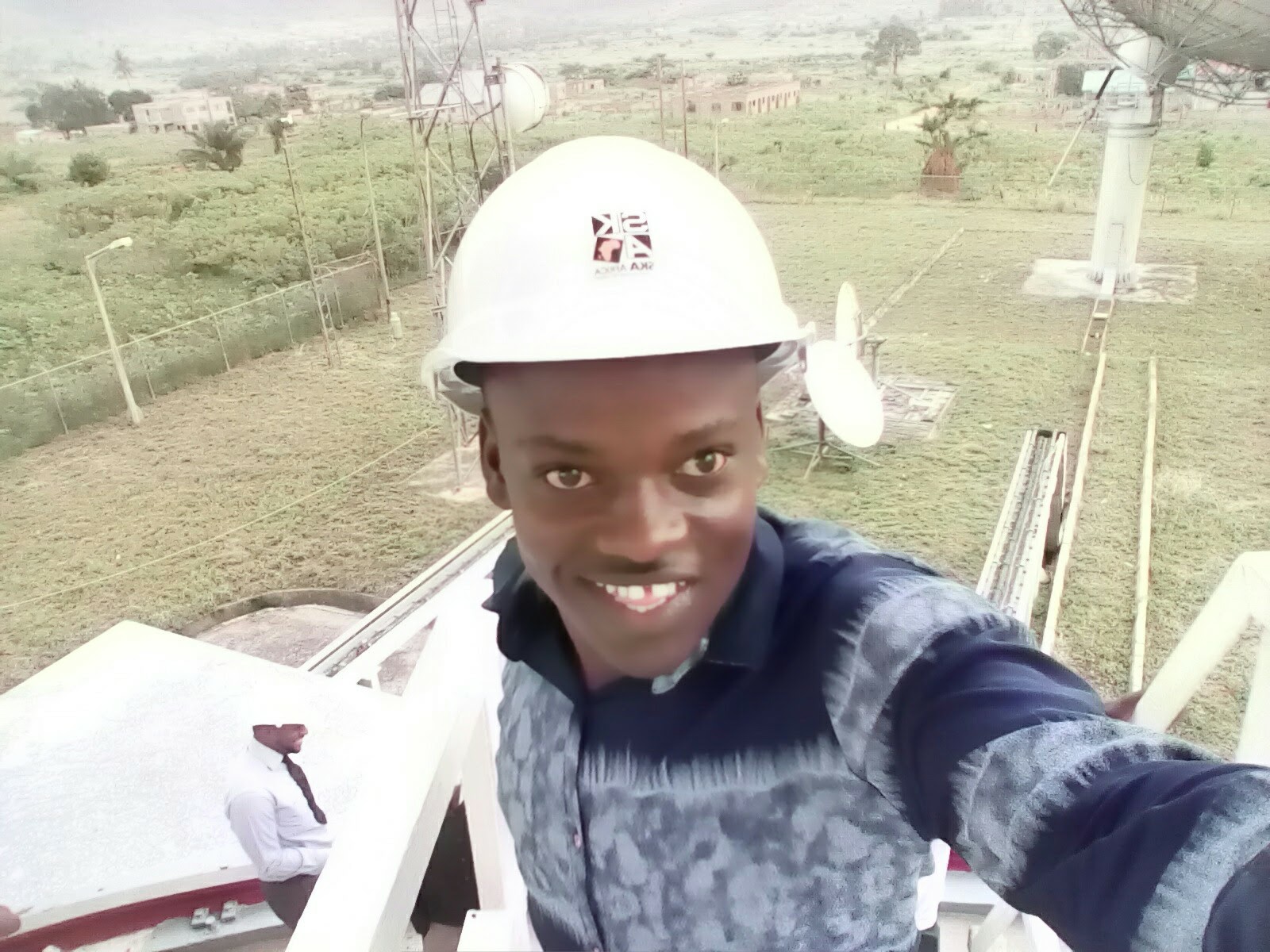
Mutie at the Ghana Radio Astronomy Observatory (GRAO) at Kuntuse, Ghana

Isaac Mumo Mutie

What do you do when the degree you want to study is not offered by your university?

You study it anyway.

“I did a lot of personal research online, looking for answers” says Isaac Mumo Mutie, an astronomy student who studied at the Technical University of Kenya. While studying for a Bachelor of Technology in Technical and Applied Physics, Professor Paul Baki introduced Mutie to astronomy, and Mutie would consult with him in his spare time.

“He would ask me ‘why are you interested? This is not part of the curriculum.’ But I insisted.” Continue reading

Naturejobs podcast: A fresh start

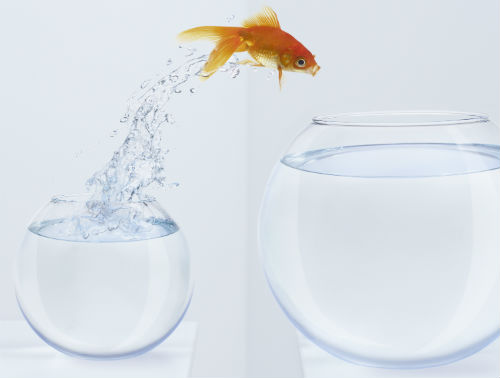
Goldfish jumping to a bigger bowl

Adam Gault

Career adventures require a leap of faith and can be hard to navigate. Our first podcast of 2018 examines the impact of fresh starts and how having transferable skills can deliver career fulfilment for both science PhDs and retiring lab heads.

Continue reading

How will open data advance scientific discovery?

SciData writing competition winner Sarah Lemprière explains how making the world’s deluge of data open will help science

As a global population we are generating more data than ever before. The International Data Corporation (IDC) estimates that by 2020 over 80 million gigabytes of data will be produced every minute. Each second, the world will generate enough data for a 50-year-long Netflix binge. Scientific investigation is a big part of that: every day huge amounts of data are generated on everything from the behaviour of supernovae to the 3D structure of proteins in the brain. When the world’s largest radio telescope comes online in 2020, it alone will produce 180,000 gigabytes of data a minute.

Previously, most of this scientific data would never be made public — the need to produce a compelling story for a journal article means that many datasets showing ‘negative’ results will never be published.

Continue reading

How to escape a ‘paint-by-numbers’ career

Academia trains us to follow pre-defined paths when planning our careers, but the most exciting and rewarding careers are designed by their owners. If you’re willing to take some risk and create your own design, you can have a more exciting career than you ever imagined.

By David M. Giltner, PhD, Founder of TurningScience

If you’re like me, you entered university with a plan: to follow a career path that many had followed before. This is common, because school trains us to follow directions. Earning a degree involves predefined steps:

‘Complete this application adequately, and we will admit you.’

‘Answer this list of questions correctly, and you will pass the test.’

‘Pass this list of classes, and we will give you a degree.’

It’s natural to continue looking for a path to follow after graduation, but, in my view, that’s not how the most exciting careers are built. I’ve found my own way, founded a company, and enjoyed an immensely rewarding career along the way.

Career-path-decisions-naturejobs-blog-small

{credit}iStock{/credit}

Continue reading

Different “Me”s open up a new world on a personal and scientific level

Haruka Yuminaga’s experience moving back to Japan has been a challenge — but has helped her become a better scientist.

A light grey room is filled with 23 grey desks, scattered in pens and books. In one corner sits a refrigerator packed with snacks. Next to it is a rice cooker. The walls are covered in pictures of fun lab memories. Amidst the clutter, some students joke and laugh; chat with a professor about their experimental procedures; analyze data on their laptops and unconsciously wrinkle their brows.

umi lab

The Ushiba lab

It is a usual morning at the Ushiba lab where I’m doing an internship this summer. I am a rising junior at Macalester College in Minnesota, USA. Before spending two years in a U.S college, I spent all my life in Japan, and expected being back in a Japanese lab to feel natural. But my assumption was wrong.

Reverse culture shock

Continue reading