Science careers are careers that involve science

This piece was originally published on the BioMed Central blog network, part of Springer Nature.

Dana Berry announces the launch of a new series ‘Science > Careers’ putting the spotlight on scientific careers outside of academia. Here she talks about her own experiences and how she hopes the series will inspire others that are searching for something different.
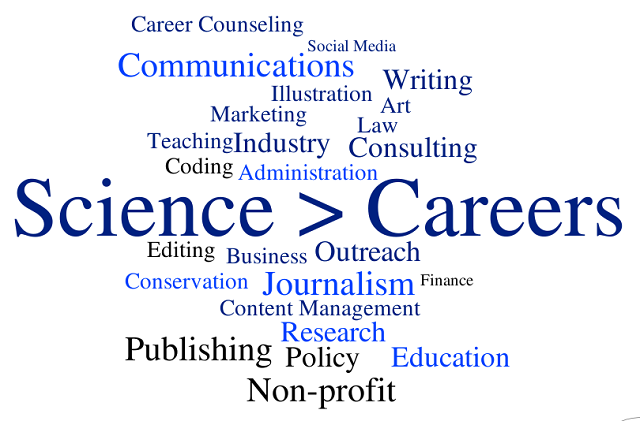
ScienceCareers640c

Dana Berry. Originally published 9 Feb 2016.

During my senior year of high school I decided that I wanted to be a research biologist. From there it was a straight path; I got my bachelor’s degree in biology, while also working in a lab, spent a year at the NIH after graduation, and then started at NYU for a PhD program in biomedicine.

Two years in I decided to leave. Not only was I not happy with what I was doing in the short term, I wasn’t happy with where it would take me. Leaving school with my masters was a difficult decision, and absolutely right for me, but figuring out what to do next was even more difficult.

I still wanted to be involved in science, I still loved biology, but being in a lab just didn’t fit. How do you do science without being a Scientist?

Searching for advice

I sought out as much advice as I could from other students, postdocs, professors, friends of friends, blogs, anyone and everyone. Because I only had research experience on my CV, and I was opting to not continue lab work in any form, I didn’t know what I was looking for, never mind how to find it.

Searching for a job is difficult at the best of times, but when you don’t know what you’re looking for? Seemingly impossible.

On the whole, the job advice I got was either vague or was only helpful in retrospect. Much of it left me more confused about my future than I was before. What exactly are those jobs that are supposedly so plentiful for graduate students? Typing ‘science communication’ into a job search engine gave me search results that were broad, baffling and relatively useless.

Where I work now

By what still seems like sheer luck, I actually found a job that would utilize my experience and involved my interests. For more than a year now I have been working as a Journal Development Editor at BioMed Central, working mainly with microbiology journals.

Seeing as I got my masters in microbiology, it’s been a pretty good fit. Working at a desk, instead of at the bench, has been great. I get to keep up with the latest research, in a much broader context than as a student, attend conferences to meet with our editorial boards and other leading researchers, and work towards improving the lives of researchers and citizens alike.

More than that, and outside of the obvious publishing experience, I’ve gained experience in marketing, science communication, content management and social media. I’ve also come to discover just how vast the world of science is beyond the lab.

So much out there

The web of scientific careers is bigger than most people realize, and definitely bigger than most graduate students see on a regular basis or are even made aware of. Although career training in graduate school is getting better, there’s still an entrenched feeling of two opposing monolithic choices for students: ‘lab research’ or ‘other’.

These two options are not separate, and they’re significantly more than just two categories. Since I started at BioMed Central, I’ve learned about new science jobs nearly every day. Both jobs that I’ve never heard of and jobs that I knew about, but didn’t know that they could revolve around science. I love finding out about these like-minded people, people who love science but aren’t ‘Scientists’.

Using our experience to educate others

I still think back to the difficulties I had looking for a job two years ago, and I wish I could tell the person I was then everything I know now. But since we haven’t invented that technology yet, I am going to share this knowledge with others who are currently going through it.

I am very happy to announce a new series all about careers in science. Previous posts on our network have touched on career exploration, but with this series I want to delve deeper into what these careers truly involve.

Science is not a solitary pursuit, but a team effort, made up of teachers, journalists, policy makers, publishers, as well as researchers. But how does this team work? What do they do and where do they do it?

Starting right here at BioMed Central, our next post will identify and explain four job types in our publishing team, and how the employee’s previous experience lends itself to their current day-to-day tasks.

Beyond that we’ll have in depth interviews with people in science policy, outreach, teaching, communications, art, administration, technology and probably more publishing. We want to explore every nook and cranny of every sector you’ve heard of, those you haven’t, and then some.

danaberry


Dana graduated with a MS in Microbiology from New York University before joining BMC in 2014, where she manages the infectious diseases portfolio.


Suggested posts

Surviving academia as an early career researcher: an unreliable guide

Careers for scientists away from the bench

Adios to academia

Podcast: How to be a consummate networker

networkingThere’s nothing sleazy about networking and it’s not just something to do at conferences, according to careers consultant Alaina G Levine.

It is a two-way process, she adds, an “honourable” exchange that builds capacity and contributes value. Levine, author of Networking for Nerds, shares her top tips, including the all-important “art of the follow-up.”

Peter Fiske says solid networking skills helped him to return to academia after 16 years in industry, most recently as CEO of Pax Water Technologies.

Peter also describes how academia has changed. “The intensity has gone up. People in research work so hard. Oh my God, they work all the time,” he tells Julie Gould. Continue reading

March for Science 2018 gears up

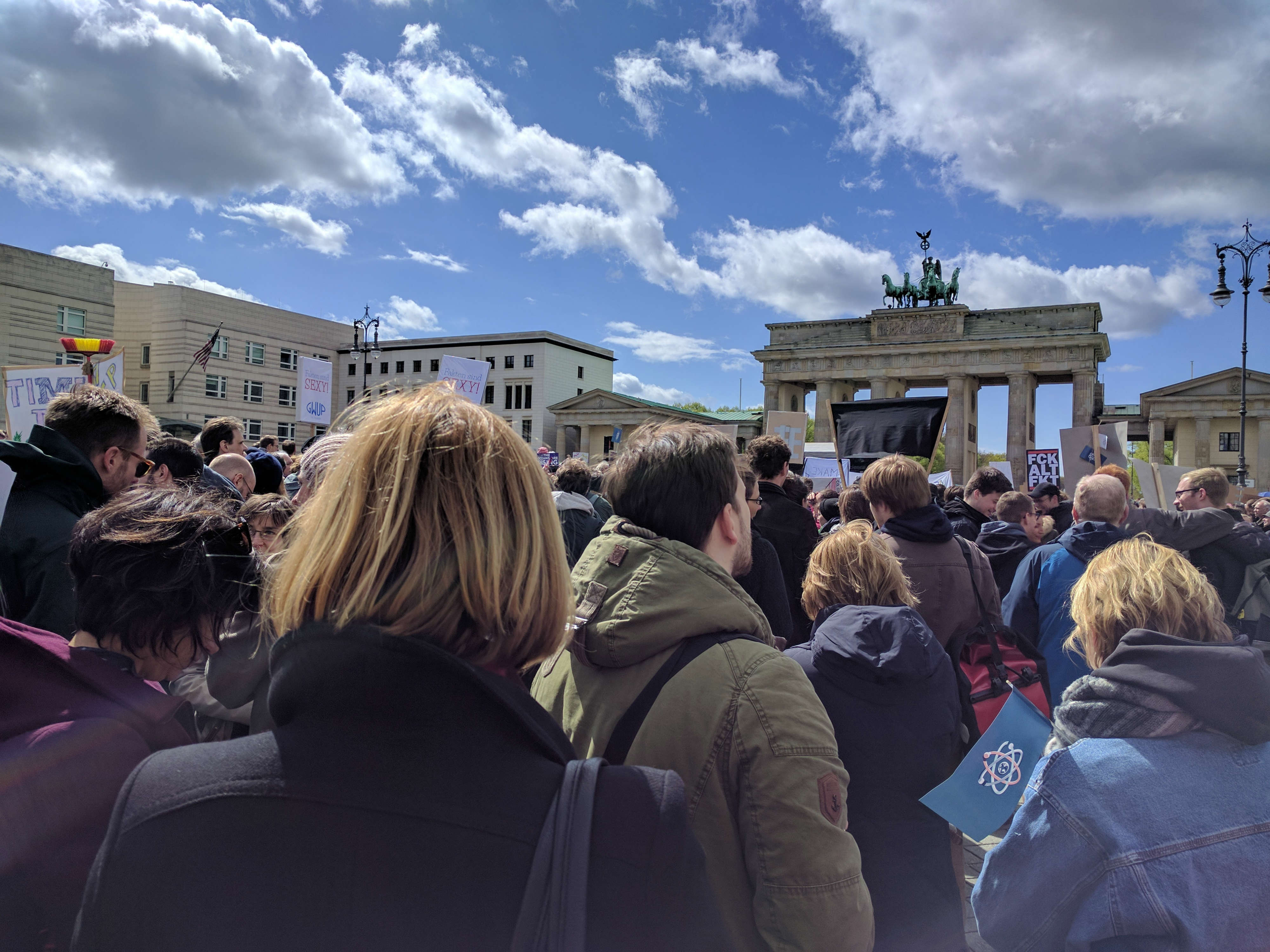
Organisers of the second annual March for Science , scheduled for 14 April in Washington DC, are hoping to recapture the energy and enthusiasm that prompted more than 1 million researchers and others to march together last year across 600 cities around the world in support of evidence-based policy and upholding science for the greater good.

MarchforScience-Judith-2-smaller

Caroline Weinberg, an organizer for the upcoming march in Washington DC, expects smaller crowds than last year, although she admits her prediction may again be off the mark. “Last we expected 40,000 people, and we got around 100,000,” she says. She adds that most of the marchers in the nation’s capital city were concerned citizens, not practicing researchers.

In Washington DC and elsewhere, organisers envision events with fewer marchers, placards and chants but more advocacy-related activities. Weinberg and others aim to offer hands-on projects for those taking to the streets in Washington DC. In Berlin, Germany, organisers are planning a “local hero” programme where scientists will give public talks at bars, cafes and other venues. March-related activities in Portland, Oregon, will include speeches by local politicians and a science expo with at least 30 presenters, including a juggler who demonstrates the principles of physics.

The election and inauguration of Donald Trump for US president helped to spur marchers last year, and Weinberg says that she suspects that some scientists this year may be motivated to speak out against Trump’s recent budget proposal, which called for drastic cuts to the US Centers for Disease Control and Prevention spending plan . But she adds that the march and other forms of science activism shouldn’t depend on crises to draw interest and participation. “Our challenge is to build up a huge crowd and send a message that galvanizes everyone but to also make it sustainable,” she says. “We can’t allow our advocacy to be tethered to those moments.”

Roughly 15,000 people attended last year’s march in Portland, but that kind of enthusiasm will be hard to replicate, says Denesa Oberbeck, a behavioral neuroscientist at the Oregon Health & Science University in Portland and a member of the steering committee for this year’s march. “There’s some fatigue and some burnout, but we need to keep fighting,” she says. “We have to maintain an activist stance.”

Kristine Wadosky, a cancer researcher at Roswell Park Cancer Institute in Buffalo, New York, marched in Washington DC last year carrying a sign that read “Curing cancer is non-partisan.”  This year, she plans to join the march in Chicago, Illinois, where she will give a talk on advanced prostate cancer for the annual meeting of the American Association for Cancer Research. She says that she’s just as energized about science advocacy as ever before, and she thinks that many other young scientists feel the same way.

This time, Wadosky says, she won’t need a sign to send her message, which isn’t especially complicated. “I just want to go to show that I’m a scientists, and I exist,” she says.


Chris Woolston is a freelance writer in Billings, Montana.


Suggested reading:

Growing pains
In support of the March
Reflections on a movement

Isolation and alienation force female researchers out of US tech jobs

US corporate training programmes aimed at retaining female researchers in technology may be focussing on the wrong targets.

IMG_4078

A report, out on 7 February in Information Systems Journal, examines the results of in-depth interviews with 23 women in information-technology jobs across nine US firms, including consultancies, a bank and an insurance company. Study authors sought to identify the challenges faced by female researchers in industrial technology positions. Continue reading

Naturejobs podcast: A fresh start

Goldfish jumping to a bigger bowl

Adam Gault

Career adventures require a leap of faith and can be hard to navigate. Our first podcast of 2018 examines the impact of fresh starts and how having transferable skills can deliver career fulfilment for both science PhDs and retiring lab heads.

Continue reading

What Can You Be with a PhD?

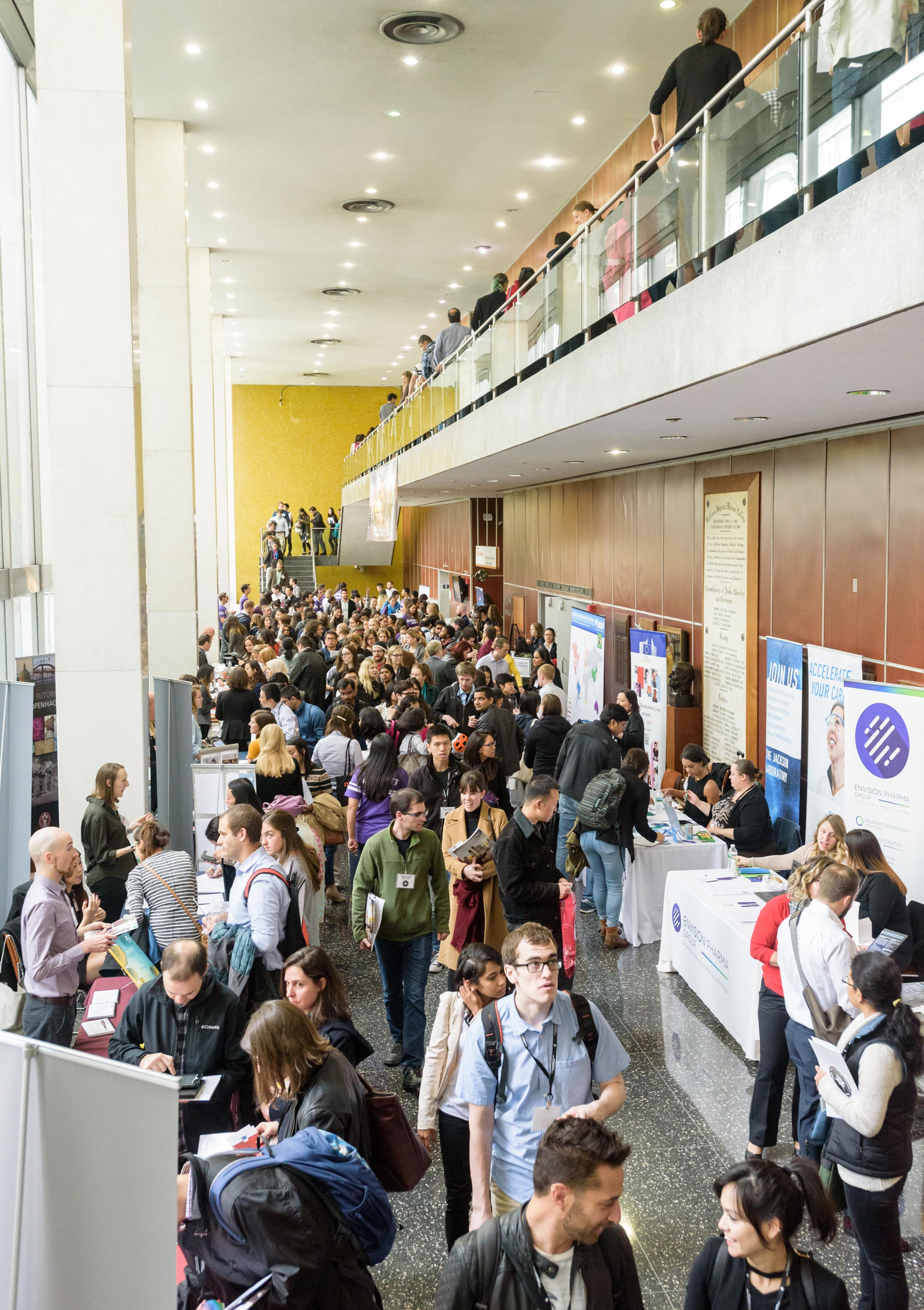
What does it take to land your dream job beyond academia? Do PhDs even have marketable skills? the 2017 What Can You Be with a PhD career symposium has some answers, reports Elisa Lazzari.

171104_0571smaller

{credit}Jeff Weiner/NYU Postdoctoral Affairs Office{/credit}

Continue reading

Building skills through a gig

Some researchers are providing short-term services such as writing science news articles and consulting on industry products to bolster their skills outside the lab. These side gigs can be valuable for career development, says Josh Henkin. (See related story here.)

GettyImages-95692019-smaller

{credit}Noel Hendrickson/Getty{/credit}

Continue reading

Naturejobs podcast: Flexibility and forward planning

#IAmAScientistAndA-smaller

London Naturejobs Career Expo speakers, exhibitors and attendees share how flexibility in a scientific career is beneficial.

“Science is a multifaceted and large enterprise, and there are lots and lots of very interesting ways to contribute to science” said Venki Ramakrishnan, president of the Royal Society, lab leader at the MRC Laboratory of Molecular Biology and joint winner of the 2009 Chemistry Nobel, at the 11th annual Naturejobs London Career Expo on Oct 4th 2017.

Ramakrishnan encourages scientists to think about the wide variety of options available to them; that having a PhD in science doesn’t mean you need to follow the tenure track career path. Continue reading

How to escape a ‘paint-by-numbers’ career

Academia trains us to follow pre-defined paths when planning our careers, but the most exciting and rewarding careers are designed by their owners. If you’re willing to take some risk and create your own design, you can have a more exciting career than you ever imagined.

By David M. Giltner, PhD, Founder of TurningScience

If you’re like me, you entered university with a plan: to follow a career path that many had followed before. This is common, because school trains us to follow directions. Earning a degree involves predefined steps:

‘Complete this application adequately, and we will admit you.’

‘Answer this list of questions correctly, and you will pass the test.’

‘Pass this list of classes, and we will give you a degree.’

It’s natural to continue looking for a path to follow after graduation, but, in my view, that’s not how the most exciting careers are built. I’ve found my own way, founded a company, and enjoyed an immensely rewarding career along the way.

Career-path-decisions-naturejobs-blog-small

{credit}iStock{/credit}

Continue reading