Balancing act

How do you find work-life balance as an early-career scientist?

You can barely keep up with your own research programme, let alone grantwriting obligations, publishing and staying abreast of literature, news and other information. Is there such a thing as a 40-hour week, or is it as extinct as an 8-track tape?

balance-716342_960_720

Continue reading

Mobilise your creativity

How do you break into the publishing world?..

…That is, media and publishing, not publishing your manuscript. It isn’t the easiest path ever, but there is a breadth of opportunities and creativity, as celebrated this week by the UK Department of Culture, Media & Sport and the Creative Industry Council. And ‘break’ is not the key word – you don’t need a break. You just need to get creative – and get started.

newspaper-pile-naturejobs-blog-2

{credit}Getty Images/Mateusz Zagorski{/credit}

Continue reading

Book Smart

It’s hard sometimes to tell the full story about your research – its implications and impact, its repercussions and significance – in a single manuscript.

Data-sharing-naturejobs-blog

You may have lots more to say about your discipline or field, too. Why not write a book? It isn’t easy, but it is rewarding to tell your story to a broader audience than manuscript editors and journal subscribers. And while you’re not likely to get rich from your book, you may find that it presents you with new opportunities – to raise your profile, to collaborate, to develop a novel project. Continue reading

Networking: Forge ahead

Networking. The word conjures up almost as much fear and loathing as the thought of a grant denial or manuscript rejection. The two words that comprise it aren’t much better: ‘net’, as if you’d be trapped, and ‘working’, when you’re already doing plenty of that.

But you can’t fling it off like a mosquito. To ‘network’ is simply to connect with others, and we’ve rounded up expert advice on why it’s important, even crucial – and how you can network in ways that don’t involve too much cringing or trying to schmooze strangers at your field’s annual conference.

It’s no secret that social media has created manifold ways to establish and boost your profile. But used appropriately, these platforms can help you to forge vital links. Twitter, for example, isn’t only a means of publicising yourself and exchanging information. It’s a great way to network virtually – and maybe even get a job.

You may know by now that there are many social-media sites specifically for researchers and academics. Are you familiar with all of them? Their benefits can be legion, finds a Nature survey: they can help you with collaborative discussion, accessing papers, sharing results and more.

Still, you have to get off your phone at some point and do some real face time. It isn’t easy for everyone, yet it doesn’t have to be an introvert’s nightmare. The key, says Nature Careers columnist Peter Fiske, is to aim for a steady level of regular interaction with others.

And ‘others’ is a central concept here. You have to diversify your network: even its weakest links count, says a Naturejobs blogger. Don’t try to persuade yourself that reaching out only to contacts of colleagues or potential collaborators means you’re done.

So after all that networking, you feel virtuous and accomplished – and probably exhausted, as another Naturejobs blogger laments. But you’ve got to carry on. After all, you never know where that chance encounter will lead – or whom it might connect you with.

The great outdoors

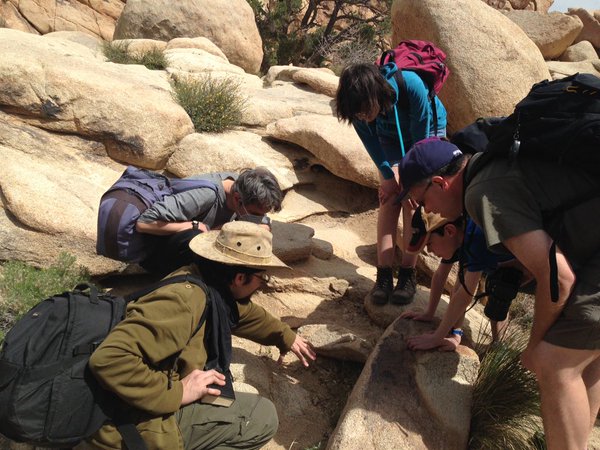
Summer is here in most parts of the world, and that means fieldwork for many junior (and senior) researchers. But journeying afar for days or weeks, though crucial for your research programme, can also mean a lot of prep work, hassle and unforeseen glitches.

{credit}Claire Asher{/credit}

How do you navigate these trips if you have children? What should you expect and prepare for if you’ll be living in close quarters with colleagues whom you may not know very well? How do you handle arduous endeavours like scaling mountains or climbing trees?

Continue reading

What did your job search teach you?

Don’t feel frustrated. You have many fabulous career options.

Most PhD students and postdocs working today will not go on to head their own labs. With little infrastructure to guide them to the next stage, young scientists are inventing it themselves.

A year ago, we launched an interview series that looks at how PhDs and postdocs found ways out of the lab and into satisfying careers. We’ve spoken to people who work in regulatory affairs, technology transfer, business development, management consulting, science outreach and philanthropy, just to name a few. And we are eager for more stories to share. See below if you’d like to volunteer.

{credit}Image credit: Venimo{/credit}

Continue reading

Highlights from the Naturejobs Career Expo

We run a quick summary of yesterday’s #NJCE16

What are the best ways to make yourself into the most appealing job candidate? How do you perfect your CV – or resume? And what should you do before, during and after a job interview?

These questions and many more were answered Wednesday at our Naturejobs Career Expo in Boston, Massachusetts. We had speakers from academia, industry, government and non-profits, who presented crucial information on navigating your career during a day of conference sessions and workshops. We’ll post lots more about these secrets in days and weeks to come, but here’s a sneak preview.

Continue reading

Launching the 2015 London Naturejobs Career Expo journalism competition

Enter for a chance to have your writing published on the Naturejobs blog and work with Nature Publishing Group editors.

Naturejobs-Career-Expo-London-2015Following the success of the Boston and London Naturejobs Career Expos journalism competitions (you can read all the articles from the competition in the #NJCEBoston and #NJCE14 categories on the blog), we are repeating the competition for both the 2015 Expos. Earlier this year we ran the Boston competition (see the NJCE15 category on the blog) but now it’s time for the London one!

The London Naturejobs Career Expo is our flagship event, so we are looking for five budding science writers to help us with our coverage of the Expo conference sessions, workshops and general ambience of the event for those who cannot make it. The conference will explore career paths in industry, academia and science communication, entrepreneurship, structuring a CV and transferable skills, amongst other things.

The five winners will have the opportunity to attend the Expo and write up at least two of the sessions or workshops for our readers, sharing the advice and expertise of the speakers with readers from around the world. Winners will also have the opportunity to work closely with Nature Publishing Group editors, and their articles will be published on the Naturejobs blog. Continue reading

Most read on the Naturejobs blog: August 2014

August has been a busy month for the Naturejobs team, especially as the Naturejobs Career Expo is coming up on September 19th in London (we hope to see many of you there). But we’ve still had plenty of time to bring you some great posts on the Naturejobs blog, and we wanted to share your 10 favourite posts from August.

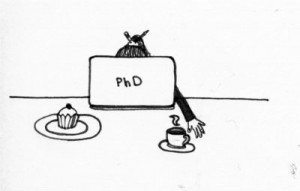
PhD and coffee

Thesis writing tip for the I-left-it-to-the-last-minute PhD student {credit}Image credit: Daisy Hessenberger{/credit}

1. Thesis writing tip for the I-left-it-to-the-last-minute PhD student.You’ve read all the other writing tips and they all say the same thing: start earlier! Unfortunately, that’s no help to you. So here are some top tips for those who have left it a little later than planned. Good luck! 

2. I am a scientist because… shows just how diverse scientists are. Theconversation continues on Twitter with the #IAmAScientistBecause hashtag. 

3. A PhD is more than just research trainingAre there too many PhDs? Only if you consider a one-track career path in academia. But this post shows that academia and a PhD can provide you with a vast set of skills that set you on the right footing for many different career paths. Continue reading

How to answer the most hated interview questions


We recently asked you what your most hated interview questions were. Here we share our tips on how to answer them.

1. What’s a weakness of yours that has been mentioned by your colleagues?

In this question, the interviewer could be trying to achieve one of a number of things. Yes, they might genuinely want to know what your weaknesses are, but they are probably also trying to put you on the spot, by veering away from your research about their company and the role.

Be warned: you probably won’t get any points for being overly honest. When faced with this question, never confess to being bad at any of the key prerequisites for the job. Instead, feel free to discuss a weakness of yours which isn’t essential to the role.

Whatever the weakness, it is a good idea to continue on to explain how you have improved on it and are making sure it doesn’t interfere with work. For instance, you might say that you worry a lot about doing everything to a high enough standard. This shows that you are conscientious, but before the interviewer begins to think you are neurotic or under-confident, go on to explain that because you are aware of this flaw, you have found strategies to address it – for instance you ask colleagues and your manager for feedback on projects, so as to gauge whether there really is anything you should be worrying about. If the feedback is good, you tell yourself not to worry. If there is room for improvement, you act on it, rather than dwelling on it.

Some people try to answer this question by picking a ‘fake flaw’ something that could also be seen as a positive. For instance: “some people say I am a bit of a perfectionist, as I like things to be done to the best of standards at all times.” Beware of coming across as too cheesy; after all nobody is perfect.

Think about this question before the interview and take the opportunity to think honestly about your strengths and weaknesses. Choosing something real, but non-essential to the role, and that you have genuinely tried to improve on, will show the employer you are a real person who can be honest and think on their feet.

Stay tuned for more answers to your most hated questions later this week.