By Paul Smaglik
Harassment and assault: ‘Disheartening’ trends
Reply

By Paul Smaglik
By Virginia Gewin
{credit}westend61/Getty{/credit}
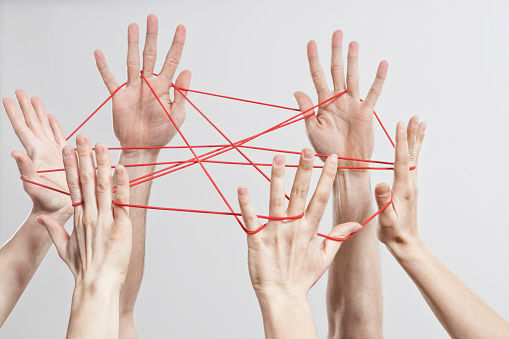
Rana Dajani, a molecular biologist based at Hashemite University in Zarqa, Jordan, developed the toolkit to inspire female researchers to build the networks they need to support, collaborate and advise one another as they move forward in their careers.
The number of female researchers in Middle Eastern countries varies wildly. A 2016 report found that women represent around 35.5% of total researchers in the 57 Organisation of Islamic Cooperation countries. Still, the numbers of employed women in some Middle Eastern countries are much lower. In Jordan and Algeria, just 12% of women work and in Saudi Arabia, 14% are employed.
Dajani built a mentoring network in Jordan in 2013, pairing 10 mentees with 10 mentors. From that experience, and with funding from the US National Academies of Science and the US National Science Foundation, she created ‘Three Circles of Alemat’, a three-year project to develop and test the mentoring toolkit. Working with female researchers from 17 universities across the Middle East, she and her team created a low-cost method to improve personal and professional success for both women and men. The final phase of her mentoring project, Three Circles of Alemat, brought together a cross-regional group of female Middle Eastern scientists this year in Boston, Massachusetts, at the annual American Association for the Advancement of Science conference.
The mentoring toolkit is available for free through the website of the Society for the Advancement of Science and Technology in the Arab World. Another organization, 500 Women Scientists, a network of 19,000 women worldwide, has also adopted the toolkit. “We did not want to provide a centralized forum for mentors to find mentees because it is costly,” says Dajani, who is spending this year as a fellow at Harvard University in Cambridge, Massachusetts, writing a book about women redefining success. “Rather, we wanted people to take control and start their own creative forums.”
Virginia Gewin is a freelance writer in Portland, Oregon.
Suggested posts
Video: How did you cultivate mentors?
Ten tips for finding an effective mentor
The faculty series: What does it take to be a mentor?
I write this as I wait outside my toddler’s summer preschool. It’s the same routine every day — I drop her, she wails, I leave. Later, the teacher reassures me that she’s completely fine as soon as I’m gone.

This is classic separation anxiety. I am overcome by guilt. Continue reading
It’s no surprise that the number of PhD degrees in scientific and related disciplines conferred upon US students has leapt by half in the past decade — from about 18,000 in 2006 to more than 27,000 in 2016 — according to a recent report. But “Snapshot Report – Science and Engineering Degree Completion by Gender,” released last month by the National Student Clearinghouse Research Center in Herndon, Virginia, shows that the proportion of women who earn those degrees has stayed stagnant — at a dismal 39%.

Credit: CORBIS
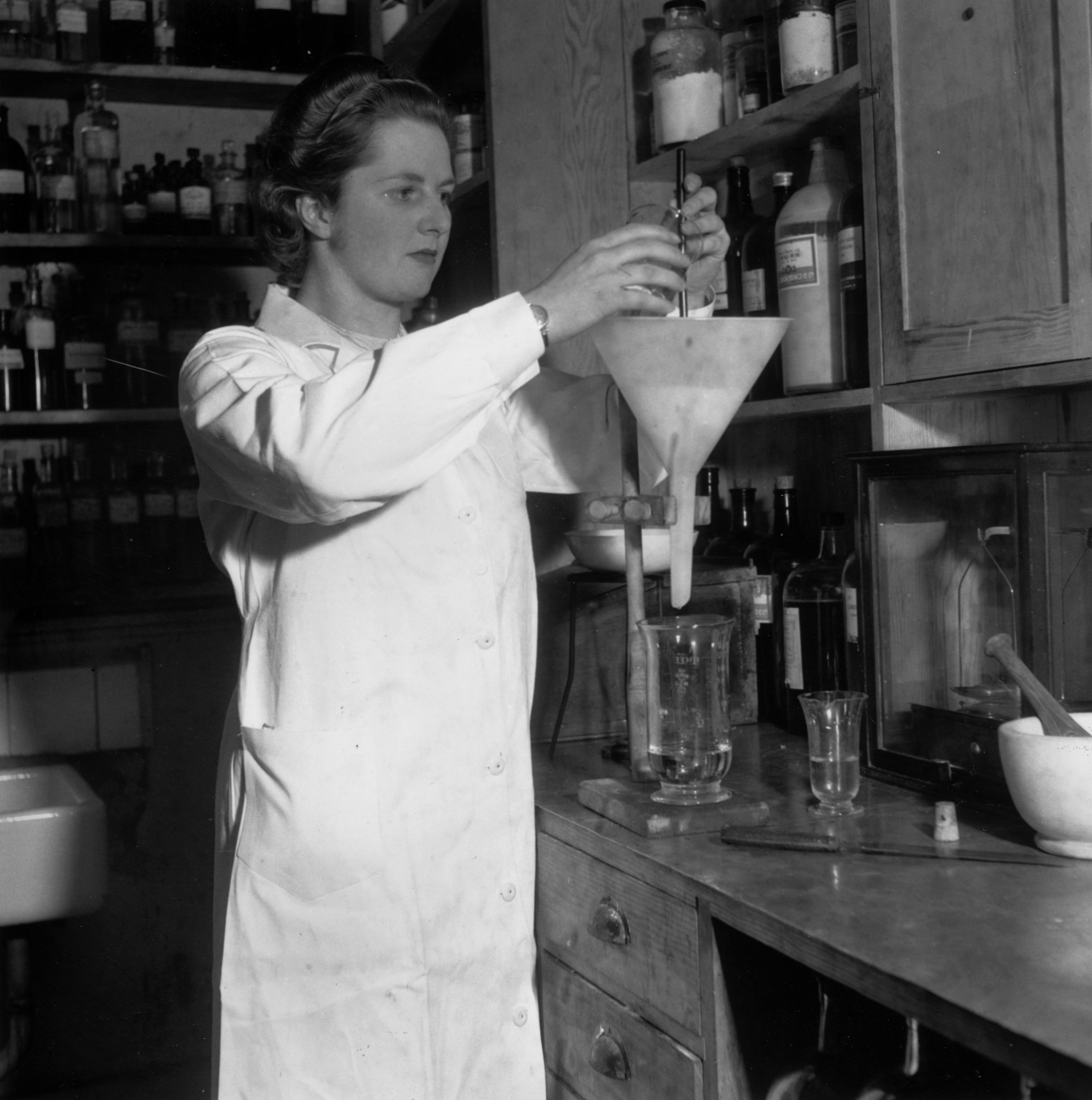
Margeret Thatcher at work as a research chemist in 1950.{credit}Christ Water/Getty{/credit}
The US National Academies of Sciences, Engineering, and Medicine (NASEM) in Washington DC are conducting a study on how sexual harassment in academia influences the career advancement of women in the scientific, technical and medical workforce.
https://www.youtube.com/watch?v=rdfqXdibc0k
Guest contributor Viviane Callier
Gender stereotypes affect our attitudes and behaviours, even if we’re unaware of them. But the habit of implicit bias can be broken: an intervention with faculty at the University of Wisconsin helped to break the bias habit, led to an improved department climate for everyone, and increased faculty hires of women and underrepresented minorities, a new study shows.

Bias, perhaps?
{credit}Ottoline Leyser{/credit}
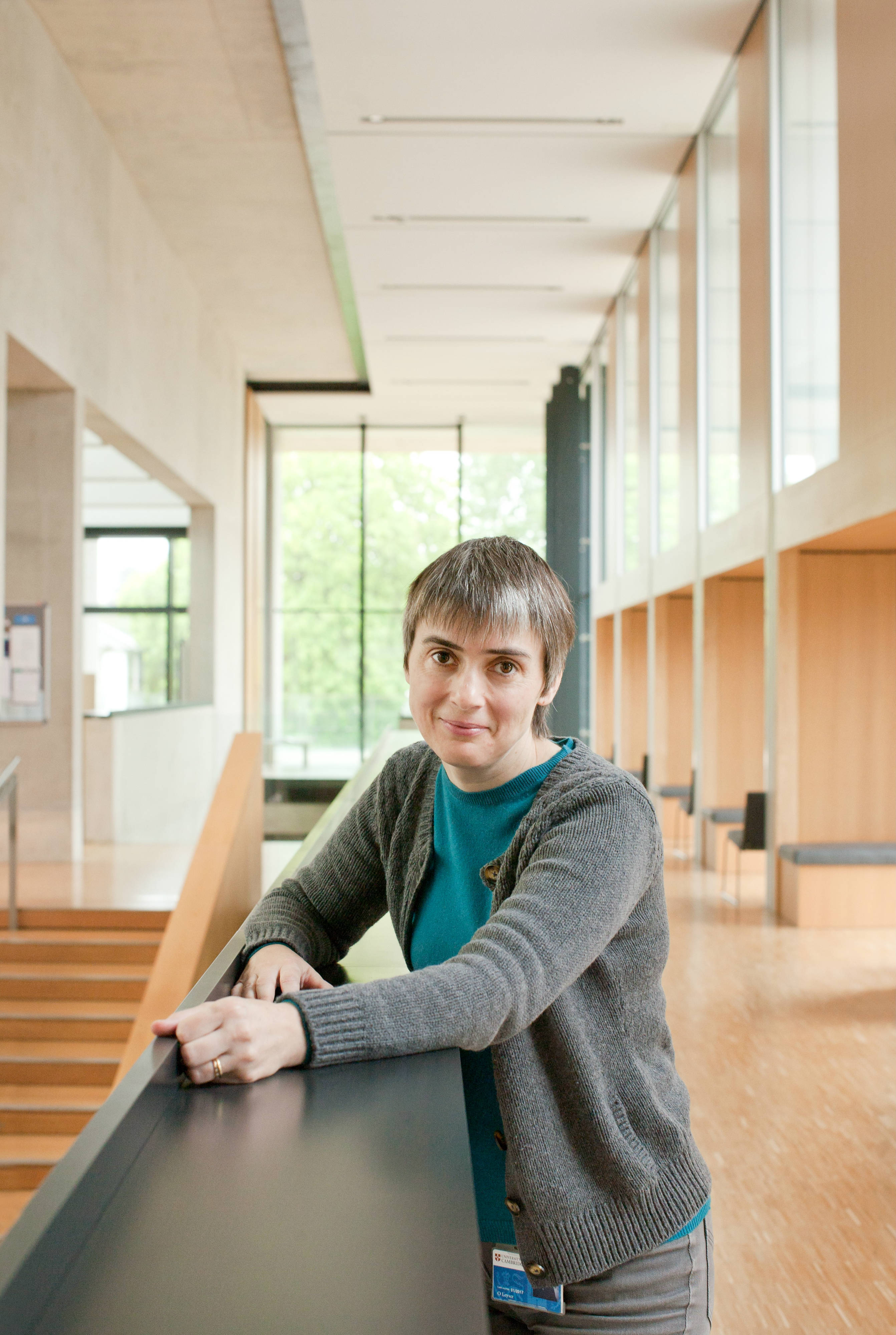
Guest contributor Ottoline Leyser.
Science needs diversity. Solving complex problems is more likely if there are diverse people, bringing diverse perspectives and diverse skills to bear on them. The imaginative and interesting people science needs find inspiration in the most unexpected places – both inside and outside the lab; in their personal and family lives and their other responsibilities and commitments.
Working environments that embrace diversity are exciting and creative. They can also be challenging and uncomfortable. While it may be reassuring to work with people who agree with you all day long, you’re much less likely to come up with anything new. It’s unfortunate that such a large part of science is done by a homogenous group of people who all look like each other. This state of affairs is maintained in part by the positive feedback that comes from unconscious bias, where appointments and promotion committees disproportionately select people similar to themselves. Continue reading
By Carolyn Beans, contributor
Professor C. Bodin, LEGO’s newest scientist minifigure, has a lot going for her. She built a fascinating career around finding “new and interesting ways to combine things together.” Her hard work was rewarded with a Nobrick Prize. She looks smart and professional in her crisp white lab coat and glasses. And last month, her very existence was met with a deluge of Tweets and blog posts as male and female science enthusiasts alike welcomed a long-over-due female scientist to the LEGO minifigure collection. Here is a LEGO character that will inspire girls to follow her away from pink-and-purple-sparkle-covered pass-times and into the lab.
The only trouble is that if girls actually read Professor C. Bodin’s bio, they’ll likely wonder whether they will ever get to leave that lab. According to Professor C. Bodin’s LEGO page, “She’ll spend all night in her lab analyzing how to connect bricks of different sizes and shapes…”
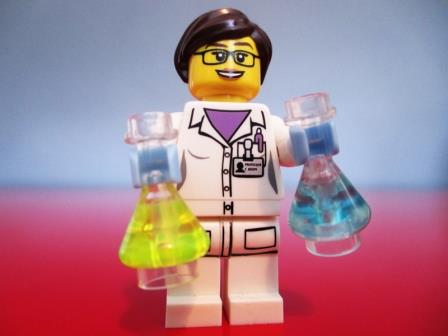
Prof Bodin{credit}Maia Weinstock {/credit}
I appreciate that LEGO wants to describe their new scientist as a hardworking professional. But I worry that we may lose budding scientists if we continue to depict STEM researchers as people who have no lives outside of their careers. Why can’t Professor C. Bodin do groundbreaking work during the day and still make it to her hip hop class or book club at night? Continue reading