Some science and some serendipity

What at first looks like a setback may be an opportunity in disguise, says Flavia Scialpi

I keep my business cards in the top drawer of my desk at work. They are in two bulky boxes and take up a lot of space, but I like them there because I can see them every time I pull out a pen. They are a memento of how very often you can’t foresee where an opportunity lies – and therefore to seize each and every one of them.

I have been in academia for almost half my life, and I am now engaged in my first position in industry at Synpromics, a biotech company. It is the first time in my professional career that I hold a position that requires and provides business cards.

New Accomodation at Roslin Innovation Centre

Scialpi’s new Accomodation at Roslin Innovation Centre

A few years ago I thought I wouldn’t have any chance to land a job in industry. Nor was I very interested in it, to be honest; I was content with academic research, greatly enjoying the highs and bitterly venting about the lows. I went for a well-trodden path; I got my PhD in Italy, where I’m from, and then ventured abroad for a postdoc. I felt the world was my oyster and I found a second home in beautiful Scotland. Continue reading


Marketing yourself, politics and post-truth

Successful marketing can land you your dream job, but does this really mean you are the best person for the role?

Achieving your dream job is always going to be a bit of a challenge. You may have a great degree, and maybe relevant experience, but getting your potential employer to believe you are absolutely the right person for the job means marketing yourself correctly. This can be tricky, particularly if you are starting off new in a field with no established reputation behind you.

Continue reading

Scientific presentations: A cheat sheet

Scientific culture and insufficient training in public speaking leads to dull, text-heavy talks. Put more effort into presentations, say Andrew Gaudet and Laura Fonken

As postdocs with a combined 20 years of experience in neuroscience research, we’ve attended hundreds of talks and delivered dozens of presentations. We’ve realized it is imperative to perform your best every time you present — whether at a weekly meeting or at a job interview.

Your preparation and organization will help the audience understand your main points, and this professionalism will boost your reputation, which could lead to further opportunities. Ultimately, a presentation is one of the ways of influencing how others perceive your science and your competence. Here, we’ve put together some ideas for creating polished presentations.

presentation-1559937_1280

Continue reading

Tracking down the holy grail of academia

Connections and research proposal that complements a department are essential in obtaining a tenure-track faculty position, Louisa Cockbill learns from Kate Smith.

Having been awarded a faculty position at the University of Colorado, newly minted assistant professor Kate Smith is preparing to move from to the US from the UK. Here, she describes her experience of tenure interviews, how to maintain a passion for research and, crucially, how to find the elusive off-switch from science.

running a Growth

Having done a PhD, I know the pressures of academic research and how crucial it is for early career researchers to gain advice and encouragement from the success stories of others, like Kate. I caught up with her to see what advice she would give to others curious about the tenure track.

Continue reading

The changing landscape of pharma: a new route for PhDs?

The pharmaceutical industry is changing – challenging for some, but an open road to opportunity for others. And the latest opportunity in the world of pharma comes from a rapidly growing demand for Medical Science Liaisons (MSLs), says Dr. Martijn Bijker.

As more drugs come to market and pharma’s business model shifts from selling drugs directly to fostering earlier engagement, companies are looking for highly skilled scientifically- and clinically-trained candidates. Could this be an outlet for the overflowing pool of PhD (and MD) graduates produced every year?

So what is an MSL?

An MSL is the scientific and clinical disease expert within a pharmaceutical or biotech company. They’re the go-to person for any complex questions about a specific drug. That could include questions about the science behind the drug, the mode of action, the competitors’ drugs, side effects, clinical trials, research opportunities, and disease-related questions.

MSLs work at the interface between internal stakeholders in the company and external stakeholders in the field – called Key Opinion Leaders (KOLs). MSLs help to bring innovative new drugs to the market and provide education about the proper use of drugs that are already on the market. KOLs – broadly defined as leaders in their field – can be heads of departments at teaching hospitals, heads of pharmacies, professors of medicine, the CEO of a patient organisation, physicians involved in pharmaceutical clinical trials and sometimes clinical scientists themselves. In short, MSLs work with the most influential stakeholders in a therapeutic area.

scientist-762627_1920

MSLs help to bring innovative new drugs to the market and provide education about the proper use of drugs that are already on the market.

Continue reading

The competition that likes to say YES!

Enterprising early career researchers get some high-level mentoring to handle the rough and tumble of the boardroom. David Payne meets finalists in the 21st annual Young Entrepreneurs Scheme (YES)

Epitome is a Singapore biotech start-up whose product pipeline is based on engineered tail proteins to tackle bacterial diseases. It wants a slice of the US’s $6bn acne market. Epitome’s founders are seeking raise $10m to build a factory where its cosmetic products can be manufactured. Investors will be rewarded with a seat on its board.

The launch team describe the company at a presentation attended by other young entrepreneurs. They brace themselves for some tough questions from a judging panel. One judge asks how a factory can be built for $10m Another challenges the team’s plan to launch an acne treatment as a cosmetic product, which means they won’t mention acne on the label (the team adopted this approach to make the US regulatory process more straightforward).

15390900_1695305427446706_286911818743892859_n

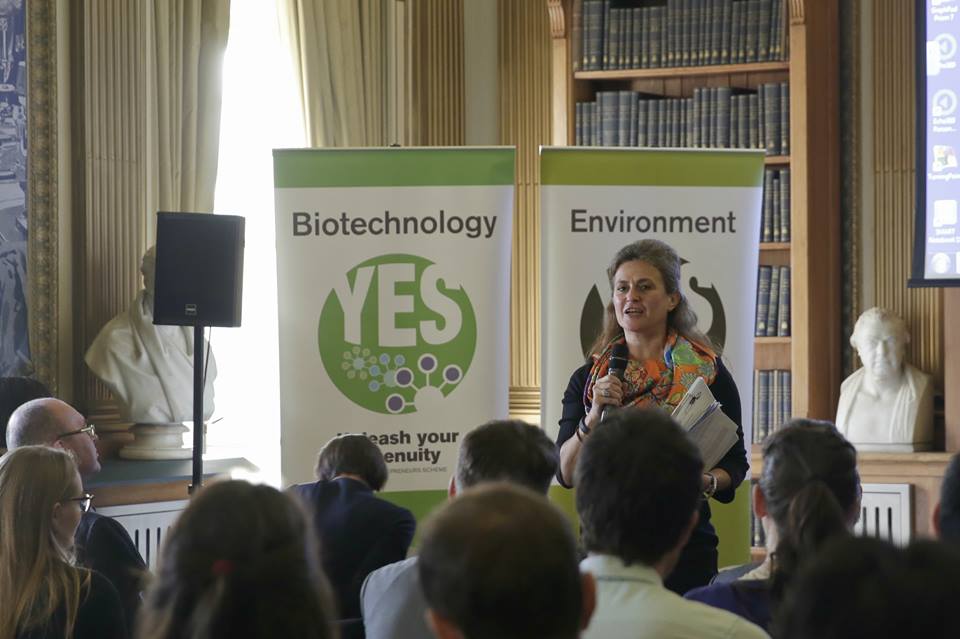
‎Elena Lurieluke, Head of Global Life Sciences Open Innovation, Corporate R&D at P&G, addresses fellow YES judges and finalists.

Continue reading

Finding job satisfaction as a drug safety manager

Steffen Schulz was completing his PhD in medical neuroscience when he realised he needed more job security than academia could offer. Now, he works as a drug safety manager in his native Berlin.

How did you get into biology?

Originally I was interested in the origin and the development and evolution of life. Then I shifted to questions like ‘why do animals and humans behave the way they do?’

IMG_2299-allwhite-smaller

Steffen Schulz

Continue reading

Back to basics: Cracking an academic interview

Mit Bhavsar runs through some simple tips he learnt in his quest for an academic position.

Staying and working in academia is a good career choice but finding the right position in academia is still a tricky thing. Blanket-applying to as many positions as you can find and crossing your fingers isn’t going to cut it. Recently, I managed to crack some of my own postdoc interviews. Here’s what I learnt.

grant snider comuic

Image source: Grant Snider https://www.incidentalcomics.com/2013/05/message-to-graduate.html

Continue reading

The beginner’s guide to the LinkedIn network

Exploring career paths sometimes feels like coming out of a cocoon – who knows what’s out there?

Naturejobs journalism competition winner Elisa Lazzari

ElisaLazzari-smaller

{credit}Jean Branan{/credit}

Continue reading