The power of data shared

In a world of interdisciplinary research, we need to make data freely available, says Katie Ember

Better Science through Better Data writing competition winner Katie Ember

Every Monday in the University of Edinburgh’s School of Chemistry, the Campbell group gather in Room 233 for a lab meeting. If you’re hosting the meeting, you bring cake. Or you forget and everyone pretends they’re not feeling a bit hungry and disappointed. Then, two scientists in the group present that month’s work.

Every Friday in the Centre for Regenerative Medicine, a fifteen minute cycle from the School of Chemistry, the Forbes group file into the first floor meeting room. After battling with the “motion-activated” lights, we all talk through what we’ve achieved that week.

Teamwork

The reason I go to two lab meetings in one week is because I’m attempting to detect liver damage using laser light. It’s multidisciplinary and it’s hard: requiring input from biologists, physicists and transplant surgeons from different institutes. The end result is that I spend about four hours each week not doing science but discussing it. Whilst this may seem like a strange way to do research, I cannot overstate how important it is. Continue reading

Multidisciplinary research: pros and cons

By bringing together experts from different disciplines we can find the solutions for today’s global challenges. Having spent a year in a multidisciplinary research group, Mit Bhavsar shares his thoughts on the advantages and disadvantages of multidisciplinary research in science.

3844579694

The increasing popularity of mixed scientific disciplines like mechatronics, bioinformatics, biomedical engineering and biophysical chemistry is evidence of the importance of multidisciplinary. And, based on the number of multidisciplinary conferences taking place around the world, it seems that many policymakers agree that bringing scientists from a variety of different backgrounds together is a crucial part of fixing the world’s problems. Continue reading

Management 101 for scientists – three rules for managing a successful team

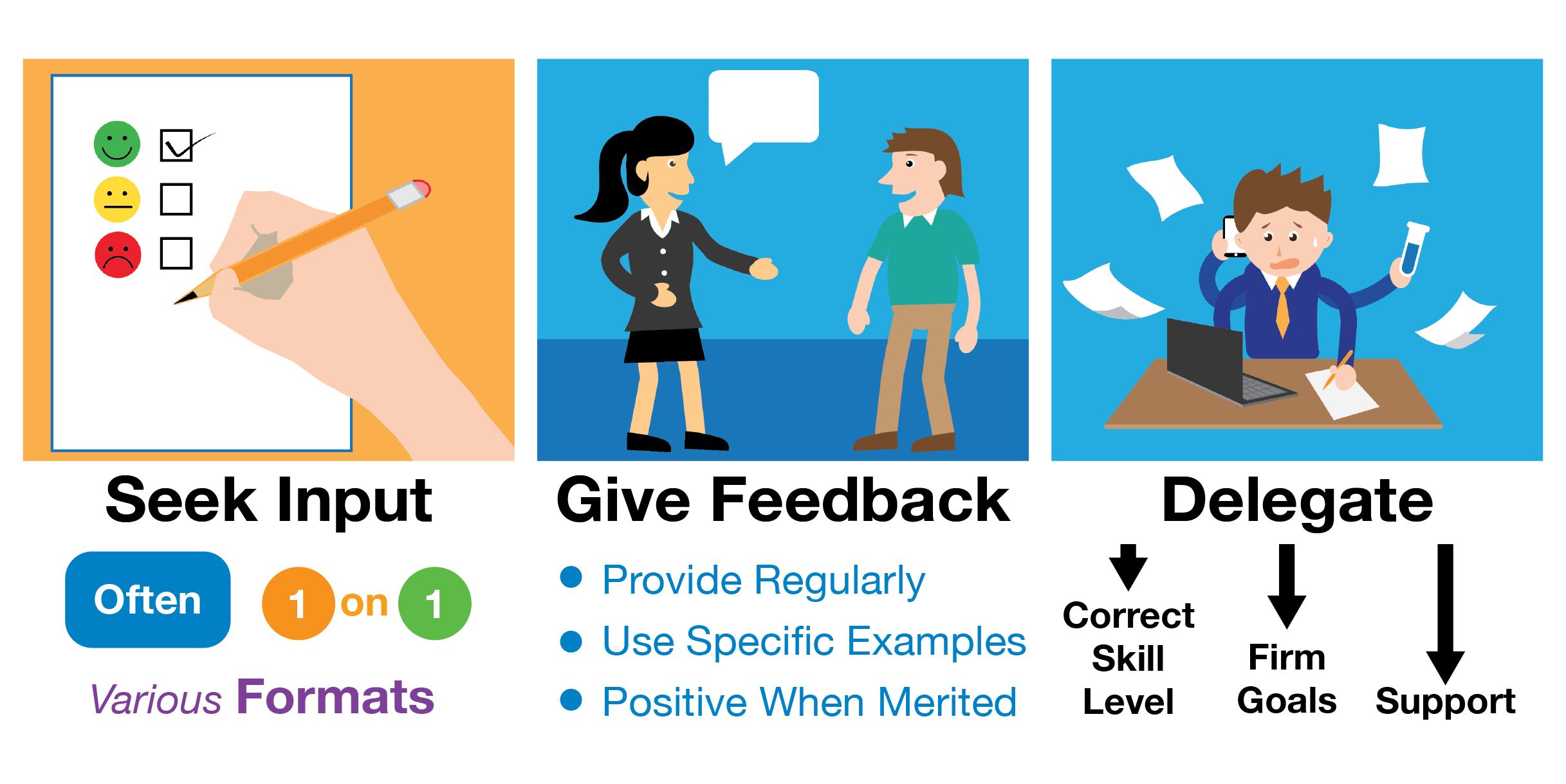
Joanne Kamens, Addgene’s executive director, shares her top tips for effective scientific management

Good management can make an enormous difference in the success and productivity of any team. Unfortunately, new managers are rarely chosen because they have demonstrated skill at managing people. After 10-15 years of training, many scientists will be expected to run an academic lab or manage a team outside of academia with little experience and almost certainly no formal training. The kind of smarts and the types of skills that it takes to be a good scientist are not the same ones it takes to be a competent manager (much less a really good one). While getting your PhD or doing a postdoc, few science trainees have opportunities to work on their emotional intelligence or to hone their delegation skills.

So what makes a good manager? First, it takes an open mind willing to learn and develop skills. Managing a team is hard and scientists should reject the myth that “it comes naturally” to some.  Most good managers have worked hard to learn principles of good management and they continually build their skill set with experience and trying new tactics. Second, being a good manager requires a focus on the goals.  I believe the most important goals are to get a lot of stuff done, to produce excellent quality work and to create a team culture that provides a happy work environment. The first two goals may be obvious, but why the third?  Happy people get more done and do better work and a positive culture attracts good people.

Here are three areas to work on.

Management Infographic

{credit}Wu Li; addgene{/credit}

Continue reading

How can better data sharing and management improve a career in science?

Taking the time to plan how raw data will be recorded and shared can make all the difference when new research directions appear, says Matthew Edmonds.

In many research projects, there tends to be three major interested parties. The first is the researcher who actually performs the experiment and collects the data. The second is the scientist overseeing the research project, who may be collating related data from several researchers. Finally, there is the institution, which supports the research financially and provides a space in which to do it.

To_deposit_or_not_to_deposit,_that_is_the_question_-_journal.pbio.1001779.g001

{credit}Roche DG, Lanfear R, Binning SA, Haff TM, Schwanz LE, et al. (2014) Troubleshooting Public Data Archiving: Suggestions to Increase Participation. PLoS Biol 12(1): e1001779. doi:10.1371/journal.pbio.1001779, CC BY 4.0, https://commons.wikimedia.org/w/index.php?curid=30978545{/credit}

Continue reading

Why you need to collaborate

Collaborating, formally or otherwise, is a huge component of your future (and current) success – even if you’re in the early stages of your career as a graduate student or postdoc.

7822101134_6cbcbb435b_o

{credit}CC-BY-SA Atos/Flickr{/credit}

Why? It’s how science works today – even in academia. You can’t do it all on your own — you need to work with others who have expertise in different areas to identify the right research questions, to ensure that your experiments answer the questions properly and that your data are robust, to fully interpret results and understand their broader implications and ramifications (as well as potential commercial application in some cases).

Continue reading

Multi-disciplinary Centers are lousy lifeguards when drowning in sea of PowerPoint slides

Structured efforts to build collaboration-encouraging centers cannot overcome fundamental problems in scientific communication.

These centers should focus on new scientist-to-scientist communication techniques before designing formal programs, says David Rubenson.

Multi-disciplinary, trans-disciplinary, translational, team science. These are the buzzwords for a consensus that transformative science requires collaboration among diverse disciplines. With scientists locked into narrow sub-disciplines, universities are dedicating enormous resources for top-down multi-disciplinary “programs,” “centers,” and “institutes” that attract diverse researchers, with the aim of encouraging more multidisciplinary collaboration.

communication

Continue reading

Team science and the early career researcher

The current trend towards increased research collaboration and larger groups is fuelled by the need to answer bigger questions, but this approach puts individual contributions at risk.

Guest contributor Lucia Possamai

Research ventures where several researchers, groups or institutions work together to answer a research question is becoming known as ‘team science.’ It can be seen at work today in large genetics studies, such as the 100,000 genomes project, in multi-centre clinical trials, or in rare disease consortia. Even on a smaller scale, it is becoming more common for publications to arise from collaborative projects.

As an early career researcher I can appreciate that team science is not just good for science: it gives those of us embarking on our scientific careers the opportunity to take part in research with high impact that would otherwise not be accessible to us. It can remove the pressure to obtain independent funding – in many cases, all funding will have been obtained as part of the larger project’s grant.

Continue reading