How to publish better science through better data

Scientific Data and Nature host an event that explores how different stake holders can collaborate with researchers to publish better science through better data management.

Data, without a doubt, are the foundation of science. If you’re a researcher, your life is data: you spend your days generating it, analysing it, and writing papers about it. You share it with colleagues and collaborate on projects that will build on it and find new and exciting things. But policy makers, funders and universities are also involved in the conversation – each trying to solve the problem of managing the increasing influx of data whilst keeping the integrity of science high.

Last Friday, PhD students and postdoctoral researchers came to the Nature offices to learn about how research data affects a scientist’s ability to publish and get research funding. The event, Publishing Better Science through Better Data, consisted of a series of talks from editors, data curators, software developers and funding body representatives, all giving their perspective on how data affects scientific research and publishing.
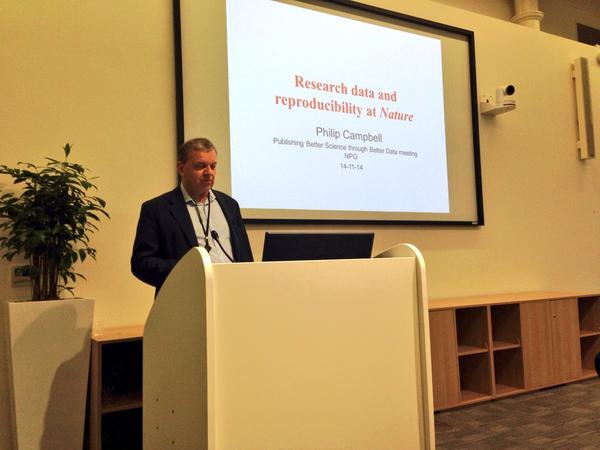
Phil-campbell-scidata14

{credit}Image credit: Nandita Quaderi (@DrNandiQ){/credit}

The editor’s perspective

Philip Campbell, Editor-in-Chief of Nature and its sister journals provided an editor’s perspective and shared how Nature journal was handling the reproducibility problem: “It mostly consists of things that are bad or sloppy science, not fraud.” To minimize the amount of “sloppy science” being published in Nature, editors have put a check-list in place for scientists that they submit along with their papers, making the research process more transparent. “It’s improving the reliability of the design of experiments, which is what we want to see happening.” Continue reading
What’s the biggest challenge you’ve faced as a woman in academia?

For some women the challenges are greater than others.

At the Naturejobs Career Expo in London this September, a panel of four academics got together to discuss their wildly different careers. Jim Usherwood from the Royal Veterinary College only spends his time doing research. Anita Hall from Imperial College London only does teaching. Lorraine Kerr and Louise Horsfall from the University of Edinburgh split their time (with different percentages) between research, teaching, business and management.

In this short Q&A film three of the panellists give their opinions (based on their experiences) about the challenges they’ve faced as women in academia.

Anita Hall from Imperial College London touches on some of the stereotypical things, including self-confidence.

Louise Horsfall says “I feel that it’s been an advantage” to being a women in science. But as a junior lecturer this might change.

Lorraine Kerr, with her experience of working across the academia/industry background. hasn’t had any challenges, she’s pleased to report!

Read more about How to navigate an academic career and about all the other conference sessions and workshops at the Naturejobs Career Expo in London.

Other Q&A videos from the Naturejobs Career Expo, London 2014

How important is having a mentor in your academic career?

How do you achieve work/life balance in academia?

Should I apply for a fellowship or a postdoc after my PhD?

Have you faced any challenges as a woman in academia? Or do you know anyone who has? Please share your thoughts with us using the comments section below.

Enough doom and gloom part 2: Curiosity is the currency of science

Science funding sources have varied over the decades, and will continue to do so as the sociological and political influences change, says Scott Chimileski.

Contributor Scott Chimileski

Twenty-first century science is global, rapidly communicated and irreversibly intertwined with virtually every aspect of society. This immensity creates the impression that our current scientific culture has been established for a very long time. However, the National Science Foundation (NSF), NASA and the Department of Energy (DOE), pillars of basic science that we recognize them to be, were all established after many of today’s senior investigators were born. In addition to appreciating the cyclical nature of funding (see part one), it is critical to consider how and why funding sources have changed throughout the history of science.

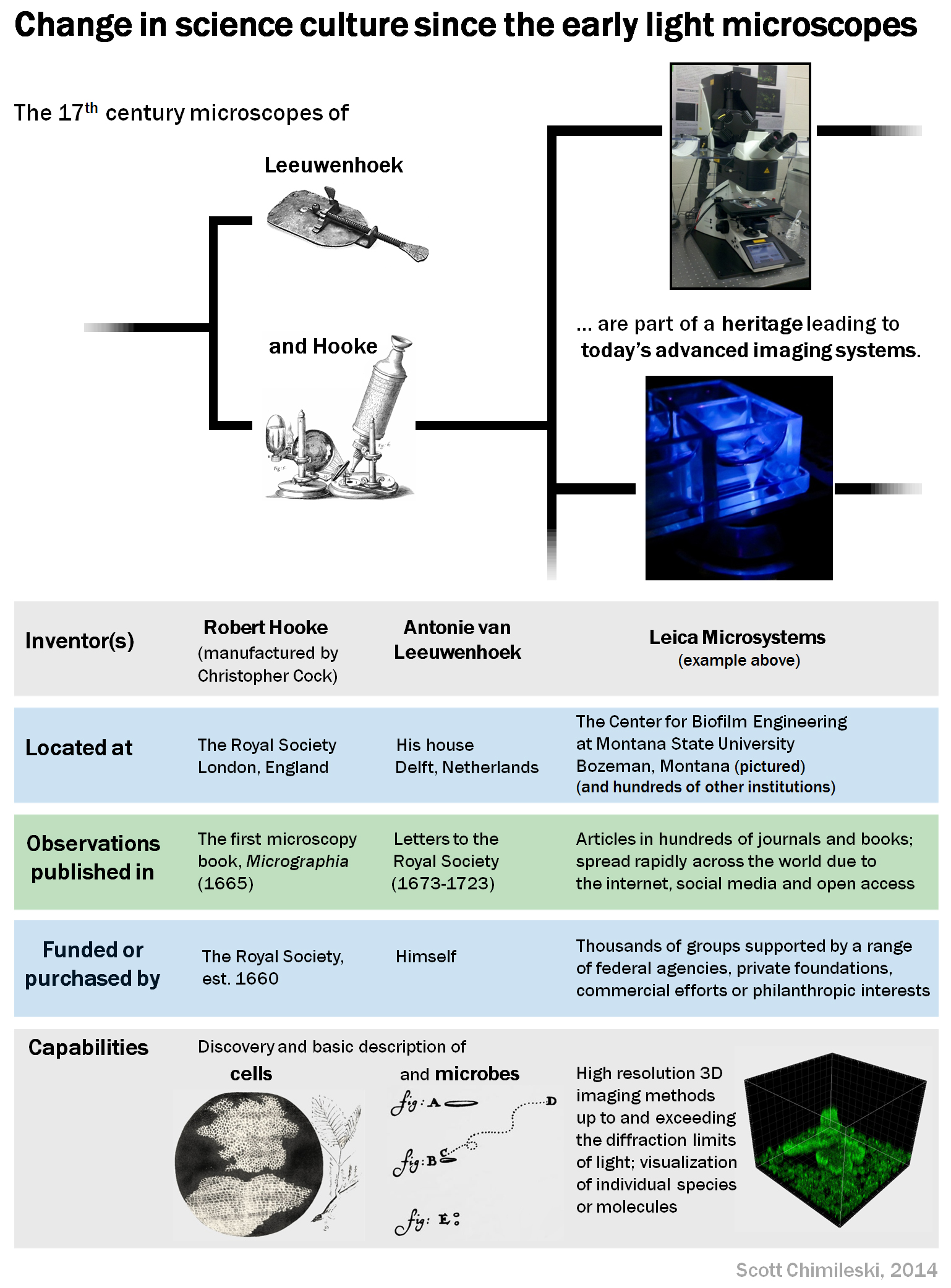
From the scientific revolution at the end of Renaissance through the 19th century, science was largely self-funded or driven by the patronage of other independently wealthy individuals. Many famous forefathers of science had side jobs. Antonie van Leeuwenhoek, whose observations of bacteria in the 17th century inspire microbiologists to this day, was a house manager. Little is known of how he made his microscopes, let alone exactly how he paid for supplies. His contemporary Robert Hooke, another pioneer of microbiology, was an architect and city surveyor. Johannes Kepler wrote horoscopes. And, Galileo Galilei – celebrated for early observations of Saturn’s shape and the Milky Way Galaxy – pitched his telescopes to the military of the Republic of Venice as naval instruments, and to the House of Medici in Florence as a means for naming distant moons after members of this powerful dynasty.

science-funding-inventors Continue reading

Ask the expert: Meet Dr Frances Saunders

Dr Frances Saunders

{credit}Courtesy of: Times Higher Education{/credit}

Meet our expert for this month: Dr Frances Saunders, President of the Institute of Physics.

What is your scientific background?

I have a degree in physics and undertook research early in my career in the field of liquid crystal displays and opto-electronic devices. I was attracted by both the interdisciplinary nature of the research involving physics, chemistry, human factors, electronics and manufacturing techniques as well as the opportunity to see my work used in practical devices. I then broadened my interests into leading and managing a wide range of research projects with applications in defence and security.

How did you come to take on the role that you currently have?

I took early retirement from my role as Chief Executive of the Defence Science and Technology Laboratory just over two years ago and have been building a portfolio of activities focused on supporting the physics and engineering communities – from education to exploitation. I am currently President of the Institute of Physics, a Trustee of the Engineering Development Trust and work on a number of topics for the Royal Academy of Engineering. Continue reading

Speed Networking for early career researchers

Contributor Gary McDowell, Tufts University Postdoctoral Association President

Graduate students and postdocs tend to spend the majority of their time at the bench, believing that this is the only path towards getting a job. The reality is that in the current job climate, most jobs are found through the networks that we build and the people we meet; up to 80% of the jobs people get are not publicly advertised. Many institutions and science organizations now regularly include networking events as part of meeting and conference schedules.

If this is something you might like to do, please let me know.

{credit}Image courtesy: Gary McDowell{/credit}

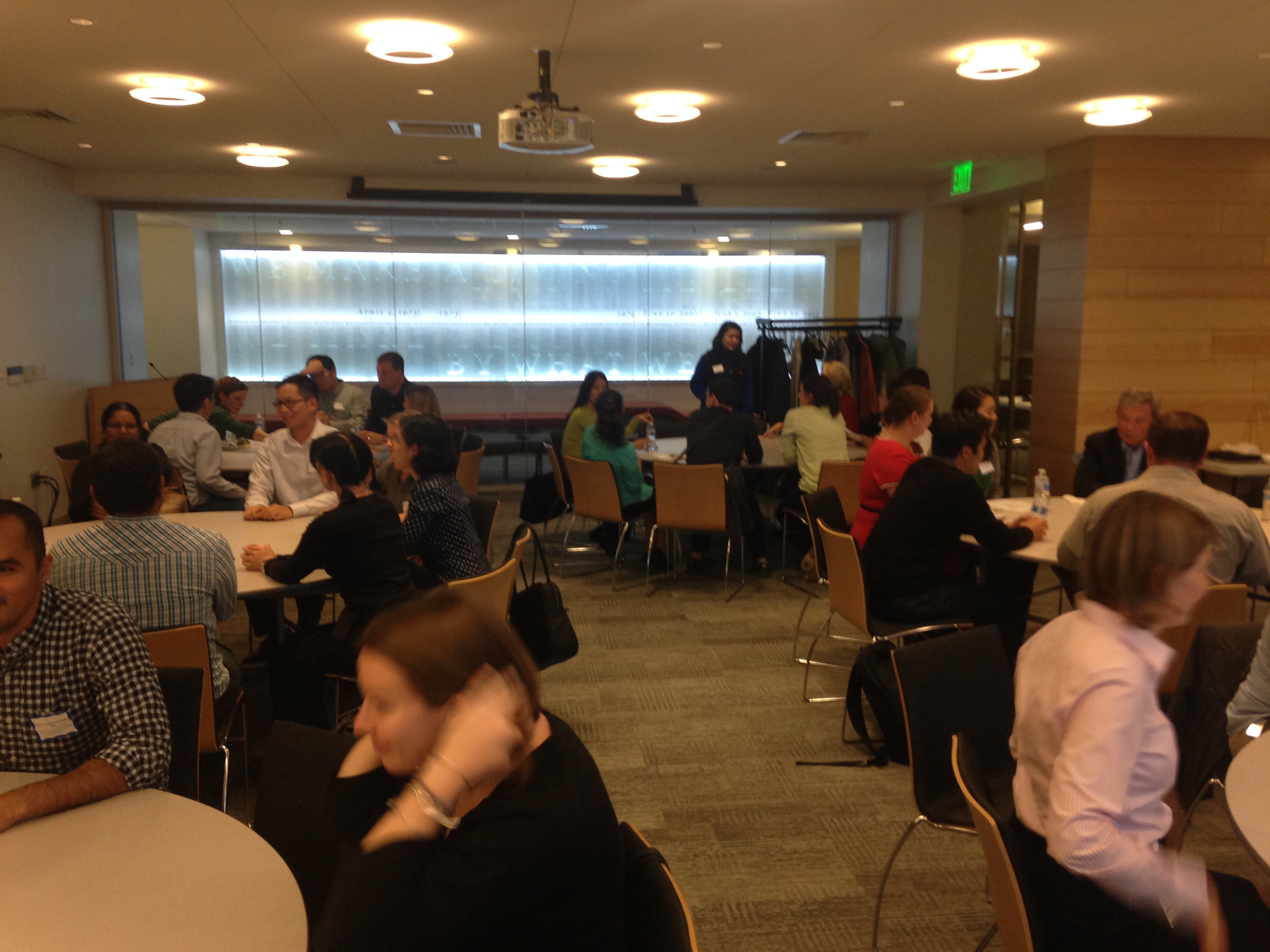
At Tufts University, our Postdoctoral Association recently tried a variation on this which is becoming more common in the business world: “Speed Networking”.

For those with experience of the cultural phenomenon of “speed dating”, the premise will be familiar.  35 postdocs and grad students were divided up into groups “dating” 15 professionals at themed tables: academia; industry; patent law; journal editing; regulatory affairs; business development; and administration. For 10 minutes, questions and conversations were exchanged to give students and postdocs an idea of some of the work involved in different careers and areas where they could build relevant experience for a particular role. Then, appropriately, a lab timer would beep and each group of postdocs and grad students would get up and rotate to another table. After everyone had met, there was time and space for more one-on-one networking. Contact details were made freely available afterwards to attendees, to get in touch and connect with professionals who most engaged them in discussing career aspirations. Continue reading

Should I apply for a postdoc or a fellowship after my PhD?

At the Naturejobs Career Expo in London this September, a panel of four academics got together to discuss their wildly different careers. Jim Usherwood from the Royal Veterinary College only spends his time doing research. Anita Hall from Imperial College London only does teaching. Lorraine Kerr and Louise Horsfall from the University of Edinburgh split their time (with different percentages) between research, teaching, business and management.

In this short Q&A film the panellists give their opinions (based on their experiences) about whether or not you should apply for a postdoc or a fellowship after finishing your PhD.

Usherwood says that this depends on what field you work in. From his experience, if you want to work in academia, build some diversity into your career by doing postdocs in different places where you can learn different skills, work with different people and get an understanding of different cultures.

Horsfall agrees and says that the fellowship positions are very competitive, so having a variety of skills and disciplines in your career track can be beneficial.

Kerr says that being able to sell yourself with your skills, and not being frightened to go for positions, will help you. And even the experience of “going for it” will give you insight about being successful in the future if it didn’t work the first time round.

Read more about How to navigate an academic career and about all the other conference sessions and workshops at the Naturejobs Career Expo in London.

Other Q&A videos from the Naturejobs Career Expo, London 2014

How important is having a mentor in your academic career?

How do you achieve work/life balance in academia?

Bench to Business: How women in STEM academia can use corporate models to their favour

Women in STEM can learn to become scientific leaders by taking a leaf out of the corporate skills handbook, says a panel at the World Economic Forum.

Contributors Mandë Holford and Ivana Gadjanski

WEF China

From left to right: Lawrence Krauss, Justine Cassell, Ivana Gadjanski, Mande Holford, Tony Pan and Diva Tommei {credit}World Economic Forum / Faruk Pinjo{/credit}

Scientists may not readily identify themselves as entrepreneurs, but a comparison can indeed be made between the corporate business sector and the scientific enterprise. Are their skills that women in business have that women in science can acquire and benefit from? The intersection of STEM (Science, Tech, Engineering and Math), Innovation, Business and Women were recently addressed on a panel at the World Economic Forum (WEF) Summer Davos meeting in Tianjin China. Together with Justine Cassell, Tony Pan, Diva Tommei, and Lawrence Krauss we discussed why aren’t more women entering careers in science and technology (in academia and industry) given the role of STEM in the future of economic growth?’

The reasons women are lacking in STEM industries and academia are multiple and complex, however one major hurdle we discussed is the lack of business knowledge among the women STEM scientists.

The current knowledge economy calls for educated specialists who can leverage their currency across multiple platforms. Scientists by nature are opportunity driven specialists who can, and should, be thriving in the knowledge economy. Running a successful laboratory is very similar to running a startup or a company. Principal Investigators (PIs) need to be good in fundraising, team- and project management, even marketing (e.g lab twitter accounts). Interestingly, the science-business interface can be a good opportunity for women scientists in STEM academia to get more exposure to these tasks and thrive. Continue reading

Enough doom and gloom part 1: Science funding is cyclical

Contributor Scott Chimileski

A few months away from finishing a PhD, my social media feeds are filled with negativity about postdocs, jobs and funding. Article after article, elaborate infographics – there are even special calculators now that predict your chances of becoming a principal investigator.

labpredictor-scott-chimileski

{credit}Image credit: Scott Chimileski{/credit}

It is certainly true: the competition for a position as a science professor and to earn funding as a researcher is increasing. Raising consciousness around these issues is important, and these articles, driven by genuine concern, do help. However, I think it has gone too far. I see it affecting my peers on Facebook: “Wee!! Sadly this motivated me to get out of bed, someday I could make $40k!” accompanied by a link to the article “Too Few Jobs for America’s Young Scientists.” This same sort of sentiment is echoed on Twitter.

It’s human nature to focus on bad news; but it is long overdue to have a critical look at all the doom and gloom. Before we panic – before we decide there are too many PhD students and dream-up ways to intervene – let’s consider the history surrounding these issues, allow a little optimism in, and explore the positive. In this three part series, I want to help uplift my fellow young scientists. Continue reading

How important is it to have a mentor in your academic career?

Choosing your career path is a difficult one. Doing it on your own is even more so. Having someone to talk to and share your concerns/challenges/ideas with can be extremely beneficial. The official term for someone like that is a Mentor. At the Naturejobs Career Expo in London this September, a panel of four academics got together to discuss their wildly different careers: Jim Usherwood from the Royal Veterinary College only spends his time doing research. Anita Hall from Imperial College London only does teaching. Lorraine Kerr and Louise Horsfall from the University of Edinburgh split their time (with different percentages) between research, teaching, business and management. 

One of the questions our audience posed to them was: “How important is it to have a mentor in your academic career?” Here are their responses.

Usherwood suggests speaking to the postdocs – they’re the ones that do the research and will give you a “reality check”. By approaching many postdocs you can get lots of different opinions.

Hall has found that having a mentor to whom you can relate is very valuable. Don’t reach for the Nobel Laureate, go for someone who’s done one more postdoc position than you, or who has started their postdoc after their PhD.

Horsfall disagrees with Usherwood: “if you’re aiming for an academic position, you don’t want to go to a postdoc because they haven’t got the academic position either.” She suggests working with the university mentor schemes that are provided by universities. “It’s just an encouragement from somebody who is outside your immediate situation. They can give a different perspective.”

Mentors are a big discussion topic in the science career space. We’ve talked about the issue before:

Mentoring: More than just a pair of hands

Becoming a mentor

Career toolkit: Mentoring

Read more about How to navigate an academic career and about all the other conference sessions and workshops at the Naturejobs Career Expo in London.

What isn’t science communication?

Naturejobs-science-communication

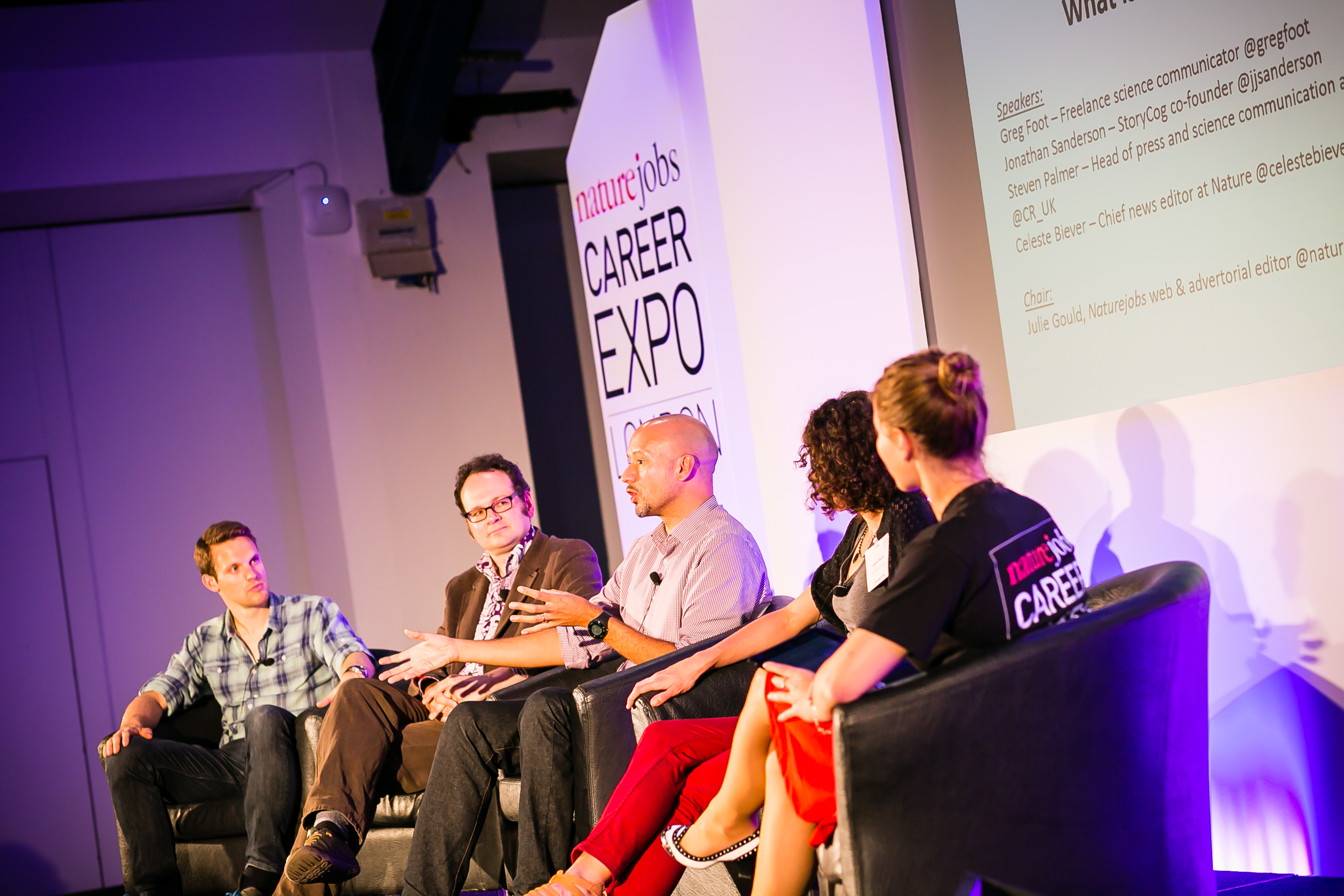
L-R: Greg Foot, Jonathan Sanderson, Steve Palmer, Celeste Biever, Julie Gould

Things to consider if you’re thinking about working in the field of science communication.

Contributor Samuel Brod

“A full house”, someone muttered as a besieged looking member of staff rushed out extra chairs for the hundreds of researchers filtering their way into the auditorium. Sci-comm, as it’s often termed, seemed a hot topic this year. A panel at the London Naturejobs Career Expo on September 19th, 2014 asked the question: What is science communication?  The panelists were Steve Palmer, Cancer Research UK; Jonathan Sanderson, StoryCog; Greg Foot, BBC; Celeste Biever, Chief news editor for Nature. Chair: Julie Gould, Naturejobs.

The talk began with the panelists describing their current jobs and how they’d found them, followed by a more general discussion around pursuing a career in science communication. On stage, the panel was at ease and their comments often induced laughter from the crowd, not out of politeness but genuine amusement. Within the audience, there was a definite sense of expectation–it seemed that they were waiting for answers. Continue reading